
Quick Answer
Moore's Law is no longer reliable as a planning shortcut for automatic performance gains. Physical scaling limits and the shift to multicore and hyperthreading mean newer hardware will not automatically fix slow software. Teams now need profiling, workload-aware architecture, benchmark validation, and evidence-based optimization before promising speed, cost, or latency improvements.
The End of an Era: Why the "Free Lunch" is Officially Over#
If you still assume faster chips will quietly rescue a slow product, reset that model now. For a long stretch, Moore's Law worked as a planning shortcut for performance. Today, it is not reliable enough to treat as a built-in upgrade path.
Historically, the bargain was simple. Computing kept improving at an exponential rate, and many applications got regular performance gains without major software changes. That pattern shaped product bets, budgets, and client promises. You could ship something that was merely adequate and expect newer hardware to make it feel better later.
The warning signs were already visible by 2004, when multicore devices became the big theme at the In-Stat/MDR Fall Processor Forum. By March 2005, the message was explicit: the free lunch was ending.
Two shifts broke that bargain. First, physical scaling does not continue forever. Put bluntly, exponential growth runs into hard physical limits. Second, major processor vendors had limited room left in traditional CPU-speed approaches and shifted toward hyperthreading and multicore architectures.
| Then | Now |
|---|---|
| Performance often improved automatically on the same code | Gains depend much more on software choices, parallelism, and workload fit |
| Roadmaps could piggyback on expected clock-speed jumps | Roadmaps depend more on concurrency-aware software and implementation choices |
| Chip vendors carried most of the optimization burden | You and your team carry more of it through architecture and implementation |
Use one practical checkpoint when you estimate delivery timelines or performance targets: test whether the workload actually benefits from multicore architectures and concurrency. A common failure mode is assuming a single-thread bottleneck will disappear on newer hardware; it may not. What still works is deliberate engineering. From here on, value comes less from automatic hardware gains and more from careful software, architecture, and operational efficiency.
Build a 2026, 2027, and 2028 scenario view before you promise a hardware-led rescue. If a plan still depends on Moore's Law delivering automatic gains, the plan is not specific enough yet.
- Name the workload where you are assuming Moore's Law will help.
- Name the metric that must improve before you treat the assumption as useful.
You might also find this useful: A guide to 'Gall's Law' for building complex systems.
The New Law of Tech: From Silicon to Skill#
Your edge now comes less from waiting on the next chip cycle and more from explicit engineering choices that improve real delivery outcomes. In practice, that means matching architecture to workload, validating latency and cost impact, and recording why a choice is worth its complexity.
That shift tracks the limits of treating Moore's Law as a planning shortcut. It was always an empirical relationship, not a physics guarantee. So your default should be software-hardware co-design: shape implementation to the strengths and limits of the system you will actually run.
The takeaway is simple: progress is no longer just miniaturization. It is coordinated choices across devices, integration, and architecture, which puts more day-to-day judgment on you.
Match the workload before you optimize#
Start with the bottleneck, not the processor label. Treat hardware choice as a testable hypothesis, not a status signal.
| Option | Workload pattern to test for | Potential upside to verify | Constraint to check first | When not to default to it |
|---|---|---|---|---|
| CPU | Mixed logic, control-heavy paths, general service behavior | Simpler implementation and deployment | Throughput limits on highly parallel hot paths | Avoid defaulting if profiling shows the bottleneck is parallel throughput |
| GPU | Repeated operations that can run in parallel | Throughput gains when parallelism is real | Porting effort and data-movement overhead | Avoid defaulting if transfer/setup overhead dominates |
| TPU | Tensor-oriented AI workloads in supported stacks | Strong fit in the right environment | Software and hosting compatibility | Avoid defaulting if your stack or target environment is not a clean fit |
Other accelerators (expand)
Use only when the workload is narrow and repeatable, and only after benchmark verification. Check integration risk, portability, and support burden before committing.
This is not a ranking table. Ask one question: which option improves your actual bottleneck at acceptable engineering and operating cost?
- Write down which Moore's Law assumption is still active in the proposal.
- Write down which engineering constraint would break that assumption first.
Verify before you promise#
Do not promise optimization outcomes without a baseline. Capture current behavior first - profiling signal, benchmark setup, and current resource/cost footprint, then test one meaningful change at a time so cause and effect stay clear.
Keep live market or performance claims provisional until you have a verified benchmark example.
Also account for silicon-side constraints at very small geometries: tunneling, leakage, heat, and energy effects can reduce how much "free" improvement you can assume from scaling alone. For context, the Berkeley source points to public scaling-trend data.
Efficiency is your currency#
Clients still pay for performance, but less of it arrives automatically from hardware cycles. What they are buying from you is efficient execution with fewer production surprises. Before recommending any optimization, run this mini-checklist:
| Step | What to do | Details |
|---|---|---|
| 1 | Diagnose the bottleneck | CPU, memory, I/O, concurrency, or data movement |
| 2 | Choose architecture fit | Based on the bottleneck, not reputation |
| 3 | Validate impact | Use a repeatable test for latency and cost |
| 4 | Document the decision | Baseline, method, result, tradeoff, and final call |
Efficiency is your currency. Related: The best 'Mind Mapping' software.
The Great Divergence: Will You Stagnate or Skyrocket?#
Use this as a business decision model: when performance pressure shows up, you either default to brute-force spend or build skill-led performance gains you can repeatedly sell.
Because Moore's Law is now better treated as an active question than a guaranteed planning shortcut, the safer move is to stop assuming hardware scaling will rescue weak system design on your timeline. In practice, prove the bottleneck before you buy more capacity.
The stagnation pattern is usually operational, not dramatic: repeated scale-ups without profiling, higher infra cost per deliverable, and latency bottlenecks that survive bigger instances. The premium pattern is also practical: profiling discipline, algorithmic optimization, workload-aware architecture, and careful use of specialized compute only when evidence supports it.
The same logic fits the broader "More than Moore" shift: gains often come from system-level choices like integration and packaging, not just transistor shrink.
| Pattern | Client outcomes | Margin impact | Risk exposure |
|---|---|---|---|
| Stagnation pattern | Temporary relief, recurring slowdowns, unclear root cause | Margin pressure from repeated spend and rework | Higher risk of paying more without fixing the bottleneck |
| Premium pattern | Clear recommendations tied to measured bottlenecks, steadier delivery decisions | Better margin control because work maps to verified fixes | Lower waste risk, with higher expectation to document evidence and tradeoffs |
Run this quick diagnostic on active projects:
- When cost or latency rises, do you start with profiling evidence or a bigger-instance request?
- For the last optimization you sold, can you name the measured bottleneck and the test method?
- Do you separate algorithm, architecture, and hardware changes in proposals?
- Have key bottlenecks survived multiple scale-ups?
- Do you have a current benchmark result, or is performance still unverified?
If these checks expose gaps, that is your roadmap for capability building. We covered this in detail in A deep dive into the 'choice of law' and 'jurisdiction' clauses for international freelance contracts.
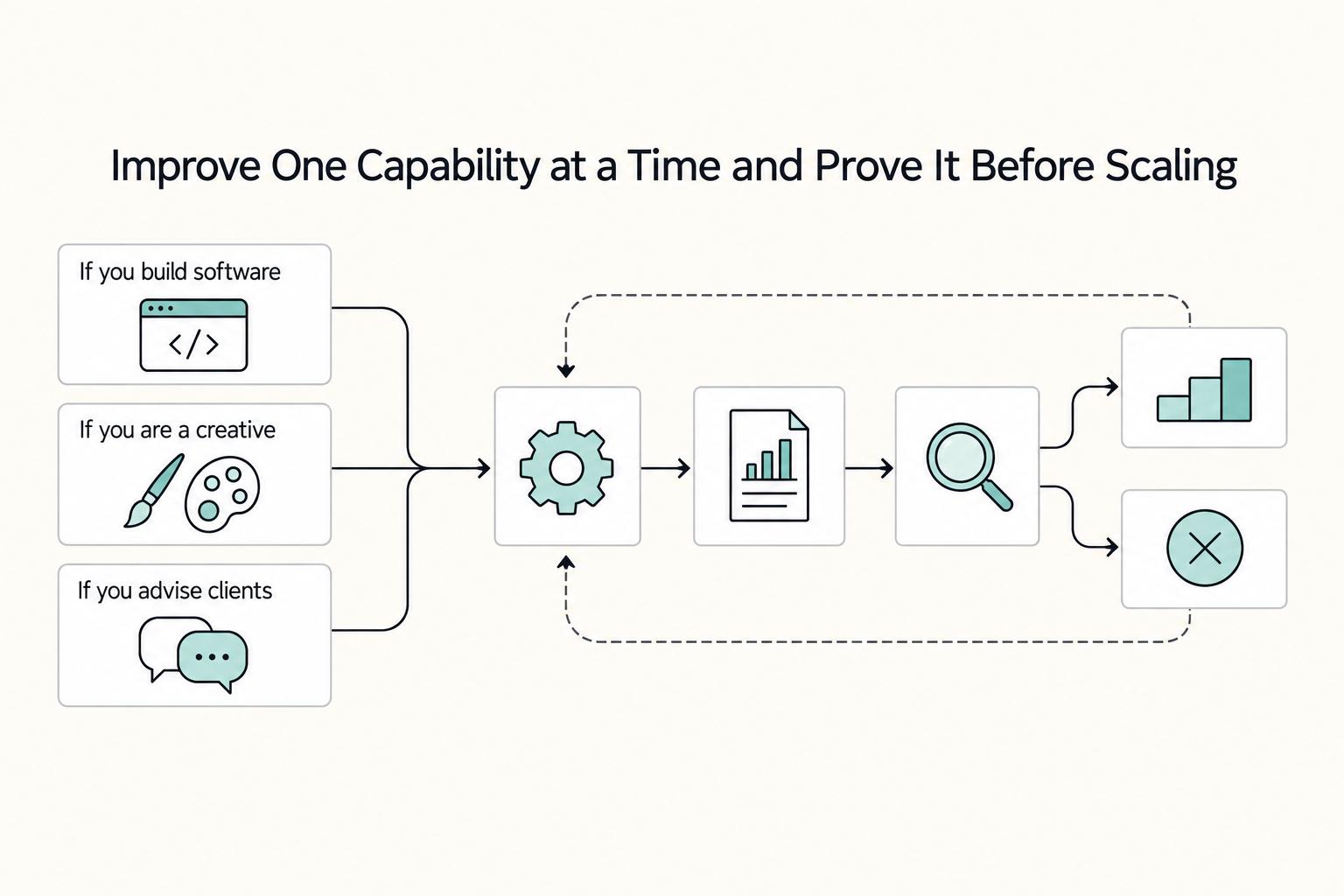
Improve One Capability at a Time and Prove It Before Scaling#
Operate as if cheaper compute will not fix weak decisions. Your practical advantage now is simple: improve one capability at a time, measure against a fixed baseline, and scale only what proves out.
- Track one Moore's Law-related claim against real benchmark results each month.
- Escalate when cost, heat, or latency moves faster than the delivery gain you expected.
The classic Moore's Law pattern was transistor counts doubling about every two years while costs decreased. In this post-Moore phase, density can still improve, but cost declines are less reliable. So your default should be tighter validation, clearer hardware fit decisions, and evidence before rollout.
If you build software#
Start with profiling, not opinion. Before changing code or recommending hardware, capture one representative input shape, one profiler trace, current resource footprint, and a short benchmark note defining the target improvement.
| Priority | Focus | Article note |
|---|---|---|
| 1 | Algorithm | Algorithmic waste often survives bigger instances |
| 2 | Memory | Memory behavior can be the real bottleneck even when work looks compute-heavy |
| 3 | Concurrency | Concurrency issues can cap gains if a hot path stays serial |
| 4 | Deployment target | Choose CPU, GPU, or accelerator only after testing your workload |
Use this order: algorithm, memory, concurrency, deployment target. Then choose CPU, GPU, or accelerator only after testing your workload. Keep a compact decision note with the CPU baseline, candidate hardware result, memory footprint, batch behavior, and any threshold that still needs verification. If the bottleneck is serial logic or memory traffic, parallel hardware alone will not solve it.
If you are a creative or designer#
Your edge is pipeline reliability, not just output quality. Map your flow from ingest to edit to render/inference to export, then identify where work actually stalls: asset waits, reruns, manual cleanup, format mismatches, or compute saturation.
| Area | Item | Why it matters |
|---|---|---|
| Control sample | Source assets | Test changes against a stable baseline |
| Control sample | Render or model settings | Test changes against a stable baseline |
| Control sample | Export settings | Test changes against a stable baseline |
| Control sample | Revision count | Test changes against a stable baseline |
| Control sample | Total turnaround time | Test changes against a stable baseline |
| Handoff standard | Accepted file types | Reduce rework before a render or inference run is treated as complete |
| Handoff standard | Naming | Reduce rework before a render or inference run is treated as complete |
| Handoff standard | Versioning | Reduce rework before a render or inference run is treated as complete |
| Handoff standard | Output settings | Reduce rework before a render or inference run is treated as complete |
| Handoff standard | Prompt/style references | Reduce rework before a render or inference run is treated as complete |
| Handoff standard | Final sign-off criteria | Reduce rework before a render or inference run is treated as complete |
Run one repeatable sample project as your control. Track source assets, render or model settings, export settings, revision count, and total turnaround time so you can test changes against a stable baseline.
Set handoff standards that reduce rework: accepted file types, naming, versioning, output settings, prompt/style references, and final sign-off criteria before a render or inference run is treated as complete.
If you advise clients#
Lead with a cost-performance-risk framework, not a generic modernization pitch.
| Decision check | What you document before approval |
|---|---|
| Cost | Cheapest credible test first, implementation effort, operating cost |
| Performance | Current load profile, baseline result, test result, unresolved threshold |
| Risk | New dependency introduced, rollback plan, ownership after rollout |
Use build-vs-buy reviews with cross-functional input. A co-design approach keeps product, engineering, and operations aligned before platform changes.
When relevant, validate in parallel: simulation proof of concept and physical proof of concept. Model the improvement, then test it in a realistic environment before wider rollout.
Keep architecture reviews grounded in current constraints: as leading-edge chips push against lithography limits, more gains can come from integration choices like advanced packaging and chiplets, not from assuming the next hardware cycle will be cheaper.
Run this checklist monthly:
- Choose one capability to deepen.
- Run one controlled optimization experiment against a fixed baseline.
- Document impact, including what did not improve.
- Roll successful changes into a reusable client offering with an evidence pack.
If you want a deeper dive, read GDPR for Freelancers: A Step-by-Step Compliance Checklist for EU Clients.
Conclusion: From Transistor Reliance to Radical Autonomy#
If you take one thing from this article, let it be this: stop waiting for hardware progress to rescue weak performance decisions. Your advantage now comes from measurable efficiency work, hardware-aware software choices, and better design decisions you can prove on a repeatable input.
That shift matters because the old expectation behind Moore's Law was simple: transistor counts would keep improving on a roughly two-year cadence. The current reality is less automatic. As features move toward a few nanometers, off-state leakage can become a harder constraint, and higher density can increase power and heat pressure. The industry response is broader than shrinkage alone. System-level integration, chiplets, and 3D packaging all matter. The practical lesson is not to predict the next chip curve. It is to verify where the job is actually slow, expensive, or unstable before you recommend code changes or a hardware purchase.
| Decision area | Old assumption | What you should do now |
|---|---|---|
| Where value comes from | New hardware will likely make the problem smaller | Show a measured gain on one fixed workload and one target metric |
| What clients buy | Faster machines or larger budgets | Evidence that you reduced latency, waste, or hardware pressure |
| What skills compound | General upgrade knowledge | Profiling, memory behavior, batching, parallelism, and hardware-aware design |
| How you stay differentiated | Early adoption | Documented results that generic scaling could not deliver |
Keep one representative input, one profiler trace, current resource footprint, and a short before-and-after note. One failure mode is selling the purchase before proving the bottleneck. If the issue is design inefficiency or thermal pressure, newer hardware may only hide it for a while.
What to do now:
- Audit your current stack and name one workload plus one metric.
- Pick one optimization specialty to go deeper on.
- Document every result with a repeatable test and evidence pack.
- Turn those documented wins into clear client offers.
That is where autonomy starts. Not from industry headlines, and not from any guaranteed market shift, but from repeatable operating discipline and specialized capability you can demonstrate. For a step-by-step walkthrough, see What is 'Conway's Law' and how it affects software development.
Frequently Asked Questions
Is Moore's Law really over?
Treat Moore's Law as an observation, not a planning promise. The old shortcut of expecting automatic performance gains is no longer reliable for current work. Verify the impact on your workload with a repeatable benchmark.
What replaces Moore's Law?
There is no single replacement rule in the article. The practical approach is to plan around measured workload behavior, current hardware characteristics, and repeatable before-and-after tests. Start with one baseline, one representative input, and one target metric.
What is the core impact on my career?
Your value comes more from showing where performance gains come from than from simply recommending newer hardware. A strong recommendation includes a representative input, a trace or timing record, the current resource footprint, and a short before-and-after note. The risk is treating hardware purchases as the only fix when another bottleneck dominates.
How does this affect AI and machine learning work?
Do not assume more compute automatically means better workload-level results. Chip-level improvement can look stronger on paper than the real gain on your task. Record a baseline before changing anything.
Will computers and phones stop getting better?
Not necessarily. The better question is whether the new device improves the task you care about on a repeatable sample. If you cannot show a before-and-after result, treat the upgrade claim as unverified.
How do you verify claims without overreacting to headlines?
Use your own benchmark plus one historical reference point. Broad industry claims can help with context, but they do not replace testing your actual workload. If a claim lacks a measured result or a repeatable test, treat it as unverified.
Try a related tool
Researched and edited by the Gruv editorial team. Gruv builds cross-border billing, payouts, and finance-operations software for global businesses.
Sources
- cs.utexas.edu/~lin/cs380p/Free_Lunch.pdftrusted
- e3s-center.berkeley.edu/wp-content/uploads/2019/06/2017_The-End-of-M...trusted
- en.wikipedia.org/wiki/Moore%27s_lawtrusted
- fmu.edu/wp-content/uploads/2024/08/FMU-Handbook-2024...trusted
- ide.mit.edu/sites/default/files/publications/SSRN-id3287...trusted
- lauder.wharton.upenn.edu/wp-content/uploads/2025/01/2025-Lauder-Globa...trusted
- pmc.ncbi.nlm.nih.gov/articles/PMC8372957trusted
- pmc.ncbi.nlm.nih.gov/articles/PMC11461141trusted
Educational content only. Not legal, tax, or financial advice.
Related Posts

GDPR Compliance Checklist for Freelancers Working With EU Clients
Start by separating the decisions you are actually making. For a workable **GDPR setup**, run three distinct tracks and record each one in writing before the first invoice goes out: VAT treatment, GDPR scope and role, and daily privacy operations.
Best Mind Mapping Software for Solo Client Projects
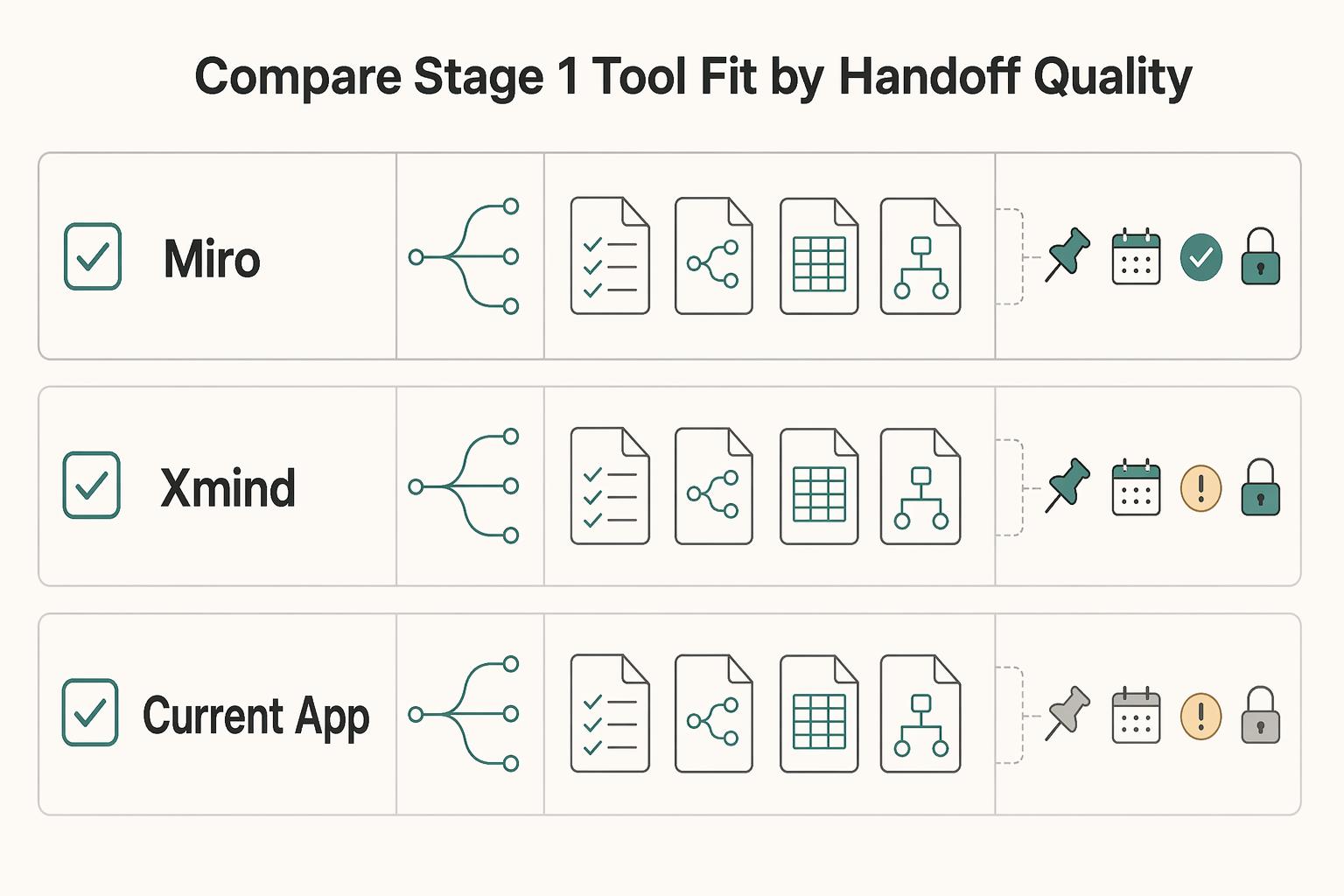
Stop judging mind mapping apps by feature count alone. For client work, the right choice is the one you can use from early scoping through delivery and reuse without scattering context across five other places. Use that lens throughout the comparison. Can the tool help you define the work clearly, run the project from the same source, and turn what you learned into something reusable next time?

The Freelance Payment Penalty: A Modeled Audit of Platform Fees, FX Spreads, and Payout Delays
The money rarely disappears through a single, easy-to-spot fee. The real loss is stacked. A marketplace takes its commission, a processor adds a charge for international cards, a bank or payment company converts the currency at a spread, a platform holds the funds before release, and a wire sheds a little to intermediaries on the way in. Each layer looks defensible on its own, but the worker feels the combined result as a smaller deposit and a later payday.