
Quick Answer
Yes, you can manage local regulations for short-term rentals with a repeatable system: verify legal fit for your exact address, complete required registration and tax setup before publishing, and maintain an ongoing review calendar. Start with municipal code, zoning, and private building rules, then confirm operating records and insurance match the same operator details. In places like New York City, registration with OSE and platform restrictions on unregistered units make pre-listing verification non-optional.
A Guide to Local Regulations for Short-Term Rentals#
If you want risk under control before you list a property, use a three-stage approach. A bad assumption here is not just paperwork. It can leave you with a permit that does not fit your address, a use that fails zoning, taxes handled the wrong way, or platform blocking/removal in cities that restrict unregistered listings.
This guide is built for decisions, not theory. Stage 1 tells you whether the property is legally viable before you invest more time or money. Stage 2 gets you from "possibly allowed" to actually launchable with the right registrations, listing details, and tax setup. Stage 3 keeps you operating without missing renewals, reporting deadlines, or rule changes buried in updated city ordinances or short-term rental laws.
A quick reality check: cities do not use one shared rulebook. San Francisco treats stays of less than 30 nights as short-term residential rentals. Chicago regulates stays of 31 days or fewer through shared-housing registration. New York City requires registration with OSE, while booking platforms cannot process transactions for unregistered units. That is why verification comes before strategy.
| Stage | Objective | Primary tasks | Deliverable |
|---|---|---|---|
| 1. Pre-launch audit | Confirm legal fit | Check local definition, zoning/use rules, building restrictions, residency rules | Go or no-go decision for your address |
| 2. Launch compliance | Get approval to operate | Complete registration or licensing, confirm listing-number rules, set up tax handling | Active, listable property with required filings in place |
| 3. Ongoing compliance | Stay approved over time | Track renewals, reporting, tax remittance, and enforcement updates | Current records and a repeatable review calendar |
One operator rule matters from the start: verify against the live city planning, code, and tax pages, not summaries or old forum posts. If a city requires a registration number in listings, as Los Angeles and Chicago do, treat that as a checkpoint before publishing. If a city changes enforcement posture, as Austin has announced for unlicensed properties starting July 1, 2026, stale advice can quickly affect whether a listing stays live.
With that roadmap in place, Stage 1 starts where it should: verification first, with every local threshold or permit condition added only after you confirm the current rules for your exact property.
Stage 1: The Pre-Launch Regulatory Audit - Protecting Your Asset from Day One#
Do not spend on setup until your address passes a documented audit. Your goal in Stage 1 is simple: confirm whether this exact property is viable under short-term rental laws, city ordinances, zoning, and private building rules, then make a written go/no-go call.
Audit workflow: verify, document, stop on conflict#
| Step | Action | Record |
|---|---|---|
| Map the jurisdiction stack first | Identify the city and any other authority that governs the parcel, then pull the live pages for short-term rental rules, city ordinances, planning, and zoning lookup | Live pages for short-term rental rules, city ordinances, planning, and zoning lookup |
| Build a compliance file while you review | For each item, save URL, access date, page title, and a copy (PDF or screenshot) | URL, access date, page title, PDF or screenshot |
| Tag records as current law vs archive context | Archived council materials can help, but they are not automatically enforceable text | Current law vs archive context |
| Use a hard stop rule | If one confirmed rule blocks your intended use, stop the deal instead of underwriting around assumptions | One confirmed rule blocks your intended use |
Work through it in order:
- Map the jurisdiction stack first. Identify the city and any other authority that governs the parcel, then pull the live pages for short-term rental rules, city ordinances, planning, and zoning lookup.
- Build a compliance file while you review. For each item, save URL, access date, page title, and a copy (PDF or screenshot).
- Tag records as current law vs archive context. Archived council materials can help, but they are not automatically enforceable text.
- Use a hard stop rule. If one confirmed rule blocks your intended use, stop the deal instead of underwriting around assumptions.
A practical example: Rancho Palos Verdes shows an archived City Council record titled "CC SR 20160920 01 - Short-Term Rentals" inside CC Agenda Reports (2016 within a 2010-2019 archive range). Treat that as a record artifact in your file, then open the full text/download before you use it for decisions; the viewer shows text/download actions and multiple pages (at least through page 25).
Compliance cost planning file (before pricing the deal)#
Before you price the deal, put every compliance cost in one file so it shows up in underwriting.
| Cost type | One-time or recurring | Verification source | Owner action |
|---|---|---|---|
| Registration/license filing | One-time, then confirm if ongoing | Official local STR page or application packet | Save filing instructions and fee page |
| Renewal/ongoing registration | Recurring if applicable | Official renewal page or enforceable rule text | Add calendar reminder only after confirmation |
| Tax setup/filing admin | One-time and/or recurring | Official local tax/finance page | Record required filings and cadence after confirmation |
| Zoning/land-use process | One-time if required | Planning page or written staff response | Capture required steps only after official confirmation |
| HOA/condo records retrieval | Usually one-time | HOA manager, association portal, or closing docs | Collect full governing documents and amendments |
| Professional review (if unclear) | Usually one-time | Your selected advisor | Escalate only where documents conflict or remain ambiguous |
HOA/condo checklist: classify what you find#
Classify the documents before you interpret them.
- Enforceable restrictions: clauses that explicitly control rental term length, transient use, or board approval in governing documents.
- Ambiguous clauses (get written interpretation): terms like "commercial use," "hotel use," or similar language without clear treatment of short stays.
- Records to retain: full CC&Rs, amendments, current rules, written board interpretation, and any policy memo/minutes the board relies on.
Zoning and land-use decision grid (parcel-specific)#
Record the parcel result in plain language.
| Status | What it means for your decision | What to record |
|---|---|---|
| Permitted | Use is confirmed as allowed for your parcel, subject to verified local thresholds/process | Confirmation source, any thresholds after official verification, next filing step |
| Conditional | Use may be possible only after additional process/approval | Required process steps, timeline confirmed from the official source, decision gate before launch |
| Prohibited | Use is not allowed for your parcel | Stop decision, date/source of confirmation, alternate strategy note |
Move to Stage 2 only when your file contains complete source evidence, a classified HOA/zoning result, officially verified cost notes, and a written go/no-go conclusion.
Stage 2: The Compliance Gauntlet - Your 90-Day Launch & Liability Shield#
Before you market the property, make sure ownership, insurance, permits, and records all identify the same operator. If names, dates, or approval conditions conflict, stop and resolve the mismatch before you accept a booking.
Keep the liability shield real#
If you use an LLC or similar entity, liability protection is an operating discipline, not a one-time filing.
Liability shield integrity checklist
- Confirm the entity is formed and keep formation records in your core file.
- Keep a dedicated business account and separate business vs. personal spending.
- Maintain operating records (ownership records, key decisions, and approvals).
- Sign contracts and filings in entity form, with title shown (for example,
Entity Name, by Your Name, Manager). - If the title holder, borrower, leaseholder, HOA approval party, permit applicant, and operating entity do not align, escalate to local counsel.
Bind insurance before you market#
Get written confirmation from your carrier or broker on what is covered, what is excluded, and which named insureds and locations appear on issued documents.
| Policy type | Typical exclusion checks | Named-insured alignment |
|---|---|---|
| Existing homeowner or landlord policy | Verify treatment of paid guest activity and related liability/property claims | Match legal name and property details to your active operating records |
| Rental endorsement or hybrid add-on | Verify scope limits for stay type, booking path, or occupancy conditions | Match the same legal person/entity used in permits and contracts |
| Commercial or dedicated rental policy | Verify whether any exposure remains outside base policy scope | Confirm owner, operator, and manager naming is consistent across all files |
Use issued declarations and endorsements as your control documents. Do not rely on quote summaries.
Submit permits in dependency order#
Treat permitting as a workflow, not a pile of forms.
- List prerequisites from the live city packet or portal.
- File only the applications that do not depend on prior approvals.
- Hold dependent filings until required approval numbers or documents are issued.
- If ordinance text, portal instructions, and staff guidance conflict, stop and resolve the conflict in writing before filing further.
Build an audit-ready documentation vault#
Set up records governance now so inspections, disputes, and renewals can be handled from file evidence alone.
- Use a fixed folder taxonomy:
01 Entity,02 Insurance,03 Permits,04 Taxes,05 Communications,06 Renewals. - Use consistent file naming:
YYYY-MM-DD+ status (draft,filed,issued,superseded). - Keep version history so active documents are clear and prior versions remain traceable.
- Maintain a communication log with date, office, staff name, channel, question, answer, and promised follow-up.
- Keep a renewal calendar tied to permits, policies, and internal review checkpoints.
When you track rule updates, save the official register entry and its identifiers. In the New York State Register context, each rule making entry uses a 13-character Rule making I.D. No. and an EA code indicates an emergency rule making that is permanent and does not expire after 90 days.
Move to Stage 3 only after approvals are issued, coverage is active, names align across documents, and your record controls are fully in place.
Stage 3: The Operations System - Automating Compliance & Staying Ahead of Change#
After Stage 2, your main risk is compliance drift. If you cannot show what you collected, what you filed, and why your listing remained permitted, your system is not yet reliable.
Run the tax control loop#
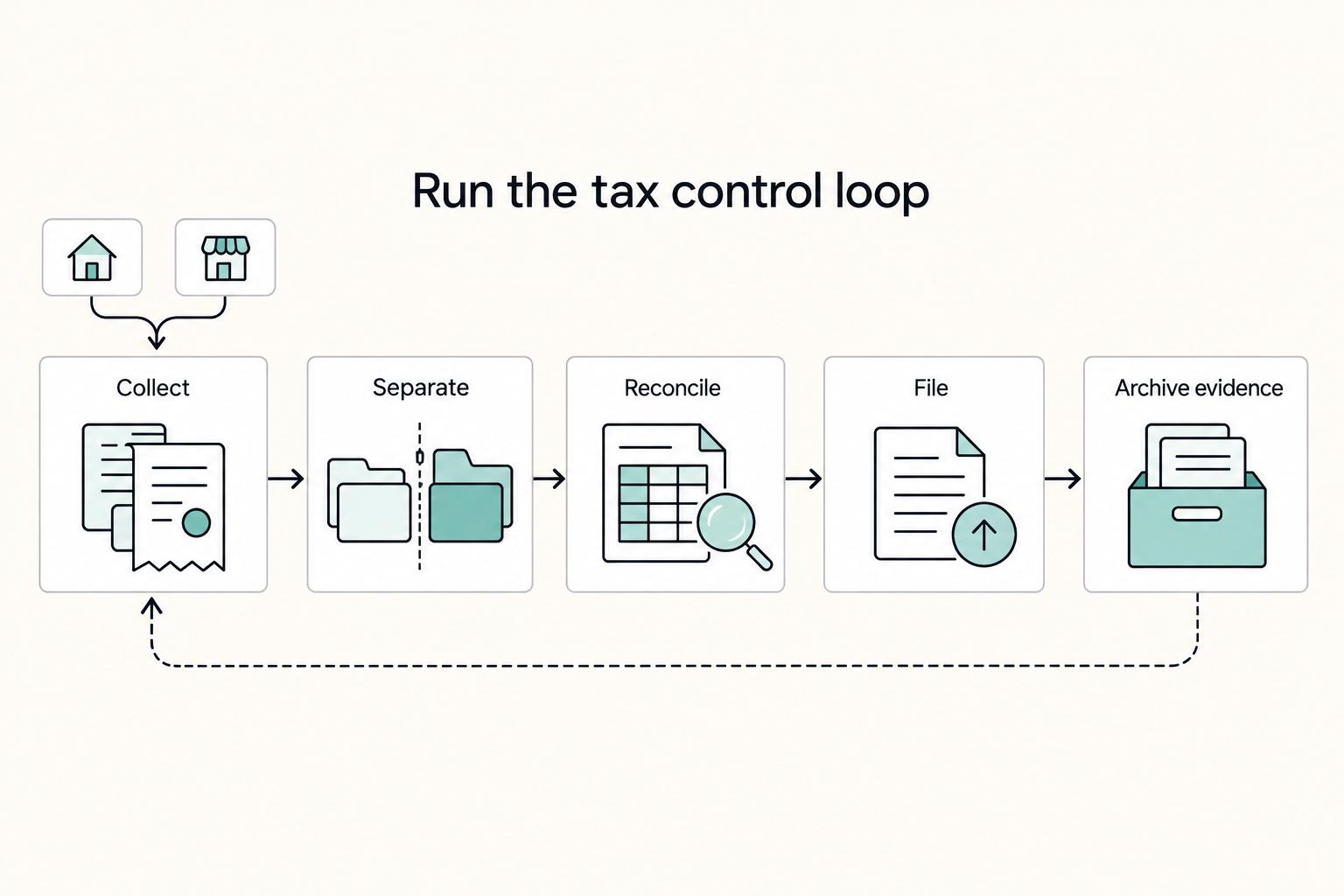
Treat lodging tax as a recurring control loop: collect, separate, reconcile, file, archive. Local and platform responsibilities can split, so do not assume one party handles everything in every jurisdiction.
| Step | What to do | Evidence |
|---|---|---|
| Collect | Collect booking-level tax data from platform charges, direct charges, and amounts actually withheld | Platform charges, direct charges, amounts actually withheld |
| Separate | Separate tax funds from operating cash in a dedicated account or clearly segregated ledger | Dedicated account or clearly segregated ledger |
| Reconcile | Reconcile booking exports, payout statements, tax settings, and your ledger for each filing period | Booking exports, payout statements, tax settings, ledger |
| File | File on the live jurisdiction cadence | Confirm the current filing cadence with the local tax authority |
| Archive evidence | Archive evidence so another person can re-create the return from source records alone | Return, payment confirmation, booking export, platform statement, submitted form copy |
In practice, run it in this order:
- Collect booking-level tax data from platform charges, direct charges, and amounts actually withheld.
- Separate tax funds from operating cash in a dedicated account or clearly segregated ledger.
- Reconcile booking exports, payout statements, tax settings, and your ledger for each filing period.
- File on the live jurisdiction cadence after you verify it.
- Archive evidence so another person can re-create the return from source records alone.
Your file set should include the return, payment confirmation, booking export, platform statement, and submitted form copy. Keep this tight because some workflows explicitly require retaining copies, and obligations may exist at multiple layers (state and local). In New York, state and local sales tax applies to short-term rental occupancy effective March 1, 2025, and New York City also applies a $1.50 per unit per day unit fee.
Choose tooling for proof, not convenience#
Automation can reduce repeated manual work, but it does not remove your duty to verify tax drivers, filing duties, and remittance ownership.
| Approach | Setup effort | Error risk | Audit trail quality | Fallback if automation fails |
|---|---|---|---|---|
| Manual spreadsheet + calendar reminders | Low initially, higher each cycle | Higher when platform/host duties split | Depends on your file discipline | Rebuild from booking exports, payout reports, prior returns, and bank records |
| Software-assisted workflow | Moderate setup and verification | Lower for repeat calculations, still settings-dependent | Strong if reports and confirmations are saved | Keep manual filing instructions and portal access ready before due dates |
| Hybrid (software + monthly manual review) | Highest upfront discipline | Lowest practical risk for many operators | Strongest when system output and reviewer sign-off are both saved | File manually from the latest reconciled ledger and archived exports |
If software says a tax was remitted, verify it against the platform's policy language and the current jurisdiction workflow, not only a settings screen.
Build a regulatory watchlist with trigger-based escalation#
Use a watchlist so you monitor changes continuously without re-reading everything every week.
- Official tax and licensing agency pages
- Platform policy updates for tax collection/remittance
- Local planning/council hearing notices and posted agendas
- State-level pages affecting booking services or accommodations intermediaries
Escalate to your accountant or lawyer when you see a trigger: proposed ordinance changes, platform remittance-language changes, new local tax layers, renewal notices, or conflicts between your filing history and current portal instructions. This matters because operating without required licensing can be unlawful in some jurisdictions.
Keep an audit-ready periodic review checklist#
| Review area | Owner | Required records | Pass/fail criteria | Corrective-action status |
|---|---|---|---|---|
| Tax filings and remittance | You or bookkeeper | Returns, payment confirmations, booking exports, platform statements | All required filings submitted on verified cadence, including zero returns where required | Open until missing filings are submitted and archived |
| License and registration status | You or local manager | Active license/registration records, renewal dates, agency correspondence | Status active and renewal dates current | Open until renewal/correction is confirmed |
| Insurance and monitoring controls | You + broker/advisor | Current declarations, endorsements, watchlist log, relevant notices | Coverage active and monitoring checks completed on schedule | Open until policy or legal follow-up is complete |
Keep records at least 3 years under IRS baseline guidance, and longer where an exception applies (including 7 years for certain loss-claim cases). That is what turns Stage 3 into an ongoing governance system for hosting compliance, short-term rental laws, and changing city ordinances.
For a step-by-step walkthrough, see The Best Software for Managing Short-Term Rentals.
The Cross-Border Challenge: Managing Your Rental Legally From Another Country#
If you own abroad, do the treaty workflow first and property operations second. Your main risk is filing or launching before you confirm who taxes the rent, how double-tax relief works for your country pair, and who handles local compliance when you are in another time zone.
Map taxing rights before the first filing#
Start with tax residency. Treaty position depends on residency under the applicable treaty, and if both countries treat you as resident, tie-breaker rules are used to assign treaty residence. For real-property rental income, the property country may tax that income, but your home-country relief method can differ (credit, exemption, or reduced rate) based on the exact treaty article.
| Step | Focus | Result |
|---|---|---|
| Determine residence status | Determine your residence status under domestic law and the treaty | Treaty residence |
| Map source-country taxing rights | Map source-country taxing rights for the rental income | The property country may tax that income |
| Confirm the relief method | Confirm the relief method your residence country allows | Credit, exemption, or reduced rate |
| Obtain a Certificate of Residence | Obtain a Certificate of Residence if required to claim relief | Certificate of Residence |
| Get written adviser sign-off | Get written adviser sign-off before filing in either country | Written adviser sign-off |
Use this sequence:
- Determine your residence status under domestic law and the treaty.
- Map source-country taxing rights for the rental income.
- Confirm the relief method your residence country allows.
- Obtain a Certificate of Residence if required to claim relief.
- Get written adviser sign-off before filing in either country.
Your checkpoint should be a short memo that records the treaty pair, residence conclusion, article reviewed, relief method, and filing obligations. If you are U.S.-based, do not assume your state return follows the federal treaty result; state treatment is not uniform.
Report at home with the right form set#
If you are a U.S. person, worldwide income still applies even when the property is overseas. Report rental real-estate income or loss on Schedule E (Form 1040). If rental-related foreign accounts exceed an aggregate maximum value of $10,000 at any point in the year, FBAR (FinCEN Form 114) may be required. Form 8938 is separate, and filing Form 8938 does not remove FBAR obligations. Foreign real estate itself is not a specified foreign financial asset for Form 8938.
If you are not U.S.-based, use the same workflow with your home-country rules. UK guidance says residents normally pay UK tax on worldwide income, while non-residents generally pay UK tax only on UK income; it also allows relief where income is taxed in more than one country. Canada guidance says a federal foreign tax credit may be available for foreign taxes paid on income reported in Canada. Verify local filing triggers from current authority guidance or qualified local counsel before you rely on them.
Pick a management model based on auditability, not just convenience.
| Operating model | Compliance control | Response speed | Documentation quality | Oversight burden |
|---|---|---|---|---|
| Self-managed from abroad | Lower, because control and execution sit with one person | Slower when in-person response is needed | Inconsistent unless you enforce strict monthly records | Highest |
| Local contact plus owner control | Moderate to strong when duties are written | Faster on urgent local issues, owner keeps approvals | Strong if logs and receipts are delivered on schedule | Moderate |
| Local manager-led | Strong in day-to-day execution, but only with active owner review | Usually fastest | Ranges from strong to weak based on reporting discipline | Lower day-to-day, higher audit duty |
Make the local team auditable#
Remote ownership works when each role has named duties, handoff rules, and required records. Keep final approval for license renewals, tax filings, and regulator responses, and require your local team to produce records you can audit remotely.
Set escalation paths in writing. If a city requires rapid local response, put that SLA into the contract. In San Diego, a designated local contact must respond within one (1) hour, and STRO activity records must be retained for four (4) years. In New York City, hosts must register, platforms are blocked from unregistered transactions, and entire-home rentals for fewer than 30 days are not allowed.
Before you treat your cross-border setup as stable, verify these controls:
- Treaty memo is saved with adviser sign-off and any Certificate of Residence.
- Home-country reporting file is complete, including Schedule E or local equivalent, plus any FBAR or other foreign-account filing.
- Local contact terms match live city ordinances, including response windows and update duties.
- Monthly archive includes license records, tax filings, complaint logs, payout reports, and handoff notes so documentation survives team changes.
You might also find this useful: The Pros and Cons of Short-Term vs. Long-Term Rentals.
Conclusion: From Anxious Host to Confident Asset Manager#
If you keep only one idea from this guide, make it this: treat short-term rental rules as something you document and re-check, not something you assume once and forget. That is how you get fewer legal surprises, cleaner records, and a faster response when rules move.
Start with Audit. Before you list or renew, verify how your city defines a short-term rental and what local lodging-tax threshold applies. In the Utah guide referenced here, an STR is often defined as a stay of less than 31 consecutive days. Transient room tax applies to stays of fewer than 30. Your local threshold may differ. Run a safety audit too: confirm secure locks, smoke and carbon monoxide detectors, emergency exits, and fire extinguishers. If you skip those checks, you increase the odds of avoidable accidents or claims.
Then Shield. Make sure your listing details and operating records match the way you actually run the property. Keep names, addresses, and responsible contacts consistent across your records. Also lock and clearly mark any private or owner-only areas so guests do not access spaces you never meant to include.
Finally, Systematize. Rules and tax guidance can change after publication, so put your tax filings and city-rule checks on a calendar instead of relying on memory.
| Approach | What it looks like |
|---|---|
| Reactive hosting | You check rules after a complaint, renewal notice, or platform issue |
| Managed hosting | You keep dated records, verify local stay/tax thresholds, and review city and tax guidance on a set cadence |
| Result | Faster fixes, cleaner evidence, and less scrambling when city ordinances change |
Your next step this week is simple: run the audit checklist, close any documentation or safety gaps, and set a recurring compliance review. That is the shift from uncertainty to control.
Frequently Asked Questions
What should be on your short-term rental compliance checklist?
Start with a go or no-go file before you publish anything. Confirm the city definition, zoning or ordinance rule, permit or registration status, tax registration, insurance requirement, and any private restrictions. Check the municipal code, permit office page, tax authority page, your lease, and HOA governing documents, then save a dated PDF or screenshot of each rule before you act. | Source | Use it for | Reliability | |---|---|---| | Official municipal code portal or city licensing page | Legal definition, zoning, registration, renewals | Highest | | City tax authority page | Lodging or hotel occupancy tax registration and filing duties | High | | Platform help center | Orientation and issue spotting only | Limited | | Third-party blog or forum | Background only | Low |
How do you find the actual city rules fast?
Go to the primary source first, not the platform summary. Search your city name plus “municipal code,” “short-term rental,” “zoning,” and “business licensing,” then confirm with the permit office if the text is unclear. Denver explicitly tells applicants to read the ordinance under “Municipal Code,” and Airbnb itself says its list is not exhaustive and it does not provide legal advice.
What counts as “short-term” in local regulations for short-term rentals?
It is not uniform. Your city’s definition controls eligibility, taxes, and whether a license is required. Austin defines an STR as a residence rented for less than 30 consecutive days, while Denver describes it as one to 29 days. Verify the live local definition before you choose your minimum stay setting.
What happens if you host without approval?
The practical risk is bigger than a fine. A city may fine you or revoke your license, and platform activity can be restricted in some jurisdictions. Denver says noncompliant hosts could be fined or could lose their license, and Austin says that on July 1, 2026 it will begin requesting removal of unlicensed properties from STR platforms. Confirm enforcement posture with the city before launch.
Can you manage from another country and still stay compliant?
Yes, but only if you build a local response path and a clear tax compliance plan. If you are unavailable, some cities require a local responsible party; Denver says to identify one who can address issues at the property. Keep your manager agreement and tax registration records organized, and verify the current rule before you act.
Does an LLC fully protect you?
No. A single-member LLC is generally disregarded for federal income tax unless you elect otherwise, so entity formation does not replace licensing, insurance, or tax compliance. Check business bank separation, insurance terms, and local permit or registration requirements. Treat the LLC as one layer, not the whole shield.
Can your HOA or lease block hosting even if the city allows it?
Yes. Private documents can independently bar or limit STR use. Check CC&Rs, rules, board policies, and your lease or occupancy agreement; NYC also maintains a Prohibited Buildings List and says a host must not be prohibited by a lease or other agreement. Get the restriction in writing, notify the HOA where required, and verify the current rule before you act.
Try a related tool
Researched and edited by the Gruv editorial team. Gruv builds cross-border billing, payouts, and finance-operations software for global businesses.
Sources
- austintexas.gov/development-services/short-term-rentalstrusted
- austintexas.gov/services/apply-short-term-rental-licensetrusted
- cor.virginiabeach.gov/businesses/short-term-rentalstrusted
- documents.rpvca.gov/WebLink/DocView.aspxtrusted
- irs.gov/individuals/international-taxpayers/tax-trea...trusted
- irs.gov/taxtopics/tc414trusted
- luau.utah.gov/wp-content/uploads/Short-Term-Rentals-Guide-...trusted
- miami.gov/Permits-Construction/Short-Term-RentalLodgin...trusted
Educational content only. Not legal, tax, or financial advice.
Related Posts

Germany Freelance Visa Application Path for Freiberufler and Gewerbe
Choose your track before you collect documents. That first decision determines what your file needs to prove and which label should appear everywhere: `Freiberufler` for liberal-profession services, or `Selbständiger/Gewerbetreibender` for business and trade activity.
Taxes in Germany for Freelancers and Expats
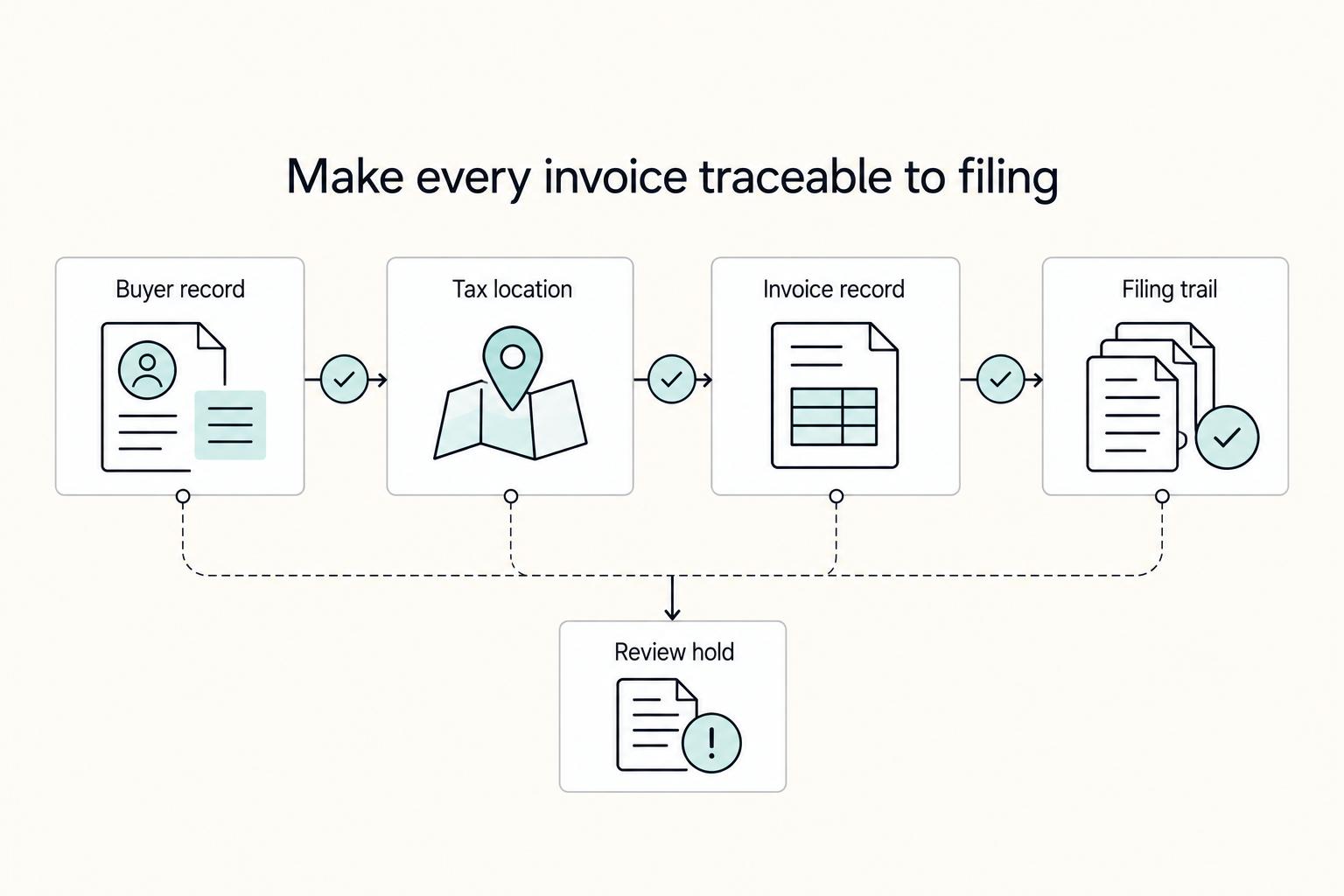
Low-stress compliance in Germany comes from decision order, not tax tricks. Use this sequence: confirm core facts, apply conservative temporary assumptions, verify the few points that can break invoices or filings, and keep one evidence file that explains each decision.
The Pros and Cons of Short-Term vs. Long-Term Rentals
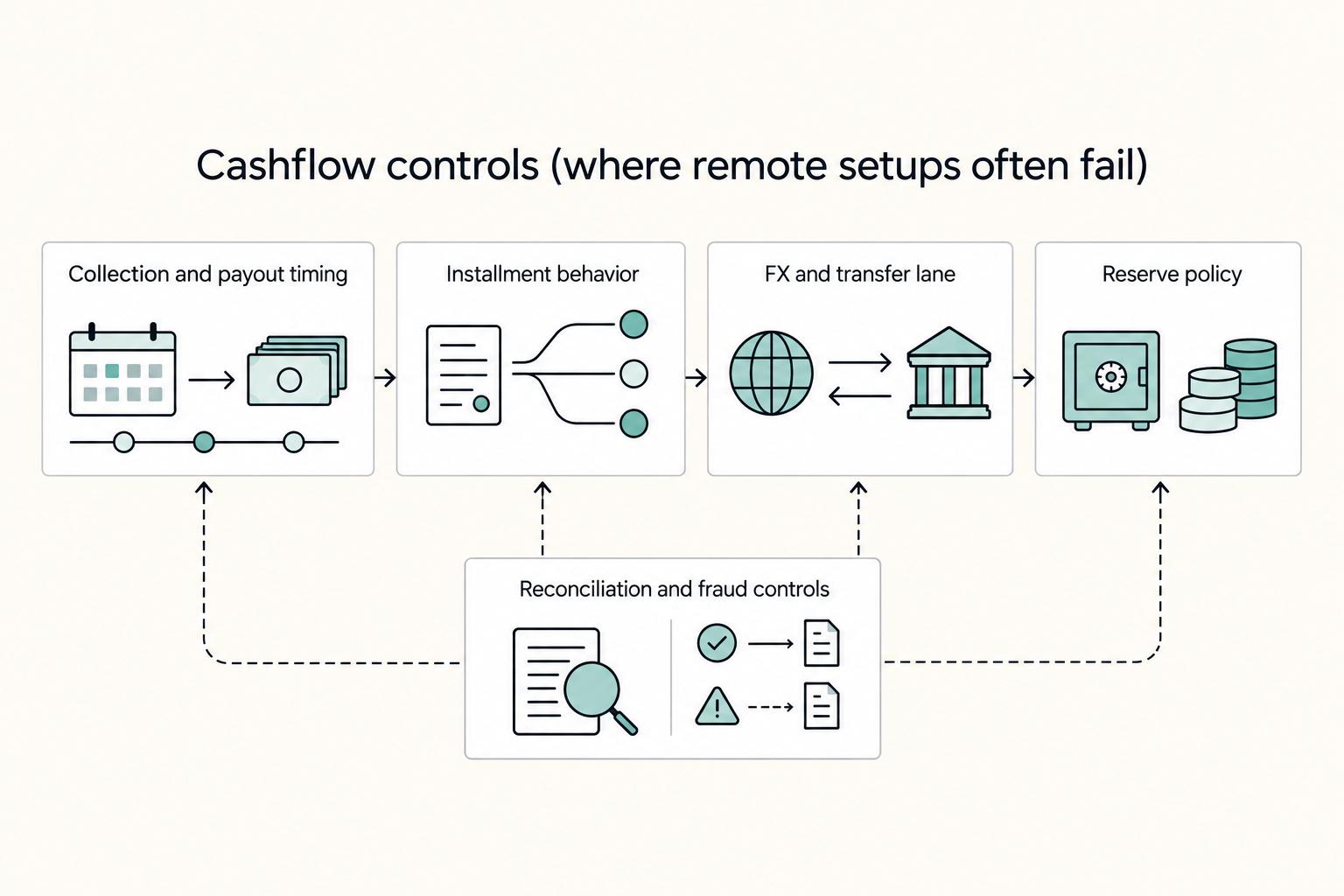
You are probably not chasing the biggest headline revenue number. You want rent that arrives, stays collected, and does not turn into a second job or a cross-border tax headache. For an owner living internationally, the real choice between a short stay and a long-term lease is about risk first. Which model gives you lower compliance exposure, less remote operating drag, and more cash left after fees, taxes, and reporting?