
Quick Answer
Negotiate the LOI by locking down the terms that are costly to reopen later, especially price structure, diligence access, exclusivity, conditions to closing, and which clauses bind now. Draft first if possible, label binding and non-binding provisions clearly, and tie exclusivity to defined economics, access, and milestones so vague language cannot box you in during diligence.
Before the Fine Print: Why the LOI is Your Most Powerful Negotiation Tool#
If you treat the LOI as a formality, you can give up ground before due diligence begins. It sets the deal's tone, expectations, and negotiation boundaries. Anything you leave vague now is harder to fix later.
Most LOIs are hybrid documents. Core business terms are usually non-binding, while selected clauses are often meant to bind right away. In practice, those carve-outs commonly include confidentiality, exclusivity (no-shop), expenses, and governing law or venue.
For LOI in M&A execution, use a minimum 5-point control set before signing: price structure, binding carve-outs, exclusivity duration, diligence scope, and conditions to closing. If one point is unresolved, label it as open risk instead of softening it in drafting language.
Before you sign, check enforceability under the chosen jurisdiction and make sure the LOI clearly states that closing depends on a later definitive agreement. Without that guardrail, an overly complete draft can create accidental binding risk.
| Approach | Control | Leverage | Diligence risk | Re-trade exposure |
|---|---|---|---|---|
| Treat LOI as template | Counterparty frames assumptions and process | Can drop after signature, especially for sellers | More unresolved issues can spill into diligence | Can be higher, because missing points get reopened |
| Treat LOI as negotiation instrument | You define scope, timing, and priorities early | Can improve your position on economics and process | More major issues are addressed before diligence spend | Can be lower, though diligence can still support changes |
Redlines are also a quality test. A credible buyer avoids sweeping "subject to diligence" language or broad financing outs that undercut credibility. A credible seller negotiates exclusivity length carefully and pushes to lock material economics before exclusivity starts.
If the other side dodges comments, reopens settled points, or pushes for a long no-shop, treat that as process risk. Handle the binding carve-outs as if they were already in the purchase agreement. Exclusivity is often negotiated tightly. In some deals, 30 to 45 days can be a reference point, but not a universal rule.
Before diligence starts, lock these points. For a related walkthrough, see A Guide to Selling Your Freelance Business or Agency. If you want stronger clause language discipline before first circulation, review The Ironclad International Freelance Contract: 10 Clauses You Cannot Ignore.
- Buyer: exclusivity length, diligence access scope, core price mechanics, and narrowly drafted diligence or financing conditions.
- Seller: exact consideration mix, key structural terms, limits on exclusivity, confidentiality protections, and clear definitive-agreement language.
Seizing Control: Who Should Draft the LOI and Why It Matters#
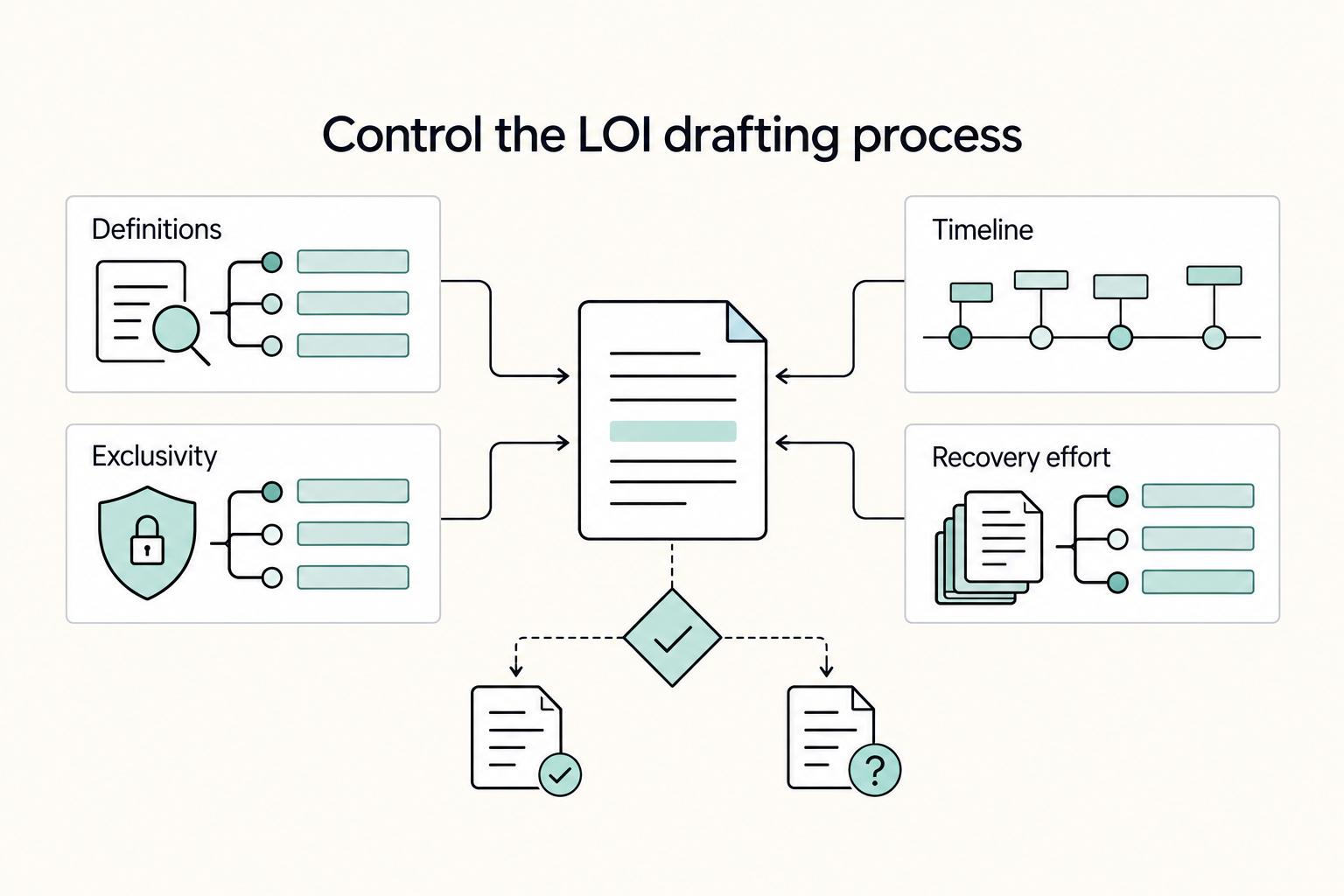
The side that drafts first often sets the frame. Drafting first does not guarantee the outcome, but it often lets you set definitions, process order, and opening anchors that the rest of the negotiation must answer.
That matters because the LOI often becomes the baseline for later negotiation and purchase-agreement drafting. Your first draft can frame purchase price, financing terms, contingencies, the closing path, and what must happen before diligence access expands. Have counsel review it before circulation, and confirm which clauses are intended to bind under the governing jurisdiction.
| Point of control | You draft first | Counterparty drafts first |
|---|---|---|
| Definitions | You set initial wording for core terms and reduce ambiguity early | You inherit their wording and must unwind embedded assumptions |
| Timeline and process | You propose sequencing for diligence, comments, and signing steps | Their sequence becomes default unless you reset it |
| Exclusivity framing | You decide whether and how exclusivity appears, and when it starts | You are often negotiating against a prewritten no-shop |
| Effort to recover ground | Often lower, because your paper is the baseline | Often higher, because redlines can leave their structure intact |
Use the diligence gateway as a real checkpoint. The LOI often marks when sensitive information starts flowing, so define the scope and staging of access before data sharing begins. If that stays vague, each side can work from a different assumption and create delays that were easy to avoid.
If the other side sends the first draft#
Do not rely on line edits alone. Start by pulling the draft apart and deciding whether it can be fixed or needs to be replaced.
- Build an issue list first. Pull out the business and process assumptions, including economics, diligence access, contingencies, exclusivity, and binding versus non-binding treatment.
- Rank redline priorities. Separate must-haves from points you can trade.
- Set fallback positions. For each major term, define your preferred wording, acceptable fallback, and walk-away concern.
- Escalate to a full counter-LOI when needed. If the structure is one-sided, for example broad no-shop language, vague diligence rights, or unclear binding treatment, send a clean counter draft instead of patching theirs.
Terms to lock early#
- Key definitions that will carry into later drafting
- Purchase price, financing terms, and contingencies
- Closing path and major process milestones
- Scope and timing of diligence access
- Exclusivity construct, if used, and trigger conditions
- Clear binding versus non-binding labels
- Confidentiality, no-hire, or break-up fee clauses, if included
The common failure mode is not dramatic. It is quiet misalignment. A document that looks agreed but reflects different assumptions can slow the process and create disagreements later on.
How Sellers Lock In Value, Timing, and Downside Before Exclusivity#
As a seller, you are not just chasing a higher headline number. You want certainty on value, timing, and downside before you hand over exclusivity.
Use the LOI to secure that certainty before you give a no-shop. Do not accept exclusivity until the buyer has committed enough detail for you to evaluate value, timing, and risk. Make sure the draft clearly labels what binds now and what does not.
Hold exclusivity on your terms#
Treat exclusivity as earned. It should start only after the draft includes a clear price breakdown, deal structure, and a diligence plan with dated milestones. Tie the exclusivity period to that plan, not to a general promise to move quickly.
At LOI stage, label binding carve-outs explicitly. Confidentiality, expenses, governing law, and exclusivity are commonly drafted as binding, while broader transaction terms are often non-binding unless stated otherwise. If the labeling is vague, you invite later disputes over what is enforceable.
| Issue | Buyer-favored draft outcome | Seller-protective draft outcome |
|---|---|---|
| Exclusivity | No-shop starts immediately and runs on the buyer's timetable | No-shop starts only after defined economics and a dated diligence calendar are agreed |
| Headline price | One number masks escrow, holdbacks, contingent value, or financing risk | Price is broken out into cash at close, escrow or holdbacks, earn-out, rollover equity, and other contingent consideration |
| Earn-out | High-level metrics with broad buyer control post-close | Performance metrics, milestone measurement, and dispute mechanics are set up front |
| Seller financing | Deferred payment appears without firm timing or default triggers | Principal, interest, payment timing, default events, and acceleration points are identified before signing |
| Confidentiality and diligence use | Broad access with weak use limits | Use limits and tighter controls for contracts, IP, pricing, plans, and cost data are explicit |
| Governing law and forum | Left for later | Governing law, dispute forum, and cross-border payment mechanics are addressed in the LOI |
Break consideration into real money, not slogans#
If all cash is not paid at closing, force each piece of value into the LOI. Split the consideration into cash at close, escrow or holdbacks, earn-out, rollover equity, seller financing, and any other contingent component. That lets you see what is certain and what depends on later events.
| Component | What to define |
|---|---|
| Cash at close | Timing and deductions; what is paid at closing, what is deferred, and what can be held back |
| Escrow or holdbacks | Break them out as separate parts of consideration |
| Earn-out | Performance metric, how milestone achievement is measured, and dispute-resolution mechanics |
| Rollover equity | Treat it as continuing exposure rather than cash-at-close certainty |
| Seller financing | Principal, interest, payment timing, default triggers, and acceleration events |
For cash, confirm timing and deductions. State what is paid at closing, what is deferred, and what can be held back. For earn-outs, draft tightly. Define the performance metric, how milestone achievement is measured, and dispute-resolution mechanics.
For rollover equity, treat it as continuing exposure, not cash-at-close certainty, before you value it as part of the purchase price.
For seller financing, set hard checkpoints. Put principal, interest, payment timing, default triggers, and acceleration events in the LOI. Also review buyer-type risk. Financial buyers are more likely to propose financing, earn-outs, and rollover components, so evaluate the mix, not just the headline figure.
Lock down cross-border risk before diligence expands#
If the deal crosses borders, do not leave enforceability and payment mechanics for later. Those issues shape real value.
| Risk area | What to address |
|---|---|
| Governing law and dispute forum | Address them at LOI stage rather than leaving them for later |
| Court litigation | Confirm whether an exclusive court clause is intended to fit the Hague Choice of Court Convention framework (in force since 1-X-2015) |
| Arbitration | Assess enforceability planning under the New York Convention framework (in force since 7 June 1959) |
| Payment mechanics | Specify payment currency and FX conversion method, especially for deferred payments |
| Sensitive diligence data | Limit use to deal evaluation and tighten access controls for contracts, IP, pricing, strategic plans, and cost data |
| EU personal data transfers outside the bloc | Check adequacy first; if no adequacy decision applies, require appropriate safeguards |
Address governing law and dispute forum at LOI stage. For court litigation, confirm whether an exclusive court clause is intended to fit the Hague Choice of Court Convention framework (in force since 1-X-2015). For arbitration, assess enforceability planning under the New York Convention framework (in force since 7 June 1959). Do not assume either path is automatically enforceable everywhere.
Define payment mechanics as economic terms. Specify payment currency and FX conversion method, especially for deferred payments.
Control data and IP exposure during diligence. Diligence commonly includes contracts and IP. In competitor deals, pricing, strategic plans, and cost data are especially sensitive. Limit use to deal evaluation and tighten access controls. For EU personal data transfers outside the bloc, check adequacy first. If no adequacy decision applies, require appropriate safeguards.
Pre-sign LOI seller checklist#
- Confirm your walk-away triggers before you return the draft: vague consideration, open earn-out mechanics, undefined deferred-payment terms, or an overbroad no-shop.
- Require a fully broken-out consideration structure, not only a headline number.
- Mark confidentiality, exclusivity, expenses, and governing law as binding if you want LOI-stage enforceability.
- If the buyer is a competitor or cross-border party, narrow diligence scope and control handling of sensitive data, contracts, and IP.
- If value depends on future events, lock dispute path and payment timing before exclusivity narrows your options.
You might also find this useful: How to Use a Letter of Intent (LOI) in a Freelance Engagement. Before you sign exclusivity, tighten your confidentiality language with this NDA generator so use restrictions are explicit.
How Buyers Tie Each LOI Clause to a Real Risk#
As a buyer, a strong LOI is not about asking for everything. It is about tying each request to a real risk and making the seller show whether the process can support the deal.
Use the draft to buy clarity, not just speed. The safest version ties each clause to a specific concern: price risk, information risk, execution risk, or legal risk.
In competitive processes, timelines are tight and information is often incomplete. Your job is to state what you need, when you need it, and what happens if cooperation or data quality breaks down.
| Issue | Buyer-protective LOI language | Seller-favoring LOI language | Main risk controlled |
|---|---|---|---|
| Exclusivity scope | Exclusivity is tied to clear diligence access, timeline milestones, and cooperation expectations | Broad no-shop starts quickly while access, timing, and cooperation remain vague | Execution risk |
| Closing conditions | Closing is tied to satisfactory diligence, any stated financing dependency, adverse-change language, and key personnel continuity needs | Conditions are generic, narrow, or deferred to later drafts | Price risk and information risk |
| Diligence access | Access is defined by category: financials, contracts, liabilities, litigation, IP, compliance records, and key personnel | Access is general, delayed, or subject to broad seller discretion | Information risk |
| Non-cooperation response | Escalation contacts and response windows are defined, with clear decision points if access is blocked | Only a general cooperation statement appears | Execution risk |
Secure exclusivity only when it buys you something concrete#
Exclusivity is only valuable if it produces access and momentum. Ask for it after you show a credible valuation range, preliminary structure, funding sources, and an estimated diligence timeline. That level of specificity tests fit quickly and can force an early no-go when value expectations are too far apart.
Before accepting a no-shop, confirm who opens the data room, who coordinates management access, and what information comes first. If you are running multiple targets, check your own internal capacity honestly so exclusivity time is usable.
Build conditions to closing around your real downside#
Build conditions around actual downside, not generic drafting habits.
| Condition area | What to include |
|---|---|
| Downside change triggers | Identify what types of changes would require reassessment and what information you would need |
| Financing dependency | If funding is required, say so clearly and identify funding sources at a high level |
| Key personnel continuity | Identify the critical roles or people and the retention or transition commitments you need |
| Disclosure quality | Require disclosures and diligence materials to be complete enough to evaluate the business and not misleading in material respects |
State those points directly in the LOI rather than leaving them to later drafts.
If process speed leaves real uncertainty, decide early whether reps and warranties insurance is part of your fallback plan.
Control timeline risk with tiered diligence#
Do not promise exhaustive pre-LOI diligence if the process will not support it. A tiered approach is more credible and more useful. Use Tier 1 for critical items such as financials, legal exposure, customer contracts, compliance, and key personnel. Put deferrable items in Tier 2 and post-close cleanup in Tier 3.
- Set a
T+0milestone for data room access and designated deal leads. - Set a
T+7milestone for first redline pass on price mechanics, exclusivity, and conditions to closing. - Set a
T+14milestone for confirming whether unresolved Tier 1 diligence items require price, structure, or timing changes.
Then anchor the process with milestones: data room live date, first management session, first definitive-agreement draft, and decision dates for open issues. If Tier 1 items are late or incomplete, escalate immediately through the named deal leads.
Define diligence access for cross-border reality#
"Full access" is too vague to protect you. Request diligence by category: liabilities, problem contracts, litigation, IP risks, compliance records, and operating personnel.
For cross-border deals, identify which country-specific legal and compliance points still need verification, and reflect that uncertainty in the draft timeline and diligence plan.
Where a local rule or contract trigger is not verified yet, mark the item as pending verification and assign an owner before signing.
Pre-sign buyer checklist#
- Confirm what is binding now and what is non-binding.
- Confirm the escalation path if diligence is blocked: named contacts, response timing, and whether you can pause or walk.
- Confirm walk-away triggers before definitive agreements: missing Tier 1 diligence, unresolved financing dependency, unclear disclosure quality, broken key-person assumptions, or unverified cross-border consent risk.
For a step-by-step walkthrough, see A Guide to Non-Disclosure Agreements (NDAs) for M&A.
From Document to Deal: Wielding Your LOI with Confidence#
Signing the LOI is not the end of negotiation. It is the point where your paper either starts controlling the deal or starts getting diluted by drift.
Once it is signed, run the transaction from the LOI. Due diligence starts, and any term you left undefined can be drafted in the buyer's favor later.
Turn the LOI into an execution map. Assign each major term to an owner, a verification step, and a fallback position. For price, document the assumptions behind the number and what diligence finding would justify any change. For exclusivity, confirm who owns access, what information must be delivered, and what happens if cooperation slows.
For closing conditions and unresolved points, keep one written issues list covering items such as employment and earn-out terms. Give each item a drafter and a target resolution date.
| Post-LOI priority | Buyer focus | Seller focus |
|---|---|---|
| Diligence focus | Test value assumptions and identify findings that could support a term change or exit | Control data quality, respond consistently, and surface issues early before trust erodes |
| Exclusivity management | Use exclusivity to secure real access and momentum, not just time on paper | Manage the tradeoff closely, since exclusivity can weaken your position once the business is off the market |
| Closing-condition discipline | Tie requests to signed LOI terms and actual diligence findings | Push back on new conditions that were not in the signed deal path unless they are supported by real findings |
| Re-trade boundaries | Reopen economics only with a documented diligence basis | Reject vague re-trade arguments and require specific findings before discussing price movement |
Use this deal-drift checklist to keep control.
- Set a fixed communication cadence and send a written action list after each call.
- Keep one unresolved-issues log instead of scattered threads across emails and drafts.
- Escalate red flags quickly when diligence uncovers material problems or a closing condition starts slipping.
- Bring counsel in before positions harden, especially where wording may make part or all of the LOI binding.
Deals can still derail after signing. Diligence findings, regulatory delays, and term disputes can all break momentum. Your position comes from disciplined follow-through on LOI terms, not from the document alone.
When you move from LOI to closing operations, use Gruv Payouts for compliance-gated cross-border payments with clear status tracking and audit-ready records.
Frequently Asked Questions
What are the biggest mistakes to avoid in an LOI?
The biggest mistakes are vague language, "agree to agree" wording, and failing to label which clauses bind now. Tighten any unclear price, process, or diligence language before signing. For exclusivity, spell out the access, timing, and cooperation expected during the exclusivity period.
Should the buyer or the seller draft the LOI?
If you can, draft first so you can set the structure, definitions, and process early. The first draft does not control the outcome by itself, so review each clause for what binds now versus later. If you receive the other side's draft, focus on price mechanics, exclusivity scope, closing conditions, and governing law and forum before responding.
How do you negotiate a letter of intent?
Negotiate the terms that are costly to revisit later, especially price structure, diligence access, exclusivity, and conditions to closing. Put each critical point in operational language that says who must deliver what, by when, and what happens if they do not. If those points stay vague, treat that as deal risk rather than a drafting style issue.
Is the purchase price in an LOI legally binding?
Usually no, but the text should say so clearly instead of leaving it to assumption. In U.S. private deals, LOIs are often non-binding on core business terms while selected clauses can still be binding. Make the price section expressly non-binding, separate any binding provisions, and record the diligence assumptions behind the number.
How does an LOI differ from a term sheet?
The label alone does not control risk. LOIs and term sheets can serve similar purposes, and either can be non-binding overall while still containing specific binding carve-outs. Before agreeing, verify the binding language, missing definitions, timelines, responsibilities, governing law, forum, and local enforceability assumptions.
When does re-trading become a real problem?
Re-trading usually becomes a problem when economics change without a clear diligence basis. Even if economics are non-binding, reopening price without specific diligence findings creates negotiation risk. If terms change, tie the change to documented diligence findings.
When should you involve a lawyer?
Involve counsel before the first draft goes out or before you mark up the other side's draft. That is when counsel can separate binding from non-binding language and reduce enforceability surprises. In cross-border deals, plan for both U.S. and local counsel early so governing law and forum assumptions are checked before signing.
Do cross-border deals change how careful you need to be at LOI stage?
Yes. Cross-border deals can change governing law, forum, payment mechanics, data handling, and enforceability assumptions, so those issues should be addressed at LOI stage rather than left for later. Confirm early who is handling local-law issues and whether the dispute clauses fit the transaction. If U.S. antitrust filing risk is in scope, date-qualify your assumptions.
Try a related tool
Researched and edited by the Gruv editorial team. Gruv builds cross-border billing, payouts, and finance-operations software for global businesses.
Sources
Includes 3 external sources outside the trusted-domain allowlist.
- commission.europa.eu/law/law-topic/data-protection/international-...trusted
- commission.europa.eu/law/law-topic/data-protection/international-...trusted
- ftc.gov/enforcement/competition-matters/2018/03/avoi...trusted
- uncitral.un.org/en/texts/arbitration/conventions/foreign_arb...trusted
- cozen.com/news-resources/publications/lois-in-m-a-tran...external
- heritagelawwi.com/loi-vs-term-sheet-what-should-buyers-useexternal
- kitces.com/blog/ria-sale-buy-sell-merger-acquisition-le...external
Educational content only. Not legal, tax, or financial advice.
Related Posts

Germany Freelance Visa Application Path for Freiberufler and Gewerbe
Choose your track before you collect documents. That first decision determines what your file needs to prove and which label should appear everywhere: `Freiberufler` for liberal-profession services, or `Selbständiger/Gewerbetreibender` for business and trade activity.
A Freelancer's Guide to Retargeting Campaigns
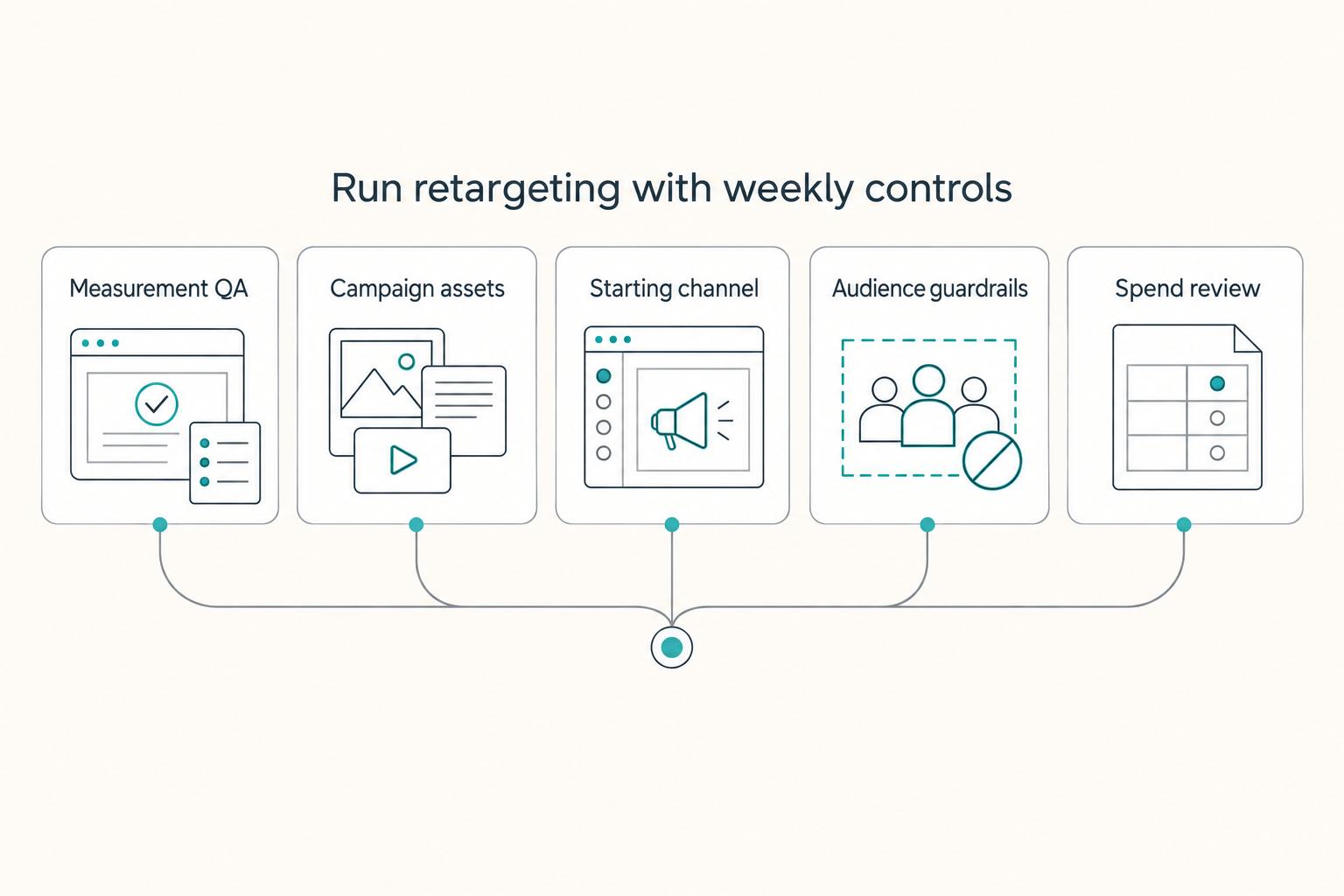
**Run retargeting for freelancers like a system, not a pile of ad tweaks, so you control budget, reputation, and measurement.** You are not here for a fuzzy definition. You are here for a workflow that makes the next decision obvious, even when the data looks noisy. As the CEO of a business-of-one, your job is to turn paid acquisition into a controlled process, not a recurring surprise.
A Guide to Selling Your Freelance Business or Agency
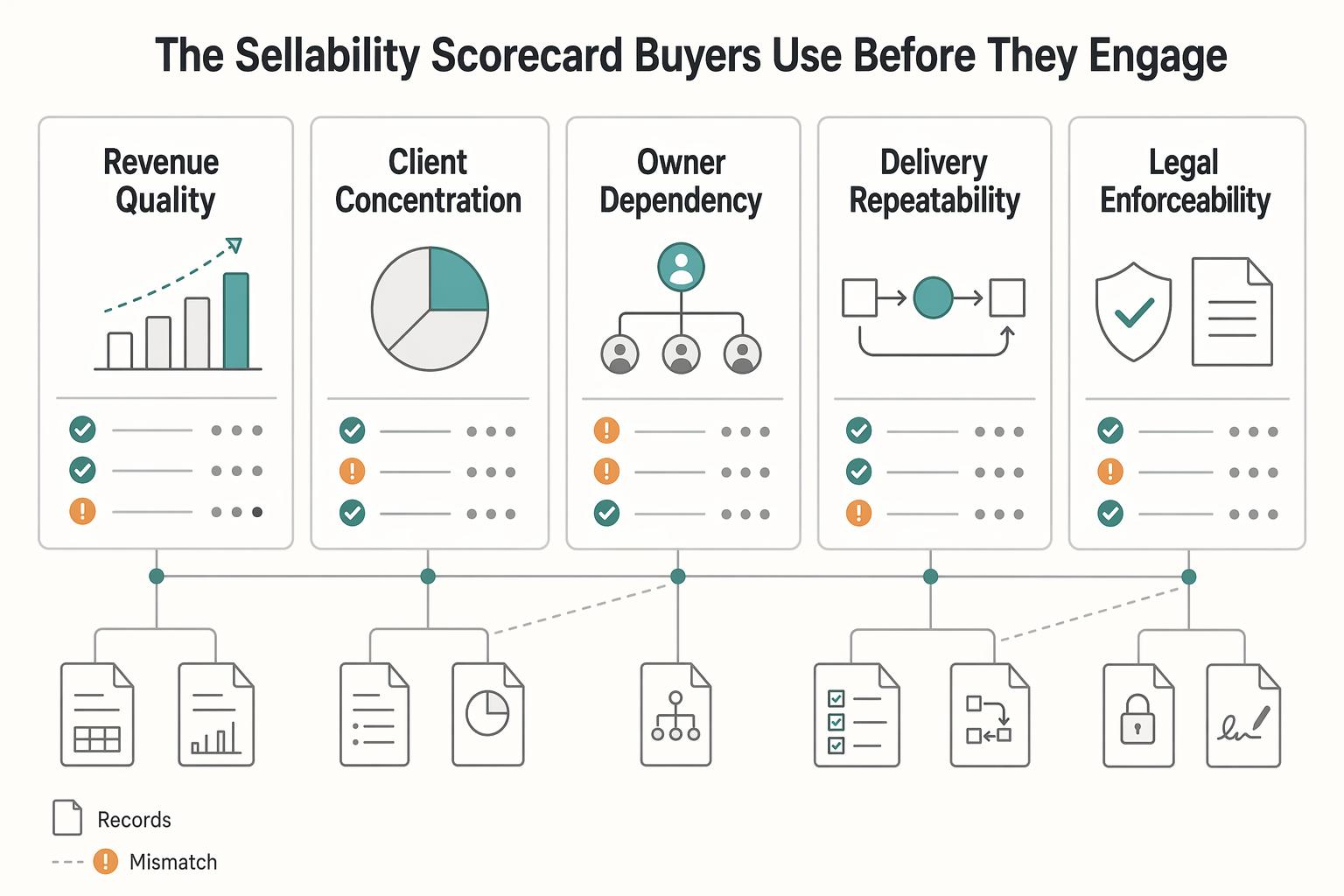
**When you sell your freelance business, buyers are paying for a reliable asset they can verify, transfer, and run, not for your personal hustle.** A common mistake is mixing advice about winning clients with advice about closing an acquisition. Those are different jobs. This guide is a sellability-to-close playbook designed to reduce surprises before buyer conversations begin.