
Quick Answer
For remote owners, landlord-tenant laws by state matter because small procedural mistakes can delay enforcement, rent collection, or both. Before leasing, set up a verified local representative, a state and city registration check, a documented notice protocol, and one named owner of compliance tracking. Then track deposits, entry, disclosures, deadlines, and proof in one dashboard.
Why Standard Landlord Advice Fails the Remote Investor#
A lot of landlord advice assumes you are local, reachable, and able to handle legal and physical tasks yourself. If you own from another state or country, that assumption breaks quickly. The real risk is not inconvenience. It is missed notice windows, mishandled service, unverified registration gaps, and delayed enforcement when something goes wrong.
That is why landlord-tenant laws by state matter more for you as an operator than as a casual reader. This area is built from state statutes, local ordinances, common law, and sometimes federal rules, so generic advice starts out weak. Eviction procedure alone varies enough across jurisdictions to change outcomes. A tactic that works in one city can fail in the next county.
| Local owner assumption | Remote owner reality | What you must systemize |
|---|---|---|
| "I can just post or deliver notice when needed." | Notice rules may require specific delivery methods, timing, and proof. In some contexts, service is not effective until multiple notice steps are completed. | A written notice protocol with approved methods, who sends, same-day logging, and proof capture. |
| "If there is a lawsuit, I'll know." | Service of process is formal legal notice. If papers go to the wrong address or no one is available locally, you can miss critical case notices. | A verified local representative or registered agent, current address records, and escalation rules for same-day forwarding. |
| "I only need to worry about the lease." | Some states require an out-of-state entity to qualify before doing business, and some jurisdictions require rental licensing or unit registration before renting. | A pre-listing compliance check for entity qualification, city licensing, unit registration, and renewal dates. |
| "If I mess up paperwork, I can fix it later." | In some cities, licensing or registration status affects whether you can collect or even demand rent. | A compliance tracker with status, renewal cadence, responsible person, and stored proof of approval. |
A few examples show how expensive stale assumptions can be. Texas requires domestic and foreign filing entities to maintain a registered agent and office. Delaware states that registered agents must generally be present at their designated location during normal business hours to accept service of process. Philadelphia requires a Rental License to rent units, and city code ties at least some landlord remedies to a valid rental license. Seattle requires landlords to register all rental housing units and renew every 2 years. Los Angeles warns that owners who fail to register are not permitted to accept or demand rent. Not every jurisdiction works this way, but enough do that you need to verify, not assume.
Your practical risk model is simple:
- Vacancy exposure:
[days vacant or delayed possession] x [gross daily rent] - Legal process drag: filing delays, service mistakes, hearing scheduling, and re-service if your first notice was defective
- Carrying-cost pressure: mortgage, taxes, insurance, HOA, utilities, and maintenance during delay
- Coordination overhead: local agent visits, counsel time, document chasing, and vendor scheduling across time zones
One more red flag: federal notice rules can move quickly. HUD's 2024 30-day nonpayment notice rule was revoked effective March 30, 2026, and notice periods for covered HUD programs can range from 5 to 30 days depending on state and local law. If your process is based on an old article or an old property manager template, you can be wrong without realizing it.
Before you lease, put four basic controls in place: a verified local representative, a state and city registration check, a documented notice protocol, and one named owner of compliance tracking. The next section turns those controls into something you can actually monitor.
The State Compliance Dashboard: Mastering Your Asset's Key Metrics#
Build one dashboard before you market the unit or send a lease for signature. With landlord-tenant laws by state, the operational failure is usually control, not intent: no named owner, no review date, and no proof record.
Use this as a control sheet, not a legal memo. For each line item, assign who verifies it, when it is reviewed, what triggers action, and which file proves completion. There is no standard rental agreement, so you need line-by-line verification of completed blanks, checked boxes, and initials before signing.
| State | Deposit rule | Return rule | Entry notice standard | Registration requirement | Last verified |
|---|---|---|---|---|---|
| California | Current deposit cap and any local overlay | Current return deadline and itemization rule | Current entry notice standard and permitted-hours rule | State or local registration status, if required | Date of last state and local rule check |
| Texas | Current deposit return deadline and forwarding-address rule | Current deduction and notice standard | Current entry and service procedure | Entity, agent, and local registration status, if required | Date of last state and local rule check |
| New York | Current deposit handling and local overlay | Current return deadline and delivery standard | Current entry rule for the property locality | State and city registration or contact status, if applicable | Date of last state and local rule check |
Security deposit#
Track this as a checklist item with ownership and evidence, not as a memory task.
- What to track: deposit amount rule, required lease wording on amount and purpose, and move-out return/accounting rule.
- What triggers action: new lease, renewal, any change affecting deposit terms, and move-out notice.
- What proves compliance: signed lease page with deposit amount/purpose, collection record, and move-out disposition file.
Do not mark this bucket complete until the rule has been verified as current and the Last verified field is updated.
Right of entry#
Treat entry as a notice-and-recordkeeping workflow every time.
- What to track: notice standard for routine entry, emergency entry, showings, and vendor access.
- What triggers action: inspection, repair, appraisal, showing, or any planned visit.
- What proves compliance: notice sent, delivery record, work order, and same-day entry log.
Require the written rule and the exact notice template used in practice before you close this item.
Lease disclosures#
Handle disclosures as a pre-signing completeness gate.
- What to track: each required disclosure and every lease field that must be completed before signature.
- What triggers action: each new lease packet and each form revision.
- What proves compliance: final signed packet and a complete, exact copy stored before occupancy.
Read the lease carefully before signature review, including every checked box, initial block, and blank field that controls term completeness.
One state override note: city or county rules can be stricter than the state baseline, so capture both levels before lease signing.
Use this dashboard as your control sheet for pre-lease setup, in-tenancy operations, and move-out closeout in the lifecycle checklist section that follows.
Related: How to Invest in Real Estate as a Digital Nomad.
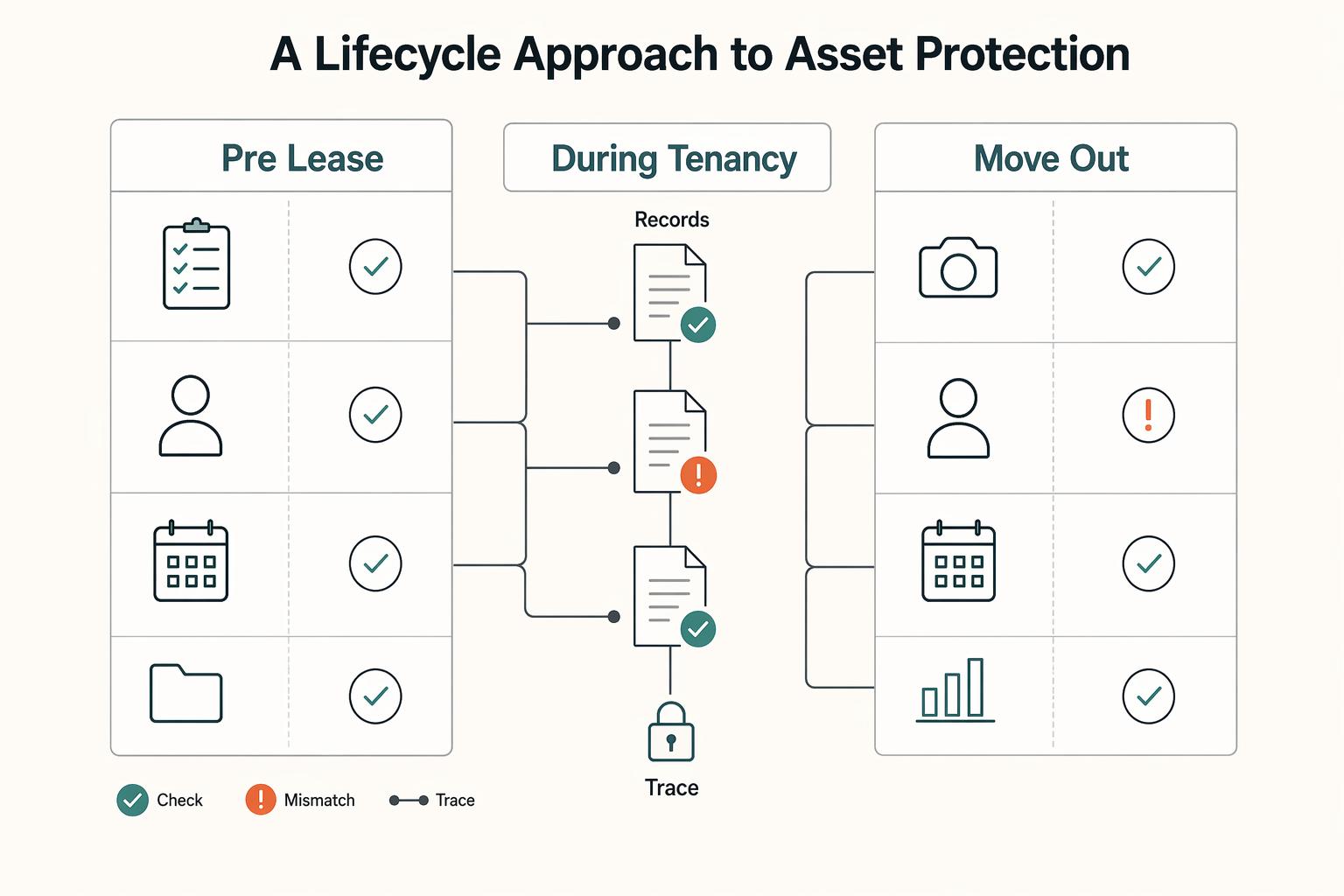
The Proactive Risk Mitigation Checklist: A Lifecycle Approach to Asset Protection#
Use this checklist to turn your dashboard into assignable controls your team can execute and audit. For each task, track four fields: required input, responsible party, trigger event, and proof artifact.
| Stage | Required inputs | Responsible party | Trigger event | Proof artifact |
|---|---|---|---|---|
| Pre-lease | Current state and local rule check, screening criteria, registration status, local-agent or service contact details, final lease packet | Owner or compliance lead, with property manager for execution | Before listing, before accepting an application, before lease signature | Registration confirmation, written screening criteria, pre-screening disclosure if required, adverse action notice file, signed lease copy |
| During tenancy | Maintenance contacts, emergency number, notice templates, and the documented local response window | Property manager or local agent, with owner escalation for legal notices | Repair request, habitability complaint, inspection, rent notice, formal demand | Incident log, notice log, work order, vendor invoice, delivery proof, entry record |
| Move-out | Move-in condition file, deposit ledger, verified deadline, deduction standards, delivery method rules | Property manager prepares, owner reviews before funds release | Notice of move-out, surrender of possession, final inspection | Photo set, inspection checklist, itemized deductions, invoices or estimates, mailing or service proof, completion log |
Pre-lease#
Set two gates before listing: compliant screening and verified registration/contact authority. Use a written screening workflow applied consistently, and align it with Fair Housing Act protected classes (race, color, national origin, religion, sex, familial status, and disability). If you use a consumer report and deny, condition, or price based wholly or partly on that report, send the required adverse action notice. In some jurisdictions, disclosure starts earlier; Washington, for example, requires written notice of screening criteria before obtaining applicant information.
| Jurisdiction | Requirement | Timing or note |
|---|---|---|
| Washington | Written notice of screening criteria | Before obtaining applicant information |
| New York City | Annual property registration | Due by September 1; HPD uses registration contact information for official notices |
| Seattle | Rental-unit registration and inspection | Renewal every 2 years; inspection at least once every 5-10 years |
Then verify state and local registration, licensing, and who is authorized to receive legal notices before marketing the unit. This matters because some cities use registration contacts for official notifications. In New York City, annual property registration is due by September 1, and HPD uses registration contact information for official notices. Seattle also requires rental-unit registration, renewal every 2 years, and inspection at least once every 5-10 years. If lease notice contacts and registration contacts do not match, fix that before listing.
During tenancy#
Treat incident handling as a single tracked workflow, not scattered messages. Require one intake path for maintenance and habitability issues, and keep maintenance-reporting and emergency contacts in rental documents. Log address, unit, timestamp, intake owner, reported condition, supporting photos (if available), and the documented local response window. This aligns with statutes that require defect notices to identify the premises, owner (if known), and nature of the condition; Washington is one example.
| Priority | Issue type | Required action |
|---|---|---|
| Priority 1 | Habitability-critical issues | Dispatch immediately and log escalation |
| Priority 2 | Material fixture/appliance outages | Assign vendor, target date, and follow through to close |
| Priority 3 | Routine issues | Acknowledge, schedule, and record completion |
Use a lightweight triage framework:
- Priority 1: habitability-critical issues. Dispatch immediately and log escalation.
- Priority 2: material fixture/appliance outages. Assign vendor, target date, and follow through to close.
- Priority 3: routine issues. Acknowledge, schedule, and record completion.
Track formal notices as a separate control. Where statutes prescribe delivery methods, keep the exact notice, method used, send date, and proof of service.
Move-out#
Run move-out as a defensible sequence: evidence capture, deductions, compliant delivery, and closeout log. Start by comparing move-out condition evidence to move-in records, then separate normal wear from chargeable damage. If your jurisdiction gives a pre-inspection right, include that written notice in your offboarding packet. California is an example: tenants must be told in writing they can request a pre-inspection.
Prepare deductions with itemized support, not broad labels. California requires an itemized statement of what was deducted and why; if deductions exceed $125.00, invoices/receipts are generally required, with a 14-day follow-up for receipts after good-faith estimates. Oregon provides a different model: written accounting stating the basis of the claim within 31 days after tenancy termination and possession delivery. California uses 21 days for return or statement after move-out. Keep the property-location deadline and evidence standard in your control sheet.
Review this checklist at least quarterly, and again after any law change, property-manager change, or lease-template update.
Your Remote Management Clause Library: Bulletproofing Your Lease from Abroad#
Your lease has to do more than sound complete. Before you sign, set each clause so it is state-valid, enforceable, and usable by your local team when notice, payment, access, or court issues arise.
| Clause area | Default gap | Remote clause focus | Counsel check |
|---|---|---|---|
| Local agent or service contact | They assume the owner is always reachable. | The service contact you will use, the scope of that contact's authority, and how updates are documented. | Whether local appointment language is required, allowed, or better handled outside the lease for that location. |
| Official communications | They treat one channel as sufficient for every notice. | Which messages can run by email/portal and which must follow statutory service rules. | Current notice form and service requirements for the property location (for Washington checkpoints, see Chapter 59.18 RCW and 59.18.057). |
| Rent collection and late-fee workflow | They include a payment channel but no receipt or escalation control. | Accepted payment methods, receipt process, and nonpayment follow-up path. | Receipt obligations (for Washington checkpoint, 59.18.063). Any fee limits or timing rules must be verified separately. |
| Cooperation for access, inspections, and showings | They rely on generic "reasonable access" language. | Tenant cooperation duties with your manager after proper notice. | Entry and showing rules for the exact state/local jurisdiction. |
| Governing law, venue, and notice-method hierarchy | They use broad forum language and leave method conflicts unresolved. | Property-state law governs, with venue rules verified for the exact jurisdiction; if statute requires a method, that method overrides email/portal. | Court-jurisdiction and notice-process requirements for the property location (Washington checkpoints: 59.18.050 and 59.18.058). |
Local agent or service contact#
Why it matters: If legal papers cannot reliably reach your side, your process breaks at the worst moment. Proof of compliance: Signed lease language, named contact record, and the current process for updating that contact.
Official communications#
Why it matters: Communication channels fail when the lease treats email as universal but state notice rules require something else. Proof of compliance: Notice log with method used, copy sent, date, and delivery evidence.
Rent collection and late-fee workflow#
Why it matters: Collection disputes are harder to defend when receipts and escalation steps are not explicit. Proof of compliance: Payment ledger, receipt file, and documented nonpayment workflow actions.
Cooperation for access, inspections, and showings#
Why it matters: Remote operations stall when tenant cooperation is vague. Proof of compliance: Entry/showing notices, scheduling records, and completion log.
Governing law, venue, and notice-method hierarchy#
Why it matters: Generic forum and notice language can conflict with local landlord-tenant rules and create enforceability risk. Proof of compliance: Counsel-approved clause version, venue check memo, and notice hierarchy mapping in your operations SOP.
Run this clause audit before each lease cycle:
- Confirm the template version, named contacts, and manager workflows match your current records.
- Confirm the correct state and local addenda are attached for that address.
- Confirm counsel has rechecked any clause tied to notice, venue, payment handling, or communication method order.
For a step-by-step walkthrough, see A Guide to Security Deposit Laws by State.
From Anxious Landlord to Confident Asset Manager#
You do not need to memorize every rule; you need a monthly control routine that shows what applies, what changed, and what you can prove.
Start with your state dashboard. For each property, track the jurisdiction stack, the exact source link, whether the source is official or guidance, the last verified date, the next deadline, and the trigger for legal review. Treat source status as a control point: FederalRegister.gov states its prototype content is unofficial and says legal researchers should verify against an official Federal Register edition, with the official PDF linked through govinfo. Apply the same filter to agency guidance. The EEOC states its sub-regulatory guidance does not have the force and effect of law, and it notes that Groff v. DeJoy, 143 S. Ct. 2279 (2023), supersedes contrary information on that page.
Then run each tenancy in phases. Before listing, confirm registration or filing status, confirm the current lease version, and flag any city or court overlay for counsel review. During the tenancy, log notices, maintenance, payment issues, and accommodation requests in one file. At move-out, your file should already contain the signed lease, ledger, photos, notice copies, mailing or service proof, and manager notes.
| Reactive landlord behavior | Asset-manager behavior |
|---|---|
| Relies on a summary page or old screenshot | Stores the official source link, source status, and last verification date |
| Reuses one generic lease everywhere | Reviews lease terms against the property's real communication, payment, and manager workflow |
| Builds records only after a dispute starts | Maintains lease, ledger, notices, photos, and proof of delivery from day one |
In the next 30 days:
- Check entity, landlord, and local registration or status items for each address.
- Build one deadline tracker for notices, renewals, inspections, and deposit handling.
- Review your lease agreement against current payment, communication, and manager practices.
- Set one documentation process so every notice, photo, ledger update, and proof of delivery lands in the same folder.
Frequently Asked Questions
What are the key legal risks for an out-of-state landlord in New York?
In New York, the main risk is procedural failure. A lawful eviction requires a court proceeding and a judgment of possession, and self-help force is not allowed. In NYC, only a marshal or sheriff can initiate the warrant step, so keep a complete file and verify the current notice, service, and court-step rule for the exact county or town.
How do I create a legally compliant lease for a remote landlord?
Use one counsel-approved template for each property jurisdiction and version-control it. Attach the correct state and local addenda, and pair the lease with a written notice matrix, payment procedure, and accommodation intake log so the document matches your real operation. Send it back to counsel whenever you change manager, payment channel, communication method, or property city.
How many days does a landlord have to return a security deposit in Texas?
The article does not give a fixed Texas deadline and says you should verify the live statute before relying on any summary. Check the current deposit return deadline, itemization rule, and forwarding-address requirements, then collect the tenant's forwarding address and keep deduction backup, mailing proof, and move-out photos in one file. If eviction is involved, have counsel recheck current Property Code and Justice Court procedure.
What is the maximum security deposit a landlord can charge in California?
The article does not give a fixed California maximum and says you should verify the current cap before marketing the unit. Local rent protections may be stronger than the state baseline, so confirm the current state rule plus any city or county rent control, rent stabilization, or just-cause overlay. Keep unit facts and any potential exemption details in your compliance file.
How much notice does a landlord need to give before entering in Florida?
In Florida, treat entry as a written-notice issue first. Use a standard written entry notice, retain copies of correspondence, and save delivery proof in the tenant file. Then verify the current entry notice timing, permitted-hours rule, and any local overlay, and if move-out is near, confirm the live deposit-claim notice timing.
What are my responsibilities under the Fair Housing Act as a remote landlord?
Your Fair Housing Act duties are the same whether you live nearby or overseas. The Act bars discrimination based on race, color, national origin, religion, sex, familial status, and disability, and it requires reasonable accommodations in rules, policies, practices, or services when required by disability. Standardize screening criteria, log accommodation requests, send adverse action notices when a consumer report contributes to a denial or harsher terms, and ask counsel to review ad copy, exceptions, repeated denials, and disputes early.
Try a related tool
Researched and edited by the Gruv editorial team. Gruv builds cross-border billing, payouts, and finance-operations software for global businesses.
Sources
- ag.idaho.gov/content/uploads/2025/08/LandlordTenant.pdftrusted
- app.leg.wa.gov/rcw/default.aspxtrusted
- app.leg.wa.gov/rcw/default.aspxtrusted
- corp.delaware.gov/faqs-regarding-registered-agentstrusted
- dre.ca.gov/publications/ResourceGuidebook/gb07_when.htmltrusted
- eeoc.gov/laws/guidance/section-12-religious-discrimin...trusted
- fdacs.gov/Consumer-Resources/Landlord-Tenant-Law-in-Fl...trusted
- federalregister.gov/documents/2020/09/24/2020-19887/huds-impleme...trusted
Educational content only. Not legal, tax, or financial advice.
Related Posts

Germany Freelance Visa Application Path for Freiberufler and Gewerbe
Choose your track before you collect documents. That first decision determines what your file needs to prove and which label should appear everywhere: `Freiberufler` for liberal-profession services, or `Selbständiger/Gewerbetreibender` for business and trade activity.
How to Invest in Real Estate as a Digital Nomad
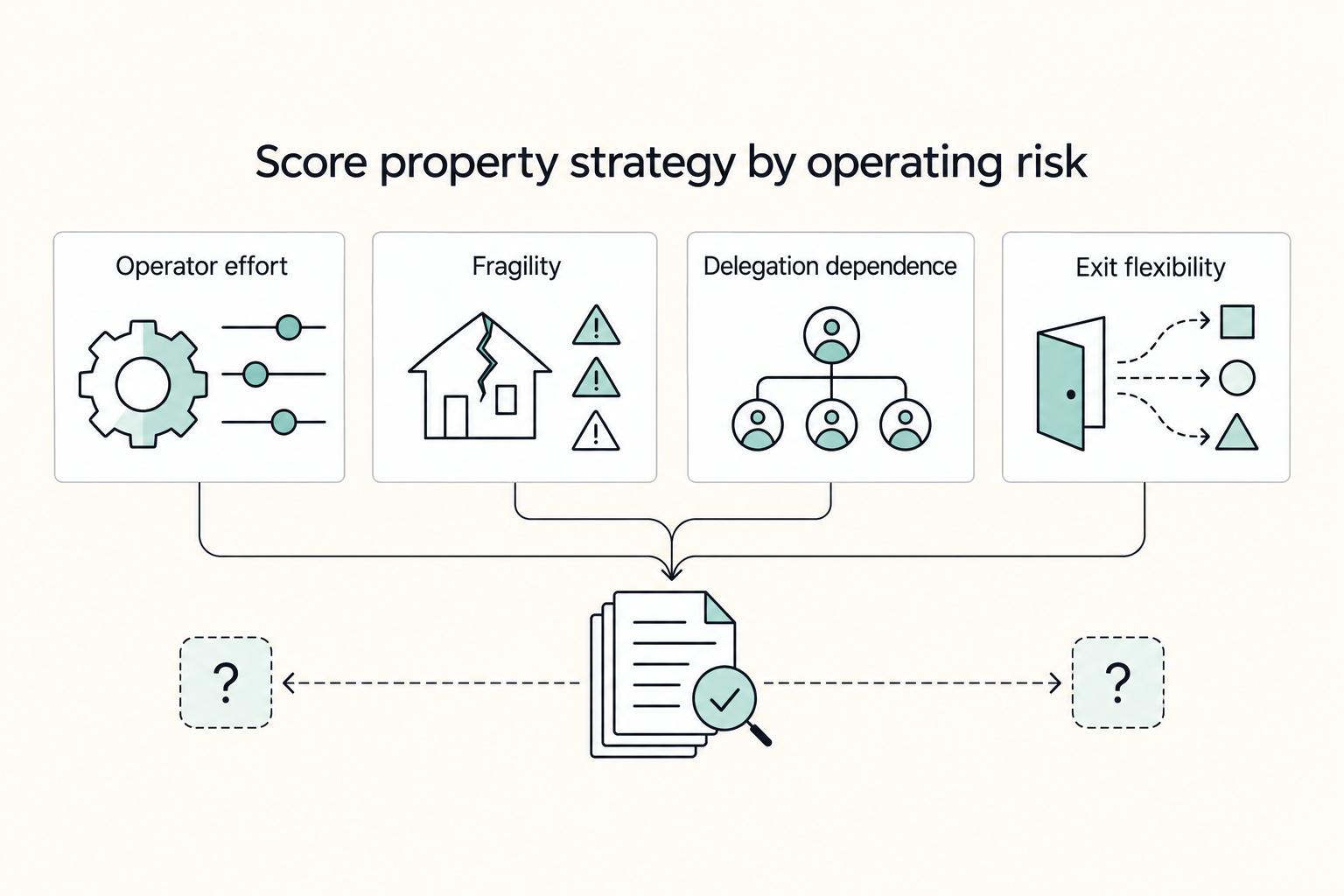
**Run anything with money and moving parts like an operations system (cash, docs, delegation, and controls), not a "passive income" vibe.** Real life stress-tests weak spots. You change time zones, a client pays late, and something breaks at the worst moment. As the CEO of a business-of-one, your job is to build a setup that keeps working when you are not available on demand.

Tax Implications for a UK Resident Owning a US LLC
When people search **uk resident owning us llc tax**, they often start with the wrong question. You do not win by chasing a clever position. You win by running a compliant system that can handle the way the US and UK classify LLC income differently, with records you can defend.