
Securing an Indonesian KITAP is a document-heavy process where a passive approach leads to costly rejections. This guide treats the application as a project you manage in phases: confirm the route fits before you prepare documents, vet the agent you hire, control document and rejection risk before submission, then handle post-approval obligations.
Confirm the Permanent Stay Route Fits Before You Prepare Documents#
Treat this as a pathway decision first, not just a filing task. Before you prepare documents, confirm that a permanent stay route fits your visa class, timeline, and sponsor setup. Start from clear terms:
- KITAS (ITAS): a limited stay permit for longer-term activity in Indonesia.
- KITAP (ITAP): a permanent stay permit issued by immigration, in physical and digital formats.
- Guarantor/sponsor (penjamin): an Indonesian individual or corporation that guarantees a foreigner in visa processing. Sponsor proof can be required in ITAS or ITAP workflows.
- Permit lifecycle: often an alih status ITAS to ITAP process, with a fixed filing window.
For ITAS-to-ITAP conversion cases, filing is due no later than 30 days before ITAS expiry. Some categories can receive ITAP directly without conversion, but the requirements still follow the target visa index. Verify your exact track before you start with the official ITAS-to-ITAP FAQ.
Use this playbook in four phases: assess fit, set up support, manage filing risk, and handle post-approval obligations. Your first checkpoints are practical: your visa index, whether a guarantor is required, who will file, and which deadline applies.
| Decision point | KITAP path | Staying on ITAS |
|---|---|---|
| Status objective | Permanent stay permit route | Limited stay permit route |
| Timing rule | ITAS-to-ITAP conversion filed no later than 30 days before ITAS expiry, or direct ITAP for certain categories | Validity and total duration depend on visa class |
| Requirements and fees | Visa-index-specific; published ITAP fee lines for some applications include Rp5,000,000, Rp10,000,000, and Rp15,000,000 | Confirm the current visa-index requirements and fee line before filing |
Also plan beyond approval. ITAP can be extended through application-based processing for an unlimited duration, and holders of unlimited-term ITAP must report every 5 years.
If you want a deeper dive, read The Global Digital Nomad Visa Index.
Phase 1: Due Diligence & Strategic Assessment - Is a KITAP Your Best Move?#
Start with one question: is your current ITAS history and sponsor setup strong enough for an ITAS-to-ITAP filing now? If you cannot verify your route, consecutive-stay history, and filing party, stop there and sort that out before you pay an agent. Use these terms exactly as you assess fit:
- KITAS / ITAS: limited stay status, and usually the status held before conversion.
- KITAP / ITAP: permanent stay permit for eligible foreigners.
- Sponsor / penjamin: the individual or corporation legally responsible for your presence and activities.
- Pathway: the legal route, such as investor, spouse or family, or retirement-type, that controls requirements and visa-index checks.
- MERP / IMK: re-entry permit for ITAS or ITAP holders.
- KTP Orang Asing: appears in ITAP document checklists. Verify civil-registration issuance mechanics separately.
Your main timing rule is fixed: submit ITAS-to-ITAP no later than 30 days before ITAS expiry. The filing can be submitted by you, your sponsor, or the responsible party through the immigration application process.
| Decision area | Stay on ITAS | Pursue ITAP |
|---|---|---|
| Admin burden | Ongoing validity tracking and renewals | One conversion process now, then route-dependent obligations later |
| Mobility impact | Travel return depends on your current permit setup | Confirm the current MERP or IMK setup for your route before travel |
| Sponsor dependence | Sponsor or penjamin details remain part of your immigration file and process | Do not assume sponsor dependence disappears; sponsor or responsible-party context still appears in the rules |
| Risk exposure | Lower immediate filing complexity, but repeated expiry pressure | Higher upfront scrutiny; the wrong route or timing can waste time and money |
| Official fees / thresholds | Confirm the current ITAS fee or threshold from the official tariff pages | Public fee page lists ITAP lines at Rp 7,000,000 for up to 5 years, Rp 12,000,000 for up to 10 years, and Rp 15,000,000 for unlimited, plus IMK lines. Verify against PP No. 45/2024 and current tariff pages before payment |
Route checks to decide whether to proceed or pause#
Use these route checks as an early filter. If your case does not clearly fit one of them, do not force a filing.
- Investor route
Proceed if your current permit history and company sponsorship align with the investor pathway and you can prove consecutive stay history.
Pause if you cannot reconcile threshold wording yet: a central FAQ states 3 consecutive years for investor, worker, religious, and retiree-type routes, while one local office page states 5 years.
- Spouse-sponsored route
Proceed if you are married to an Indonesian citizen and the marriage duration is at least 2 years.
Pause if the marriage duration is below the threshold or sponsor documents are inconsistent.
- Retirement route
Proceed only if your current permit actually maps to the recognized retirement-type category.
Pause if your eligibility is based on older summaries rather than current route text and visa-index checks.
Validate this before you hire help#
Before you hire help, verify four points yourself: permit class, sponsor identity and eligibility, consecutive-stay timeline, and filing deadline. Then assemble a minimum evidence set: a valid passport, current ITAS, integration statement (pernyataan integrasi), and sponsorship proof (bukti penjaminan) where required.
If key records do not match, including your name, passport number, sponsor details, or status history, defer filing and fix the mismatch first. If you cannot prove route and threshold today, do not pay for speed. Tighten your KITAS history and document trail and apply when the prerequisites are clean.
You might also find this useful: Should You Choose Indonesia’s Second Home Visa for a Long Stay?.
Phase 2: Resource Allocation & Partner Vetting - Building Your Application Team#
Once the route is clear, the next job is control. Lock your budget boundaries, confirm who is legally allowed to act, and only then engage an agent. Avoidable setbacks are more likely when money or documents move before filing authority and accountability are clear. Set your budget by cost bucket, not by one bundled quote.
| Cost bucket | What belongs here |
|---|---|
| Official fees | ITAP-related immigration payment lines and payment verification records |
| Agent services | Case handling, submission support, appointment support, follow-up |
| Document prep | Route-specific file prep, such as passport or ITAS copies, domicile records, and sponsor documents |
| Translation/legalization | Translation, certification, or legalization only where your documents require it |
| Contingency | Urgent corrections, extra document requests, courier, and admin rework |
Decision criteria before signing#
Use one standardized brief for every candidate: your pathway, sponsor type, ITAS expiry timeline, and intended filing party, whether that is you, the penjamin, or the penanggung jawab. If they will file on your behalf, require Surat Kuasa handling in writing.
| Decision criterion | What you should require before signing |
|---|---|
| Required documents from the agent | Written scope of work, service agreement, route-specific checklist, and filing-party plan, including Surat Kuasa if represented |
| Process transparency | Clear separation of official fees and service fees, who pays what, and how payment verification records will be shared |
| Communication cadence | Named contact, rapid escalation for immigration notices, and a process that can meet the 2-day correction window |
| Legal business standing | Proof the relevant corporate sponsor or guarantor is legally registered, active, and prepared for eVisa account requirements where applicable |
Partner comparison matrix (score 1-5)#
| Candidate | Scope clarity | Risk controls | Accountability terms | Notes |
|---|---|---|---|---|
| A | ||||
| B | ||||
| C |
If a candidate is cheap but weak on risk controls, or polished but vague on accountability, pause and keep comparing.
What to do when you see red flags#
When something looks off, act in stages rather than arguing your way through it.
- Verify now: Confirm the actual sponsor identity, filing authority, whether
Surat Kuasais needed, the payment path for official fees, and sponsor legal and eVisa readiness. - Pause engagement: Pause if contract terms blur official fees and service fees, route-specific document duties are missing, or escalation timing cannot support the 2-day correction requirement.
- Walk away: Walk away if document custody terms are unclear, filing-error responsibility is not assigned, or payment milestones and escalation contacts are not explicitly documented.
Before Phase 3, confirm all five are complete: selected partner, signed scope, payment milestones, document custody rules, and one named escalation contact.
This pairs well with our guide on Choosing the Right Residency Path After Spain's Golden Visa Closure.
Phase 3: Execution & Risk Mitigation - Managing the Application Project Plan#
With the route and team set, move into file control. This phase is about submission discipline: file on time, assign ownership clearly, and submit only when the package is truly complete. For an ITAS-to-ITAP conversion, file no later than 30 days before ITAS expiry. If immigration sends a deficiency notice, the correction window may be 2 days, and missing that window can lead to rejection.
Set ownership before submission#
“Ready to submit” means every task has an owner and every notice has a receiver.
| Task | Primary owner | What must be confirmed |
|---|---|---|
| Confirm filing party (foreigner, sponsor, or responsible party) | You + agent + sponsor | Filing role is named in writing before upload |
| Personal identity data and core documents (passport, ITAS, and applicable civil records) | You | Names, dates, passport number, and address are consistent across all files and forms |
| Sponsor-side accuracy and updates | Sponsor (penjamin) | Sponsor information is current and compliant |
| Collection, upload, status monitoring, follow-up | Agent | Monitoring process and escalation path are documented |
| Photo capture and any office-requested interview | You + agent | Attendance plan is confirmed for the local office process |
| Electronic notice handling | All parties | Exactly who receives immigration notices is confirmed so no correction time is lost |
Use a document control sheet, not a static checklist#
A checklist tells you what should exist. A document control sheet tells you who owns each item, whether it is usable, and what still needs verification.
| Document group | Required item(s) | Source / owner | Readiness check | Final verification checkpoint |
|---|---|---|---|---|
| Required for all | Valid passport, current ITAS, integration statement, except for an unmarried child under 18 | You | Core documents are valid and aligned with form entries | Final line-by-line match: name, DOB, passport number, address |
| Pathway-specific | Documents tied to the target visa index | You + sponsor | Route eligibility still matches your case | Confirm against the target visa-index requirements, not a universal list |
| Sponsor file | Sponsor identity and support records | Sponsor | Sponsor data is consistent across records | Sponsor compliance precheck completed |
| Foreign-language civil records | Marriage, birth, or related records where applicable | You | Correct issuing version is prepared | Check local-office translation requirements. Some office guidance explicitly requires sworn Indonesian translation except English |
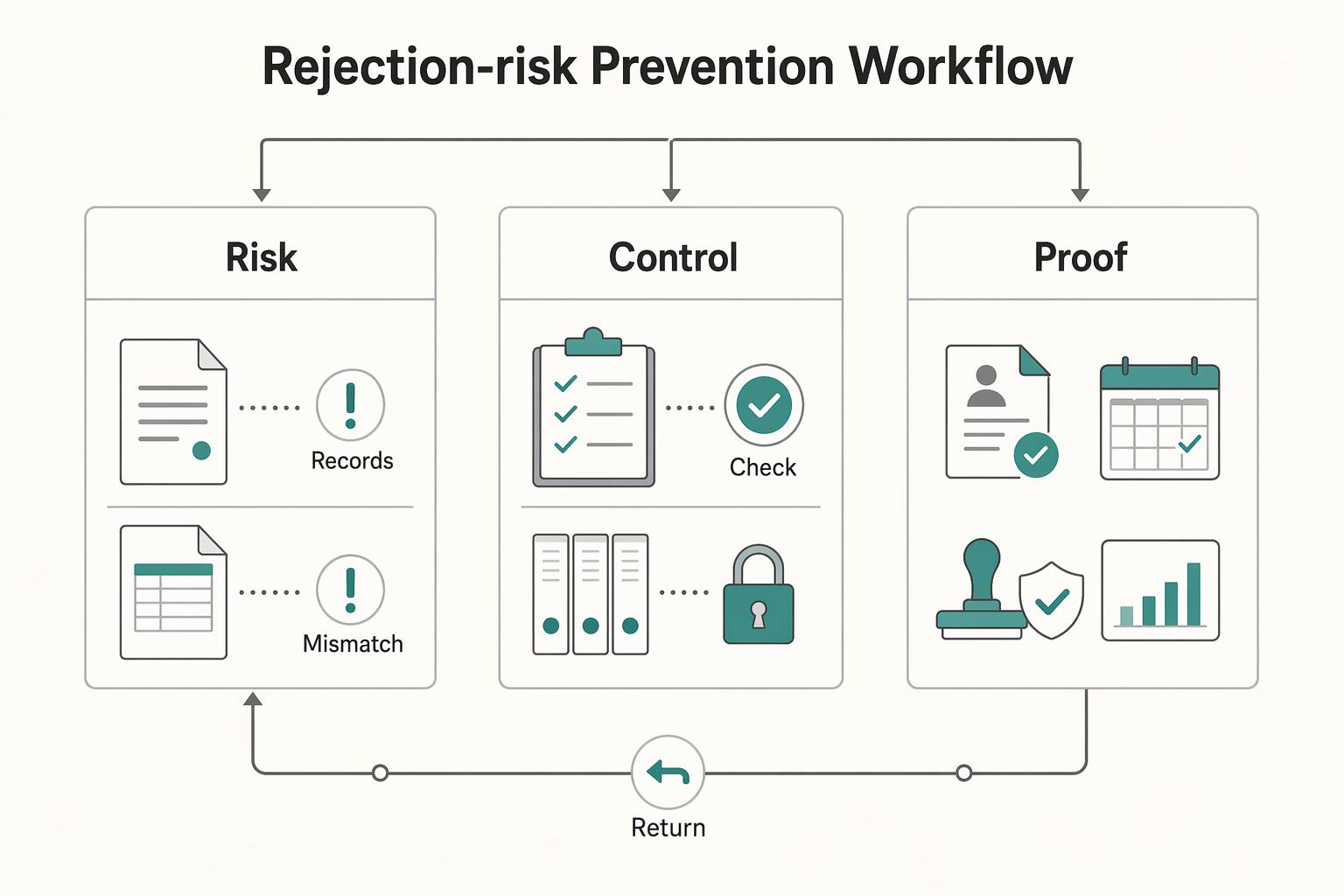
Rejection-risk prevention workflow#
Preventable rejection can come from file-control failures. Run these checks before payment and upload.
| Risk | Prevention workflow | Fallback action if issue is found |
|---|---|---|
| Data mismatch across forms/documents | Run a pre-submission data audit from one master fact sheet | Pause submission; correct the source document or form first |
| Sponsor non-compliance or stale sponsor data | Complete sponsor compliance precheck before filing | Pause submission until sponsor records are corrected |
| Incomplete evidence, including translation or commitment proof where applicable | Run a completeness review for general and pathway-specific requirements | Pause submission and close gaps before payment or upload |
| Deficiency notice response delay | Assign one same-day response owner and one backup owner | Treat it as an immediate priority; submit corrections within the 2-day window |
Stage tracker (manage by milestones, not one promised timeline)#
Do not manage this by a single promised completion date. Manage it by milestones, proof points, and who owns the next move. Use published working-day steps as control checkpoints, not as guaranteed end-to-end timelines for every office or pathway.
| Stage | Primary owner | Proof to retain |
|---|---|---|
| Submission | Agent + filing party | Submission reference and receipt |
| Photo capture / interview if requested by your office | You + agent | Appointment notice + attendance proof |
| Payment verification | You or sponsor + agent | Payment proof + shared confirmation |
| Central review / forwarding | Immigration office forwards; agent monitors | Status updates and any electronic notice |
| Issuance / collection | Agent + you | Issuance notice + collection record |
Risk register for this phase#
Track practical risks, not just legal ones. Common problems include timing, notice handling, and uncertainty around documents or travel.
| Risk | Trigger | Immediate action | Escalation path |
|---|---|---|---|
| Passport handling / travel constraint uncertainty | Office practice not confirmed | Confirm in advance whether the original passport is retained or only presented | Agent -> filing party/sponsor -> immigration office |
| Request for more documents | Electronic deficiency notice received | Start the same day and complete within the correction window | Agent -> filing party/sponsor -> immigration office |
| Status stalls after receipt | No meaningful update after submission or payment milestones | Escalate with the submission reference and payment proof | Agent -> filing party/sponsor -> immigration office |
Go or no-go checklist before you submit#
- Go when the filing party is named, sponsor precheck is complete, core documents are validated, pathway-specific requirements match the target visa index, and notice recipients are confirmed.
- Pause if any mismatch remains in names, dates, passport numbers, or addresses.
- Pause if translation or commitment proof is still pending for your route.
- Pause if near-term travel is fixed and passport handling at your office is still unconfirmed.
- Do not submit if the file is incomplete and your ITAS deadline is approaching.
For a step-by-step walkthrough, see Greece Golden Visa Guide: Eligibility, Property Rules, Documents, and Timeline.
Before you lock your Indonesia move timeline, pressure-test your permit path and backup options with the Visa Cheatsheet for Digital Nomads.
Phase 4: Post-Approval Integration - Maximizing the ROI of Your New Status#
Once approval lands, the work shifts from filing to record alignment. The value of the status comes from getting immigration, civil registry, and travel records to match cleanly. Start in this order:
- Secure your KITAP proof from immigration. Save the digital KITAP sent by email to you and your sponsor, then confirm physical pickup timing with your Kantor Imigrasi. Immigration currently states physical pickup is available no earlier than 15 working days after issuance, so re-check the current window before collection.
Done when: the digital file is archived, and you have collection proof or pickup confirmation in your records.
- Complete your civil-registry activation at Disdukcapil (Dinas Kependudukan dan Pencatatan Sipil, the civil registry office). Bring your passport, KITAP proof, and any supporting documents your local office requests, with copies that match your submitted data. Confirm the local reporting deadline with the office before you go. For a practical local reference on foreign-resident ID issuance, review this KTP WNA guidance.
Done when: your local foreigner-residency record is updated and your application outputs are issued or recorded.
- Finalize your local ID set. A key document is KTP Orang Asing (KTP-OA), the foreigner ID card, which is different from an Indonesian-citizen KTP. Its validity follows your ITAP period, so the current validity period must be verified against official or local-office records before you use it for planning. You may also receive a household-composition record labeled SKSKPS in some offices or SKSKP in others. Treat the label as office-specific and keep the issued version exactly as named.
Done when: names, passport number, and address match immigration records line by line.
Post-approval outcomes at a glance#
| Document/status | Where you use it | Why it matters | Common failure point |
|---|---|---|---|
| Digital + physical KITAP proof | Immigration, civil registry, your compliance file | Core proof of stay status | Keeping only email proof and delaying physical collection planning |
| KTP Orang Asing (KTP-OA) | Civil registry workflows and identity checks that require local ID | Day-to-day local identity tied to ITAP status | Data mismatch in name, address, or passport details versus the immigration file |
| SKSKPS / SKSKP | Civil registry and household-record checks | Aligns family or household composition records | Assuming one label is used nationwide |
| MERP / Izin Masuk Kembali | Immigration and international travel | Re-entry permission so travel does not break stay status | Traveling without verified validity or renewal timing |
| SIM | Driving-license processes issued by Polri | Legal driving document | Applying before identity records are aligned |
Travel and re-entry risk control#
Before any international trip, check MERP (Izin Masuk Kembali). It is the re-entry permission that lets ITAS and ITAP holders leave and return without losing stay status. One local immigration office notes filing can start 14 days before expiry. Treat that as local guidance; the current local lead time must be verified with your office before travel.
When to self-manage and when to use an agent#
Self-managing post-approval steps is realistic when your sponsor is responsive, your records are already consistent, and you can attend offices directly. Use an agent when you have near-term travel, recent identity or address changes, or any mismatch risk across passport, KITAP, and civil-registry records. Representation is optional through power of attorney, and filing is not limited to agents.
Ongoing compliance checklist#
Once your records are aligned, keep them aligned:
- Re-verify the exact match across passport, KITAP or ITAP, and KTP-OA data before each renewal or reporting cycle.
- Confirm MERP validity before every international departure.
- Confirm your local Dukcapil replacement or reporting deadline with the office before you rely on it. One local guidance page cites 30 days before ITAP expiry.
- Keep one folder with the digital approval email, collection proof, office notices, and submitted copies.
This is how you protect the value of KITAP: consistent records, verified travel permission, and no gaps between offices. We covered this in detail in Canggu Digital Nomad Guide 2026 for a Smooth First Month.
Turn Your KITAP Work into a Traceable Execution Plan#
For KITAP, a permanent stay permit in Indonesia, treat this as an execution plan, not a waiting game. Confirm your applicable path first. Then keep records consistent across your file, keep sponsor-side documentation in order, and track any ongoing obligations that may apply after approval.
| What you control | What you cannot control |
|---|---|
| How clearly your documents support one consistent case | Review timelines and queue pressure |
| Whether your sponsor-side documentation is complete and current | How an officer interprets unclear facts |
| Whether you keep written records of submissions and notices | Policy or process changes outside your control |
| Whether you ask for clarification when a requirement is ambiguous |
This approach helps keep your process organized and decisions traceable when requirements are unclear.
Next steps in order#
- Recheck Phase 1 and confirm your correct path. If you are not yet at the permanent stage, start with How to Get a KITAS (Temporary Stay Permit) in Indonesia.
- Use Phase 2 to confirm who is responsible for each document, review step, and submission.
- Run Phase 3 as a file-control pass: one fact pattern, one consistent document set, and one owner for follow-ups.
- Start Phase 4 early by listing post-approval duties that apply to your case and storing that list with your residency records.
- Seek professional help when your sponsor setup, personal status, or prior immigration history is complex enough that small inconsistencies could create avoidable risk.
Related: How to Write Compelling Case Studies for Your Portfolio. If continuity in client payments and withdrawals is important while your residency status changes, talk to Gruv to confirm setup and coverage.
Frequently Asked Questions
What is the difference between a KITAS and a KITAP?
Think of the KITAS (Kartu Izin Tinggal Terbatas) as a temporary work or residence permit, typically requiring annual renewal. The KITAP (Kartu Izin Tinggal Tetap) is a permanent stay permit. The fundamental difference is stability. A KITAP is granted for five years and is extendable indefinitely, offering a much stronger foundation for long-term life and business planning by shifting your status from temporary visitor to permanent resident.
How long must I hold a KITAS before applying for a KITAP?
The required holding period is strict and depends on your pathway. You must begin the conversion process while your current KITAS is still valid.
Sponsorship Pathway: Spouse-Sponsored Minimum KITAS Holding Period: 2 years of marriage
Sponsorship Pathway: Investor/Director Minimum KITAS Holding Period: 3 to 4 consecutive years
Sponsorship Pathway: Retirement Minimum KITAS Holding Period: 4 to 5 consecutive years
What are the most common reasons for KITAP rejection?
Rejection almost always stems from a failure to demonstrate compliance and consistency. The most frequent pitfalls are:
- Documentation Errors: Incomplete forms, mismatched names, or missing sponsor documents.
- Sponsor Non-Compliance: An investor's company that is not in good legal or tax standing, or a spouse sponsor with invalid personal documents.
- Failure to Meet Timelines: Applying before completing the requisite number of years on a KITAS.
What is the total expected investment for a KITAP application?
Budget for both official government fees and professional service fees. While official fees can change, a realistic all-in budget for a five-year KITAP, including the mandatory MERP and reputable agent fees, typically falls between IDR 45,000,000 and IDR 75,000,000. View this as a single capital investment in your long-term stability.
Is it necessary to use an agent to apply for a KITAP?
While legally possible to apply on your own, it is a complex bureaucratic process where minor errors lead to major delays or rejection. For a global professional, the strategic value of a reputable agent is significant. They act as a project manager, ensuring document perfection, navigating local office nuances, and providing a crucial layer of risk mitigation. The decision is a trade-off between your tolerance for bureaucratic friction and the cost of expert guidance.
Can a foreigner own property in Indonesia with a KITAP?
Yes. A KITAP is a key requirement for foreigners to purchase property in their own name under a "Right to Use" (Hak Pakai) title. This is a secure, long-term title that can potentially extend up to 80 years. Minimum property value thresholds apply and vary by region.
What happens to my KITAP if my circumstances change (e.g., divorce, company closure)?
Your KITAP is directly linked to its sponsor. A change in that status requires immediate action.
- Divorce (Spouse-Sponsored): If the marriage was less than 10 years, the KITAP is at risk. You typically have 60 days to find a new sponsor (e.g., an employer) to convert your permit and legally remain in Indonesia.
- Company Closure (Investor-Sponsored): If your sponsoring company closes, it can no longer sponsor you. Your KITAP will be invalidated. You must coordinate the closure of your residency permit—an Exit Permit Only (EPO)—with the company liquidation to avoid penalties.
Researched and edited by the Gruv editorial team. Gruv builds cross-border billing, payouts, and finance-operations software for global businesses.
Sources
Includes 4 external sources outside the trusted-domain allowlist.
Educational content only. Not legal, tax, or financial advice.
Related Posts

The 2026 Global Digital Nomad Visa Index for 50+ Countries
Start with legal fit, not lifestyle filters. The practical order is simple: choose a route you can actually document, then decide where you want to live. That single change cuts a lot of wasted comparison work and stops you from falling in love with places that were never a real filing option.
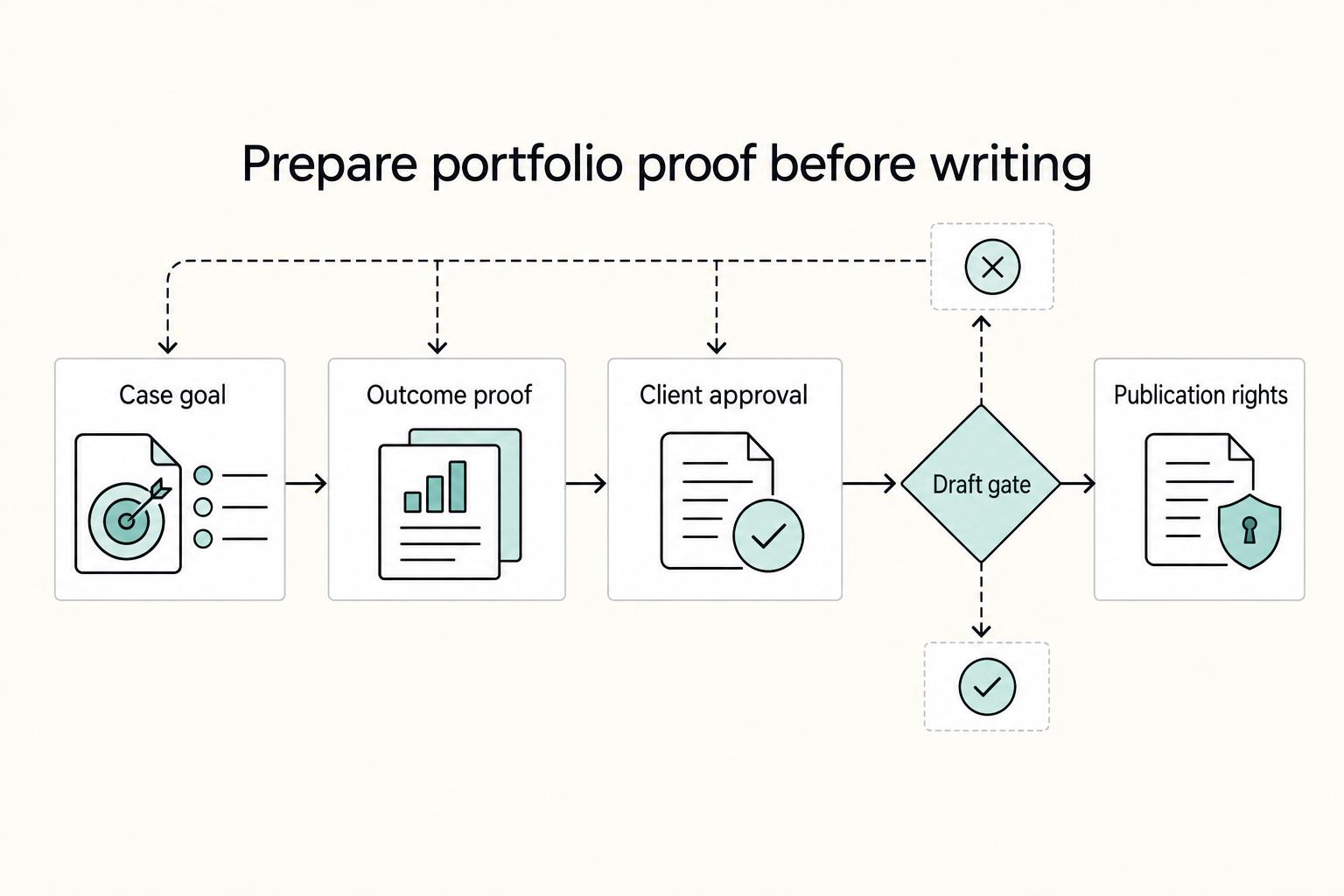
How to Write Compelling Case Studies for Your Portfolio
Treat your case study as buyer decision evidence, not as a polished recap of work you enjoyed doing. To build trust, give the reader enough real context and proof to answer one question: should they trust your judgment on a project like theirs?
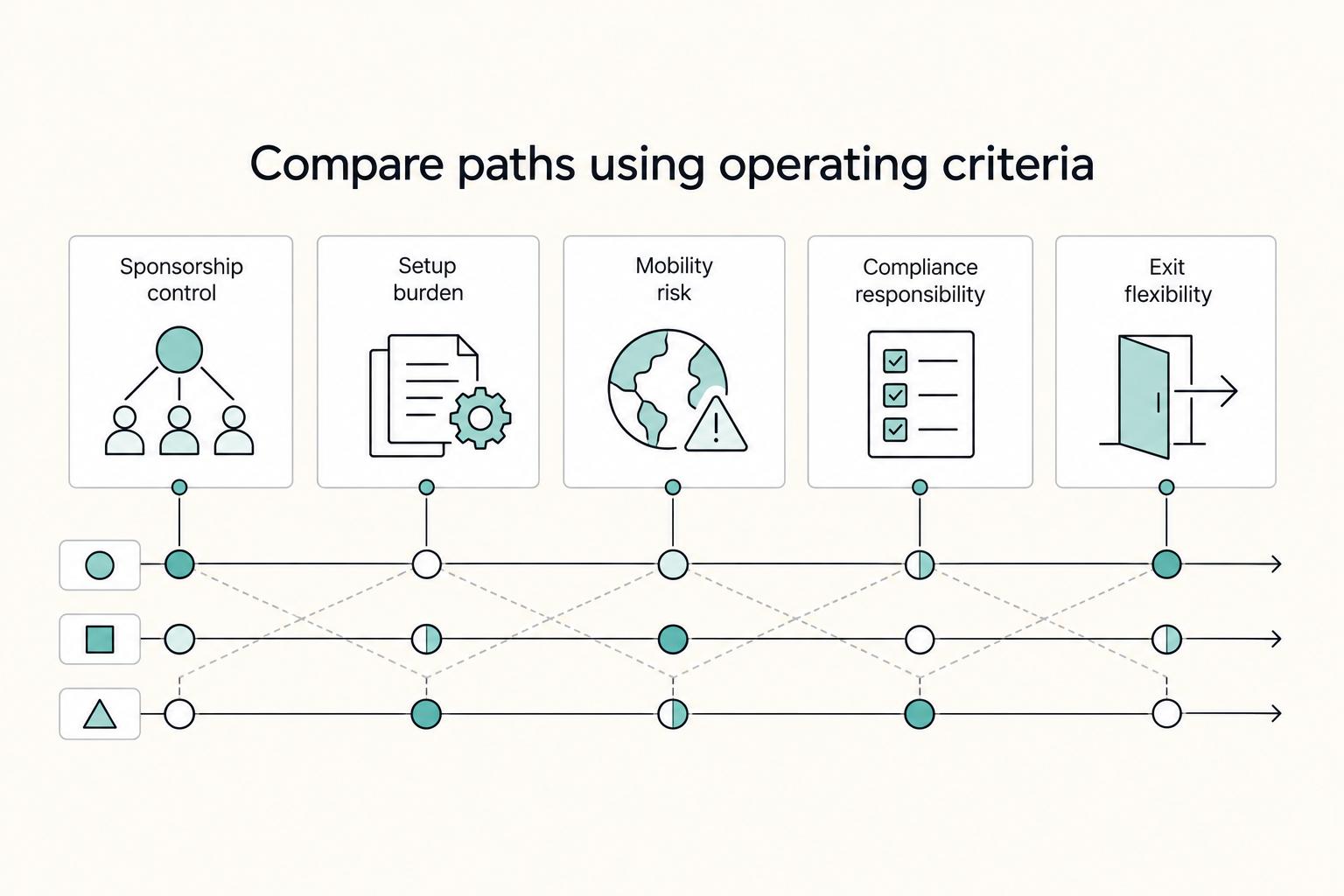
How to Get a KITAS (Temporary Stay Permit) in Indonesia
If you want to get a KITAS in Indonesia without avoidable trouble, do three things in order: match the permit to your real sponsor and work pattern, follow the filing sequence for your exact visa code, and plan for post-approval compliance from day one.