
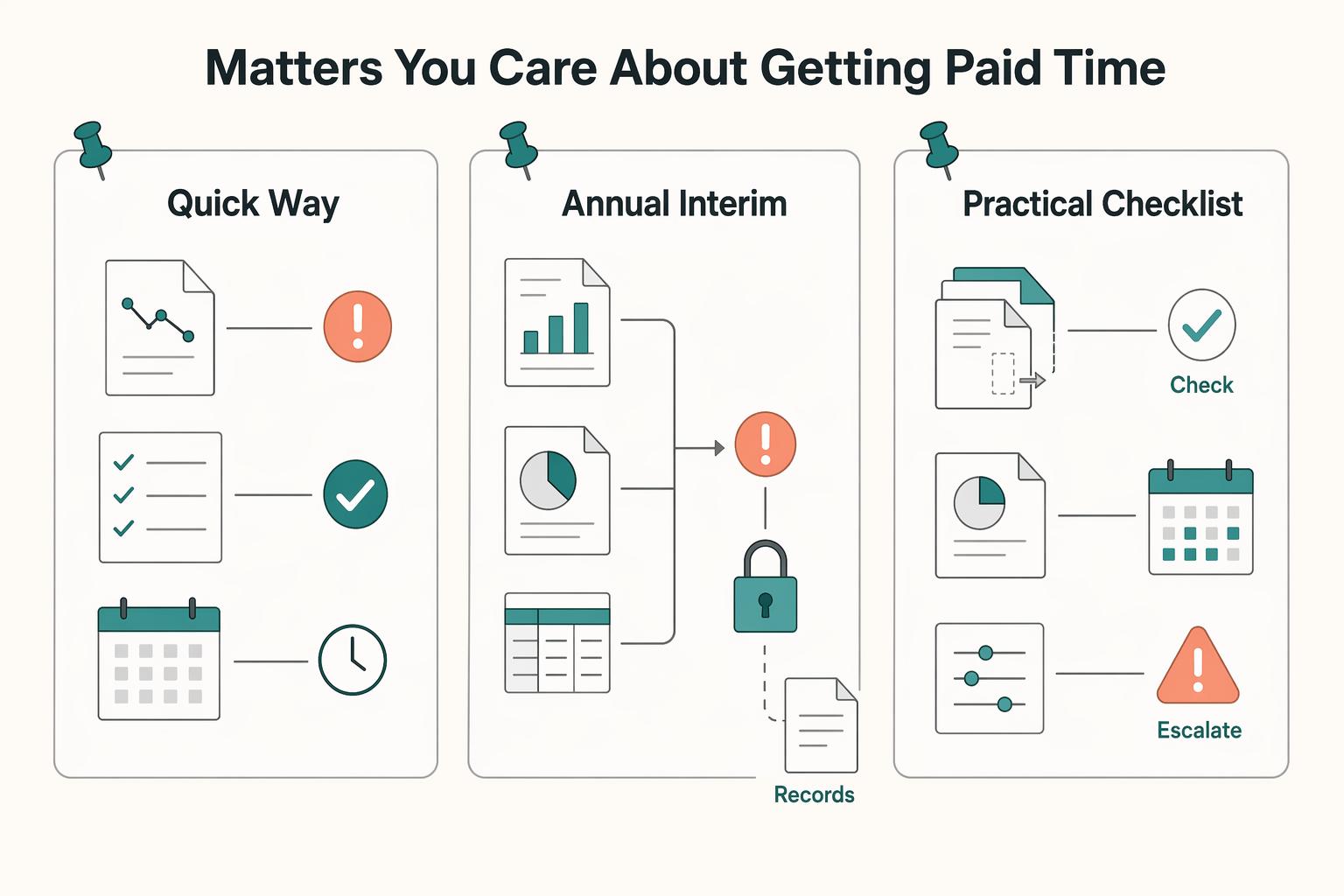
Quick Answer
Yes. Treat goodwill impairment testing as a payment-timing signal, not a default forecast of nonpayment. Start by confirming recorded goodwill on the balance sheet and the reporting unit tied to your work under ASC 350-20. Then watch for interim trigger evidence that fair value may fall below carrying amount. If that question is still open, move to higher deposits, tighter milestone acceptance, and shorter net terms until finance signs off.
Why this matters if you care about getting paid on time#
If a client starts showing goodwill impairment signals, treat that as an early warning for your payment terms, not proof they will pay late. The practical move is to review your exposure before the receivable grows: deposits, milestone size, and payment windows.
This may sound like big-company accounting, and often it is. Under U.S. GAAP, goodwill is typically tied to a business combination, and ASC 350-20 governs goodwill after initial recognition within the FASB Accounting Standards Codification. You may never run the test yourself, but you still decide whether a large phase should stay on open terms or move to a tighter structure.
This guide translates ASC 350 language into operator decisions. At a minimum, goodwill is tested annually. It may also require an interim test when events or circumstances indicate fair value could fall below carrying amount. Your job is not to do technical accounting. Your job is to notice when risk may be rising, verify what is actually happening, and escalate to finance or an outside accountant when needed.
The scope here is intentionally narrow: U.S. GAAP concepts in ASC 350-20. That includes the core quantitative comparison of a reporting unit's fair value versus carrying amount, including goodwill. It also includes trigger language such as "more likely than not," meaning more than 50 percent. If your client reports under a different framework, confirm the details before you apply U.S. GAAP assumptions.
Before you act, check two basics. Confirm whether the relevant entity actually has recorded goodwill. Also confirm that the explanation you are relying on is current, since older two-step descriptions predate ASU 2017-04, which removed Step 2. The rest of this guide gives you three things:
- a quick way to decide whether this lens applies
- the annual and interim signals worth watching under ASC 350-20
- a practical checklist for tightening deposits, milestone design, and invoice terms
This pairs well with our guide on Comparables Analysis for Business Valuation in a One-Person Business.
Define the terms before you make decisions#
Get the labels right first, because many bad risk calls start there. Under ASC 350-20, goodwill is not amortized and must be tested at least annually for impairment at the reporting-unit level. That test is about whether recorded goodwill is overstated, not a general check on whether a business still feels valuable.
| Term | Plain meaning | What to verify first |
|---|---|---|
| Goodwill | A residual acquisition-related asset representing future economic benefits from a business combination that were not separately identified | Does the entity actually report a goodwill balance? |
| Identifiable intangible assets | Intangible assets recognized separately from goodwill when separability or contractual-legal criteria are met | Are you discussing identifiable intangibles instead of goodwill? |
| Reporting unit | The level where goodwill is assigned and tested for impairment | Which reporting unit holds the goodwill in question? |
The core quantitative test happens at the reporting unit level: compare fair value with carrying amount, including goodwill. If carrying amount is higher than fair value, that is the impairment condition.
Keep goodwill separate from other intangible assets in your thinking. Identifiable intangibles are recognized separately in a business combination, while goodwill is the residual after those assets are measured. That is why goodwill is not measured asset by asset.
A common mistake is to treat goodwill impairment as just a valuation exercise. For payment-risk decisions, take that as a warning. If the discussion is not tied to a specific reporting unit's fair value and carrying amount, the signal is not specific enough yet.
Practical rule: before you tighten terms or escalate risk, confirm two items in writing from finance or your client contact. Confirm the recorded goodwill balance and the reporting unit where it sits. If those are unclear, treat the signal as unverified. You might also find this useful: Choosing Functional Currency for Your Business.
Do you even need goodwill impairment testing in your business?#
Not always. If the balance sheet does not show recorded goodwill, you are usually monitoring risk signals rather than running a formal annual test. That can change if goodwill is recognized later.
Under ASC 350-20, the test applies to goodwill assigned to a reporting unit. So start with the simplest check: confirm whether goodwill is actually recorded and whether it has been mapped to a reporting unit. Do not assume a generic "intangible assets" line alone proves goodwill.
Quick checkpoint#
| Check | Yes means | No means |
|---|---|---|
| Do you have recorded goodwill on the balance sheet? | Formal scope may exist | You are usually monitoring risk, not running the test |
| Has that goodwill been assigned to a reporting unit? | You are in the ASC 350 structure | Scope is still unconfirmed; finance needs to map it |
| Are you part of a buyer-backed group or acquired-entity structure? | ASC 350 relevance is more likely until finance confirms otherwise | Lower odds, but still verify before ruling it out |
If you are in a buyer-backed or acquired-entity structure, treat ASC 350 as potentially in scope until finance confirms otherwise. Goodwill is commonly recognized in business combinations. Your first document check should be the reporting-unit map plus written confirmation on whether goodwill exists.
Even if you do not run the test yourself, a client reporting under U.S. GAAP can still give you useful risk signals. If finance is discussing impairment or interim trigger assessments (the "more likely than not" threshold), review payment exposure before you extend more credit. Do not overread one comment, but do not ignore confirmed goodwill plus signs that a reporting unit may need testing. Related: What are 'Goodwill' and 'Intangible Assets' on a Balance Sheet?.
Know which rulebook applies before you proceed#
Confirm the framework before you do anything else. If the entity reports under U.S. GAAP, use the FASB Accounting Standards Codification, specifically Topic 350 Intangibles, Goodwill and Other and ASC 350-20 for goodwill. If you cannot confirm U.S. GAAP, pause there.
Timeline mismatch can create confusion. Older materials still describe a two-step model, while ASU 2017-04 removed legacy Step 2, so newer guidance reads differently. Before you rely on any checklist or memo, confirm whether it is pre- or post-ASU 2017-04.
Keep the testing level straight. Under U.S. GAAP, goodwill impairment is evaluated at the reporting unit level. In non-U.S. discussions, you may see different labels and levels, such as IFRS references to a cash-generating unit. Do not treat those frameworks as interchangeable without checking first.
To keep the setup clean, use this confirm-first pass before you model or draft conclusions:
- Applicable GAAP: Confirm the reporting basis in writing.
- Entity structure: Confirm where goodwill sits in the organization.
- Reporting unit map: Confirm recorded goodwill is assigned to the correct reporting unit.
- Reviewer sign-off: Assign named review ownership before test work starts.
Document what you relied on and when. Summaries can age quickly, and similar entities can still reach different conclusions based on their facts. For a step-by-step walkthrough, see GAAP for Small Businesses Choosing Between Cash and Accrual.
Pick your annual testing date once and operationalize it#
Pick an annual testing date for each reporting unit with goodwill and keep it consistent year to year. Under ASC 350-20-35-28, the test can be performed at any time in the fiscal year, and different reporting units may be tested at different times.
The best date is one your team can complete and review before financial statements are issued.
What to lock down first#
- Set the annual date by reporting unit. Any fiscal-year date is allowed, and reporting units can use different dates.
- Assign ownership internally. ASC 350 does not prescribe a specific owner title; define who is accountable for keeping each unit on schedule.
- Tie the test to the close calendar. Align timing so testing can finish before issuance and filing deadlines.
- Define internal review deadlines. ASC 350 does not set fixed intervals, so set deadlines that fit your reporting timetable.
For public entities, quarterly reporting and filing deadlines make this timing especially important.
Date options and tradeoffs#
| Annual test date option | Close-calendar tradeoff | Documentation to retain |
|---|---|---|
| First day of Q4 | Common public-company choice; can leave more time before year-end issuance deadlines | Evidence of date selection, reporting unit coverage, and completion timing |
| Mid-year date | Works if each unit keeps the same date each year and testing still finishes before issuance deadlines | Unit-specific date record and year-to-year consistency evidence |
| Fiscal year-end | Allowed, but may leave less time to complete testing before issuance deadlines | Close-calendar linkage and evidence testing was completed before issuance |
If you use different dates across reporting units, document which unit uses which date and keep each unit on a consistent annual schedule. If you want a deeper dive, read Hiring Your First Subcontractor: Legal and Financial Steps.
Spot interim triggers early and tie them to cashflow actions#
Do not wait for the annual date if conditions suggest a reporting unit's fair value may be below its carrying amount. Under ASC 350-20, that is when you assess whether an interim goodwill impairment test is required. Separately, it is also when you decide how to protect cashflow.
What counts as a trigger. A trigger is not just "bad news." It is often assessed across multiple events or circumstances. In ASC 350's qualitative screen, the question is whether it is more likely than not that fair value is below carrying amount.
Look at the totality of relevant facts. A single weak data point may be insufficient on its own. Several aligned signals usually matter more. Keep the focus at the reporting-unit level, because that is where goodwill is tested.
Build a unit-level early warning screen#
Build a short, evidence-based screen tied to each reporting unit.
| Trigger signal | Evidence needed | Impairment follow-up | Payment-term response (judgment-based) |
|---|---|---|---|
| Adverse business event affecting a reporting unit | Unit-level record of the event, timing, and reviewer | Reassess whether fair value may be below carrying amount; decide if interim testing is required | For work tied to that unit, consider reducing back-loaded billing and bringing cash collection forward |
| Forecast deterioration or declining cash flows/performance | Latest vs prior forecast, actual-to-plan variance, unit-level revenue/earnings trend | Escalate if deterioration is persistent and not offset by other facts | Consider shorter payment windows and tighter milestone approvals this quarter |
| Financing stress or limited access to capital | Covenant pressure, refinancing issues, lender communications, cash stress indicators | Revisit trigger conclusion promptly | Consider higher upfront deposits and reduced credit exposure on new scope |
| Sustained share-price decrease (if applicable) | Multi-period trend, including relative movement to peers | Document whether the decline appears sustained and whether interim testing is needed | Consider pausing generous terms on large deliverables until risk is clearer |
Turn trigger signals into cash decisions. If trigger confidence is high, act in-quarter. That can mean shorter terms, less unfunded work in progress, and higher upfront deposits for exposed work. Those are cash-protection decisions, not GAAP-mandated invoice rules.
At the same time, do not overreact to noise. A one-day stock drop is not automatically a trigger, and ASC examples are not exhaustive. The judgment is whether the combined evidence now points to a fair value issue that is more likely than not.
Document the conclusion while facts are fresh. If you conclude that no interim test is needed, keep support for that call. At a minimum, retain the assessment date, reporting unit, facts considered, forecast version, and approver.
Also note the timing distinction: eligible private and not-for-profit entities may elect the ASU 2021-03 period-end trigger assessment alternative. That changes when monitoring happens, not whether triggers must be evaluated. Need the full breakdown? Read Discounted Cash Flow DCF Valuation for Solo Professionals.
If trigger risk is climbing, lock payment protection into every new scope before work starts with the freelance contract generator.
Choose qualitative or quantitative assessment without guessing#
Use the qualitative assessment when the facts are clear, or bypass it and run a quantitative test directly. If indicators are persistent, mixed, or disputed, quantitative testing is usually the safer path. Under ASC 350-20, both paths lead to the same checkpoint: whether a reporting unit's fair value is below its carrying amount.
Use the screen, then escalate when needed. The qualitative assessment is not a lighter final test. It is an optional gate that tells you whether more work is necessary. Its threshold is "more likely than not," meaning a likelihood of more than 50 percent that fair value is below carrying amount.
ASC 350-20 also lets you bypass the qualitative screen unconditionally. So if the risk picture is already crowded, go straight to quantitative work instead of forcing a qualitative memo that settles nothing.
A practical checkpoint is simple: if current reporting-unit facts support a clear conclusion, qualitative may be enough. If the file depends on caveats, stale assumptions, or disputed inputs, escalate.
Keep the order of operations clean. Use this sequence:
- Decide whether to begin with the qualitative screen or go straight to quantitative testing.
- If you use qualitative factors, assess whether impairment is more likely than not.
- If you bypass qualitative, or if qualitative indicates more work is needed, perform the quantitative test.
A common failure mode is stopping too early while the indicators are still unresolved. If the risk signals keep stacking up, treat that as escalation territory.
What changes and what does not. What changes is the effort and evidence burden. What does not change is the decision point: fair value versus carrying amount at the reporting-unit level. In the post-ASU framing, impairment is measured by the amount a reporting unit's carrying amount exceeds fair value.
Mixed online explanations are normal. Some sources still describe a legacy two-step model, while post-ASU summaries describe the removal of legacy Step 2. The key is to confirm which guidance frame your source is using before you rely on it.
| Decision area | Qualitative assessment | Quantitative assessment |
|---|---|---|
| Purpose | Optional screen to decide whether more testing is necessary | Direct test of fair value versus carrying amount |
| Main inputs | Current qualitative factors at the reporting-unit level | Fair value support and carrying amount support for the reporting unit |
| Effort | Lower upfront effort when facts are clear | Higher effort, typically more cross-functional work |
| Evidence burden | Supportable conclusion that impairment is not more likely than not | Defensible measurement support |
| Typical failure mode | Treating mixed or stale facts as enough to stop | Weak assumptions or weak tie-out support |
Document limits and require technical review. Public summaries help, but they do not cover every judgment-heavy quantitative mechanic. Use ASC as the authoritative U.S. GAAP base, document assumptions clearly, and get technical review when conclusions turn on complex valuation judgments.
Document the assessment date, reporting unit, chosen path, key assumptions, and reviewer sign-off so the conclusion is supportable later. Related reading: How to Choose a Presentation Currency for Financial Reports.
Build an evidence pack an auditor or reviewer can follow#
A file is only ready when a reviewer can trace the conclusion from the reporting unit setup to the fair value support and the carrying amount tie-out. Build it as a re-performance file, not a summary, so the judgment can be followed without relying on memory.
The judgment can be complex. The evidence path should still be straightforward. Identify reporting units, determine carrying amount by assigning assets and liabilities to those units, and support the fair value comparison under ASC 350-20.
Minimum contents that earn trust#
Keep the pack lean, but keep the structure consistent every cycle.
| Pack item | What it should show | Practical checkpoint |
|---|---|---|
| Reporting unit mapping | Current reporting units, what changed since last year, and how assets and liabilities were assigned | Confirm the map matches the structure used in this year's test |
| Prior-period comparison summary (if used) | Last cycle's conclusion, methods used, and what changed this cycle | Call out method changes directly instead of burying them |
| Current assumptions file | Forecast version, operating assumptions, and key inputs used in the assessment | Confirm assumptions are consistent with the forecast used in the test |
| Fair value support | Valuation method, key assumptions, and how those assumptions were determined | For at-risk units, document uncertainty, not only point estimates |
| Carrying amount tie-outs | Detailed schedules supporting assigned assets and liabilities by reporting unit | Reconcile totals to balance sheet support and accounting records |
The assignment step is often where files weaken first. Use a reasonable, supportable, and consistent assignment methodology, and keep detailed schedules that support the financial-statement balances.
Add governance, not just accounting support#
Include governance documentation for the annual test and any interim test when triggering events arise, including who reviewed conclusions and when key decisions were made. Since triggering events are monitored throughout the reporting period, timing evidence is part of the support.
If conclusions change during review, retain that change history and rationale. Reviewers often need to see how and why the judgment moved, not just the final position.
Verification points that catch weak files early#
Run two checks before formal review. First, reconcile carrying amount schedules to the balance sheet and underlying accounting records. If those totals do not tie, the rest of the analysis rests on a weak base.
Second, confirm your FASB Accounting Standards Codification references match the method you actually used. If the memo uses a post-ASU 2017-04 approach, avoid legacy Step 2 language in the measurement discussion unless you clearly label it as historical context.
A lean template small teams can repeat#
For small teams, a repeatable template is usually stronger than a fresh narrative each cycle. Use five sections: reporting unit map, trigger assessment with dates, current assumptions, fair value support, and carrying amount tie-out with review notes.
If a section is unchanged from last year, say that directly and retain the prior support in the file. The goal is traceability, not length.
Avoid the mistakes that create false confidence#
False confidence usually comes from four errors: the wrong unit of account, inconsistent annual timing, missed interim triggers, and conclusions that are not supported by the fair value versus carrying amount comparison.
| Mistake | Rule | Check |
|---|---|---|
| Pooling goodwill with all intangible assets | Goodwill is tested at the reporting-unit level, not as one company-wide pool with all intangible assets | Confirm the reporting unit in the map matches the unit used for fair value support and carrying amount assignment |
| Changing the annual test timing casually | The annual goodwill impairment test can be performed at any point in the fiscal year, but it should be performed at the same time each year | If timing changes are necessary, document the reason and approval clearly |
| Waiting until year-end after adverse signals | An interim goodwill impairment test may be required when events or circumstances indicate it is more likely than not that fair value would fall below carrying amount | Do not defer the trigger assessment when pressure rises near close |
| Supporting only the conclusion | The core test is whether a reporting unit's carrying amount exceeds its fair value | Confirm the carrying amount support ties to accounting records and clarify any legacy Step 2 language |
Do not pool goodwill with all intangible assets#
Under the general ASC 350-20 model, goodwill is tested at the reporting unit level, not as one company-wide pool with all intangible assets. The guidance also separates goodwill testing from indefinite-lived intangible asset testing. If you started from one combined bucket, stop and confirm whether you are in the standard reporting-unit model or an accounting alternative with different scope.
A practical check is simple: the reporting unit in your map should match the unit used for both fair value support and carrying amount assignment.
Treat the annual date as a controlled choice#
The annual goodwill impairment test can be performed at any point in the fiscal year, but it should be performed at the same time each year. Casual timing changes can quietly change the forecast base and evidence window.
If timing changes are necessary, document the reason and approval clearly. Different reporting units can use different testing dates, but those dates should be intentional and consistently applied.
Interim signals do not wait for year-end#
Between annual tests, an interim goodwill impairment test may be required when events or circumstances indicate it is more likely than not that fair value would fall below carrying amount. Waiting until year-end after adverse signals can put the analysis out of step with that requirement.
When pressure rises near close, do not defer the trigger assessment.
Support the comparison, not just the conclusion#
The core test is whether a reporting unit's carrying amount exceeds its fair value. A conclusion without clear support for those two values is not enough.
Before sign-off, confirm that the carrying amount support ties to your accounting records and that the method language matches the model actually used. If legacy Step 2 language appears, flag it and clarify it, since ASU 2017-04 removed Step 2.
Turn impairment signals into payment-protection decisions this quarter#
When impairment risk rises, keep the client but reduce unsecured exposure this quarter. Tighten terms, bill earlier, and avoid back-loaded fees until the uncertainty clears.
If interim trigger risk is unresolved, do not start the next phase on the old terms. Move to a deposit invoice, shorten net terms, and tie each milestone invoice to clear acceptance criteria.
Translate the accounting signal into credit controls#
Under ASC 350-20, the question is whether a reporting unit may have a carrying amount above fair value. That is an accounting test, not a direct prediction of collections, but it can still be a practical risk signal when conditions are weakening.
Use that signal to control credit exposure. Longer payment periods increase non-payment risk, and a deposit invoice lowers downside by collecting part of the fee before full delivery. For service work, a safer pattern is deposit, tighter milestone acceptance, and less end-loaded billing.
Use client tiers instead of one rule for everyone#
Tier by where the risk sits, then apply terms consistently.
| Tier | Signal | Terms to apply |
|---|---|---|
| Higher-control tier | Work is tied to a stressed reporting unit and interim trigger risk is still open | Higher upfront payment than usual, shorter net terms, and no new phase until prior acceptance is signed |
| Watch tier | Unit appears stable, but broader economic or operating conditions are weakening | Tight milestones, less billed at final delivery, close monitoring of approval speed |
| Standard tier | No current unit-level stress and stable profile | Normal terms, without casually extending longer credit |
Because goodwill testing is done at the reporting-unit level, do not change terms based only on parent-level headlines. If you cannot confirm whether your project sits in the unit under review, treat that uncertainty as a reason to avoid back-loaded billing.
What to change right now#
If the client is still evaluating whether it is more likely than not that fair value fell below carrying amount, use that unresolved status as your decision trigger for this quarter. Do not wait for the final accounting conclusion before adjusting terms.
- Send a revised SOW or change order before the next phase starts.
- Replace end-loaded billing with a deposit invoice plus smaller milestone invoices.
- Define acceptance in writing so payment cannot be stalled by vague review language.
- Keep the evidence together: revised terms, approvals, invoice dates, and payment-status records.
Waiting for the accounting conclusion while continuing long-term billing can leave your highest-risk work delivered on unsecured credit.
Enforce terms in execution#
Terms only work if they are visible and repeatable. In Gruv, use invoicing to request upfront payment. Monitor payout status so delays surface early, and keep audit-ready records where supported so you can show what was agreed, billed, accepted, and paid.
If you want a quick refresher on what to review before changing terms, see How to Read a Balance Sheet.
The main takeaway is simple#
Treat goodwill impairment signals as an early warning on timing, not a late compliance task. They do not predict late payment or default, but they can be a practical cue to tighten exposure controls when uncertainty rises.
Use the accounting signal for timing, not prediction. Under U.S. GAAP (ASC 350-20), goodwill is tested at least annually. It is also tested between annual tests when events or circumstances indicate it is more likely than not (more than 50 percent likely) that fair value is below carrying amount. Use that trigger as a timing signal: if the risk is unresolved, tighten terms now instead of waiting for year-end.
The protective moves can stay simple: shorten net terms, increase upfront deposits, reduce back-loaded billing, and tighten milestone acceptance language before the next phase.
Keep one repeatable sequence.
- Confirm scope. Verify recorded goodwill and identify the unit being tested. Under U.S. GAAP, that is the reporting unit.
- Set annual timing. Run the annual test at the same time every year. Different reporting units may be tested on different dates.
- Run interim checkpoints. If events suggest fair value may be below carrying amount, test between annual dates.
- Document evidence. Keep assumptions, fair value support, carrying amount tie-out, and the dated conclusion together.
- Adjust commercial terms fast. If the accounting conclusion is still open, make your credit posture stricter, not looser.
Do not export U.S. GAAP assumptions into cross-border work. Cross-border setups need framework confirmation first. U.S. GAAP and IFRS both require annual goodwill testing, but key mechanics differ. U.S. GAAP uses the reporting unit and may allow an initial qualitative screen. IFRS uses the cash-generating unit (CGU), or group of CGUs, and does not permit that optional qualitative goodwill screen. Those differences can change timing and impairment amount, so confirm the rulebook before you apply the same decision logic.
Related reading: GAAP vs. IFRS: What's the Difference?. When you want stricter terms backed by payout tracking and audit-ready records where supported, review Gruv Payouts.
Frequently Asked Questions
How often must goodwill be tested?
In the guidance here, goodwill should be tested when a triggering event suggests fair value may have fallen below carrying amount. The same excerpts describe practical timing patterns: public filers often assess impairments during the year, while many private companies address impairments at fiscal year-end.
When do you test besides the annual date?
Test when an event or circumstance indicates goodwill may now be worth less than its current balance-sheet amount. A trigger can move the work forward before year-end.
Can a company choose any annual test date?
The guidance here does not confirm a blanket "any date" rule. It focuses on trigger-based testing and practical timing patterns, so treat annual-date policy as a point to confirm with your accounting advisers.
Must all reporting units be tested on the same date?
Whether different reporting units can use different annual dates isn't settled by a general rule. If this is material, document the policy and confirm the approach with your finance lead or auditor.
What is the core comparison in goodwill impairment testing?
The core checkpoint is fair value versus carrying amount for what is being tested. The qualitative screen is only a gate. If it supports fair value above carrying amount, no further action is needed at that step.
What is still unclear from common SERP summaries?
The biggest gap is usually the full quantitative measurement detail. Many summaries explain the headline concept but not the complete mechanics, measurement-date judgment, or practical guardrails such as not ignoring recent stock-price declines or choosing an averaging window to avoid impairment.
Is this only relevant for large acquirers?
Formal goodwill impairment testing mainly matters when an entity has recorded goodwill, typically from an acquisition on the acquirer’s balance sheet. If you are a freelancer or a small team without recorded goodwill, you may never run this accounting test directly.
Try a related tool
Researched and edited by the Gruv editorial team. Gruv builds cross-border billing, payouts, and finance-operations software for global businesses.
Sources
Includes 6 external sources outside the trusted-domain allowlist.
- courts.michigan.gov/499a5e/siteassets/case-documents/briefs/msc/...trusted
- sec.gov/Archives/edgar/data/923282/00011931250803146...trusted
- asc.fasb.org/layoutComponents/getPdfexternal
- crowe.com/insights/take-into-account/goodwill-impairme...external
- dart.deloitte.com/USDART/home/codification/assets/asc350-20/go...external
- dart.deloitte.com/USDART/home/codification/assets/asc350-20/go...external
- fasb.org/standardsexternal
- gaapdynamics.com/goodwill-impairment-testing-asc-350external
Educational content only. Not legal, tax, or financial advice.
Related Posts

Hiring a Subcontractor for the First Time Without Costly Surprises
**Start with a risk-control sequence, not an ad hoc handoff.** As the Contractor, your goal is simple: deliver cleanly, control scope, and release payment only when the work and file are complete.
How to Read a Balance Sheet for Freelancers and Small Teams
Use your balance sheet as a dated decision dashboard, not an accounting exercise. It shows what your business owns, what it owes, and what is left on that date. Use it to make better calls on cash safety, client risk, tax readiness, and growth timing.
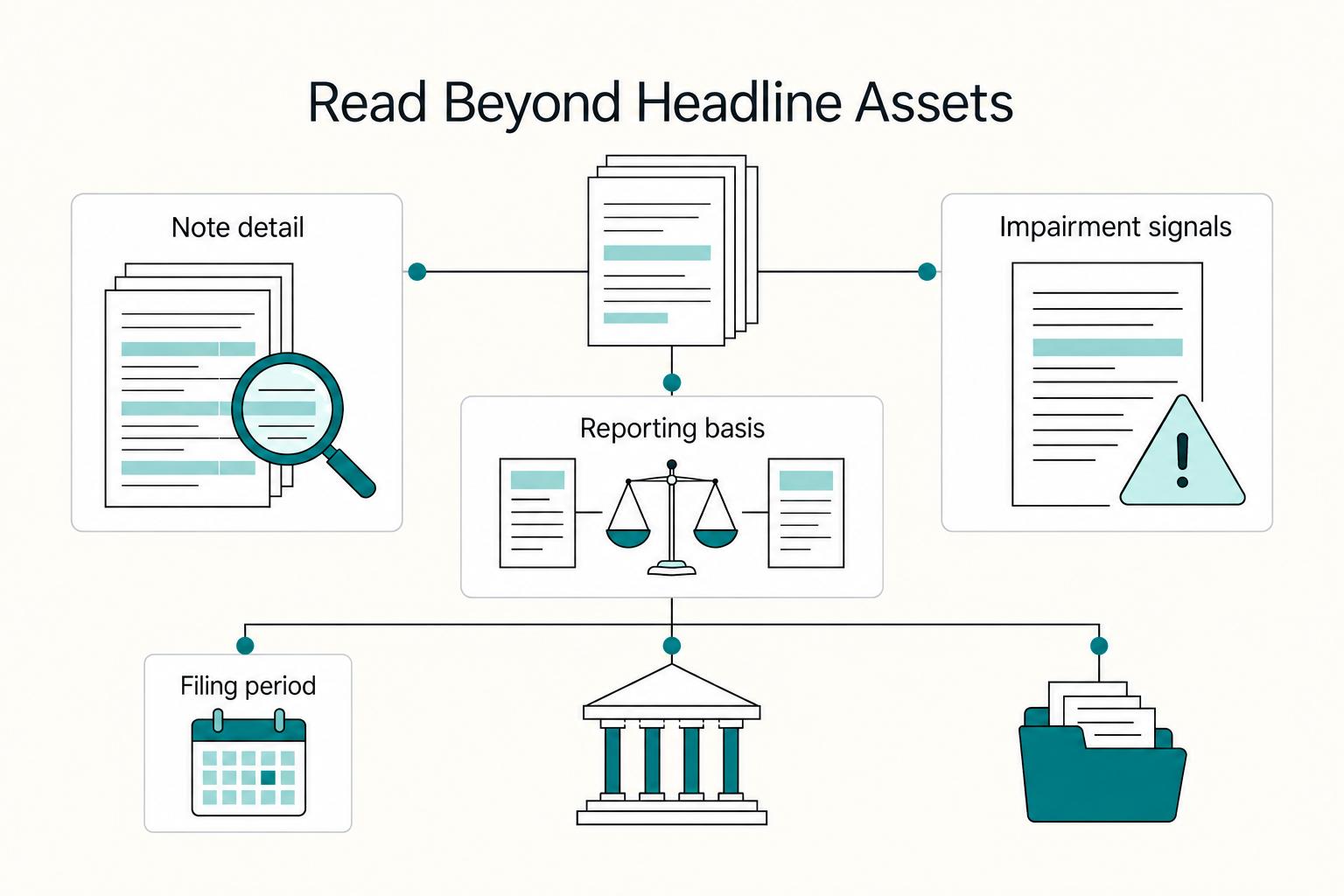
Goodwill and Intangible Assets on a Balance Sheet for Payment Risk
If you invoice clients and carry delivery costs before you get paid, goodwill and other intangible balances can show where accounting judgment is concentrated. They do not predict nonpayment on their own, but they do show where to look next before you offer loose terms. The practical goal is simple: read the balance sheet and related notes, identify the accounting areas that need more scrutiny, then set deposits, milestones, and net terms that keep your cashflow from carrying the full risk.