
Quick Answer
Hypo-tax is an employer-policy estimate used in tax equalization, not a government levy. After leaving payroll, a freelancer can adopt the budgeting habit through a tax reserve, but that reserve does not equalize taxes or replace required estimated payments. Base it on current tax exposure and reconcile it as income, location, and deadlines change.
Deconstructing Hypo-Tax: How to Build a Superior Financial System Than the One You Left Behind#
If you're asking what is hypo-tax, the short answer is this: it is an employer estimate of the tax you likely would have paid if you had stayed in your home country. It sits inside a tax equalization policy meant to keep you broadly tax-neutral compared with staying home. It is not a separate government tax you directly pay. In common U.S. framing, it is usually treated as a reduction to compensation, and the calculation method comes from employer policy rather than one universal legal formula.
That distinction matters because it marks the shift from employee life to independent work. Corporate assignments can feel more predictable on payroll, but the employer and its providers control most of the machinery behind those results.
| Decision point | Corporate assignee model | Self-managed freelancer model |
|---|---|---|
| Cash flow visibility | Often more predictable on monthly net pay, with less visibility into underlying mechanics | Often less predictable at first unless you run a formal set-aside process |
| Compliance ownership | Employer policy typically coordinates the process and often funds actual home/host taxes | You own filings, payments, deadlines, and records |
| Reconciliation process | Annual true-up reconciles hypothetical withholding against final equalization results | You reconcile your own estimates against actual filings and payments |
| Who captures optimization upside | Under common policy design, employer may keep the difference when actual tax is lower than hypotax | Tax outcomes flow directly to you, including shortfalls if estimates are wrong |
The tradeoff is simple. Corporate equalization can improve predictability and reduce day-to-day burden, but you get less control. Independent work gives you more control, but only if you handle compliance and cash planning on purpose.
What does the corporate flow usually look like?#
The employer or its provider estimates a home-country hypothetical tax, deducts it through payroll under the policy, coordinates covered actual taxes and filing support, and reconciles the result in a true-up. The assignment policy determines what is covered; the employee still supplies required information.
- Pre-year estimate
The employer or its tax provider estimates your hypothetical liability from a stay-at-home baseline.
- Withholding through payroll
The hypothetical amount is typically withheld ratably from wages during the assignment period.
- Employer-managed tax handling
Under equalization policy, the employer commonly handles actual home/host tax payments and coordinates filing support, while employee participation is still typically required. Jurisdiction mechanics vary, so verify the current local rule before you rely on it.
- Year-end true-up
The provider reconciles withheld hypotax against final equalization results and settles the difference.
A practical checkpoint is to review your assignment letter, equalization policy, payslips showing hypothetical withholding, and annual true-up statement. Those documents show what the employer covered, what you still had to do, and where responsibility stayed with you. If any of those documents use different terms for the same item, note that before you copy the logic into your own system. Clarity about labels now makes later reconciliation much easier.
What you want to carry into self-employment is not the corporate wrapper. It is the control logic underneath it: predictable cash flow, a documented calculation method, and a repeatable true-up habit. Once you keep those three pieces, the independent version gets much easier to run. If you want a deeper dive, read Digital Nomad Taxes in 2026 With a Defensible Filing Plan.
Step 1: Build Your Personal Hypo-Tax Reserve From Incoming Revenue#
A freelancer’s tax reserve is cash planning, not employer tax equalization. Set aside a calculated share of cleared receipts for expected bills, and make required tax payments by the applicable deadlines. A reserve transfer itself pays no tax.
How should you set the reserve rule?#
Use a separate tax-reserve account and a documented transfer trigger after cleared receipts or on a scheduled sweep. Log each movement so receipts, reserved funds, and usable cash remain visible. This is a budgeting reserve, not payment of tax; meet applicable advance-payment deadlines separately.
- Create one dedicated reserve account separate from day-to-day operating cash.
- Define one transfer trigger. Each time client cash clears, move the reserve share immediately or at the next scheduled sweep.
- Treat the reserve as non-operating cash so it does not get mixed into routine spending decisions.
- Log every transfer wherever you track invoices and receipts so gross cash in, tax reserved, and remaining operating cash stay visible.
In many corporate setups, you mainly saw a hypo-tax line item and then a year-end summary with limited transparency. Your own system should be easier to inspect at any time.
A useful test is whether you could look at one month of activity and answer four basic questions without guessing: What cash came in? What portion was reserved? What remains available to operate the business? Was any transfer missed? If the answer depends on memory or inbox searches, tighten the process before volume grows.
How should you pick the reserve percentage?#
Estimate tax exposure using taxable profit, allowable expenses, other income, contributions, credits, withholding, and payment deadlines. Convert the cash requirement into a provisional transfer percentage of receipts, document the assumptions, and revisit it as facts change. Gross receipts are a transfer shortcut rather than the tax base.
- Gross revenue actually received.
- Your current working estimate of taxable exposure.
- Any material changes that could shift that estimate.
Use taxable profit, allowable expenses, other income, social contributions, credits, withholding, and payment deadlines to estimate exposure. A percentage of gross receipts is only a transfer shortcut, not the tax calculation. Review a provisional rate when those facts change.
One practical habit helps here: document the reason for the rate you chose. A short note in your bookkeeping file or monthly close checklist is enough. That way, when facts change, you can compare new information against the old assumption instead of rebuilding the logic from scratch.
How do you make the workflow repeatable?#
Cash arrives, the reserve transfer runs, and the movement is logged. Reconcile the reserve monthly, make required estimated or advance payments during the year, then compare the reserve and payments with actual liability at filing. Waiting for year-end can create penalties even when enough cash was reserved.
Review the reserve rate periodically with your tax advisor, and again whenever the facts change in a meaningful way.
| Setup choice | Option A | Option B | Practical tradeoff | Decision rule |
|---|---|---|---|---|
| Transfer method | Move on receipt | Scheduled sweep | Speed vs routine | Pick one trigger and apply it consistently |
| Reserve structure | Single account | Multiple sub-accounts | Simplicity vs granularity | Start simple, add complexity only if needed |
| Rate management | Working fixed rate | Working fixed rate + periodic review | Execution simplicity vs adjustment frequency | Document assumptions and revisit when facts change |
Most failure modes are operational: a missed transfer, an outdated rate assumption, or records that do not match account movement. Clear, simple rules are usually easier to run than complicated ones. A written checklist, a recurring reminder, and a visible reserve balance help keep the process on track.
If you get this step right, tax cash flow becomes more predictable, filing time gets less painful, and Step 2 becomes easier because your numbers are cleaner from the start.
You might also find this useful: How to Handle Tax Equalization for Expat Employees.
Step 2: Keep residency, invoice, and payment records together#
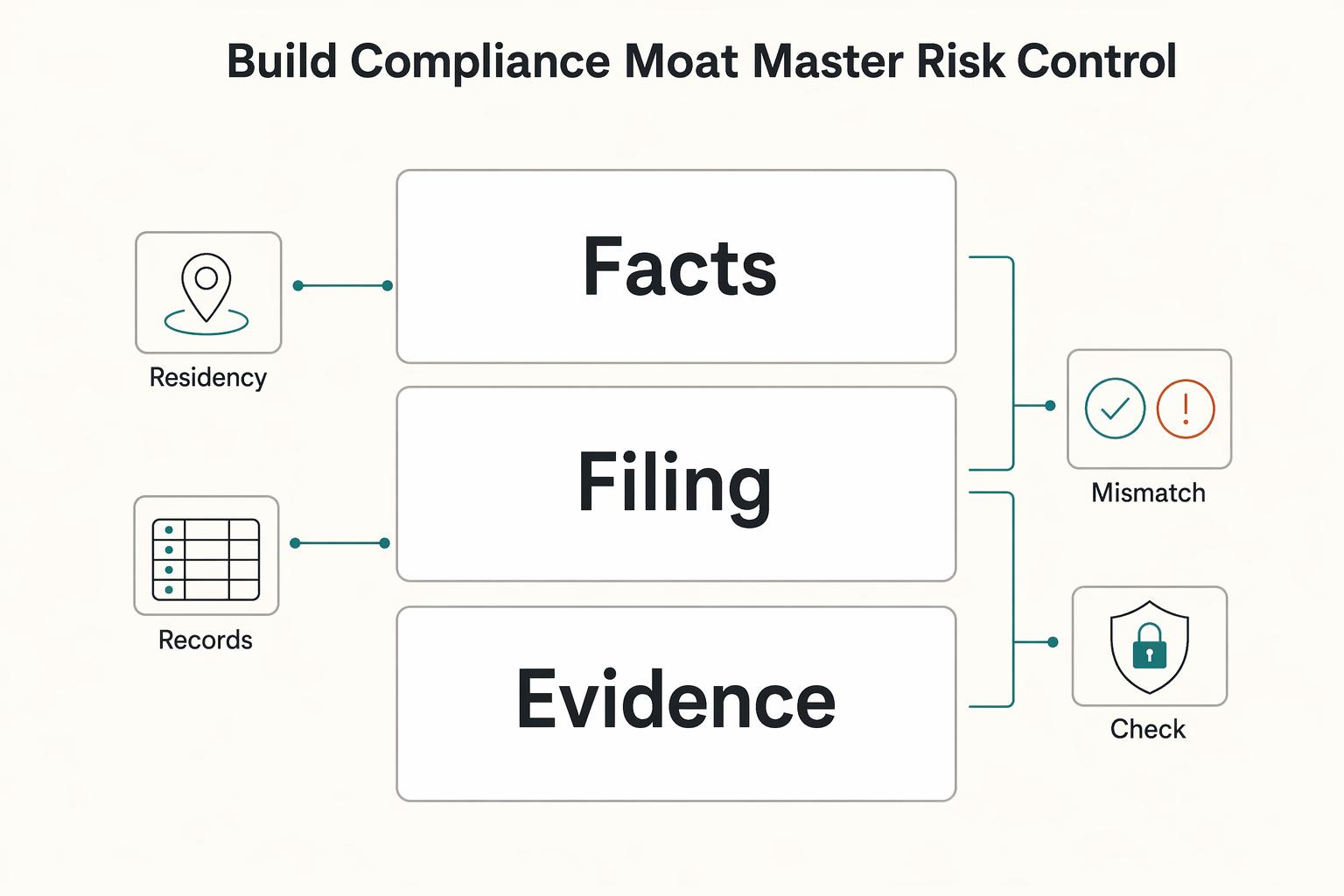
Once the reserve system is working, the next job is to protect the facts behind your filing position: where you were, what you invoiced, and what you can prove. This is where most avoidable trouble starts. Done well, it gives you fewer surprises, cleaner evidence, faster advisor handoffs, and less compliance risk.
| Control area | Manual baseline | Tool-based / structured baseline | Main tradeoff | Safe default |
|---|---|---|---|---|
| Residency tracking | Spreadsheet + calendar notes | Day-tracking tool + monthly evidence reconciliation | Manual is easy to start but easier to miscount; tools reduce counting errors but still require review | Tool-based tracking with monthly reconciliation |
| Invoicing | Basic invoice fields only | Cross-border-compliant setup (client tax details, VAT/reverse-charge handling, contractor forms) | Basic invoicing is faster now but creates ambiguity later | Cross-border-compliant setup for foreign clients |
| Recordkeeping | Ad hoc folders and inbox search | Audit-ready cloud archive with naming rules + monthly tie-out | Ad hoc feels lighter until filing or audit; structured records reduce rework | Audit-ready archive from day one |
What should your residency tracking checklist include?#
Your first control is a verified residency ledger, not a generic "183-day" assumption. Use one file that pulls together your daily location log, travel evidence such as stamps, tickets, and lodging, home or lease details, and state-ties notes such as permanent place of abode factors.
| Rule example | Threshold or test | Notes |
|---|---|---|
| U.S. substantial presence test | At least 31 days this year and 183 weighted days across three years: all this year, 1/3 prior year, 1/6 second prior year | Applies to relevant noncitizens; excluded days and exceptions may change the result |
| Other country or state residence | Apply the jurisdiction’s actual tests, including domicile or home ties where relevant | A day count alone may not settle residence |
| Treaty tie-breaker | Use the actual treaty and required filing position | Does not automatically remove every domestic filing obligation |
Reconcile your day log to travel evidence and calendar entries each week. Then, once a month, review the rule families for each relevant country or state, include treaty tie-breaker checks for potential dual-residence cases, and keep a rule register. Where the limits are jurisdiction-specific or not yet confirmed, mark those entries as Current threshold pending official, tax, or source-record verification rather than treating an assumption as settled. The output should stay simple: one advisor-ready file with day counts, supporting evidence, and any open questions.
For the U.S. substantial presence test, count all relevant current-year days, one-third of the preceding year, and one-sixth of the second preceding year, with the current-year minimum. Check excluded days and closer-connection or treaty exceptions. U.S. citizens do not use this test to determine whether worldwide income remains reportable.
What usually breaks this system is not the rule itself but weak inputs. A calendar entry with no supporting travel proof, a flight receipt that does not match the day log, or a lease file stored separately from the rest of the evidence can all turn a simple review into a reconstruction exercise. The easier you make monthly reconciliation, the less likely you are to face that scramble later.
What should your invoicing compliance checklist cover?#
Confirm the client and contract entity, service, billing country, relevant registrations and VAT details, invoice requirements, and applicable withholding or payer forms. Reverse-charge wording belongs only where that treatment applies. W-9 generally documents U.S. persons; W-8BEN generally documents an individual foreign beneficial owner, with other forms needed for entities or some income. A rejected form does not automatically impose 24% backup withholding on every foreign contractor.
| Topic | Article guidance | Notes |
|---|---|---|
| EU B2B | Check applicable invoice requirements and VAT treatment | Reverse-charge wording applies only when that treatment is appropriate |
| U.S. payer documentation | Use W-9 for U.S. persons where applicable; W-8BEN generally certifies an individual’s foreign beneficial-owner status | Other forms may be required, including for entities or certain U.S. service income |
| Backup withholding | 24% on covered reportable payments when applicable triggers occur | Not a universal tax on foreign contractors or every rejected form |
Start with the core inputs: client legal name, billing country, contract counterparty, service description, your tax or registration status, client VAT details if relevant, and any payer forms the client requests. Validate each new client setup before the first invoice, then reuse that approved profile. Each month, spot-check invoices against contract terms and payment records.
The goal is a clean match between invoices, payer documentation, residency facts, VAT or reverse-charge treatment, and any withholding or reporting process.
Key checks:
- Confirm the invoice requirements and VAT treatment for the actual supply.
- Add reverse-charge wording only where that treatment applies.
- Match payer forms to recipient status, entity type, and income; W-8BEN is not the form for every non-U.S. recipient.
- Ask the payer to identify any withholding rule and missing certification before correcting records.
Escalate to an advisor if:
- Two countries may both claim residency and treaty tie-breaker analysis is needed.
- VAT or reverse-charge treatment is unclear in the governing jurisdiction.
- Contract entity, billing entity, and service-delivery country do not align.
- A U.S. payer rejects W-8BEN or W-9, raises backup withholding, or raises 1099-NEC handling.
A good operating standard is that every invoice should trace back to one approved client profile and one signed contract path. If you change a client setup midstream, note why and from what date the change applies. That makes your invoice trail easier to follow when you or your preparer review it months later.
What should your record system capture?#
Your records need to work as evidence, not just storage. Build one cloud archive that holds invoices, receipts, bank statements, contracts, payment proof, travel evidence, tax forms including W-8BEN or W-9 where used, and VAT or withholding correspondence.
| Example | Retention period | Notes |
|---|---|---|
| U.S. general period | Usually 3 years from filing, subject to IRS rules | Start date and exceptions matter |
| Substantial omission | 6 years when omitted income exceeds 25% of reported gross income | Other exceptions include indefinite retention for no return or fraud |
| Employment tax records | At least 4 years after due/payment date, whichever is later | Only where employment tax records are relevant |
| Other jurisdictions | Apply the actual local rule | Keep longer where cross-border, property, or contract needs require it |
File documents weekly by year and then by client, account, or tax topic. Each month, reconcile bank activity to invoices and reserve movements, export day-count logs, and confirm that you can trace the full chain from contract to invoice to payment to tax treatment. The result should be an audit-ready evidence trail that supports positions on residency, source income, deductions, and withholding.
A simple naming rule helps more than people expect. If contracts, invoices, payment confirmations, and tax forms follow a consistent pattern, you can pull a clean file set quickly for one client, one month, or one filing issue. The point is not elegance. The point is being able to prove the story of the transaction without relying on memory.
Use the IRS recordkeeping periods where applicable and check local requirements separately. Keep property records through the relevant disposal period, and retain longer where open proceedings or other obligations require it. A generic three-year deletion rule is insufficient.
Related: 183-Day Rule Explained: Stop the Tax Myths Before They Cost You.
If you're building your compliance moat now, use the Tax Residency Tracker to log travel days and keep threshold checks in one place.
Decide What You Own, Delegate, and Review on a Cadence#
You gain control when tax management runs on habits, not stress. The practical split is simple: decide what you own directly, what you delegate, and what you review on a fixed cadence.
Own these three behaviors:
- Fund your Tax Provision Fund each time income arrives.
- Keep your location log current and reconcile it to real evidence on a schedule.
- Maintain one evidence pack that links contracts, invoices, payment proof, travel support, and tax documents.
Delegate technical and cross-border judgment. Tax filing can get complicated, and many taxpayers use professional help. A credentialed preparer can be a practical default, even at higher cost, especially if multiple countries may have a claim, your records conflict, or your filing duties are unclear.
Review on a recurring cycle and keep the most useful part of the hypo-tax model: a visible true-up. Run a short weekly check for new payments, travel updates, and missing documents. Run a monthly reconciliation across reserve balance, day log, and evidence files. At year-end, do a final pre-handoff self-review so your preparer starts with clean facts instead of a scramble.
The handoff itself should be structured. Give your preparer the same packet each time: your reserve summary, day-count file, client and invoice records, key tax forms, and a short note listing unresolved questions. That approach does not replace technical advice, but it can reduce back-and-forth and make it easier to see what still needs an answer.
Minimum viable checklist#
- Your reserve transfer runs after each payment. If unsure, automate it.
- Your day log is up to date and matched to supporting evidence. If unsure, keep more proof.
- Your archive links income, location, and documentation in one place.
- You have a named preparer or a shortlist for escalation. If unsure, choose a credentialed preparer.
- Escalate now if you have multi-country exposure, inconsistent records, unclear filing obligations, or any local trigger still pending official, tax, or source-record verification.
That is the real upgrade after leaving the corporate system: more predictable cash handling, potentially lower compliance risk, and cleaner inputs for residency and tax decisions that follow.
For a step-by-step walkthrough, see What Is a Tax Home for US Expats and Why It Matters.
When you want one operational layer for invoicing, getting paid globally, and payout visibility, review Gruv for Freelancers to confirm what's supported in your market.
Frequently Asked Questions
What does the corporate flow usually look like?
The employer or its provider estimates a home-country hypothetical tax, deducts it through payroll under the policy, coordinates covered actual taxes and filing support, and reconciles the result in a true-up. The assignment policy determines what is covered; the employee still supplies required information.
How should you set the reserve rule?
Use a separate tax-reserve account and a documented transfer trigger after cleared receipts or on a scheduled sweep. Log each movement so receipts, reserved funds, and usable cash remain visible. This is a budgeting reserve, not payment of tax; meet applicable advance-payment deadlines separately.
How should you pick the reserve percentage?
Estimate tax exposure using taxable profit, allowable expenses, other income, contributions, credits, withholding, and payment deadlines. Convert the cash requirement into a provisional transfer percentage of receipts, document the assumptions, and revisit it as facts change. Gross receipts are a transfer shortcut rather than the tax base.
How do you make the workflow repeatable?
Cash arrives, the reserve transfer runs, and the movement is logged. Reconcile the reserve monthly, make required estimated or advance payments during the year, then compare the reserve and payments with actual liability at filing. Waiting for year-end can create penalties even when enough cash was reserved.
What should your residency tracking checklist include?
Your first control is a verified residency ledger, not a generic "183-day" assumption. Use one file that pulls together your daily location log, travel evidence such as stamps, tickets, and lodging, home or lease details, and state-ties notes such as permanent place of abode factors.
What should your invoicing compliance checklist cover?
Confirm the client and contract entity, service, billing country, relevant registrations and VAT details, invoice requirements, and applicable withholding or payer forms. Reverse-charge wording belongs only where that treatment applies. W-9 generally documents U.S. persons; W-8BEN generally documents an individual foreign beneficial owner, with other forms needed for entities or some income. A rejected form does not automatically impose 24% backup withholding on every foreign contractor.
What should your record system capture?
Your records need to work as evidence, not just storage. Build one cloud archive that holds invoices, receipts, bank statements, contracts, payment proof, travel evidence, tax forms including W-8BEN or W-9 where used, and VAT or withholding correspondence.
Try a related tool
Researched and edited by the Gruv editorial team. Gruv builds cross-border billing, payouts, and finance-operations software for global businesses.
Sources
Educational content only. Not legal, tax, or financial advice.
Related Posts

Digital Nomad Taxes in 2026 With a Defensible Filing Plan
With digital nomad taxes, the first move is not optimization. It is figuring out where you may be taxable, where filings may be required, and what proof supports that position.

183-Day Rule Tax Myths That Trigger Residency Filing Mistakes
If you are a mobile freelancer or consultant, start here: the "183 day rule tax" idea is not a single universal test. It is a shortcut phrase people use for different residency rules that do not ask the same question. If you mix federal and non-federal residency logic, you can create filing risk even when your travel calendar looks clean.
How to Handle Tax Equalization for Expat Employees
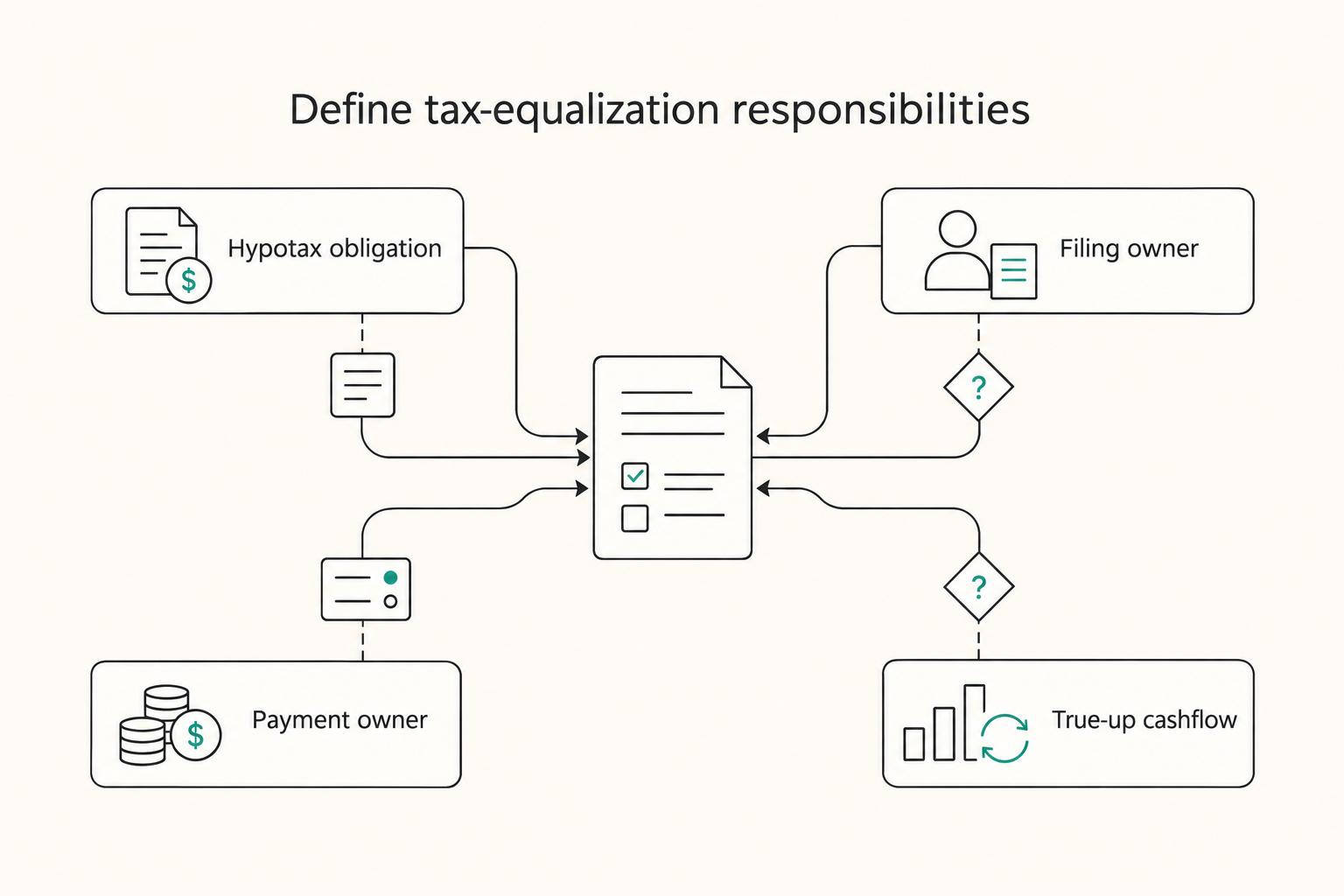
Tax equalization for expats is a tax-neutral framework, not a tax-cut strategy. Its job is to keep your assignment from leaving you better or worse off on tax than if you had stayed in your home country.