
Quick Answer
Remote workers can use Harvest Hosts successfully by treating each stay as a pre-coordinated, property-specific work decision with a verified backup plan. Before booking, confirm the listing rules, rig fit, arrival timing, internet failover, power endurance, and meeting readiness. It works best when short stays, regular turnover, and self-sufficient overnighting fit your schedule and work style.
Harvest Hosts: The Core Operating Model for the Uninitiated#
The current research set does not confirm Harvest Hosts' exact 2026 operating rules, plan details, or stay protocols. Treat each stop as property-specific and pre-coordinated until you verify the current membership terms and the host listing you plan to use. If platform terms and a specific listing differ from something you heard elsewhere, rely on the in-platform terms and that listing.
The right mindset is reciprocity: you are a guest on someone else's property. Read the listing closely, follow the stated instructions, and keep your stay easy for the host to accommodate.
What the stay flow can look like#
Before you plan a stop, confirm what access is required and whether the specific property fits your rig, schedule, and needs. The practical question is whether the listing gives you enough clarity on access, parking, timing, and on-site expectations for you to arrive without friction.
Do not assume you can arrive without prior coordination. Verify the process shown in the listing, then confirm the details that most often create problems: rig fit, entry instructions, timing limits, and arrival steps. Saving a screenshot of listing rules and host messages can help if service is weak near the property.
Arrival etiquette is straightforward even when exact steps vary by host: arrive as instructed, check in as requested, and keep your setup compact. Common problems usually come from mismatched expectations, such as arriving outside agreed timing, parking in the wrong area, or expecting services that were never confirmed.
Choosing a plan shape#
Pick a plan based on your real travel pattern and the host coverage you will actually use, then verify current details before purchasing.
| Plan type | Network difference | What to verify before you buy | Best fit |
|---|---|---|---|
Entry tier [verify current name] | Scope of listings and booking access may vary | Current annual price, included access, and booking rules | You want a lower-commitment way to test fit |
Mid tier [verify current name] | May add broader coverage or flexibility | Whether added access matches your routes | You need more backup options between destinations |
Higher tier / bundle [verify current name] | May include wider access or extra features | Whether added cost aligns with actual usage | You travel frequently enough to use expanded options |
If you expect limited use, a lower-cost valid option is often more practical. If your routes are irregular and you need redundancy, broader coverage can be worth it.
Rig fit and your first stay#
Do not assume any van or camper is automatically eligible. Verify the platform's current definition of self-contained and confirm fit at the listing level before requesting a stay.
If your setup depends on external facilities or extra space, confirm compatibility in advance rather than guessing. For your first stay, keep execution simple:
- Use the request/contact method shown in the listing and read the full listing twice.
- Send a clear note with your rig type, size, and realistic arrival timing.
- Plan to support the host's business in a way that fits the property.
- Park where instructed, not where it looks convenient.
- Operate as a self-sufficient guest and keep your footprint tight.
- Depart according to the listing or host instructions.
If you want a deeper dive, read The Best RVs and Campervans for Digital Nomads.
Calculating the True ROI of Each Stop for Your Work Week#
Do not evaluate this as "cheap camping." Evaluate it as a work decision: did this stop improve your week enough to justify its total cost and operational risk?
Use a simple estimating discipline: define the purpose of each stay, write down your assumptions, and include all relevant costs, not just the visible membership line. In practice, that means deciding upfront whether the stop is for focused work, a transit break, a social reset, or recovery between demanding days.
| Decision lens | Cost-only view | Business ROI view |
|---|---|---|
| Cash inputs to log | Membership fee (confirm the current annual price) and any host purchase | Membership fee, host purchase, detour fuel, added drive time, and backup-night cost if the stop does not work out |
| Focus quality | "I parked for less" | "Did this environment support the work I planned, with acceptable noise and enough calm?" |
| Host access | "It was available" | "Did the listing fit my rig, timing, parking constraints, and workday requirements without friction?" |
| Schedule reliability | "I skipped a campground fee" | "Did this stop protect tomorrow's calls and departure plan, or add uncertainty?" |
| Burnout risk | "One more low-cost night" | "Did this improve energy and travel rhythm, or add logistical strain?" |
Track these three ROI pillars as weekly outcomes, not assumptions:
Creativity. Best fit when your upcoming work is flexible and benefits from a change of setting. If your next day is call-heavy or deadline-compressed, prioritize predictability over novelty.
Networking. Value appears when you have the bandwidth for brief, genuine host interaction. If you are stretched thin, treat social upside as optional and focus on a low-friction overnight.
Sustainability. This matters most over repeated travel weeks. If these stops consistently leave you steadier the next morning, that is real return; if they regularly increase setup stress, your setup may need a more predictable base.
Use this quick self-score before buying or renewing (0-2 each, total 0-8):
- Work style: mostly async/deep work = 2; mixed = 1; live-call heavy = 0
- Call sensitivity: critical calls can be scheduled elsewhere = 2; sometimes = 1; rarely = 0
- Travel cadence: frequent regional moves = 2; occasional = 1; mostly stationary = 0
- Energy pattern: location variety usually helps = 2; neutral = 1; usually drains = 0
Interpret it as a planning cue, not a guarantee: higher scores suggest better fit, middle scores suggest a limited trial with tight tracking, and lower scores suggest a more predictable overnight model.
For your next three stays, log actuals and update your estimate each time:
- Planned purpose: [deep work / transit break / recovery / social]
- Total cash outlay: [membership allocation + host spend + detour fuel + backup cost]
- Planned work completed: [yes/no + short note]
- Call reliability: [met / partly met / failed]
- Next-morning energy: [better / same / worse]
- Rebook for the same workday type: [yes / no]
You might also find this useful: How to Find Free Camping in the US.
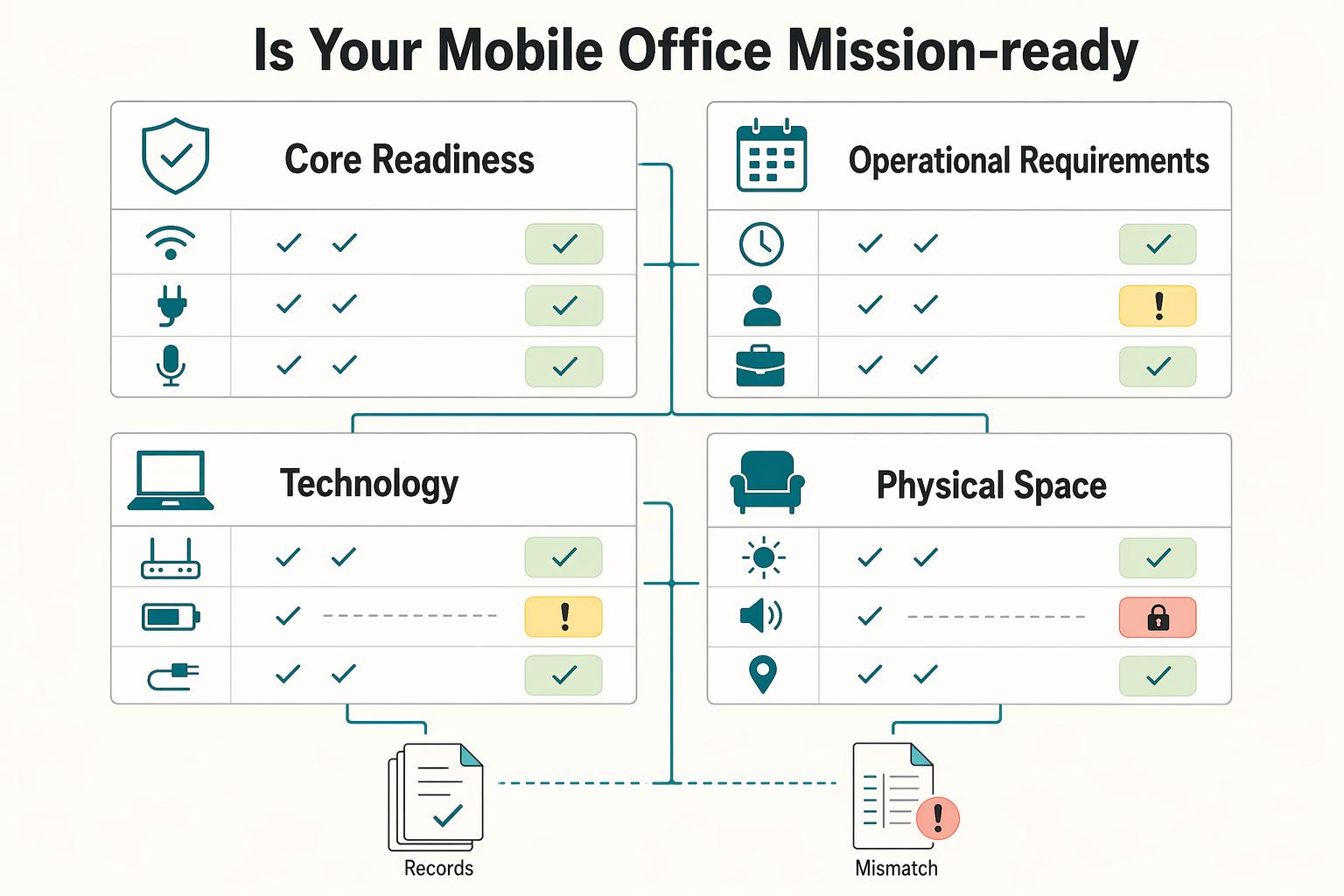
The Remote Work Readiness Audit: Is Your Mobile Office Mission-Ready?#
If your income depends on being reachable, only treat a host stop as a work site after it passes a reliability audit. Your decision gate is simple: connectivity failover, power endurance, and meeting quality all need to work under normal conditions.
A practical way to run it is as a readiness assessment: check Core Readiness, then Operational Requirements, then Technology and Physical Space. The Telehealth Readiness Assessment Tool is not an RV standard, but its questionnaire and scoring structure are useful because they force a pass/fail check before pressure hits.
| Audit area | What to verify before you book | Common failure mode |
|---|---|---|
| Core Readiness | The stop matches your real workday risk (especially call sensitivity) | Treating a high-stakes call day like a flexible travel day |
| Operational Requirements | Your arrival and setup plan is realistic, with a fallback option | Tight timing, setup friction, no practical backup |
| Technology | Internet can fail over and power can cover your actual workload | Single-point internet failure or power assumptions |
| Physical Space | Video, audio, lighting, and posture are client-ready | Noise, unstable framing, poor light, uncomfortable setup |
Connectivity you can trust#
Ask this first: if your primary link drops right before a meeting, what is your next move? If you do not have an immediate answer, you are not ready yet.
Use a redundancy pattern that fits your work risk: primary connection, cross-network backup, and satellite fallback only when your route regularly puts you in weak-cell areas. Before each trip cycle, verify current plan terms yourself (hotspot limits, deprioritization behavior, roaming, and device rules) [verify current plan details].
Run a real failover test, not a theory test. Join a live meeting or test room, drop the primary on purpose, and confirm you can rejoin quickly on backup. Keep a small record of what actually worked. If a device starts acting up, restart it and retest before blaming the location.
Power that matches your workday#
Size power from your real usage, not from a generic setup. List the devices you actually run during work blocks, estimate daily load per device, total the day, then add a weather/no-sun buffer.
Then pressure-test it against a normal workday. Work from battery as you would on the road, then confirm your charging path can recover for the next day by verifying your actual capacity and charge rates. If success depends on cutting key tools or constant power-saving workarounds, treat the setup as not ready.
For client-facing work, confirm:
- Stable eye-level camera setup with a repeatable background
- Clear audio that still holds in wind or site noise
- Lighting you can control without depending on perfect daylight
- Ergonomics you can hold through long work blocks
Pass or fail before departure#
Use this pre-departure gate before you request or drive to a stay:
- Internet failover: Pass only if you can switch links and rejoin a meeting without troubleshooting.
- Power endurance: Pass only if your system supports your normal work pattern, not an emergency-lite version.
- Meeting setup: Pass only if video, audio, lighting, and seating are client-ready in the exact workspace you will use.
If any one fails, classify the stop as leisure or transit, not a workday location. For a broader remote-work planning lens, we covered related setup thinking in London, UK: A Guide for Expats and Remote Workers.
The Host Vetting Framework: A System for Selecting High-Performance Locations#
Before you request a stay, run a verification-first screen: reviews, map recon, and a short host message. Harvest Hosts-specific vetting rules are not established, so treat every work-critical condition as unverified until you confirm it directly.
Your readiness audit proves your setup can work in principle. This step checks whether this specific location works for your actual schedule.
Read reviews like a risk screen#
Use reviews to surface unknowns, not to chase vibes. Group what you find into four buckets so you can decide faster:
- Connectivity clues: any mention that suggests signal, sky visibility, or work-call reliability may be uncertain
- Noise/privacy clues: anything that could affect calls, focus blocks, or predictable quiet hours
- Access-fit clues: signs that entry, turns, parking surface, or setup difficulty may not match your rig
- Host communication quality: whether arrival/parking details are clear and responses are specific
If language is vague, keep it as a risk signal rather than upgrading it to certainty.
Do map recon before you message#
Use satellite and street-level views (when available) to test assumptions from reviews. Keep a short checklist:
- Sky visibility
If satellite internet matters to you, check whether the likely parking area appears open enough. If unclear, mark it as an explicit host question.
- Terrain and leveling risk
Look for slope, uneven surfaces, or setup conditions that could disrupt a full work block.
- Rig access constraints
Check entry width, turning room, and likely parking approach against your rig's real limits.
- Nearby disruption sources
Scan for roads, rail, industrial activity, or event areas that could introduce daytime noise or traffic.
If you rely on public notices or government pages during recon, verify authenticity and security before trusting them: official U.S. government sites use .gov, and sensitive info should only be shared on secure pages (https with a lock icon). If a portal fails to load, also consider browser support issues; older browsers may not be supported.
Ask a short question set and decide#
Send a brief, respectful message covering only what you could not verify yourself:
- Where do guests usually park, and how predictable is daytime noise there?
- If satellite internet is needed, is that area generally open to the sky?
- Any access constraints for a rig of my size?
- Any routine daytime activity (deliveries, equipment, events) that could affect calls?
Then make a simple call based on verified conditions:
| Decision | When to use it |
|---|---|
| Book | Your key work conditions are confirmed and no major unknowns remain |
| Book with backup plan | One important condition is still uncertain, but you have a tested fallback |
| Skip | Work-critical conditions remain vague, conflicting, or clearly unsuitable |
For a step-by-step walkthrough, see A Guide to Worldschooling and Unschooling for Nomad Families.
The Risk Mitigation Protocol: Managing Liability and Your 'Plan B'#
Treat every stay as a risk decision, not a simple yes/no: approve, conditionally approve, or reject based on coverage clarity, on-site damage risk, and backup readiness before you drive.
Formal risk management starts before operations begin, and your trip should follow the same pattern. The goal is simple: prevent one bad surprise from disrupting work or creating a property issue.
Check your coverage before you roll#
Run this pre-trip checklist each time:
- Confirm whether your RV and personal liability coverage applies on private host property.
- Ask how your policy responds if you damage a surface, fence, gate, utility post, or landscaping during entry, parking, leveling, or departure.
- Ask how claims are handled if a connected guest, child, or pet causes damage, or if someone is injured near your rig.
- Record answers in writing when possible, or log the date, agent name, and summary.
- Do not assume any platform-specific coverage requirement has been satisfied; confirm current requirements directly with the platform and your insurer before the stay.
Keep these notes with your host recon and backup details. If you rely on legal/access references, capture page currency details too, since some official-looking resources are authoritative but still marked unofficial.
Use a zero-impact on-site protocol#
Use the same four-step routine every time:
| Phase | What you do | Why it reduces risk |
|---|---|---|
| Arrival | Pause before committing; walk tight/soft/sloped areas; confirm instructions if on-site conditions differ from messages. | Prevents forced maneuvers and wrong-spot setup. |
| Setup | Keep footprint small; use pads if needed; avoid unnecessary repositioning; note pre-existing surface damage. | Lowers chance of avoidable ground or surface damage disputes. |
| Stay | Stay within assigned boundaries; secure loose gear; do one leak/drip check under the rig. | Reduces incidental property damage during occupancy. |
| Departure | Do a full walk-around of rig and ground; report any issue immediately. | Early disclosure usually resolves faster than delayed disputes. |
Rank your backup before arrival#
A backup counts only if you have already checked work reliability, access constraints, and practical check-in.
| Backup option | Work reliability | Access certainty | Check-in practicality | Best use |
|---|---|---|---|---|
| Pre-confirmed commercial RV park/campground | High | Usually high once fit is confirmed | High with same-day confirmation | Meeting-heavy days or hard deadlines |
| Previously verified public campground/public land option | Medium to low | Variable | Variable | Lighter schedules with daylight flexibility |
| Work-first fallback (coworking/library/hotel business center) plus separate overnight plan | High for work, mixed for overnight | Usually high for work block | Medium | Protecting calls when overnight plan is secondary |
Set and verify your own fallback cutoff before departure: [verify minutes] and/or [verify miles]. Save confirmation screenshots, addresses, arrival notes, and after-hours instructions. If your "backup" is another unvetted host, treat it as unconfirmed.
- Go: Coverage is clear, conditions match recon, and host instructions are workable.
- No-go: Liability scope is still unclear, access risk is higher than expected, or surface conditions make damage likely.
- Reroute: A work-critical condition fails on arrival; notify the host briefly, avoid full setup, and switch to your confirmed backup immediately.
Related: A Guide to Full-Time RVing on a Budget.
Conclusion: Harvest Hosts as a Strategic Tool, Not a Gamble#
You will get more from Harvest Hosts when you treat it as a planning choice, not a spur-of-the-moment stop. The point is not to chase a perfect stay every time. It is to create controllable conditions for work by using the same checks, timing, and fallback discipline on every stop.
That is the shift from casual use to strategic use. A simple plan works because it tells you what to check before departure, what counts as a pass, and when to reroute. In practice, that means keeping a timeline task list before each move, not just a destination in your head. If your next stop does not pass your host-fit check, your connectivity check, and your backup check, do not rationalize it. Skip it.
| Decision area | Casual approach | Strategic approach |
|---|---|---|
| Planning discipline | Decides late and fills gaps on the road | Uses a timeline and task list before departure |
| Connectivity readiness | Assumes work will probably be fine | Verifies likely work conditions and keeps a second option ready |
| Fallback planning | Searches for alternatives after a problem starts | Notes a backup overnight or work location before driving |
| Host-fit checks | Books on appeal or novelty | Confirms the stop fits your schedule and workday requirements |
A useful checkpoint is to keep one small evidence pack for each stop: your timing, your key tasks, host notes, and your fallback location. That is not overkill. Improvisation can cost more when something breaks at the wrong moment.
Choose this model when you can work well with frequent stop changes, verify your conditions ahead of time, and move without scrambling. Choose a conventional campground when you need steadier conditions, less daily decision-making, or more predictable workdays.
Your next step is simple: use the audit, the vetting checks, and the fallback plan every time. Consistency will do more for you than improvisation.
This pairs well with our guide on A guide to 'travel warnings' and 'advisories' from the state department.
Frequently Asked Questions
Is it actually worth it for you?
It can be worth it if the stay model matches how you work. The first night has no camping fee, and members are expected to buy something from the host. It fits best when your route already passes useful hosts, your work can handle short stays, and your rig can stay overnight without hookups. If you need long settled stretches, utility certainty, or a fixed desk setup every day, a campground or apartment-style base may fit better.
How do you handle internet reliability?
Assume connectivity is your job to verify, not something the host guarantees. Check the likely parking area, host notes, and your own carrier coverage before requesting a stay, and consider whether the site looks open enough if you use satellite. Bring redundancy you already trust, such as a second carrier, an offline work block, or a pre-booked work location. If you cannot verify the parking situation well enough for meeting-heavy hours, skip that host.
What should you verify before you book, and how should you behave on site?
Verify what the listing actually offers instead of assuming electric hookups or extra nights are available. If anything is unclear, use the Help Center and the host communication guidance before sending the request. On site, keep your footprint small, follow host instructions, make the expected purchase, clean up after yourself, and keep one fallback option ready before you drive.
Researched and edited by the Gruv editorial team. Gruv builds cross-border billing, payouts, and finance-operations software for global businesses.
Sources
- congress.gov/116/plaws/publ94/PLAW-116publ94.htmtrusted
- ecfr.gov/current/title-30/chapter-V/subchapter-B/part...trusted
- federalregister.gov/documents/2013/01/16/2013-00123/standards-fo...trusted
- gao.gov/assets/gao-20-195g.pdftrusted
- mhcc.maryland.gov/mhcc/pages/hit/hit_telemedicine/documents/TL...trusted
- nrcs.usda.gov/sites/default/files/2024-07/tillage-tools-an...trusted
- pclt.defense.gov/DIRECTORATES/RegulatoryProgram/ActiveGuidanc...trusted
Educational content only. Not legal, tax, or financial advice.
Related Posts
The Best RVs and Campervans for Digital Nomads
If you're searching for the **best rvs for digital nomads**, do not start with brand hype or dealer roundups. Start with your workday. The wrong layout will cost you every day, even if the rig looks great on the lot.
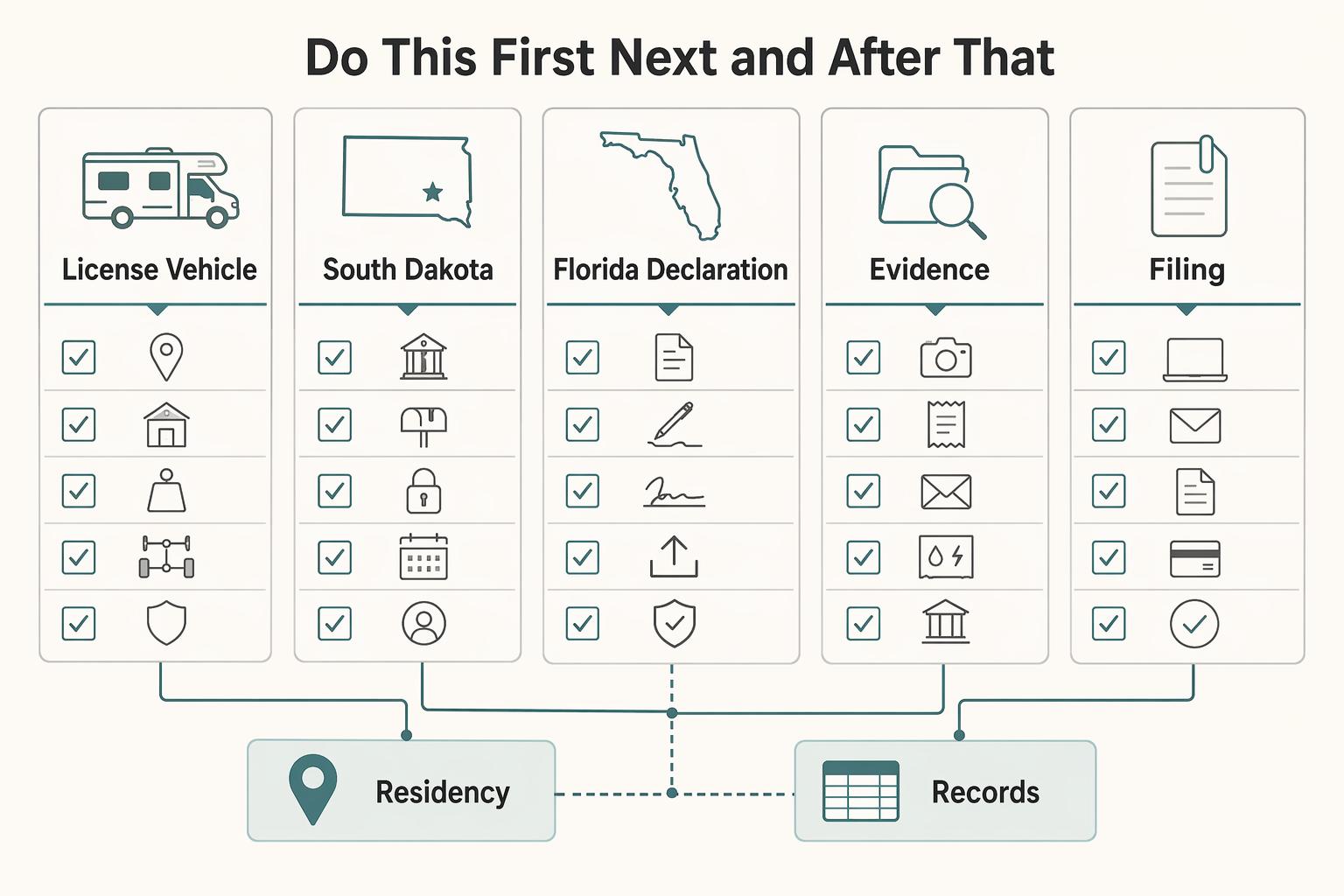
Full-Time RVing on a Budget for Freelancers Who Need Reliable Cashflow
Before you compare rigs, choose your domicile and make it provable. This comes first because a cheap setup can get expensive fast when your license, vehicle records, banking profile, and client paperwork do not match.
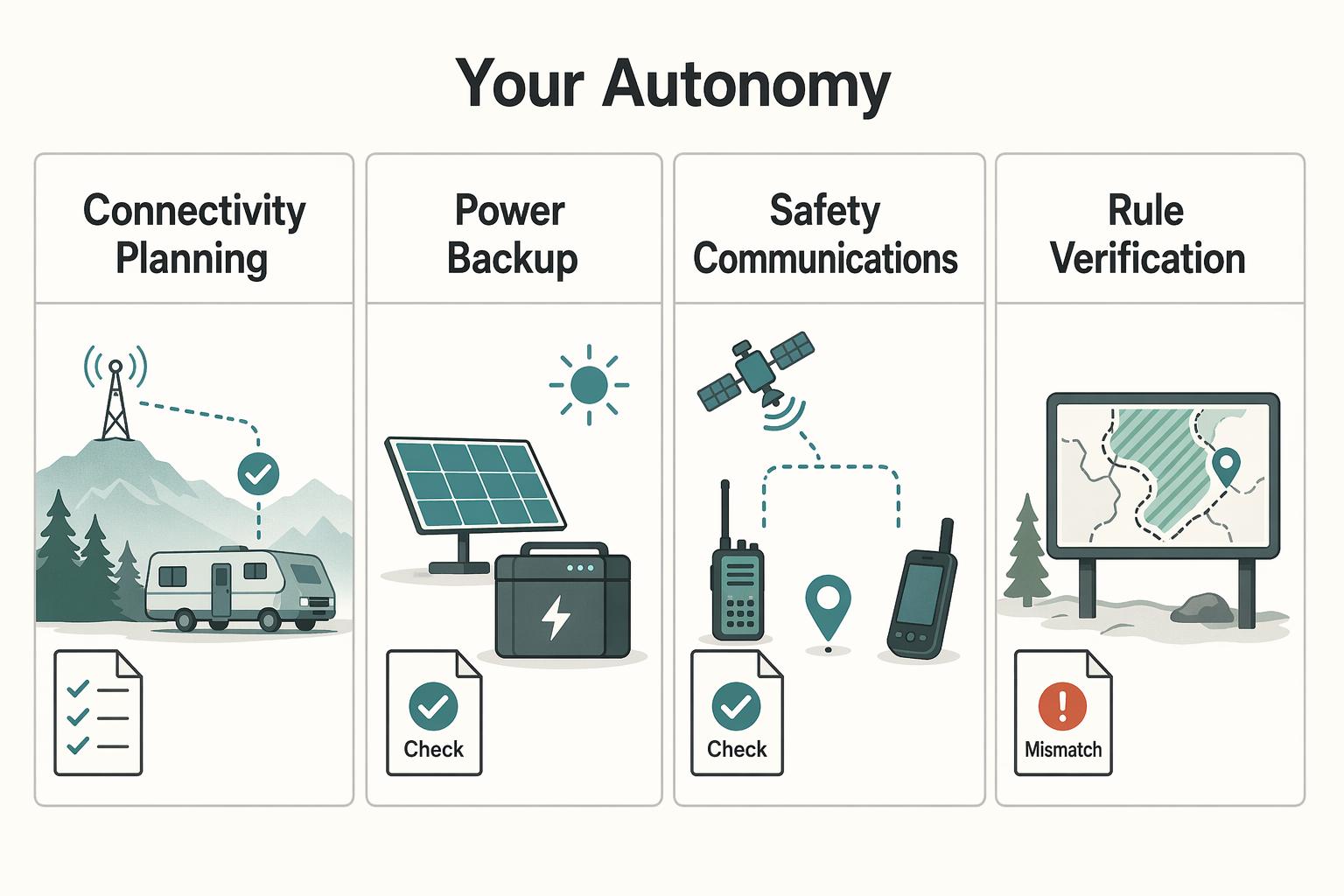
How to Find Free Camping in the US
To **find free camping in the US** that you can actually work from, treat every listing as a lead until you verify it. Use a simple discovery workflow (`search`, `site`, `contact`, `map`, `reviews`), but do not assume a listing tells you the current camping rules.