
Quick Answer
Yes - decide registration by checking aggregate turnover against ₹20 lakhs (or ₹10 lakhs in special-category states), then test service classification and Section 2(6) export conditions before invoicing. Foreign clients alone are not enough for export treatment, and possible OIDAR work needs a separate check. If you are near threshold or signing new contracts, registering earlier is usually safer than backfilling paperwork. Verify your position on CBIC and gst.gov.in, then save a dated turnover worksheet and decision note.
Start here if you freelance from India and bill global clients#
This guide is for solo freelancers and independent consultants working from India, whether you bill Indian clients, foreign clients, or both. It focuses on practical GST registration decisions, not large-company structures, multi-entity planning, or product-heavy GST setups.
By the end, you should be able to decide whether to register now, which invoicing path fits your client mix, what documentation to maintain, and when to bring in a tax professional.
What this guide helps you decide#
Most GST decisions for freelancers come down to a small set of facts working together. Check these first:
- whether aggregate annual turnover exceeds commonly cited thresholds: ₹20 lakhs, or ₹10 lakhs in special category states
- whether your work is domestic service or may qualify as export of services
- whether your service needs separate classification review, for example possible OIDAR implications
- whether your situation includes inter-state elements that need careful verification
Boundaries to keep in mind before acting#
Do not treat any single rule as the whole answer. Inter-state treatment is summarized differently across the material referenced here. That includes references to notification-based relief such as Notification 10/2017, amended by 10/2019, so you should verify this area against your exact facts.
A foreign client alone does not make a service an export for GST. Export treatment depends on statutory conditions, including the test under Section 2(6) of the IGST Act.
How to use this article#
Use this as an execution guide, not as a substitute for live law or filing instructions. As you go, separate domestic and foreign-client billing, apply Rule 46 invoice requirements, and verify service classification where needed before you make filing decisions.
Keep one habit from day one: review turnover quarterly and log what you verified before you act. This matters most when you are near a threshold, because late registration can create penalty exposure. Penalties can run up to ₹10,000 plus tax dues.
You might also find this useful: The Freelancer's Guide to Presumptive Taxation in India (Section 44ADA).
Key GST terms you need before making any decision#
Get these terms straight first. Freelancers often mix up registration, export treatment, and compliance steps.
GST, registration, and GSTIN#
GST is India's unified indirect tax system, and GST registration brings you into the compliance cycle for invoicing, returns, and tax handling where applicable. Before you start registration, make sure your PAN and Aadhaar are linked and updated. That can prevent avoidable friction.
Export of services is a legal test, not a client-location shortcut#
A client being outside India does not automatically settle export treatment. This material refers to services supplied outside India as export of services, but it does not provide the full statutory test or place-of-supply details. Verify your facts and classification before you label an invoice as export.
ITC, LUT, and OIDAR solve different problems#
Input Tax Credit, or ITC, is about claiming credit for GST paid on business expenses. LUT is export-related, but this guide does not establish detailed eligibility or procedure.
OIDAR services can carry different GST implications from regular freelance services. In some cases they may require registration regardless of income, so do not assume they follow the same treatment without checking your exact service model.
Do you need GST registration right now#
Start with four inputs, then decide. If you are well below the applicable service threshold and your service type is straightforward, you may be able to defer. If you are near the threshold, signing new contracts, or could fall under OIDAR, early registration can be the lower-risk move.
Start with four inputs#
| Input | What to verify | Why it matters |
|---|---|---|
| Annual turnover trajectory | Your aggregate turnover across all business income streams. | A stated trigger is crossing ₹20 lakhs in general cases and ₹10 lakhs in specific North-east state cases. |
| Service type | Whether your work is regular freelance services or could be OIDAR. | OIDAR is flagged as a category that can independently trigger mandatory registration. |
| Client geography | India, outside India, or mixed. | Export of services is described as zero-rated and inter-state under IGST, but that does not automatically remove registration analysis. |
| Supply pattern and legal hooks | Whether your facts may trigger Section 22 logic or require notification-level checks before deferral. | Deferral risk increases when assumptions are used instead of testing the exact facts. |
Also, do not use the ₹40 lakh figure for freelance services. That threshold is described here for goods suppliers, not services.
Apply threshold logic carefully#
If your aggregate turnover is clearly below ₹20 lakhs, or ₹10 lakhs in the specific North-east state cases, threshold-based registration may not be immediately mandatory. That only works if your turnover math is complete. Include all business income streams, not just one platform or one client channel. If your work might be OIDAR, do not treat it as routine freelance services without verification.
Where deferral becomes risky#
Deferral gets riskier when you are close to threshold and still signing new contracts. In that situation, early registration can be lower-risk than retrofitting paperwork later.
If your deferral logic depends on edge-case readings of Notification No. 10/2017, IGST (Rate), or Notification No. 10/2019, IGST (Rate), treat that as something to verify, not something to assume. There is no blanket conclusion for all cases in this material.
Verify once and keep records#
Before you finalize either "register now" or "defer," verify your interpretation against current CBIC guidance and GST portal instructions, then save dated notes or screenshots in your compliance folder. Keep a short evidence set:
- turnover worksheet
- service classification note
- location and client-mix note
- decision memo explaining why you registered or deferred
If you choose the faster onboarding path, the material here describes an optional Rule 14A pathway, effective 1 November 2025, with GSTIN in about 3 working days instead of the usual 7 or 30. It is selected in Form REG-01. The same material also describes limits, including potential B2B invoicing constraints and a ₹2,50,000 per month B2B output tax liability cap, so use it only if it fits your operating model.
Domestic clients and foreign clients are not the same GST story#
Do not start with the client's country and jump straight to a tax label. Start with classification, then invoice based on that result. Use the domestic lane unless the export conditions are actually met, because export-of-services treatment under IGST Section 2(6) depends on meeting all four conditions.
| Situation | Governing checks | GST lane | Keep ready |
|---|---|---|---|
| Client is in India | Classify service and confirm recipient details | Typically domestic treatment | Tax invoice (if registered), contract or SOW, recipient details that match the invoice |
| Client is outside India and export conditions are met | Section 2(6) four-condition export test | Potential export of services treatment | Tax invoice (if registered), foreign-client evidence, contract or SOW, payment trail, platform records showing foreign origin where relevant |
| Client is outside India but one export condition is unclear | Same checks, do not assume export status | Hold classification until verified | Draft invoice, payout or bank records, client correspondence, note on what is still unclear |
Use this order before every invoice#
- Classify the service. If your work may fall into a category like OIDAR, do not treat it as routine freelance services without checking, because that classification can change registration obligations.
- Confirm the export conditions. For cross-border work, check the Section 2(6) conditions before labeling the supply as export.
- Confirm client location. Use the contracting entity, not just the platform or brand presentation.
- Choose the tax line. Apply domestic treatment, or move to export treatment only after the export conditions are met.
What changes for foreign-client work#
For cross-border services, the export test under Section 2(6) is what matters. In practice, one condition often becomes the failure point: receipt in convertible foreign exchange, or in INR received in line with RBI rules.
This is where platform payouts often break down. If the INR credit looks like a domestic rupee payment and you cannot show compliant foreign-origin remittance records, export benefit may not be available. For platform work, keep records that show an RBI-compliant route and foreign origin where relevant.
Document the lane you chose#
Once you choose a lane, document it so the invoice, records, and filing position tell the same story. For domestic work, keep your invoice and core contract and client records clean and consistent. For export-leaning work, keep an evidence pack:
- contract, SOW, or platform work order
- proof of foreign recipient location
- tax invoice (if registered)
- payout or remittance records
- platform disclosures or statements showing foreign origin where relevant
Also keep these operational guardrails in place. Without a GSTIN, you cannot issue tax invoices. Aggregate turnover includes domestic and international business income, including export services. A common failure pattern is labeling work as export first and validating later. If any export condition is unclear, pause, document the issue, and verify before issuing the invoice.
When foreign client work can still force registration#
Do not assume foreign-client work settles the registration question. Recheck your position before you invoice. A safer sequence is to review service classification, check whether export-of-services conditions are met, and then retest your GST registration position when the facts change.
The source material points in different directions, so treat this as a risk-control decision, not a forum shortcut. One item says foreign-client work can require registration. Another says export revenue is zero-rated but still counted in turnover. Another says specific trigger cases can force registration even with a ₹1 invoice. The practical takeaway is narrower: foreign-client work does not end the analysis.
Thresholds are only the first screen#
For service providers, the material here cites ₹20 lakh in regular states and ₹10 lakh in special-category states. It also treats aggregate turnover as combined domestic income, export revenue, and marketplace earnings. If your mix changes across export, platform, and India-based revenue, reassess before the next invoice, not after.
Mixed work can change your registration answer#
Mixed portfolios are where old assumptions break fastest. If you handle both export-oriented work and India-based components, retest your classification whenever the facts shift.
Keep a short written note per client on why you treated the supply as export or domestic and what record supports that decision.
Treat OIDAR separately#
OIDAR needs its own classification track. Do not default it into your general service bucket without review. If your offering may fall under OIDAR for Indian customers, pause and re-check obligations before invoicing.
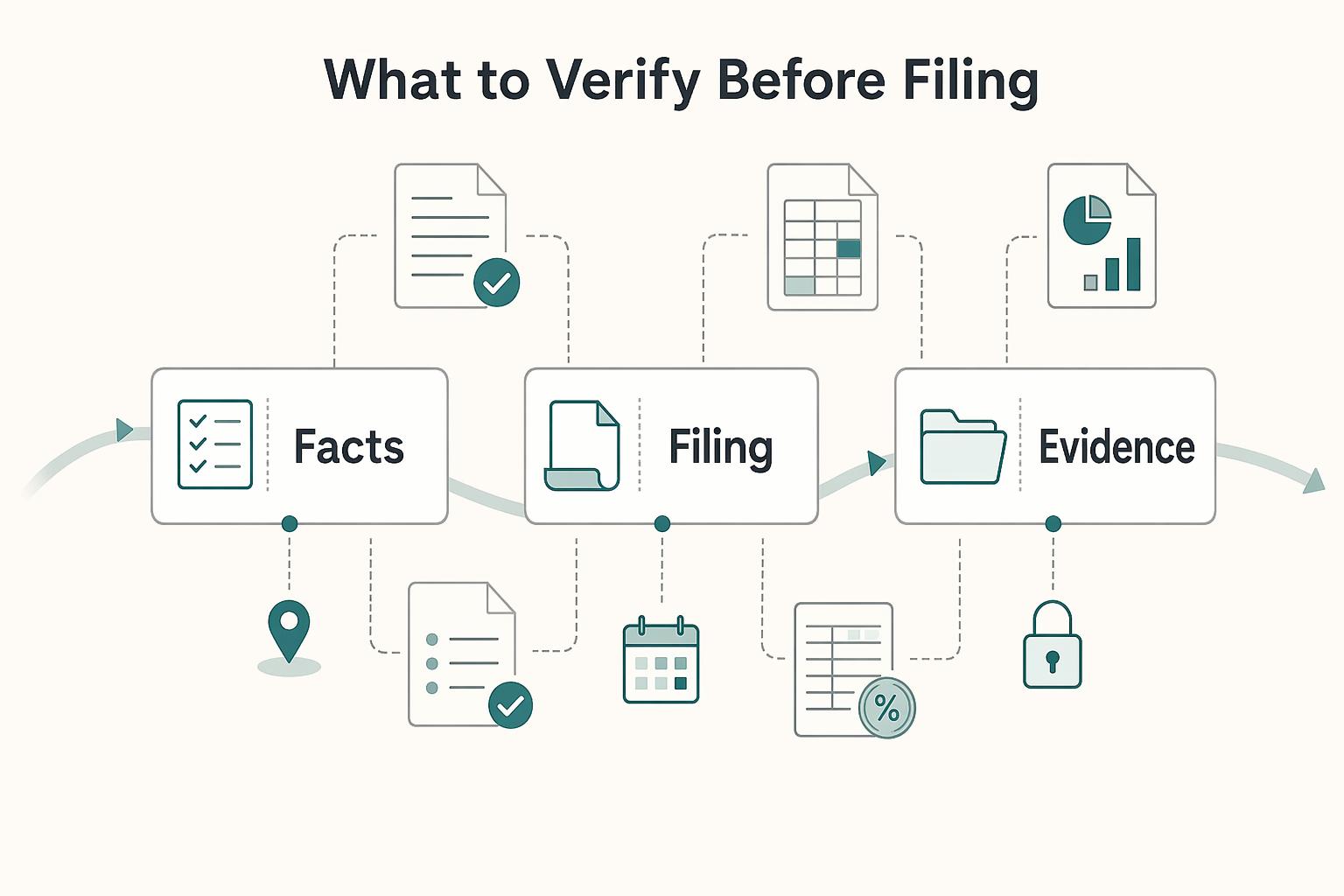
What to verify before filing#
When facts are mixed or borderline, take the higher-compliance route and get written professional review before filing. Keep this evidence pack ready:
- turnover working, including export and marketplace revenue
- service-classification note, including OIDAR review outcome
- contract and invoice draft used for the transaction
- LUT status and e-FIRA for each inbound foreign payment, where relevant
Also keep payment documentation and withholding handling in the same control set, since weak handling can reduce net payout by 15 to 30% in cross-border flows.
This pairs well with our guide on The Best Invoicing Software for Indian Freelancers with GST Compliance.
Upwork fees and GSTIN handling without confusion#
Treat Upwork as two GST tracks: your supply to the client, and the platform charges billed to you. If you collapse them into one number, you can misstate both revenue and tax treatment.
For the platform side, rely on current Upwork invoices, not assumptions. If specific charge line items appear on your invoice, record them exactly as issued and keep those records with the billing period and account details.
If you add a GSTIN in Upwork tax settings, treat that as a change you still need to verify, not an outcome to assume. Compare the next invoice with a prior one. Confirm that the GSTIN and invoice details are reflected correctly before you finalize your books.
Payout treatment is a separate export check under IGST Section 2(6). All four conditions still matter, including the receipt condition. With INR payouts, the payment mechanism matters, not just the client's foreign location. Keep remittance and platform disclosure records that support foreign-origin funds if you are relying on export treatment. Without that trail, export benefit may not be available.
For registration tracking, review aggregate turnover against the ₹20 lakh threshold, or ₹10 lakh in special-category states, using a full-year view rather than only net bank credits. Some guidance also counts non-freelancing income toward this limit, and interpretations around inter-state/export and platform-lane registration can differ, so verify your specific case before filing.
Registering on the GST portal in the right sequence#
The cleanest registration process is sequential: get your documents ready, submit through the GST portal, confirm ARN generation, then track status until GSTIN is issued.
Get your file ready before you log in#
You complete GST registration online at gst.gov.in. Before you start, gather the core documents you will rely on in the application: PAN, address proof, bank account details, and photographs. Address proof matters in particular because principal place of business documentation is part of registration processing.
Also draft your service description in clear, consistent language before you begin the form. It will help keep your records consistent later.
Use the portal flow in order#
Start by selecting Taxpayer, enter PAN, state, and email, then complete OTP verification on your registered email and mobile. Next, complete GST REG-01 and submit.
Two checks matter most:
- confirm an
ARNwas generated after submission and save it - treat submission as the start of review, not final approval, because GSTIN is issued only after officer verification if the application is in order
If ARN is not generated, do not assume the filing is moving ahead. Recheck submission status and any pending authentication prompts. GSTN advisories include Aadhaar and biometric authentication checkpoints, so one missed step can delay the application.
Run a quick pre-submit consistency check#
Before you submit, run one short consistency check:
| What to check | What should match | Why it helps |
|---|---|---|
| Core documents | PAN, address proof, bank details, and photographs are ready | Reduces incomplete-file delays |
| Contact details | Registered email and mobile are active for OTP verification | Keeps portal verification moving |
| Submission checkpoint | GST REG-01 is completed and an ARN is generated after submission | Confirms the application entered review |
For freelancers, this low-effort check avoids preventable back-and-forth.
Set controls as soon as GSTIN is issued#
Approval day is not the end of setup. Once GSTIN is issued, update your invoice, contract, and proposal templates so new client paperwork reflects registered status from the start.
Then set a recurring calendar check so your registration details, invoicing, and supporting records stay aligned over time.
Invoice rules that keep your GST position defensible#
A defensible invoice process is simple: issue the right document on time for each supply event, then keep the details consistent with what you file later. Under GST, invoices, whether a tax invoice or bill of supply, are tied to the supply event and prescribed timing, so "fix it later" creates avoidable compliance risk.
Standardize first, then stop improvising#
Use one controlled invoice process instead of editing old files ad hoc. Keep key business, client, and service details consistent across registration details, invoices, and filed returns, so records line up when reviewed together.
Write service descriptions that match the real work#
Treat invoice wording as compliance data, not filler. If your invoice details do not align with what you later report, you increase mismatch risk before filing reviews even start.
Keep domestic and export treatment clearly separated#
Do not mix narratives across invoices. If the facts are not clear yet, pause before issuing and confirm the correct treatment first. If helpful, review this explainer before finalizing: place of supply rules.
Add two lightweight controls#
Two small controls can catch many preventable invoice problems. Before you send an invoice, run a quick red-flag check for unclear or inconsistent details. Then run a monthly reconciliation across your invoice register, GSTR-1, GSTR-3B, and GSTR-2A/2B, along with registration details, statements, and ledgers.
This is where small inconsistencies get caught early, before they turn into notices, interest, or penalties.
Before you send the next bill, you can draft it with this free invoice generator.
Build a monthly evidence pack before you ever need it#
Do not wait for a notice to find out your records are scattered. By month-end, every billed project should be traceable from invoice to money movement, with the supporting records in one place. This is not about a legally mandated folder format. It is a practical control that keeps your GST position defensible.
Keep one folder per month, then file by project#
Create one monthly folder and file records by project while details are still fresh. Include invoices, registration details tied to your 15-digit GSTIN, client records, payment proofs, and relevant platform records.
| Record | What it should show |
|---|---|
| Issued invoices | Include Rule 46 fields |
| Project proof trail | Link engagement, service, and invoice |
| Bank or payment-provider records | Show how funds were received |
| Platform tax and fee documents | Keep relevant platform records |
| Sales register or internal ledger export | Keep the month's sales record |
For domestic B2B work, keep the client GSTIN in the same project record set. Also retain full Rule 46 invoice fields so the invoice data stands up if reviewed later.
Reconcile money, not just invoice totals#
Invoice totals alone are not enough. Reconcile each billed amount to actual money movement. Match invoices to bank receipts and payment-platform statements, including fee deductions or split payouts where relevant.
If you use Gruv where supported, keep ledger-linked invoice, wallet, and payout exports in the same monthly pack so the record stays continuous across tools. Keep the primary records too. App exports do not replace source invoices and statements.
Group export evidence with the project, not in a separate mystery folder#
If you treat a project as export of services, keep the supporting evidence inside that project file. Zero-rated treatment under Section 16 of the IGST Act is conditional, so your file should clearly show the client, service supplied, invoice, payment trail, and other condition evidence you rely on.
Avoid splitting tax documents and business documents so far apart that no one can follow the sequence later. If client location or payment trail is unclear, flag it and resolve it before month close.
Add one close-of-month checkpoint#
Before you close the month, run one short verification pass:
- confirm invoice numbering continuity
- confirm invoice totals match ledger and receipts
- confirm no invoice is missing support documents
- scan turnover against your registration context, including the cited ₹20 lakh threshold and ₹10 lakhs in special category states
- document any below-threshold registration position you are relying on (for example, inter-state supply/ITC/export-benefit needs vs. applicable relief)
If any receipt cannot be matched to a numbered invoice and project file, keep the month open until you resolve it. That routine is far more reliable than trying to rebuild missing evidence later.
Where to pause and call a professional#
Pause the DIY approach as soon as the facts get ambiguous or your filings stop reconciling cleanly.
| Trigger | Why it matters |
|---|---|
| Contracts, invoices, and delivery records do not support one clear reporting approach | You do not have one clear reporting position to support |
| Operating model changes mid-year | Platform shift, service mix change, or turnover context near ₹20 lakhs or ₹10 lakhs in special states can make older assumptions stop fitting active contracts |
| GSTN sends an SMS about inconsistencies, or GSTR-3B does not reconcile with GSTR-1 or 2B | Notable mismatches are described as a suspension risk, and unexplained discrepancies can increase cancellation exposure |
| Returns are not being filed on time | Non-filing for three consecutive tax periods (composition) or six months (regular) is described as a suspension trigger |
| You plan to apply for cancellation | Registration may be suspended during cancellation proceedings |
When any of these shows up, get written advice tied to your exact facts and keep it with the same monthly project records as your invoices and payment trail.
How GST choices interact with pricing and income tax planning#
Treat GST as a pricing decision from the start, not as an invoice add-on at the end. Keep income-tax choices in a separate lane, because GST obligations are still determined under GST rules.
Keep income tax and GST as separate decisions#
Do not let an income-tax choice decide a GST position by default. Your GST treatment still depends on registration context, turnover context, and whether a supply is domestic or qualifies as export under Section 2(6) and Section 16 of the IGST Act.
Keeping those decisions separate protects both compliance and margins. Your GST route affects invoice design, ITC eligibility, filing workload, and how easily the setup scales as clients or service lines grow.
Decide your quote style before the proposal goes out#
Set one pricing rule before you send proposals: tax-inclusive or tax-exclusive. Keep it consistent across proposal, contract, and invoice.
- Tax-exclusive quotes can protect margin if GST applies later.
- Tax-inclusive quotes can look simpler to clients, but vague wording can leave room for tax to be absorbed from your fee.
Before the first invoice, confirm:
- contract pricing language matches the proposal
- invoice template matches the same tax treatment
- Rule 46 fields are ready: GSTIN, invoice number and date, SAC code, tax rate, amount, and place of supply
For domestic B2B billing, capture the client GSTIN correctly so ITC flow is not disrupted.
Update clients before registration becomes urgent#
If you expect registration to become relevant soon, update proposals and renewals early instead of waiting for GSTIN issuance. This matters most when you are near the commonly cited thresholds of ₹20 lakhs or ₹10 lakhs in special category states.
A practical contract line is to bill based on your registration status at invoicing time, then apply that same rule consistently. Late GST line items without prior notice can feel like price surprises.
Align pricing with cross-border documentation habits#
Your pricing language should match your compliance trail. If you treat a project as export of services, your invoice wording, client-location records, payment trail, and place-of-supply analysis should align. If it is domestic, your documents should clearly support GST collection and remittance.
Use one operating rule across proposal, contract, invoice, and payment records: one consistent tax story, checked before filing.
What to do this week to stay compliant#
Use this week to lock your GST position in writing, standardize invoicing, and escalate unclear points before the next invoice or filing cycle.
Decide your status and record your assumptions#
Start with the registration decision table and write a dated conclusion, even if that conclusion is "unclear, needs review."
Document the facts you are relying on now: turnover, whether you are near the ₹20 lakhs or ₹10 lakhs guide thresholds, whether inter-state services apply, and whether your client mix is domestic, foreign, or mixed.
Treat threshold and inter-state signals as prompts, not final legal interpretation. Verify your position against current official GST guidance, then save a short verification note with the date and source checked. Include these items in a one-page status note:
- turnover to date
- service type and client geography
- your current view: register now, monitor closely, or unclear
- what is verified versus what still needs professional review
Do not delay this step. A late required registration decision can lead to penalties, missed opportunities, and avoidable reputation risk.
Standardize two invoice templates now#
Before the next billing cycle, set up two templates: one for domestic taxable billing and one for cross-border work while treatment is still being validated. Keep numbering, service descriptions, client details, and tax-note logic consistent so invoicing does not become ad hoc.
If your written decision says registration is required, move to the application step. A concrete checkpoint is filing through Form GST REG-01. In the Rule 14A path described in this material, Aadhaar OTP authentication for the authorized signatory and one promoter or partner is a stated verification step, so keep identity details ready. Do not assume instant approval is guaranteed.
Build a monthly evidence pack and pause unclear filing decisions#
Create one folder per month and keep the same evidence set each time: issued invoices, contracts or scopes, payment proof, service-related client communication, and your status note.
If registered, keep registration records and return-filing records in the same archive. Run a simple monthly check:
- reconcile billed amounts to receipts
- confirm invoice numbering is complete
- confirm each invoice has supporting records
If classification or cross-border treatment is still unclear, pause judgment calls and get written advice from a qualified tax professional based on your exact facts. Store that written advice with the month's records.
If your case is borderline on thresholds or service classification, contact Gruv for an operational workflow walkthrough, and keep final tax determinations with a qualified professional.
Frequently Asked Questions
Is GST registration mandatory for every freelancer in India?
No. Registration is fact-specific and commonly depends on turnover, state and service context, and whether a flagged category like OIDAR applies. If you do register, keep up with return filing because delayed filing can lead to penalties and interest.
What turnover limits usually trigger GST registration for service freelancers?
A commonly cited trigger is ₹20 lakhs in a financial year, with ₹10 lakhs often cited for North-Eastern or special category states. Some guidance also treats inter-state services as a mandatory trigger, so turnover is only the first screen. Use thresholds as an early warning and validate your position before your next invoice cycle.
If all my clients are outside India, do I still need GST registration?
Do not assume the answer is automatically no. A common mistake is to treat zero-rated exports as if they always remove registration obligations. You still need to test your facts carefully before taking that position.
What does zero-rated export of services actually require in practice?
Zero-rated exports should not be assumed to automatically remove registration obligations. If your case is borderline, confirm your position before invoicing or filing on that basis.
What GST rate is commonly applied to freelance services and platform fees?
The grounded number here is 18% for taxable Upwork services in India. Upwork’s example is $100 in Freelancer Service Fees, $18 tax, and $118 total. Do not treat 18% as a universal default for every freelance billing context.
How does Upwork GST change when I add a valid GSTIN?
Upwork says it must collect India GST on its services unless you provide a valid GSTIN. It lists Membership Fees, Connects purchases, and Freelancer Service Fees as examples, and says it will stop collecting that tax after a valid GSTIN is added and will display the GSTIN on invoices. Enter the GSTIN carefully, then verify VAT or GST ID status on the Tax information page and confirm the change on the next invoice.
What must be present on a GST-compliant freelancer invoice?
There is no complete legal checklist of invoice fields to rely on. One concrete invoice point here is that Upwork says it will display your GSTIN on invoices after you add a valid GSTIN. For the full current field list, verify requirements before issuing invoices.
Try a related tool
Researched and edited by the Gruv editorial team. Gruv builds cross-border billing, payouts, and finance-operations software for global businesses.
Sources
Includes 6 external sources outside the trusted-domain allowlist.
- ocw.mit.edu/courses/24-914-language-variation-and-change...trusted
- sec.gov/Archives/edgar/data/2039096/0001493152250280...trusted
- angelone.in/knowledge-center/income-tax/gst-for-freelanc...external
- bajajbroking.in/blog/gst-for-freelancersexternal
- caclubindia.com/articles/fasttrack-gst-registration-and-its-...external
- chhotacfo.com/blog/gst-for-freelancers-registration-filing...external
- clearlycomply.org/blog/gst-registration-india-guideexternal
- cleartax.in/s/how-to-register-for-gstexternal
Educational content only. Not legal, tax, or financial advice.
Related Posts

Digital Nomad Taxes in 2026 With a Defensible Filing Plan
With digital nomad taxes, the first move is not optimization. It is figuring out where you may be taxable, where filings may be required, and what proof supports that position.

Do I Have to Pay State Taxes While Living Abroad as a Digital Nomad?
Living abroad does not end `state income tax` exposure by itself. The first decision is practical: choose a filing position your facts can support, then build records that support the same story all year.

Section 44ADA for Freelancers in India Who Need a Defensible Filing Path
For a globally mobile freelancer, a safer tax move is the one you can defend six months later, not the one that feels fastest this week. Start with classification under `PGBP`, test whether `Section 44ADA` actually fits your facts, then file with records that support every major number you report.