
Quick Answer
Separate the process into immigration and tax from day one: Type D and Z.1 for status, then AFM plus a standalone Article 5C filing in myAADE. The move is usually workable only when your pay is service income from outside Greece and you are not taking local Greek work. Before committing, run FTC versus FEIE and confirm your day-count and vital-interests evidence can support your tax residency position.
Relocating your Business-of-One to Greece is not just a lifestyle move. It is a financial and administrative restructuring. The 50% tax break gets the attention, but the real work is making sure your visa path, tax position, and evidence all line up.
This is not a travel guide. It is a three-stage operating plan for turning uncertainty into something you can manage. First, decide whether the move actually fits your work and tax setup. Then execute the immigration and tax steps as separate tracks. After that, keep the records and routines that make the structure hold up over time. If you approach the move with the same discipline you would use for any major business decision, you reduce avoidable errors, limit risk, and free up attention for your work.
Stage 1: The Strategic Assessment - Is This a Viable Move?#
Make the decision here: proceed, pause, or choose another jurisdiction. Move forward only if your work setup fits Greece's remote-work rules, your tax path is realistic, and your all-in costs still work after compliance.
Pause if your plan depends on local Greek work, on passive income being treated like earned service income, or on the visa automatically giving you the 50% treatment under Article 5C.
Check your work model and which income qualifies#
Start with the work model, because everything else depends on it. For the Greek Digital Nomad Visa, your income must come from outside Greece, and you must not be employed or engaged in business activity in Greece. In practice, the income categories below and the work arrangements that follow are the usual fit:
| Income type | Treatment | Planning note |
|---|---|---|
| Wages, salary, and other pay for personal services | The clearest fit | Article 5C is not a blanket 50% cut on all income |
| Dividends, interest, and capital gains | Passive categories under IRS earned-income treatment | Do not build your plan around those as qualifying service income |
| Structure that mixes service pay with distributions | Test it before you move | Keep a clean record that shows foreign payers, service-based work, and a consistent payment history |
- an employee paid by a foreign company
- an independent contractor serving foreign clients
- a self-employed owner of a company outside Greece
Use a simple test: who pays you, where they are based, and whether the income comes from your personal services.
For tax planning, keep Article 5C narrow. AADE frames it around income from salaried employment and/or business activity. Current AADE guidance describes a 50% exemption on qualifying income for 7 tax years for approved applicants. Do not treat that as a blanket 50% cut on all income. Wages, salary, and other pay for personal services are the clearest fit. Dividends, interest, and capital gains are passive categories under IRS earned-income treatment, so do not build your plan around those as qualifying service income.
If your structure mixes service pay with distributions, test it before you move. You want a clean record that shows foreign payers, service-based work, and a consistent payment history.
Make the U.S. tax choice before you move#
For many U.S. filers, FTC is often the first model to test because it is built to reduce double taxation on the same foreign-source income. IRS guidance also says a credit is often more advantageous. You also cannot claim FTC on income you exclude under FEIE. Use this framework:
| Model or case | When to test | Key note |
|---|---|---|
| FTC | If your plan is to be taxed in Greece on service income and potentially use Article 5C on that same income | IRS guidance also says a credit is often more advantageous |
| FEIE | If your earned income may fit the current exclusion amount once checked against official IRS records, or if your Greek tax result is too low or uneven to generate useful credits | You also cannot claim FTC on income you exclude under FEIE |
| Physical-presence path | Before relying on FEIE | Generally requires 330 full days in foreign countries during a 12-month period |
| Mixed income | For example salary plus distributions, or contractor income plus royalties | Confirm edge cases with an advisor |
- Start with FTC if your plan is to be taxed in Greece on service income and potentially use Article 5C on that same income.
- Model FEIE as an alternative if your earned income may fit the current exclusion amount once checked against official IRS records, or if your Greek tax result is too low or uneven to generate useful credits.
- Check FEIE eligibility mechanics before relying on it. The physical-presence path generally requires 330 full days in foreign countries during a 12-month period.
- Confirm edge cases with an advisor if you have mixed income, for example salary plus distributions, or contractor income plus royalties.
Price the move as an operating model#
Do not judge this move on headline tax savings alone. Build one model that separates setup costs, recurring compliance costs, and lifestyle costs, so you can see what is fixed, what is variable, and what can drift over time.
| Cost bucket | What to include |
|---|---|
| One-time setup | Visa fee (EUR 75) + administrative fee (EUR 150), residence permit costs, translations, certifications, relocation travel |
| Recurring compliance | Annual Greek income-tax filing, local tax support, Article 5C filing support via myAADE (if needed), bookkeeping/payroll support where required |
| Lifestyle | Rent, utilities, health cover, coworking, local transport, flights home, seasonal housing buffer |
Treat recurring compliance as mandatory, not optional. Greek income-tax filing is annual, and the cited filing window runs 15 March to 15 July. Also plan for the timeline reality. The visa is valid for 1 year, with a path to a 2-year residence permit extension.
Use a strict go/no-go checklist#
Proceed only if every line below is true:
- Your clients or employer are outside Greece, and you will not take Greek local employment or business activity.
- Your monthly income clears the current sufficient-resources threshold. The cited checklist shows EUR 3,500/month, plus 20% for a spouse/partner and 15% per child. Re-verify with your consulate.
- Most of your income is earned service income, not mainly dividends, interest, or capital gains.
- You understand Article 5C is a separate tax application through myAADE. The visa does not activate it automatically.
- You can document foreign payers, service-based work, and payment history.
- You have confirmed the current AADE tax-residency history rule against official guidance or a Greek tax adviser.
- You have confirmed the current Article 5C minimum-stay or commitment wording against official guidance or a Greek tax adviser.
- You are planning around Greek tax residence if you expect to exceed 183 days in any 12-month period in Greece, or if Greece becomes your center of vital interests.
Use this decision rule:
- Proceed if all lines are true.
- Pause if one or two items are still unverified.
- Choose another jurisdiction if your plan relies on local Greek work, passive-income dependence, or tax math that does not hold under FTC or FEIE modeling.
You might also find this useful: The Future of the Agency Model in the Age of AI. Before you commit, map your travel pattern and tax-home assumptions in the Tax Residency Tracker so your visa and tax decisions stay aligned.
Stage 2: Run the Visa and Tax Tracks in Parallel#
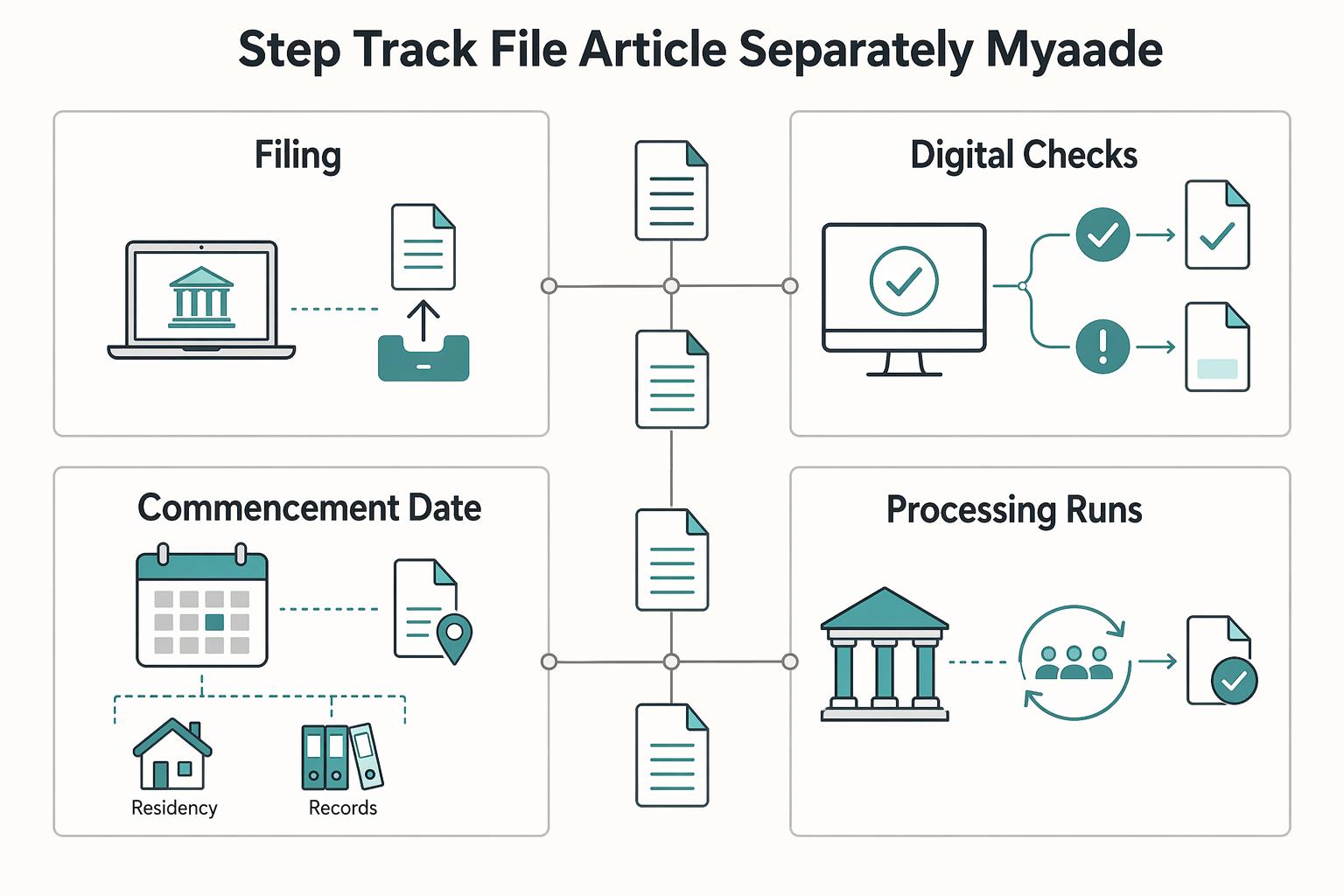
Once the move is viable on paper, execution is the priority. Run this stage as two parallel tracks with different authorities:
- Track 1 (Immigration): Type D visa, then residence permit (Z.1)
- Track 2 (Tax): AFM setup, then separate Article 5C filing in myAADE
Your Type D approval does not activate Article 5C automatically.
The key terms are straightforward. Type D visa means Greece's national long-stay visa handled by Greek consular authorities. Z.1 is the digital-nomad residence title. AFM is a Greek tax ID number. Article 5C is the special tax method for eligible people transferring tax residence to Greece. KE.FO.DE. is the tax service that handles manual-review cases when digital checks are not enough.
Step 1 (Pre-departure) build and verify your consular file#
The consular file is where many avoidable delays start. Exact requirements can vary by consulate, and additional documents may be requested during examination, so use the table below as a working checklist and verify each item against your consulate's current instructions.
| Document / item | Purpose | Acceptable evidence | Common rejection trigger | Status |
|---|---|---|---|---|
| Passport | Identity and travel document for Type D filing and biometrics | Current passport and matching identity details | Damage, inconsistent identity details, or unclear validity window | Confirm current passport validity requirement with your consulate |
| Work-activity documentation | Support the work-activity narrative in your application | Employment contract, client agreements, company documents, payer details | Unclear payer/employer details, unsigned documents, or inconsistent records | Re-verify with your consulate |
| Financial documentation | Support your ability to sustain yourself during stay | Bank statements, payroll records, invoices, tax returns | One-off funds only or inconsistent payment history | Confirm current financial threshold and lookback requirement with your consulate |
| Declaration on work activity (if requested) | Confirm your stated work plan in a signed format | Signed statement consistent with the rest of your application | Statement conflicts with contract or business documents | Confirm current consular wording |
| Health coverage documentation (if requested) | Show medical coverage details for your stay | Policy certificate and schedule showing Greece coverage terms | Coverage terms are unclear for Greece | Confirm current health coverage requirement with your consulate |
| Criminal record certificate (if requested) | Background document for visa file when requested | Official certificate from relevant authority | Expired copy or incomplete certification package | Confirm current criminal-record validity, apostille, and translation rule with your consulate |
Step 2 (Track 1) file the Type D visa in person and manage consular handoffs#
File in person at the competent Greek diplomatic or consular authority and provide biometrics. The published window for digital-nomad visa decisions is 10 days, and Type D validity can run from over 90 days up to 365 days.
In practice, the official timeline matters less than document readiness. If your appointment takes time to secure or the consulate asks for a revised format, the real schedule shifts immediately.
Decision points:
- If appointments are delayed: move your relocation timeline, and re-check document validity before filing.
- If a document format is rejected: replace it in the exact format requested by the consulate.
- If review runs long or extra documents are requested: respond quickly and keep your travel and start dates flexible.
Step 3 (After entry) complete residence-permit handoff (Z.1) and AFM setup#
After arrival, continue Track 1 through the residence-permit process under Z.1. The migration platform supports online initial submissions, e-appointment booking for permit delivery, and delivery-status lookup.
At the same time, start Track 2 by requesting your AFM electronically or via the tax office. Keep identity details aligned across your visa, residence-permit, and AFM records. Small mismatches in names, addresses, or dates create preventable processing friction later.
Step 4 (Track 2) file Article 5C separately in myAADE#
This is the step people most often blur with the visa process, so keep it separate in your mind. Article 5C is its own tax filing path for eligible people transferring tax residence to Greece. File through myAADE. If digital checks cannot confirm eligibility, attach supporting documents for manual review by KE.FO.DE.
| Situation | Action | Detail |
|---|---|---|
| Article 5C filing path | File through myAADE | Separate tax filing path for eligible people transferring tax residence to Greece |
| Digital checks cannot confirm eligibility | Attach supporting documents | Manual review by KE.FO.DE. |
| Commencement date up to and including July 2 | File by end of the same year | Timing rule |
| Commencement date after July 2 | File by end of the following year | Timing rule |
| Processing runs longer than expected | Keep a dated evidence pack ready | Filing receipt, AFM confirmation, residence documentation, and work and payment records |
Timing rule:
- Commencement date up to and including July 2: file by end of the same year.
- Commencement date after July 2: file by end of the following year.
If processing runs longer than expected, keep a dated evidence pack ready: filing receipt, AFM confirmation, residence documentation, and work and payment records.
If you want a deeper dive, read our digital nomad visa index for 50+ countries.
Stage 3: Run Compliance as One Managed Annual Cycle#
Once setup is complete, the job shifts from filing to proving. Treat compliance as one managed annual cycle. Keep one calendar, one owner per task, and one evidence file that can support your tax residence, your Article 5C position, and your home-country reporting.
Turn the year into a managed cycle#
Treat Article 5C as a status you revisit each year, not just a one-time approval. AADE describes it as a separate application path for natural persons transferring tax residence to Greece, tied to income from employment and/or business activity arising in Greece.
| Task | Owner | Trigger date | Key documents | Failure risk |
|---|---|---|---|---|
| Confirm current-year tax-residence facts and Article 5C assumptions | You + Greek tax adviser | January review, then after any major move or work change | AFM record, residence documentation, Article 5C application records from myAADE, work contracts, travel log | You report under a position you can no longer prove |
| Prepare and file the Greek annual income tax return | Greek tax adviser, with your sign-off | Confirm the current Greek tax filing window with the Greek tax authority | Income records, Greek and foreign account statements, invoices/payroll, Article 5C records | Late or inconsistent filing; mismatches with supporting records |
| Check residence-permit validity and renewal lead time | You + immigration adviser if used | Six months before expiry, then monthly until renewal is submitted | Passport, permit status/card, and the document checklist for your permit class | Permit lapse or identity mismatches across systems |
| Capture monthly residency proof stack | You or your assistant/bookkeeper | Last business day of each month | Travel records, housing records, financial records, AFM/residence records | Weak audit trail for presence and vital-interests analysis |
| Review home-country reporting (accounts + entities) | Home-country CPA or cross-border adviser | Confirm the current home-country reporting window with your home-country tax authority; also review when opening accounts or forming entities | Account list, highest balances, corporate docs, cap table, partnership agreements | Missed information returns for accounts or ownership |
Run a quarterly reconciliation across your passport, residence records, AFM profile, lease, and bank statements so names, addresses, and dates stay aligned.
Build a proof stack, not a pile of loose documents#
Day counting matters, but it is not enough on its own. Guidance points to both physical presence and your centre of vital interests, so your records should tell one consistent story across both. Use a monthly four-bucket proof stack:
- Travel records: flight confirmations, boarding passes, passport stamps where available, and a day-count log.
- Housing ties: lease or deed, rent payments, and utilities if available.
- Financial activity: Greek bank or card activity that shows ongoing local life.
- Local registrations: AFM records, residence-permit records, and related registrations.
On the last business day of each month, archive that month's records into one dated folder. That is what makes later review or audit work defensible instead of chaotic.
Map both jurisdictions before filing season starts#
Do not treat Greece and your home country as separate stories. They are one fact pattern, even if different advisers handle each side. The practical job here is to map the same income streams, account activity, and entity positions across both filings before deadlines start piling up.
| Jurisdiction | What to map each year | Core proof to keep | Common miss |
|---|---|---|---|
| Greece | Tax residence position + Article 5C treatment scope | AFM profile, Article 5C file records, income mapping by stream, residence evidence stack | Assuming the 50% treatment applies to every income stream without explicit mapping |
| Home country | Home-country income reporting, plus any account/asset/entity disclosures that apply | Return workpapers, foreign account records, entity ownership docs, adviser memos | Filing only the income return and missing separate reporting regimes |
For U.S. persons, keep explicit checks for FBAR (aggregate foreign accounts over $10,000), Form 8938 (baseline threshold from $50,000, with higher thresholds possible), Form 5471 (per foreign corporation), and Form 8865 (certain foreign partnership cases).
If your home country is not the U.S., keep standing checks for foreign account, foreign asset, and entity reporting, and verify the current reporting thresholds against official or adviser records before relying on them.
Decide your end state before year seven arrives#
The 50% period has an end date, so do not leave the transition for later. Plan it before year seven arrives. If you declared that you will remain in Greece for at least two years, review the implications with your adviser before making an early-exit decision.
Use this decision path:
- Check early-warning signals. Repeated difficulty proving Greece as your main base, growing entity complexity, or expanding foreign account reporting.
- Start lead-time planning. Use at least one full filing cycle to model the next step.
- Choose an end state.
- Stay in Greece and normalize tax treatment after the 50% period. * Relocate strategically and align timing across residence facts, work setup, and next-country filing obligations.
The goal is fewer surprises, stronger records, and enough lead time to execute cleanly. Related: The Taiwan Gold Card: A Visa for High-Skilled Professionals.
Conclusion: From Anxious Planner to Confident Operator#
Proceed only if you can execute the immigration track and the tax track separately. If you cannot confirm all four checkpoints, delay the move and close the gaps first.
In plain terms, each moving part has a different job. The National visa (Type D) is entry authorization for stays over 90 days and up to 365 days. Digital nomad applications are handled by the competent consular authority, require an in-person appearance, and have a stated 10-day decision timeline.
The Digital Nomad Residence Permit is your longer-stay status after arrival, up to two years. Greek tax resident status is tax status, not visa status, and can arise from residence or vital-interests criteria or by exceeding 183 days in any 12-month period in Greece. Article 5C is a separate myAADE tax application for people transferring tax residence to Greece, with a potential 50% exemption on qualifying employment or business-activity income for 7 tax years.
| Checkpoint | Ready if yes | Not ready if no |
|---|---|---|
| Visa path | You are a non-EU/EEA remote worker, can apply at the correct consulate, appear in person, and document at least €3,500/month, with +20% for a spouse/partner and +15% per child | Do not plan travel around assumptions or outdated checklists |
| Tax-benefit path | You can qualify under Article 5C as a person transferring tax residence and providing services in Greece, and for same-year commencement cases you know your filing window: by year-end if activity starts on or before July 2, or by end of the following year if after July 2 | Do not assume visa approval activates the tax benefit |
| Compliance readiness | You are prepared for Greek tax-residency consequences, including worldwide-income taxation and income-tax return filing where required | Pause and map your income and reporting obligations first |
| Evidence and admin | Your myAADE taxpayer contact details are current, and your remote work does not serve a Greece-based employer | Fix this before filing |
After arrival, complete residence and tax administration steps, then meet the applicable Article 5C deadline. Monitor your day count, work source, and whether your income still fits the employment or business-activity lane you applied under. Escalate to licensed immigration or tax advisers when the facts get more complex, including mixed income, entity distributions, employer changes, dependants, or uncertainty about when Greek tax residency begins.
For a step-by-step walkthrough, see Italy Digital Nomad Visa and Tax Regime Guide.
As you finalize your relocation timeline, use the Digital Nomad Visa Cheatsheet to keep your document and deadline checklist organized.
Frequently Asked Questions
Do you get the tax break automatically when you get the Greece Digital Nomad Visa?
No. Your visa or residence permit and your Article 5C tax status are separate, and immigration approval does not automatically enroll you in the 50% regime. That matters because you may become tax resident in Greece without getting the treatment you planned for. Get your AFM, confirm the separate myAADE application path, and verify the current filing cutoff against official or adviser records before you file.
Are you eligible for the Digital Nomad Visa, and what should you verify before you file?
Start with this lane if you are a non-EU/EEA/Swiss national and you work remotely for clients or an employer outside Greece. The key point is that you apply through the Greek consular authority in your country of main residence, and you need to confirm the current net-income requirement, family uplifts, and response timeline against the live consular checklist before booking travel. Also verify that this visa period does not allow work for a Greek company.
Can you use FEIE and the Greek 50% regime together?
Potentially, depending on your income mix, but you cannot use FEIE and FTC on the same excluded income. That matters because FEIE may fit when your income is mainly personal-service compensation and stays within the FEIE cap you have verified against official IRS records, while FTC is often the better fit when foreign taxes apply to income that is not excluded. If you have mixed income, self-employment, entity distributions, or a prior FEIE election still in effect unless revoked, escalate to cross-border tax advice and map each income stream before filing.
Does income from your US LLC qualify for Article 5C or FEIE?
For FEIE, only the active service portion is the starting point, not every dollar that moves through your LLC. The distinction matters because earned income is compensation for personal services you perform, while passive categories include items such as interest, dividends, annuities, royalties, and rents, and profit distributions can fail earned-compensation treatment. For Article 5C, confirm the income category and source rules before assuming LLC cash flow qualifies. A common misclassification risk is treating owner draws or distributions as service income because client payments hit the LLC first, so document contracts, invoices, and compensation logic before filing.
Try a related tool
Researched and edited by the Gruv editorial team. Gruv builds cross-border billing, payouts, and finance-operations software for global businesses.
Sources
Includes 4 external sources outside the trusted-domain allowlist.
- irs.gov/individuals/international-taxpayers/foreign-...trusted
- irs.gov/individuals/international-taxpayers/foreign-...trusted
- aade.gr/en/psifiakes-ypiresies/eisodima/ypoboli-aiti...external
- aade.gr/en/greeks-abroad-non-residents/income-taxati...external
- workfromgreece.gr/faqexternal
- workfromgreece.gr/wp-content/uploads/2023/05/WFG_VisaChecklist...external
Educational content only. Not legal, tax, or financial advice.
Related Posts

The 2026 Global Digital Nomad Visa Index for 50+ Countries
Start with legal fit, not lifestyle filters. The practical order is simple: choose a route you can actually document, then decide where you want to live. That single change cuts a lot of wasted comparison work and stops you from falling in love with places that were never a real filing option.
Taiwan Gold Card Application Strategy for Remote Professionals
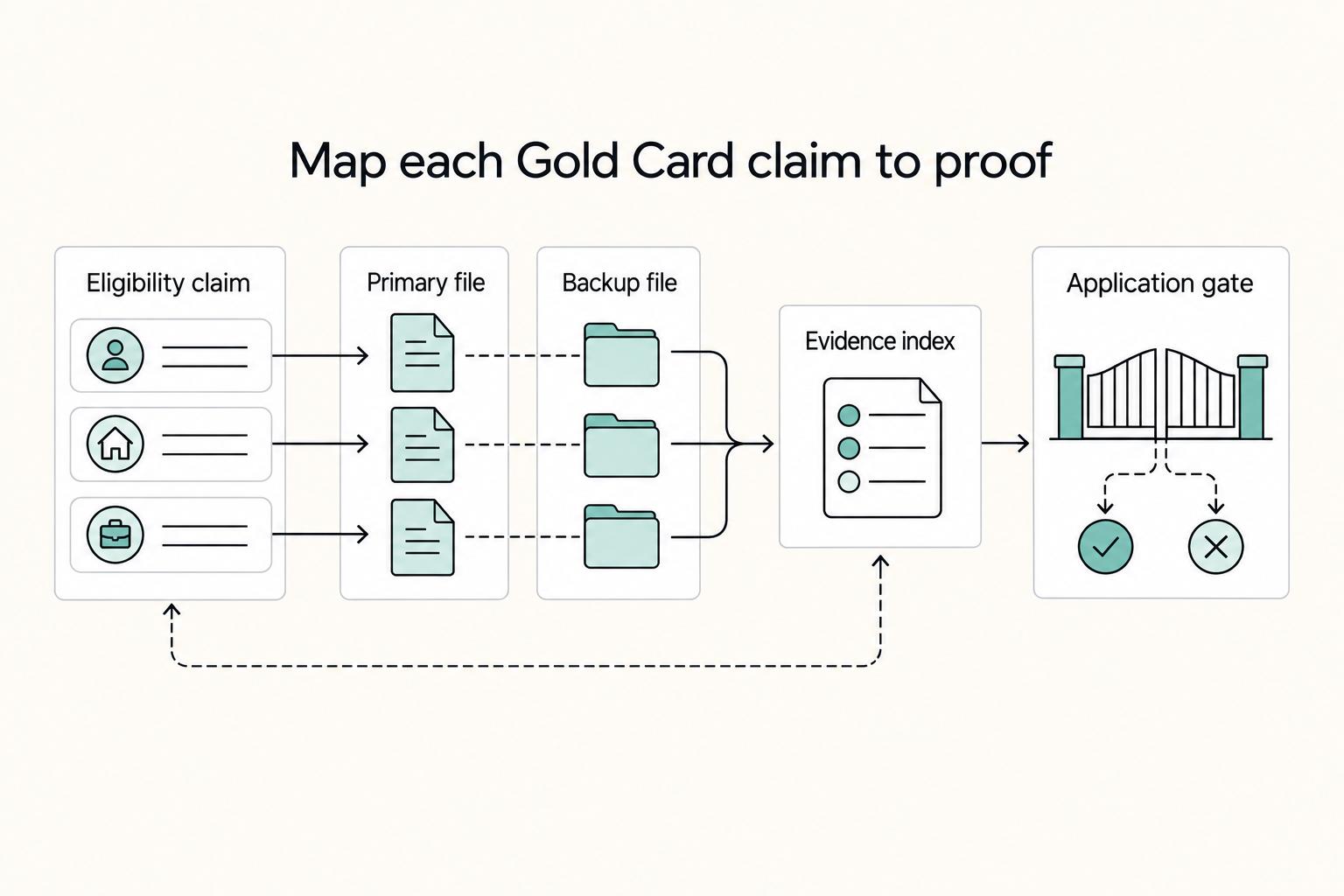
Treat this process as a chain of linked decisions, not a race to submit. If you are planning a serious move or a long stay in Taiwan, the safer outcome usually comes from choosing the right route first and proving each core claim before you pay or file. The Taiwan Employment Gold Card rewards that discipline because it combines four functions in one status: a work permit, resident visa, Alien Resident Certificate (ARC), and re-entry permit.
The Future of the Agency Model in the Age of AI
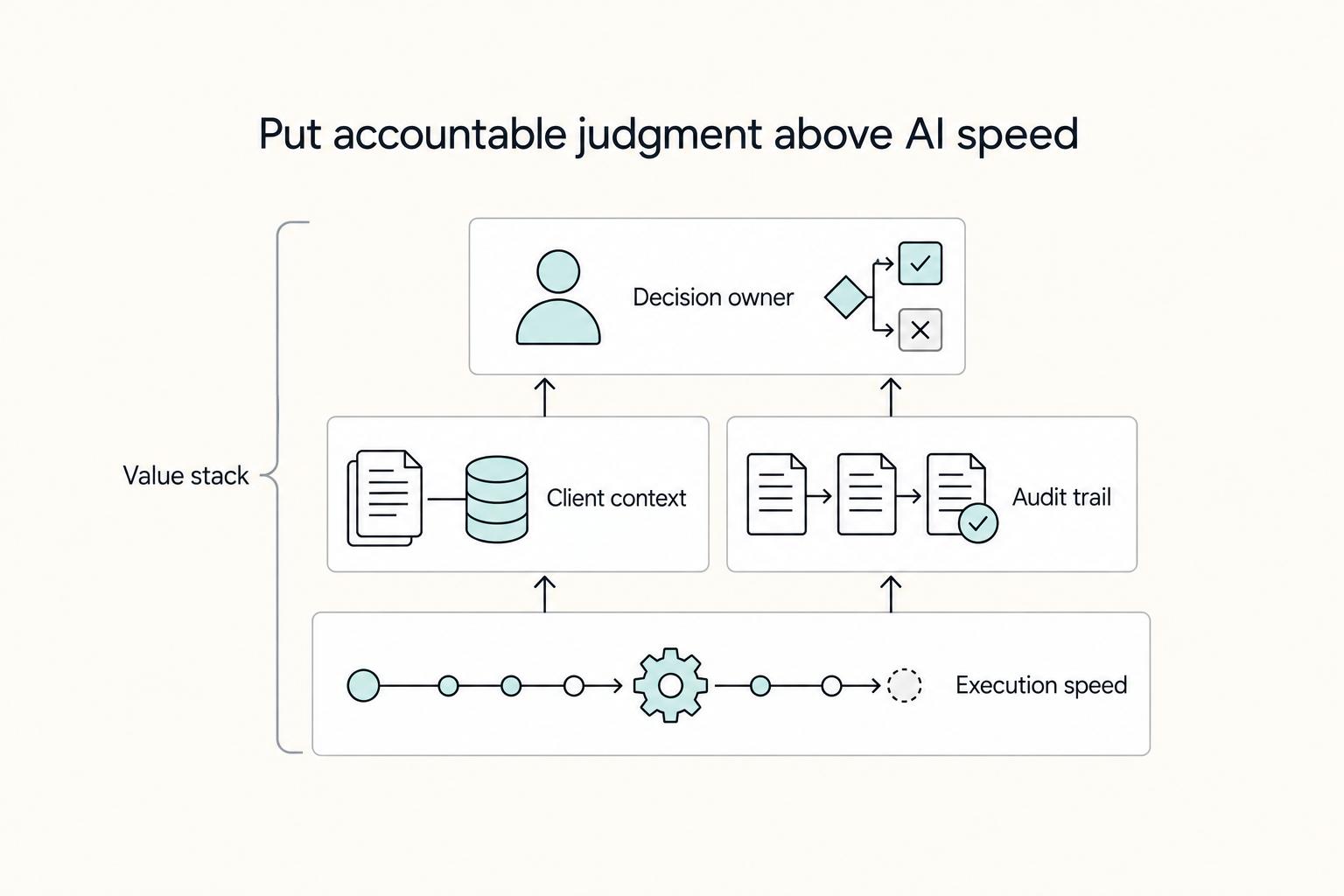
AI can increase agency speed, not agency responsibility. The future of agencies with AI is less about producing more output and more about deciding who owns judgment as execution gets faster. When automation is treated as a shortcut, weak briefs, unclear approval rights, and late client communication surface sooner.