
Quick Answer
To get a German driving license through Umschreibung, first confirm whether your foreign licence must be converted and whether Annex 11 means no test, one test, or both. Then gather your documents, verify translation and local rules with your Führerscheinstelle, complete the eye test and first aid course, submit the application, and treat authority approval as the point where booking and exams begin.
Your German Driving License: Why This Isn't a Checklist, It's Your Next Critical Project#
Start by deciding whether you can keep using your current licence or need Umschreibung. That decision drives your timeline, document pack, admin workload, and whether tests are in scope. If you want to get a German driving license without losing weeks to avoidable mistakes, treat this as a live admin project with dependencies, not a pile of forms to deal with later.
The first split is straightforward. If you hold an EU or EEA licence, it is generally valid in Germany and immediate conversion may not be necessary. If your licence was issued outside the EU or EEA and you now live in Germany, the working assumption is that conversion will be required. The exact path then depends on your issuing country and Annex 11 of the Driving Licence Regulations, which determines whether theory, practical, or both tests apply.
Do not build your plan from a single internet summary. Official wording differs on when the limited validity period starts, and local offices can phrase or apply parts of the process differently. Your real verification point is the local Führerscheinstelle, because that is where case-specific questions are handled. A common failure mode is assuming your friend's city, your relocation agent, or your driving school has the final word on your eligibility.
Start with these three actions:
- Confirm your reciprocity path: check Annex 11 for your issuing country, then verify the result with your local licensing authority.
- Gather the core document pack: passport or ID, residence proof or registration certificate, your valid foreign licence, translation if required, and a biometric photo sized 35 x 45 mm that is not older than 1 year.
- Start an authority-specific tracker: note document rules, whether translation is needed, and any local wording on the current validity window.
For another step-by-step admin walkthrough, see How to Get a German Tax ID as a Freelancer Without Mix-Ups.
A Professional's Budget: De-Risking the Financial Investment#
Build your budget in three buckets from day one: fixed admin costs, school-variable costs, and exam/retry-sensitive costs. That structure keeps you from underplanning the parts that usually create budget surprises.
Do not rely on generic fee lists floating around online. The USAFE Pamphlet 31-206 is scoped to U.S. Forces populations and shows an older publication date (16 November 2010), so it is not a civilian 2026 pricing source. Broad macro analysis, like the 7 January 2025 McKinsey analysis page, is also not a licensing-fee source for your personal conversion plan.
Budget by cost behavior#
| Cost bucket | What sits here | What drives this up | What to verify first |
|---|---|---|---|
| Fixed administrative costs | Application-related authority fees, biometric photo, translation (if required), required certificates/documents | Local document rules, translation requirements, rejected/expired documents | Confirm the exact document list and format rules with your local licensing authority |
| School-variable costs | School registration, materials, assessment lesson, practice lessons, school admin items | School pricing model, lesson volume, lesson length, cancellation terms, bundled vs separate charges | Request full line-item fee sheets from at least two schools and confirm included items |
| Exam/retry-sensitive costs | Theory/practical booking charges, school test-day handling, vehicle-on-test-day fees, retake-related charges | Failed attempts, late cancellations, extra prep before retakes, scheduling delays | Confirm first-attempt, retake, and cancellation charges in writing |
For planning, treat practice lessons as your biggest variable cost. Keep that line item under active control rather than assuming a fixed total too early.
Match budget to your path#
| Path | Main cost pressure | Planning focus |
|---|---|---|
| Direct exchange path | Administrative completeness | Prioritize document quality, translation requirements, and authority processing items |
| Partial-test path | One exam track plus targeted preparation | Confirm which test applies, then budget prep and a retake/reschedule buffer |
| Full-test path | Training volume plus both exam tracks | Plan for onboarding, materials, exams, and a realistic practice buffer |
Use a budget-control checklist#
- Compare at least two school fee sheets line by line.
- Confirm what is included in registration and test-day handling.
- Confirm cancellation and retake charges before you enroll.
- Set a spending ceiling and track actual spend against it weekly.
- Keep a retake buffer instead of allocating your full ceiling to a first-pass plan.
If you want a deeper dive, read our digital nomad visa index for 50+ countries.
Phase 1: Pre-Launch Strategy (The First 30 Days)#
Use Phase 1 to do two things at once: complete prerequisites you control, and lock your exact Umschreibung path with your local Führerscheinstelle. Start moving now, but treat exam scope, translation, and final document requirements as unconfirmed until your office verifies them for your issuing country.
Start now: parallel checklist#
Begin with tasks that do not depend on final authority decisions:
- Book your Erste-Hilfe-Kurs and Sehtest.
- Build your dossier: passport, original foreign licence, biometric photo, and your Anmeldebestätigung (or other local proof of first registration if required).
- Check Anlage 11 for your issuing country and licence class.
- Ask your local Führerscheinstelle for its current document checklist before submission.
- Ask in writing: "Please confirm whether my foreign licence needs translation for my issuing country and licence format."
Keep one physical folder and one digital folder so you can answer office follow-ups quickly.
What must wait for confirmation#
Your authority confirmation determines scope: default third-country route, often theory + practical, or an Anlage 11 exception, which can mean no exam or one exam. Also verify office-specific variations before you commit to dates or providers:
| Item | What to verify | Current note |
|---|---|---|
| Exam scope | Whether your path is the default third-country route or an Anlage 11 exception | Default third-country route often means theory + practical; an Anlage 11 exception can mean no exam or one exam |
| Local documents | Office-specific document variants | Local document variants can differ by region |
| Translation | Whether translation is required | Translation can be required based on issuing country and authority decision |
| Process constraints | Local timing or booking limits | Munich notes a 2 to 3 week authenticity check; Berlin notes test-center switching may be blocked after Prüfungszulassung |
Current processing windows must be verified with the local authority before you treat any timeline as fixed. Confirm the translation requirement by issuing country and local authority before you plan around it.
Shortlist your Fahrschule for Phase 1 decisions#
Focus on the criteria that affect setup speed and admin risk now:
| What to check | Why it matters in Phase 1 | What to ask |
|---|---|---|
| Conversion-case experience | Not every school handles Umschreibung equally well | "How often do you handle cases from my issuing country?" |
| Communication language | Misunderstood instructions cause paperwork delays | "Who can guide me in English or my preferred language?" |
| Paperwork support | Some offices require school confirmation early | "Will you support the application pack and provide Fahrschule confirmation?" |
| Current booking lead times | Test appointments are often routed through the school | "What are current lead times for registration and test booking?" |
If language is a factor, also ask how they support theory prep in your chosen test language.
You are ready for Phase 2 when all four are true: prerequisites completed, dossier complete, reciprocity path confirmed under Anlage 11, and Fahrschule shortlist prepared.
Related: Can Digital Nomads Claim the Home Office Deduction?.
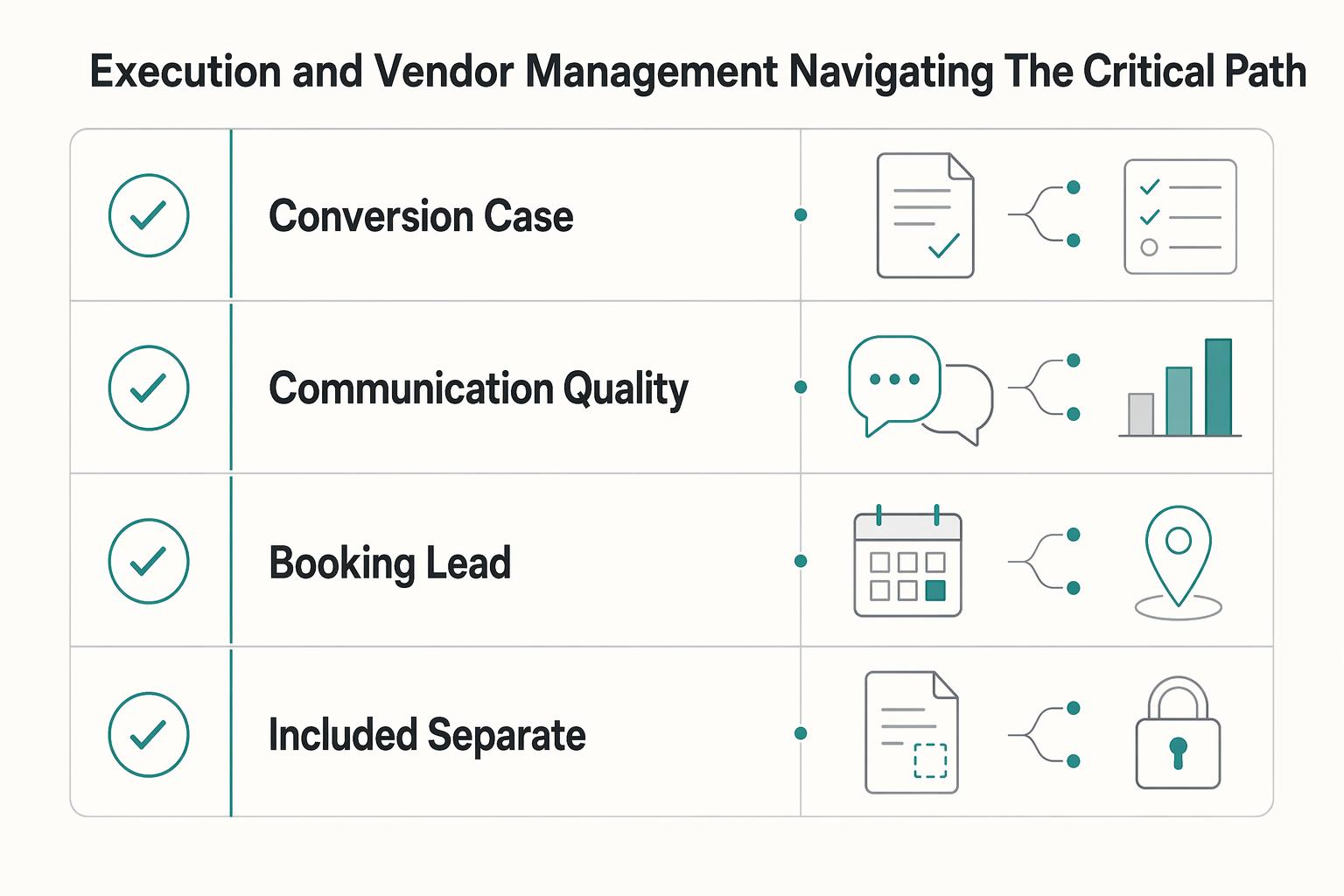
Phase 2: Execution & Vendor Management (Navigating The Critical Path)#
In this phase, keep authority steps, school tasks, and your own readiness in one visible system so delays show up early instead of at booking time.
Choose the school you can coordinate with clearly, not the one with the best sales pitch. In a conversion case, clarity, response quality, and written follow-through matter more than polished promises.
| What to compare | What to ask | What to record | Red flag |
|---|---|---|---|
| Conversion-case handling | "How do you run licence conversion cases like mine?" | Whether they explain a conversion workflow or only generic learner onboarding | They stay generic and cannot describe how they handle your case |
| Communication quality | "Who is my day-to-day contact, and how are questions handled between lessons?" | Contact name, channel, and response expectation in writing | You get sales replies but no operational owner |
| Booking lead times | "What are your current lead times for registration, lessons, and booking-related steps?" | Their estimate, date shared, and any conditions | They promise speed but avoid details or written confirmation |
| Included vs separate charges | "What is included, and what is billed separately?" | Written breakdown of admin support, lesson scope, booking support, and extras | No written breakdown |
Map the dependency chain after authority confirmation#
Confirm the current authority approval flow with your local office, then map your chain using status gates instead of assumptions. Use this format:
Application status-> what changed, who confirmed it, and on what date.Next unlocked action-> what can now be requested or scheduled.Owner-> authority, school, or you.Proof-> receipt, email, portal update, or written school confirmation.
If a step stalls, you can chase the right owner immediately because the dependency is explicit.
Run a simple execution board#
Use one tracker with four lanes and update it twice weekly:
Authority: submitted -> under review -> clarification requested -> response sent -> next-step eligible.School: selected -> agreement received -> documents shared -> instructor assigned.Study readiness: materials ready -> weak habits listed -> practice plan active.Bookings: requested -> pending confirmation -> confirmed -> completed.
If one lane is not moving, escalate that lane first.
Make the evaluation drive actionable#
Use the first drive as a diagnostic. Ask your instructor for a documented habit-correction plan that lists each exam-critical behavior to fix, what was observed, and what to practice before the next lesson. Then assign each paid lesson to one or two priority corrections from that plan so sessions stay focused.
We covered this in detail in A guide to 'end-user license agreements' (EULAs).
Phase 3: The Final Milestone: Passing the Compliance Audit#
At this stage, passing depends more on repeatable compliance than confidence. Your practical test is about showing consistent rule application under observation, not smooth style.
Before your school books the test, ask your instructor for a clear yes/no check on specific behaviors in your lesson notes. In most cases, the driving school handles booking, and the practical test is scheduled only after theory is passed. For an Umschreibung case, confirm local steps with your Fahrerlaubnisbehörde, since process details can vary by region.
What your instructor should confirm before booking#
| Behavior | What must be shown |
|---|---|
| Rechts vor Links | Apply it whenever no signs, signals, or police control the intersection |
| Schulterblick | Perform a visible check before turning, changing lanes, or moving off, not just a mirror check |
| Signaling | Signal for every lane or direction change without prompting |
| Pedestrian and cyclist protection | Protect pedestrians while turning and actively check for cyclists and other vulnerable road users |
If feedback is vague, treat that as "not ready yet." You need named behaviors to fix, not general reassurance.
Mistake-prevention framework for final prep#
- Observation routine: Keep scanning through the full maneuver, not only at the start.
- Priority-rule discipline: If control is unclear, verify right of way before committing.
- Speed-control habits: Show early, deliberate speed adjustment, especially in tighter or lower-visibility areas.
- Vulnerable-road-user positioning: Keep space, keep sightlines open, and avoid cutting across likely bike or pedestrian paths.
Your exam-day execution plan#
Before the drive, remove avoidable distractions: keep your sightline clear and confirm basic vehicle comfort settings like ventilation. If an examiner instruction is unclear, ask for clarification right away instead of guessing.
During the drive, prioritize visibility, signaling, right-of-way discipline, and protection of pedestrians and cyclists. If you make a small mistake, correct it calmly, reset your scan routine, and focus on the next decision so one error does not trigger another.
Current exam format and legal-consequence details must be verified with local authority guidance before use. Enforcement and process details should always be confirmed with current local authority guidance before you rely on them.
This pairs well with our guide on A Guide to Renting a Car Long-Term in Europe.
Conclusion: You Are Now in the Driver's Seat#
The sequence is clear. First, confirm your route by checking your issuing country against the current local exchange rules for Umschreibung. Confirm whether your case falls under an Anlage 11 arrangement and whether any tests are still required.
From there, keep the order practical. Build the document pack early, then move the authority application before you treat lessons or test dates as fixed. The checkpoint that matters most is approval from your local licensing authority, and your file needs basics like your original foreign licence in valid form, not just an International Driving Permit.
If you live in Germany for at least 185 days a year, the federal guidance says your foreign licence is generally valid for 6 months before exchange is required. That makes your residence timeline something to track, not leave fuzzy.
After that, coordinate the moving parts in the right order. Your driving school and test center are part of the application path in some third-country cases, and exam appointments are typically arranged through the school, not self-booked directly. If tests are required, prepare for the formats that apply to your case and budget for retake risk too. ADAC notes a new attempt is possible after 2 weeks, with fees charged again.
Keep this short checklist in front of you:
- Documentation gaps: missing required documents, expired original licence, or an incomplete application file
- Scheduling delays: waiting on authority approval, then finding school and test slots
- Repeat-test costs: failing once means new fees and more waiting
- Driving-status risk: assuming your foreign licence or IDP still covers you when your resident validity window may have ended
Your next step is simple: map your personal deadline, confirm your local rule set, and assemble your document checklist now. That is how you get a German driving license without avoidable delays.
You might also find this useful: How to Get an International Driving Permit (IDP).
Frequently Asked Questions
Do you need to retake tests if you already have a foreign license?
Maybe. Some licences can be exchanged without tests, while others require theory, practical, or both depending on the issuing country and current rules. Confirm your exact case with the local Fahrerlaubnisbehörde or town hall before paying for lessons or booking anything.
What documents should you gather before you apply?
Gather the items your local authority is likely to require: eye test, first aid course, biometric passport photo, your original foreign licence, passport, residence permit, and a formal translation if needed. The article also stresses residence proof or a registration certificate. Verify the exact checklist with your local office before you apply.
What is the fastest practical sequence if you want to get a German driving license through exchange?
Move the authority step first. Gather documents, submit the exchange application to the local licensing authority or town hall, and study theory in parallel. Treat lessons and test booking as real only after the authority approves the application.
How long does the process take?
There is no single nationwide timeline. Timing depends on your local authority, document completeness, and whether your case can be exchanged without tests or requires testing. Ask separately how long exchange approvals are taking and how far out your school and test center are booking.
What changes your total cost the most?
Your path and your readiness change the total cost the most. Practice lessons are the biggest variable cost, and failed attempts, cancellations, and retakes can raise the total further. Ask for an estimate split into admin fees, lesson price, test fees, and only-if-needed items.
Do you need a minimum number of driving lessons for an exchange case?
Not necessarily. Confirm whether any minimum lesson requirement applies to your exchange case before buying a standard package. Buy lessons based on specific gaps your instructor can name, such as observation, priority rules, or parking.
Can you take the theory test in English or another language?
Often yes, but verify local availability before you assume your language can be booked. The listed options include German, English, Spanish, Italian, Turkish, Greek, Polish, Romanian, Russian, Croatian, Portuguese, French, and High Arabic. Ask both the driving school and the test center to confirm the language shown on your booking.
Which theory app should you use?
The article does not name a specific theory app. Use a study tool that supports your test language, and confirm language availability with your driving school and test center. If your route may involve practical training in an automatic car, ask the school to confirm in writing that passing that way means you may then drive only automatic cars.
Try a related tool
Researched and edited by the Gruv editorial team. Gruv builds cross-border billing, payouts, and finance-operations software for global businesses.
Sources
- ccbcmd.edu/Programs-and-Courses-Finder/index.htmltrusted
- de.usembassy.gov/driving-in-germanytrusted
- ecb.europa.eu/press/financial-stability-publications/fsr/h...trusted
- federalreserve.gov/monetarypolicy/files/FOMC20190918meeting.pdftrusted
- go.dtcc.edu/NonCreditScheduletrusted
- in.gov/doe/files/2024-2025-High-School-Course-Title...trusted
- oge.gov/web/OGE.nsf/0/2A603AF0F82C08E4852585B6005A15...trusted
- sandiego.gov/park-and-recreation/parks/permitstrusted
Educational content only. Not legal, tax, or financial advice.
Related Posts

The 2026 Global Digital Nomad Visa Index for 50+ Countries
Start with legal fit, not lifestyle filters. The practical order is simple: choose a route you can actually document, then decide where you want to live. That single change cuts a lot of wasted comparison work and stops you from falling in love with places that were never a real filing option.

Can Digital Nomads Claim the Home Office Deduction?
Claim the deduction only when your facts and records can carry it. With the home office deduction for digital nomads, the real decision is usually a three-way call: claim it, do not claim it, or pause and get help because your file is not ready.
How to Get an International Driving Permit (IDP)
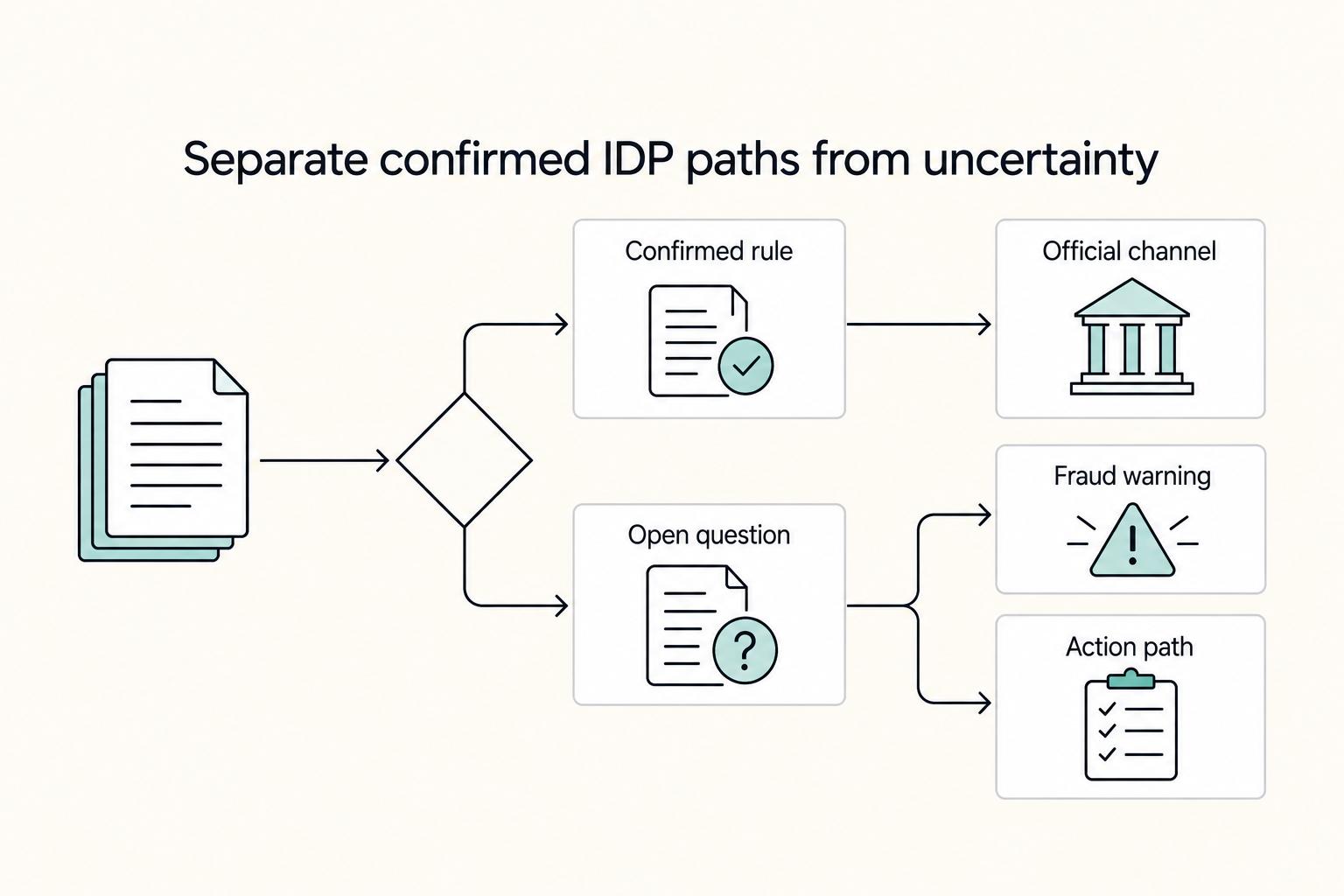
**Start by separating what is confirmed, what is still unclear, and which paths are plainly promotional before you take any IDP action.**