
Quick Answer
Start by framing remote exit interviews as a handoff task, not a final debate. Prepare one steady reason for leaving, then bring a short feedback set built in Situation-Impact-Suggestion format. Select call, survey, or hybrid based on how much context your points need, and keep the same message across all channels. Before you join, confirm attendees, agenda, where notes will live, and who owns follow-up actions so your transition closes cleanly.
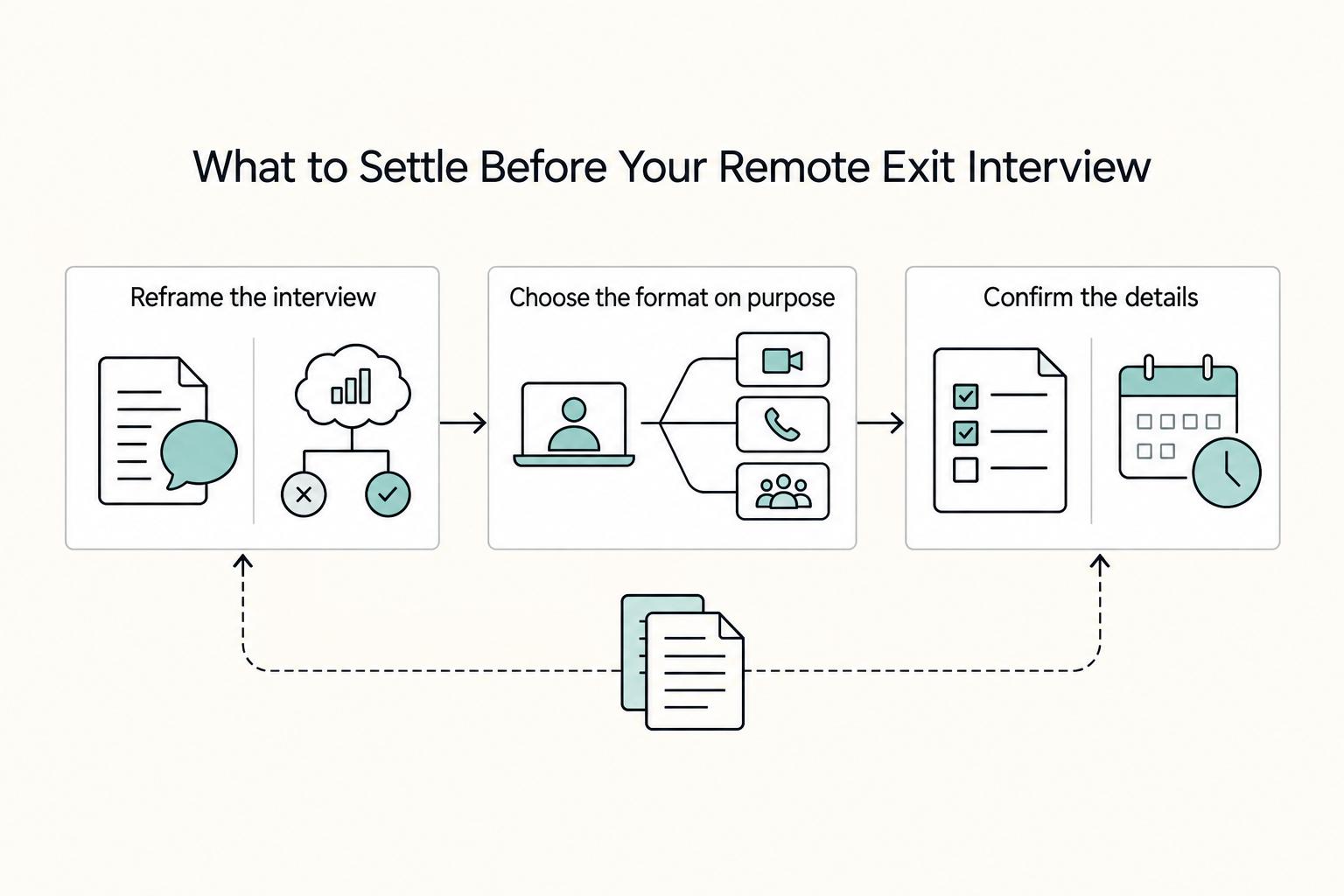
What to Settle Before Your Remote Exit Interview#
Treat the exit interview as one checkpoint inside offboarding, not a standalone venting session. Once your departure is known, the real work is leaving a clean transition, a consistent message, and feedback that still holds up once someone writes it down.
In a remote company, offboarding starts before the interview and runs through your last day. It includes knowledge transfer, admin tasks, and risk controls such as equipment return and data security. If the wider process is still unclear, review How to Offboard an Employee from a Remote Company before you focus on the interview itself.
Step 1. Reframe the interview as a handoff checkpoint#
The real shift in a remote exit is not just location. Your transition is spread across tools, people, and documents. A loose comment in a call, a note in HR software, and a handoff detail in Slack can all become part of the record. No one person may hold the full picture, so go in assuming three things:
- your comments may be repeated later without your tone
- unfinished work can get lost if ownership is vague
- useful feedback can drop quickly when people speak too loosely or too carefully
That is why process-focused feedback travels better than personal accusations. Say what happened, what it affected, and what would have helped. If you want to describe a pattern, anchor it to observable work issues such as unclear approvals, scattered decisions, or missing documentation. The goal is not to prove a case. It is to leave something the company can use without creating fresh risk for you.
Before the interview, verify that open projects, key contacts, current status, and pending decisions live in one shared place. If they do not, create a short handoff note yourself and bring it into the discussion. In remote teams, undocumented knowledge can be the first thing that disappears.
Step 2. Choose the format on purpose#
The format shapes how much nuance you can give and how easily your words can be misread later. There is no single best option, so choose based on the kind of feedback you actually need to deliver.
| Format | Best use case | Main risk | How to respond |
|---|---|---|---|
| Live video call | You need context, clarification, or a real conversation about handoff gaps and working patterns. | You speak too casually, drift into complaints, or forget key points. | Prepare 2 to 3 points in advance and ask who will document follow-ups. |
| Online survey | Your feedback is simple, standardized, or mostly process-based. | Written answers can sound harsher than intended or become so vague they say nothing. | Keep answers short, factual, and free of loaded language. |
| Hybrid | You want a clean written record but also need room to explain one or two issues. | Your form and your call do not match if you improvise. | Use the form for summaries, then expand only on the highest-value points live. |
If you are given only one format, adapt to it instead of resisting it. The real test is consistency across the call, the form, and your transition documents.
A common failure mode is self-protective feedback that tells the safest version of the truth. Another is the opposite: a very candid live call followed by a bland survey answer that makes your comments look unreliable. Pick your wording once, then repeat it cleanly.
Step 3. Confirm the details before you join#
You do not need a long prep ritual, but you do need basic control over the meeting. If your company has weak documentation norms, Build a Remote Employee Handbook Your Team Can Run is a useful benchmark for what clear ownership should look like. Before the meeting, confirm:
| Detail | What to confirm |
|---|---|
| Format | Call, survey, or both |
| Attendees | HR, manager, or anyone else joining |
| Agenda | Feedback, transition review, or both |
| Aftercare | Where notes live, who owns next steps, and how remaining offboarding tasks will be tracked |
In short, confirm the format, attendees, agenda, and aftercare before you join.
The expected outcome is simple: aligned messaging on why you are leaving, documented ownership for every open item, and a clear path for follow-through after the interview. That is what turns an awkward final meeting into a professional close. It also lowers the odds that a poor exit becomes the kind of story people repeat later.
The Three Pillars of a Strategic Exit: Your Preparation Framework#
Strong prep for this interview is simple: align one leaving narrative, two or three usable feedback points, and one forward-looking question before you join. If those pieces conflict across your call, form, and handoff note, you recreate the same risks you want to avoid: misalignment, uncertainty, and slow decisions.
| Pillar | Prepare now | Verify before the meeting | Common failure mode |
|---|---|---|---|
| Departure narrative | One clear reason for leaving, one genuine appreciation, one forward-looking sentence | It matches what you already told your manager, HR, and anyone reading your handoff note | You give different versions to different audiences |
| Feedback package | Two or three points in Situation-Impact-Suggestion format | Each point ties to an observable work example, not a personal judgment | You turn the meeting into a full history of every frustration |
| Closing question | One question tied to process, transition, or future contact | It helps the company act after you leave, not debate your decision | You reopen an argument that cannot be solved in the interview |
Step 1 Lock your departure narrative#
Lock this first so your message stays stable across spoken and written records. Use one short line you can repeat calmly: "I'm leaving because ____. I appreciated ____. I'm moving toward ____ next."
Use this pre-meeting scan:
- Do keep one reason you can repeat in video, survey, and email.
- Do make appreciation specific, for example: trust, scope, flexibility, team relationship.
- Do align wording with your resignation note and prior messages.
- Don't add a new complaint you are not prepared to see repeated later.
- Don't use loaded phrases that can read harsher in writing.
If open work, owners, or return tasks are still unclear, fix that before the interview. Use How to Offboard an Employee from a Remote Company to tighten the full transition plan.
Before moving to Pillar 2, run a consistency check: compare your one-sentence reason against your HR form draft, resignation message, and handoff document. If one version sounds vague, emotional, or materially different, rewrite it now.
Step 2 Build a feedback package they can use#
Keep feedback selective and execution-focused so it can be acted on. Situation-Impact-Suggestion helps you do that: what happened, what it affected, and what would have helped.
Example: "During final handoff, approvals were split across chat while current status lived in the project board. That made it harder for the next owner to see what was decided versus pending. A better approach is one linked decision summary inside the active project item before ownership changes."
Example: "Design and engineering tracked the same work in different tools with different labels. During transition, ownership looked complete in one place and open in another. A shared naming rule and linked duplicate tickets would reduce that overlap."
Build your points from your own handoff notes, task history, meeting notes, or written status updates. If you cannot tie a point to a specific project or handoff moment, it is usually too broad.
Step 3 Finish with one forward-looking question#
Close with one question that creates a practical next step after you leave. Good options include what would make future handoffs easier, what a replacement should learn first, or how to stay in touch for future collaboration.
This keeps the interview useful without trying to solve everything in one meeting. Your goal is a usable close: consistent narrative, practical suggestions, and one clear path forward. For adjacent operating practices in distributed teams, see How to Manage a Global Team of Freelancers.
The Diplomat's Toolkit: Giving Honest Feedback Without Burning Bridges#
To keep feedback honest without burning bridges, focus on observable process issues, explain the impact, and suggest one practical improvement. In practice, you can structure each point as observation, business impact, suggested improvement, neutral close.
| Part | What it covers |
|---|---|
| Observation | What you directly saw |
| Business impact | What changed for the team, project, or customer |
| Suggested improvement | One realistic next step |
| Neutral close | A sentence that keeps the tone professional |
Example: "I noticed final decisions were split between Slack threads and the project board during handoffs. That made it harder to confirm the current direction and slowed follow-up across time zones. One improvement might be requiring final decisions to be logged in one agreed place before handoff. That could make transitions smoother for the next person."
Before the call, pressure-test each point against one concrete example from your notes, task board, calendar history, or an approval thread. Broad claims like "leadership kept changing everything" are usually harder to act on and easier to dismiss.
Say this instead#
| Emotional statement | Risky phrasing | Safer process-oriented alternative |
|---|---|---|
| "My manager was disorganized." | Personal judgment that invites defense | "Priorities sometimes changed through multiple channels, which made ownership less clear. A single place for current priorities would reduce rework." |
| "Nobody knew what was going on." | Too broad to act on | "Project status was often spread across chat and docs. A shared update cadence could make handoffs easier." |
| "Approvals took forever." | Sounds exaggerated | "Approvals sometimes sat across different time zones without a clear owner. Naming one approver and response window could speed decisions." |
Phrase starters that keep you steady#
- To flag uncertainty: "From my perspective...", "What I observed was..."
- To propose improvement: "One change that might help is...", "It may be worth considering..."
- To preserve tone: "I want to keep this focused on process...", "I'm sharing this because it may help the next transition..."
A praise sandwich is optional. Use it when the positive point is genuine and the issue is sensitive but fixable. Skip it when the praise would sound forced.
Exit interviews do not always lead to visible change, so make your input usable. Before you submit a form or end the call, do a quick check: is it respectful, specific, practical, and safe if forwarded internally?
For related guidance, see A Guide to Performance Reviews for Remote Employees and How to Encourage Diversity and Inclusion in a Remote Workplace Without Adding Bureaucracy.
Are Exit Interviews Truly Confidential? A Realistic Approach to Privacy#
Exit interviews are not fully confidential in practice, so speak as if your comments could be shared internally. Keep feedback process-focused, avoid personal allegations, and use wording you can stand behind if attributed to you.
Specific stories can reveal identities even without names. Before the call, review any confidentiality or IP terms tied to your exit, and rewrite examples that rely on client names, private messages, or nonpublic internal data.
Treat the notice period as security-sensitive. Some organizations monitor for unusual activity, including mass downloads or atypical access to high-value systems, so keep your points evidence-based without sharing confidential files, customer details, or internal metrics unless policy clearly allows it.
| Topic | Safe to Discuss in Exit Interview | Better Escalation Path |
|---|---|---|
| Handoffs, approvals, tool overlap | Yes, when framed as process and business impact | Exit interview or survey |
| Communication breakdowns in day-to-day work | Yes, when specific and professional | Exit interview, without personal attacks |
| Misconduct, harassment, discrimination, retaliation concerns | Not as your only route | Use the applicable formal reporting channel; confirm the current process through an official internal source |
| Client-sensitive information, source files, internal financial data, roadmap details | Usually no | Use policy-approved channel only |
Before you submit or say anything, run one final filter: is this necessary, factual, non-defamatory, and constructive if your name is attached? For a step-by-step walkthrough, see A Guide to Harassment Training for Remote Teams.
The Final Networking Play: Turning Your Exit into an Opportunity#
Treat your close as a relationship handoff: done well, it can preserve trust and keep the door open for future contact, without promising referrals or rehiring.
Keep your ending brief and practical: a clear thank-you, one specific takeaway from the work, and a simple line about staying in touch. The interview is most useful when it stays focused on reflection and organizational learning, so your close should sound grounded, not performative.
A close you can actually use#
Before the call, pick one takeaway tied to real work so your final message stays specific and credible. If the conversation is remote, set yourself up to speak clearly and stay focused.
If your work involved async collaboration or cross-border coordination, name one concrete practice you valued, such as clear written decisions or clean handoffs across time zones.
| Objective | What to say | What to avoid |
|---|---|---|
| Show appreciation without sounding scripted | "I appreciated the chance to work on the onboarding redesign. It sharpened how I think about handoffs." | "Thanks for everything, it was great." |
| Leave one memorable takeaway | "Working with a distributed team made me more disciplined about documenting decisions." | "I learned a lot." |
| Keep the door open | "I valued working with you and would be glad to stay in touch." | "Let me know if you hear of any openings." |
| Protect tone after hard feedback | "I shared candid feedback because I think it can help the team, and I'm grateful for the experience." | Reopening old arguments or personal conflicts |
If you want a reference, introduction, or future contract conversation, handle that separately from your final minute in the interview so your close stays clean and professional.
Follow up after a short pause#
After the interview, reconnect briefly on the channel you already use with that person, often LinkedIn or direct email. Keep it simple:
"Hi the recipient's name, thank you again for the conversation and for working together on your shared team or project. I appreciated the chance to learn your specific takeaway. I'd be glad to stay in touch, and I wish you and the team well."
Use this checklist so your follow-up feels professional, not transactional:
- Reconnect with people you worked with directly, including the interviewer and key collaborators.
- Follow up in the channel you already used naturally together.
- Keep the relationship warm with occasional, relevant check-ins or congratulations, not repeated asks.
Related: How to Manage a Global Team of Freelancers. You might also find this useful: How to Find Remote Work on LinkedIn Without Mass-Applying.
Conclusion: Leave with Confidence and Control#
Your job is to close cleanly. Treat the interview as a deliberate offboarding step: give feedback the company can use, say only what you can stand behind later, and leave your records in order.
That works best when you stick to a simple structure: one neutral reason for leaving, then a few process-based points with examples, impact, and a practical suggestion. The interview is meant to capture the departing employee perspective, so your best contribution is usable detail, not a full retelling of every frustration. If the meeting invite comes during your final work period, verify who will conduct it and what format it will use. Exit interviews can be run virtually, in person, or with a form, and a neutral setting can make it easier to speak openly.
Keep expectations realistic. Exit interviews can create a direct feedback channel, but they do not always produce useful feedback. If the exit was difficult or involuntary, keep your comments factual and professional anyway. Do not assume your responses are confidential or anonymous.
Just as important, this protects your reputation. You are showing how you handle a sensitive handoff: concise, calm, specific, and forward-looking.
After the interview, do three things: document the key points you gave, align your notes with any written forms or emails, and finish the rest of your offboarding follow-through. If you need the broader handoff checklist, see How to Offboard an Employee from a Remote Company.
This pairs well with our guide on How to Onboard a New Employee in a Remote-First Company.
Frequently Asked Questions
How should you prepare for remote exit interviews?
There is no single standard for how to prepare for remote exit interviews. A verifiable baseline is to avoid submitting confidential information or personal data in feedback forms.
What should you avoid saying?
Avoid sharing confidential information or personal data. That is the clearest privacy guardrail.
Should you choose a live call or a survey?
There is no clear-cut case for choosing live calls over surveys, or the reverse. Treat format choice as organization-specific and confirm expectations with the channel you are asked to use.
Are exit interviews confidential?
Confidentiality rights for exit interviews are not settled in the general case. The explicit guidance available here is a caution not to submit confidential information or personal data in form-based feedback.
What if your experience was seriously negative?
There are no fixed remote exit interview escalation rules. One relevant limitation shown in the sources is that some channels are only for site/help issues and redirect content matters elsewhere, so verify the correct reporting path before sharing details.
How honest should you be?
Be precise about what you know and avoid presenting assumptions as settled fact. The PMC/NLM excerpt also notes that database inclusion is not the same as endorsement of an article’s claims.
Try a related tool
Researched and edited by the Gruv editorial team. Gruv builds cross-border billing, payouts, and finance-operations software for global businesses.
Sources
- diplomacy.edu/wp-content/uploads/2021/11/Persuasionbook5.pdftrusted
- dodcio.defense.gov/Portals/0/Documents/CMMC/AssessmentGuideL2v2...trusted
- ecfr.gov/current/title-32/subtitle-A/chapter-I/subcha...trusted
- hanford.gov/files.cfm/FOI_2012-00870_Attachment_to_April...trusted
- menlopark.gov/files/sharedassets/public/v/1/agendas-and-mi...trusted
- middlebury.edu/deal-podcasttrusted
- nrc.gov/docs/ML2605/ML26058A154.pdftrusted
- pmc.ncbi.nlm.nih.gov/articles/PMC12880635trusted
Educational content only. Not legal, tax, or financial advice.
Related Posts

Germany Freelance Visa Application Path for Freiberufler and Gewerbe
Choose your track before you collect documents. That first decision determines what your file needs to prove and which label should appear everywhere: `Freiberufler` for liberal-profession services, or `Selbständiger/Gewerbetreibender` for business and trade activity.
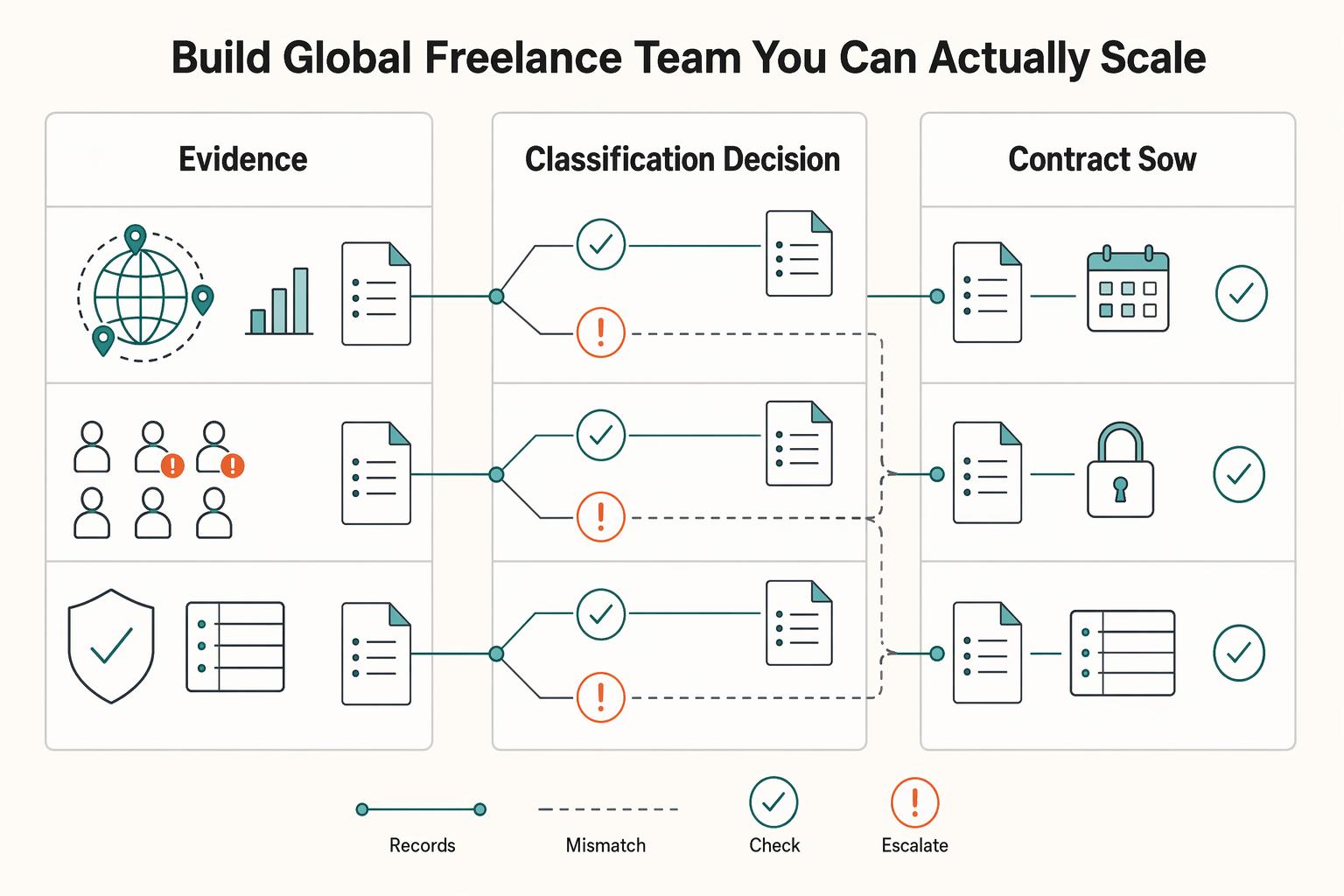
How to Manage a Global Freelance Team Without Compliance Gaps
If you want to manage a global freelance team without constant cleanup, use the same intake-to-payout process for every engagement and save an artifact at each gate. Common failure points are instinct-based classification, vague scope, and payments approved in chat with no audit trail.
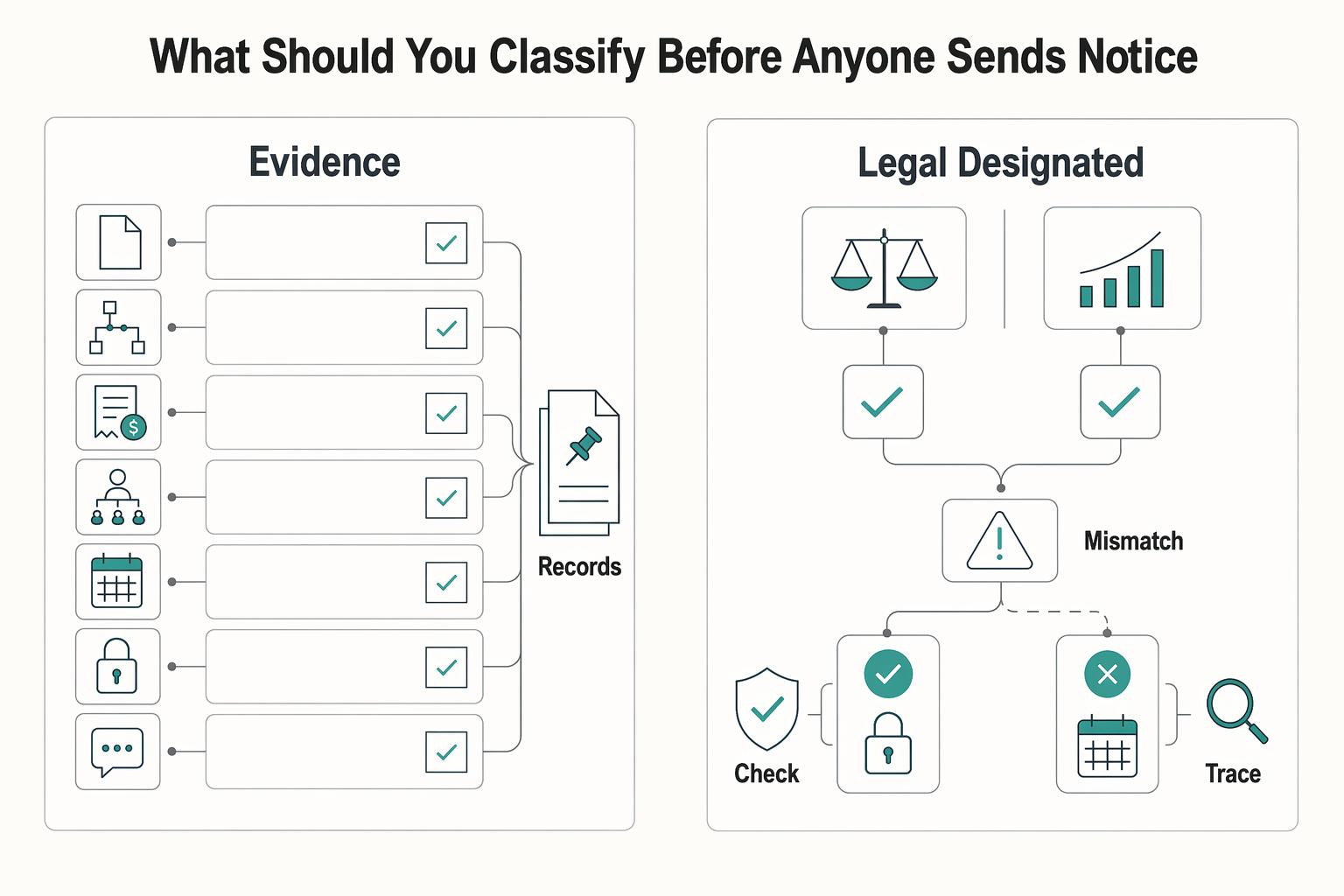
Remote Employee Offboarding Without Compliance Gaps
**A common offboarding failure pattern is doing the right tasks in the wrong order.** Treat compliance as a hard sequence: classify the relationship, route the owner path, send written notice, and close only when the evidence file is complete.