
Quick Answer
A workable direct booking model starts with operations, not web design. Before launch, put four controls in place: insurance that fits short-term rental use, a signed rental-agreement workflow, tax registration and collection settings, and a documented guest-screening standard. Then test your PMS, booking engine, calendar sync, payment reconciliation, and chargeback process so bookings can grow without exposing compliance or operational gaps.
Treat direct booking as an operating model you can run#
A direct booking business that lasts is an operating model, not a website project. The real question is not whether you can launch a site. It is whether your team can take on work that used to sit with a third-party channel and execute it consistently enough that the business gets stronger as bookings grow.
A September 2024 hospitality chapter makes that tradeoff plain. Guests are increasingly using OTAs to book accommodation, and those bookings come with a high acquisition cost, especially for smaller establishments. The same chapter also notes that moving guests to direct bookings is not frictionless. That is the right starting point. You may reduce third-party cost, but you also take control of execution areas that are easy to get wrong.
| Area | OTA-led model | Owner-led direct model |
|---|---|---|
| Execution discipline | Third-party channels provide an established booking path | You need documented steps, checklists, and clear staff briefing |
| Acquisition cost pressure | OTA demand can come with high third-party acquisition cost | Direct bookings can reduce third-party cost over time |
| Transition effort | Existing guest behavior is already channel-led | Shifting guests to direct takes sustained operational follow-through |
Your first checkpoint is not design quality. It is operational discipline. Can you turn the guest journey into checklists, and can anyone involved in delivery follow them without guessing? Poor planning is the obvious failure mode. A weak direct setup does not create sovereignty. It just exposes inconsistency faster.
Before you chase more direct traffic, build a small operating pack: written booking terms, communication templates, and a clear owner for each guest-facing step. Start with the controls your team can execute consistently, then expand. If you want a deeper dive, read The 1% Tax Regime for Entrepreneurs in Georgia.
Pillar I: The Legal & Compliance Moat#
Before you take direct payments, set up four controls: insurance that fits short-term rental use, a signed rental-agreement workflow, tax registration and collection settings, and a documented guest-screening standard. Once you move off OTA checkout, you own these obligations directly.
OTA-style rental sites can reduce host risk with insurance, guest histories, and other safeguards. Your direct setup needs to replace those safeguards with controls you can verify.
| Area | OTA-side protection | Your direct obligation |
|---|---|---|
| Liability | Platform may offer some host safeguards for on-platform stays | Confirm your own policy fits short-term rental use, guest injury risk, property damage, and income interruption |
| Disputes | Platform structure may help standardize booking records and issue handling | Keep signed terms, payment records, guest messages, and versioned policies so you can prove what was agreed |
| Taxes | The Florida bill-analysis excerpt says advertising platforms must collect and remit certain taxes | Identify every taxing jurisdiction, register where required, configure collection correctly, then remit and reconcile on schedule |
| Guest vetting | Platforms may provide guest histories and basic screening signals | Use objective criteria, apply them uniformly, document decisions, and align data handling with your privacy policy |
Insurance and contracts#
Do not assume platform protection applies when a guest books direct. Before launch, confirm with your insurer that the policy matches actual short-term rental use. Focus on guest injury liability, building and contents damage, loss of business income if the unit becomes unusable, and legal defense. Confirm the current coverage thresholds with your insurer before launch.
Then check policy-to-listing consistency: named insured, property address, occupancy type, and rental use should match what you advertise and sell. Also verify property-use limits that still apply, including HOA, condominium, or cooperative restrictions.
Use your rental agreement as an enforcement tool, not just a rules page. Keep clause groups clear and consistent across listing, checkout, and contract terms: occupancy/use limits, payment timing, cancellation/refunds, damage/deposit handling, access/entry terms, issue reporting, and remedies. Require acceptance before booking confirmation or access release, and retain the signed agreement, booking record, and exact terms version accepted.
Tax registration and display duties#
Run tax setup as an operating sequence: identify jurisdictions, register where required, configure checkout tax collection, then remit and reconcile against booking records and payouts. Verify local registration rules and filing cadence market by market.
| Area | Florida excerpt detail |
|---|---|
| Licensing and inspection | State licensing/inspection context |
| Local registration | Local registration administered by the tax collector |
| Verification | License/registration verification systems |
| Listing display | Listing/display duties |
| Fee cap | Registration fee cap of $150 |
| Fines | Fines up to $300 for certain violations |
Do not treat one definition as universal. A general compliance description says short-term vacation rentals are generally under 30 days, while the Florida bill-analysis excerpt describes a vacation rental as more than three times in a calendar year for periods of less than 30 days or 1 calendar month. Use this as a verification prompt for your market, not a global rule.
The Florida excerpt also shows what to validate operationally: state licensing/inspection context, local registration administered by the tax collector, license/registration verification systems, listing/display duties, a registration fee cap of $150, and fines up to $300 for certain violations. Even where rules differ, the practical standard is the same: know what identifiers you need, where they must appear, and how they are verified.
Screening and data handling#
Use a written, non-discriminatory screening framework with objective criteria applied the same way every time. Keep criteria practical and pre-set: identity verification, complete guest details, fit with stated occupancy rules, agreement acceptance, and other legitimate booking-risk checks.
Document each decision (approve, decline, or request more information) and store that with the booking record. Make sure your privacy policy matches your actual data handling for ID, contact details, or supporting documents, including purpose, access, and retention. Inconsistent exceptions create weak records, uneven treatment, and avoidable risk. Related: The Best Website Builders for Freelancers.
Pillar II: The Autonomous Operations Stack#
After legal setup, the next priority is operational consistency: fewer manual handoffs, clear ownership, and calendar control that helps you avoid a 6am double-booking emergency.
Use three tool layers as a decision model, even when a vendor sells them as one bundle. Run a sandbox booking before you commit so you can see what updates automatically, what still needs human action, and where friction appears.
| Layer | Primary job | What to confirm in testing | Common failure pattern if weak |
|---|---|---|---|
| PMS or operations hub | Centralize reservations, guest communication, and ops tasks | You can see live calendar visibility and track work in one place | Teams work from different views, statuses drift, and issues get missed |
| Booking engine | Let guests book directly on your site | The booking is captured reliably and availability shown to guests is current | Manual quoting returns, confirmations slow down, and mismatch risk increases |
| Channel manager or calendar sync | Keep availability aligned across external channels | Sync status is visible and failures are easy to catch quickly | Availability drift and higher double-booking exposure |
Give every stage an automated action, fallback, and check#
Automation works when every stage also has a backup. Build each stage with three parts: one automated action, one manual fallback, and one quick quality check.
| Stage | Auto action | Fallback | Check |
|---|---|---|---|
| Booking | Auto-confirmation | Manual confirmation | Reservation appears on your live calendar |
| Pre-arrival | Auto-send arrival details | Resend path | Codes, links, and instructions confirmed before release |
| In-stay | Auto check-in/support message | Owner/manager handoff | Open issues are assigned |
| Post-checkout | Auto-create turnover task | Manual dispatch | Guest-ready status verified before the next arrival |
The point is simple: if one step breaks, you should already know who steps in, how, and what they verify before the guest feels the failure.
If your system includes QR scan-and-go check-in, treat it as a checkpoint only after you test it in real operating conditions.
Keep field ops and guest data clean#
Field operations break down when important updates stay in side messages. Put cleaning, maintenance escalation, late-checkout exceptions, and unit-block decisions into one visible workflow so unresolved issues can immediately affect booking or availability status.
Data discipline matters more as platforms move deeper into the guest journey and operational stack. A January 29, 2026 industry update describes Airbnb as moving beyond a pure distribution role and introducing more operational complexity for managers. To keep your direct channel strong, capture follow-up consent clearly, segment contacts in a simple way (for example by property or stay history), run rebooking outreach from those segments, and clean duplicates or dead records on a routine schedule.
Build in phases: start with live calendar visibility, a reliable booking flow, and reservation-to-task automation; then add check-in workflows; then maintenance/exception handling; then rebooking CRM. You might also find this useful: Vrbo vs. Airbnb: A Comparison for Property Owners.
Pillar III: The Sovereign Financial Treasury#
Once bookings run through your own site, you are the merchant of record. That means you own payment risk, dispute handling, payout reconciliation, and reporting, so this pillar is about running those controls consistently each week.
Choose a processor you can operate, not just one you can connect#
Pick the gateway your team can verify, reconcile, and defend in disputes. The key test is whether it supports clean controls from payment acceptance to PMS record matching.
| Capability area | What to verify before signing | Red flag |
|---|---|---|
| Risk tools | Available risk checks, review flags, and whether suspicious payments can be held before confirmation | Risk signals appear only after acceptance |
| Payout controls | Whether payouts, refunds, and disputes are visible in one reporting flow you can reconcile | Money movement is split across disconnected reports |
| Dispute workflow | Whether evidence submission, case tracking, and exports are handled in one place | You rebuild every case from inbox threads |
| Integration fit | Whether payment records map to reservation IDs in your PMS and booking flow | You cannot trace payout/refund to a specific stay quickly |
| Compliance review | KYC, beneficial-owner, reserve, and account-review triggers documented with your payment processor before launch | Verification requirements appear only after funds are held |
Use a simple internal-control mindset: one source of truth for payment records, one weekly reconciliation owner, and one exception log for failed captures, held payouts, and partial refunds.
Run chargebacks as a process with one complete case file#
Treat chargebacks as a process, not a scramble. Start controls before acceptance, then respond with one complete case file.
| Part | Included items | Article note |
|---|---|---|
| Before acceptance | Match booking, guest, and payment details; require agreement acceptance before final payment; flag mismatches for manual review | Start controls before acceptance |
| Evidence pack | Reservation details; accepted terms or signed agreement; guest communications; payment/refund/credit records; any access or occupancy records you normally keep | Respond with one complete case file |
| Response workflow | Log dispute date and assign an owner the same day; submit the full evidence pack through the processor; record financial impact and case status; run a root-cause review after closure | Treat chargebacks as a process, not a scramble |
| Case standard | One artifact is never enough on its own | Connect terms, booking records, and communication history as one complete record |
In practice, log the dispute date and assign an owner the same day. Then submit the full evidence pack through the processor, record the financial impact and case status, and run a root-cause review after closure.
Use this rule: one artifact is never enough on its own. Your case should connect terms, booking records, and communication history as one complete record.
Make deposit handling and pricing controls consistent#
For deposits, consistency is the control. Use clear authorization language at booking, document incidents with timestamped notes/photos, send guests a short written summary before any claim action, and run a defined release process so untouched deposits do not linger.
For pricing, use a weekly revenue-ops loop tied to your PMS and channel mix. Review base rates, minimum stays, fee setup, and direct-vs-channel positioning together; set guardrails so automation does not drift below your floor or into unrealistic spikes; and define override rules for holidays, events, owner stays, maintenance blocks, and short lead-time gaps.
Keep a fixed reporting cadence. A formal report like Treasury's AFR uses a defined window (October 1, 2024 to September 30, 2025); your operation should also run on closed periods: weekly reconciliation, monthly close, and monthly review of occupancy, ADR, refunds, disputes, and unpaid balances. If a figure cannot be traced to both a reservation and a payment record, treat it as uncontrolled.
For a step-by-step walkthrough, see How to Conduct an SEO Audit of Your Freelance Website.
The Three Pillars Only Work If Your Day-to-Day Changes#
The shift is operational: you stop managing for filled dates and start managing a business you can defend, measure, and improve each week. Your direct booking site is one part of that; your real job is owning the decisions behind it.
The three pillars only work if they change what you do day to day. Compliance discipline means insurance, rental terms, tax checks, and privacy ownership each have a clear owner and a clear review rhythm. Systemized operations means your PMS, booking engine, channel manager, and payment flow are tested end to end, not just connected. Financial control means you track decision-useful KPIs; one STR operations source specifically warns that reading total revenue instead of net rental revenue can flip your performance interpretation.
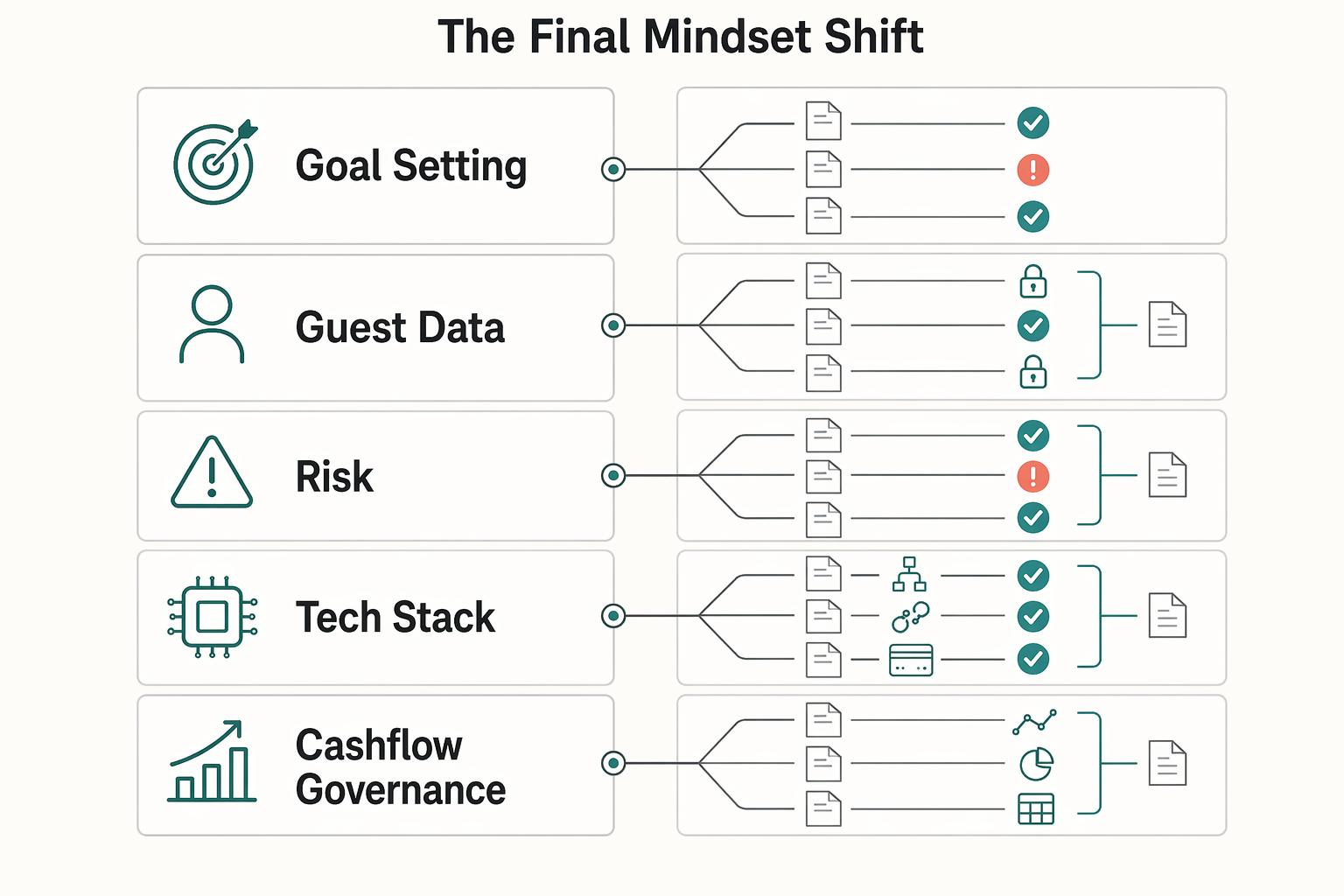
| Decision area | Host habit | Owner behavior you can implement now |
|---|---|---|
| Goal setting | Focus on occupancy or gross revenue alone | Set weekly targets around net rental revenue plus booking quality |
| Guest data ownership | Leave most relationship value on the platform | Maintain first-party guest records and a repeat-booking contact path |
| Risk process | Screen by instinct and message tone | Use objective screening data points with written approval rules |
| Tech stack ownership | Assume integrations work once connected | Run test bookings, verify sync, and validate support outcomes |
| Cashflow governance | React after payout problems appear | Track fees, refunds, disputes, and deposit handling on purpose |
Why this matters: reported examples include a four-month fraud pattern tied to $20,000 in losses, and an audit claim where a reported 84% support resolution rate was 11%. The takeaway is not panic. It is verification: test your stack, keep dispute evidence ready, and assign clear ownership for each risk area.
What this looks like this quarter:
- Pick 3 to 5 KPIs, including net rental revenue, and review them weekly.
- Replace gut-feel screening with objective checks and documented approval steps.
- Run one full booking test across PMS, channel manager, checkout, and guest messaging.
- Confirm where first-party guest data lives and how you will use it for direct relationships and repeat-booking channels.
We covered this in detail in The Best Channel Managers for Vacation Rentals.
Frequently Asked Questions
What are the primary legal risks of taking bookings on your own site?
The main risks are weak guest terms, unclear payment and dispute workflows, and missed tax or privacy responsibilities. Review those areas with qualified local advisors before launch. Also inspect each vendor's data language carefully, because some tools say they avoid personal data while still logging property-page actions like arrival dates, departure dates, or quote values.
Direct booking vs. Airbnb: which is safer for you as an owner?
Neither option is automatically safer. OTAs can bring demand, but they control more of the guest relationship and take a commission. Your own site gives you more control, but you also operate more of the stack yourself. A practical middle path is to use marketplaces for visibility and make your site strong enough that repeat guests prefer to book direct.
Does your direct booking website vacation rental setup need PCI compliance?
Yes, treat PCI as a required launch checkpoint. This article does not define your exact scope outcome. Confirm your compliance steps, attestations, and any scanning obligations with your processor and a qualified compliance advisor.
What is a channel manager, and when is it essential?
If you sell the same dates in multiple places, most teams treat a channel manager as essential. Exact integration and sync behavior are vendor-specific, so validate your setup directly before relying on automation.
How should you budget for a direct booking website vacation rental?
Budget with placeholders until you verify current rates. Your baseline stack is mobile-friendly design, a secure payment gateway, SEO, and booking-calendar integration. If you are multi-channel, add integration fit checks because integrations are vendor-specific. Before launch, make sure guests can browse photos, check availability, and book easily on a phone.
Try a related tool
Researched and edited by the Gruv editorial team. Gruv builds cross-border billing, payouts, and finance-operations software for global businesses.
Sources
- acquisition.gov/far/2.101trusted
- cde.ca.gov/sp/ml/documents/eldstndspublication14.pdftrusted
- documents.coastal.ca.gov/reports/2025/8/w15a/W15a-8-2025-corresp1.pdftrusted
- flsenate.gov/Session/Bill/2024/1537/Analyses/h1537c.COM.PDFtrusted
- home.treasury.gov/system/files/266/Treasury-FY-2025-AFR.pdftrusted
- irs.gov/irb/2026-01_IRBtrusted
- ohioauditor.gov/publications/docs/TownshipHandbook_2-27-19.pdftrusted
- sec.gov/Archives/edgar/data/1874944/0001874944220000...trusted
Educational content only. Not legal, tax, or financial advice.
Related Posts

Georgia 1% Tax for Entrepreneurs Without Filing Surprises
Treat Georgia's 1% tax path as a compliance question first and a rate discussion second. The goal is a setup you can defend under review, not a shortcut that fails at filing time.
The Best Website Builders for Freelancers
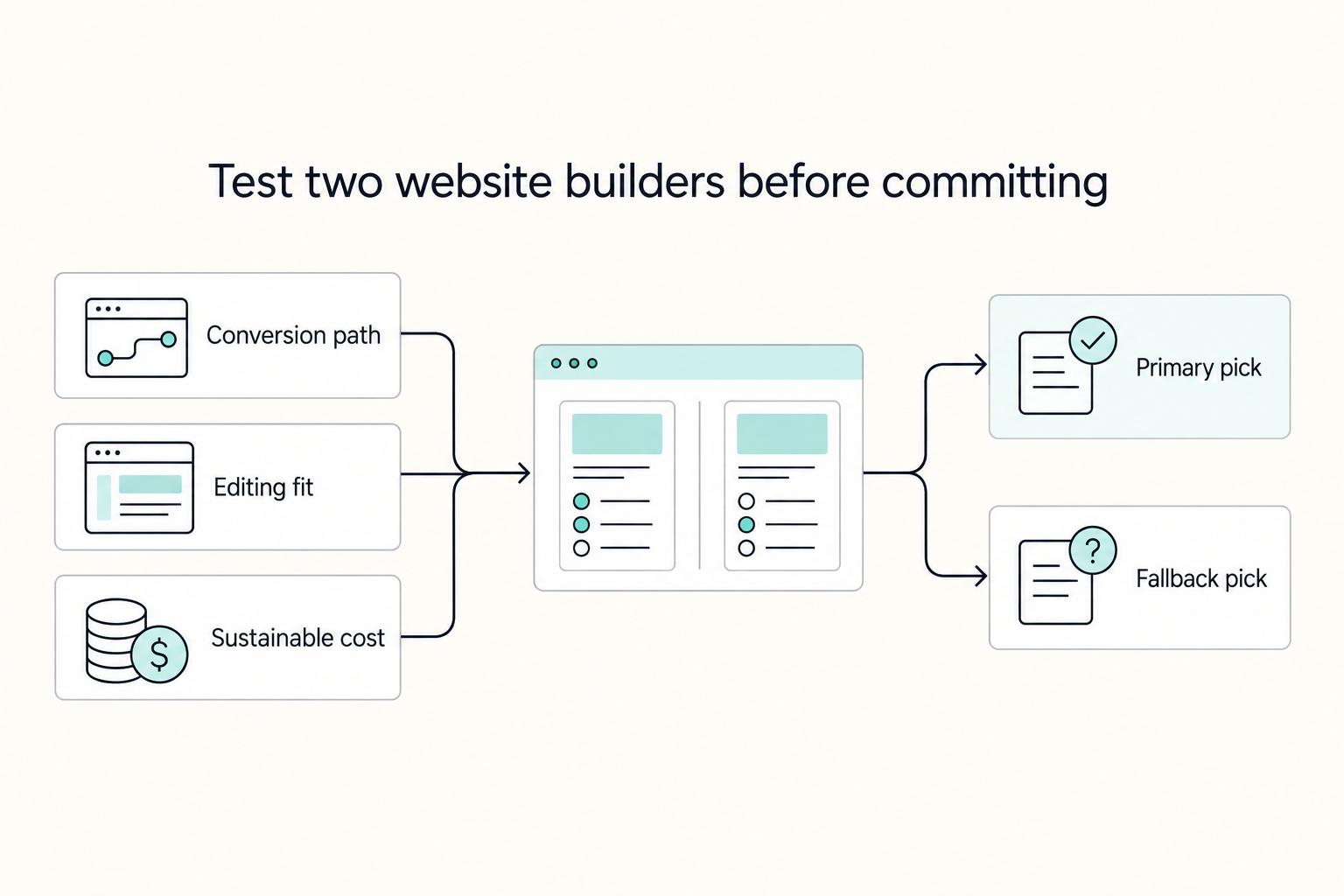
If you are trying to choose the **best website builder for freelancers**, stop looking for a universal winner. The right pick is the one that fits your conversion path, your editing habits during busy client weeks, and a budget you can actually sustain.
Vrbo vs. Airbnb: A Comparison for Property Owners
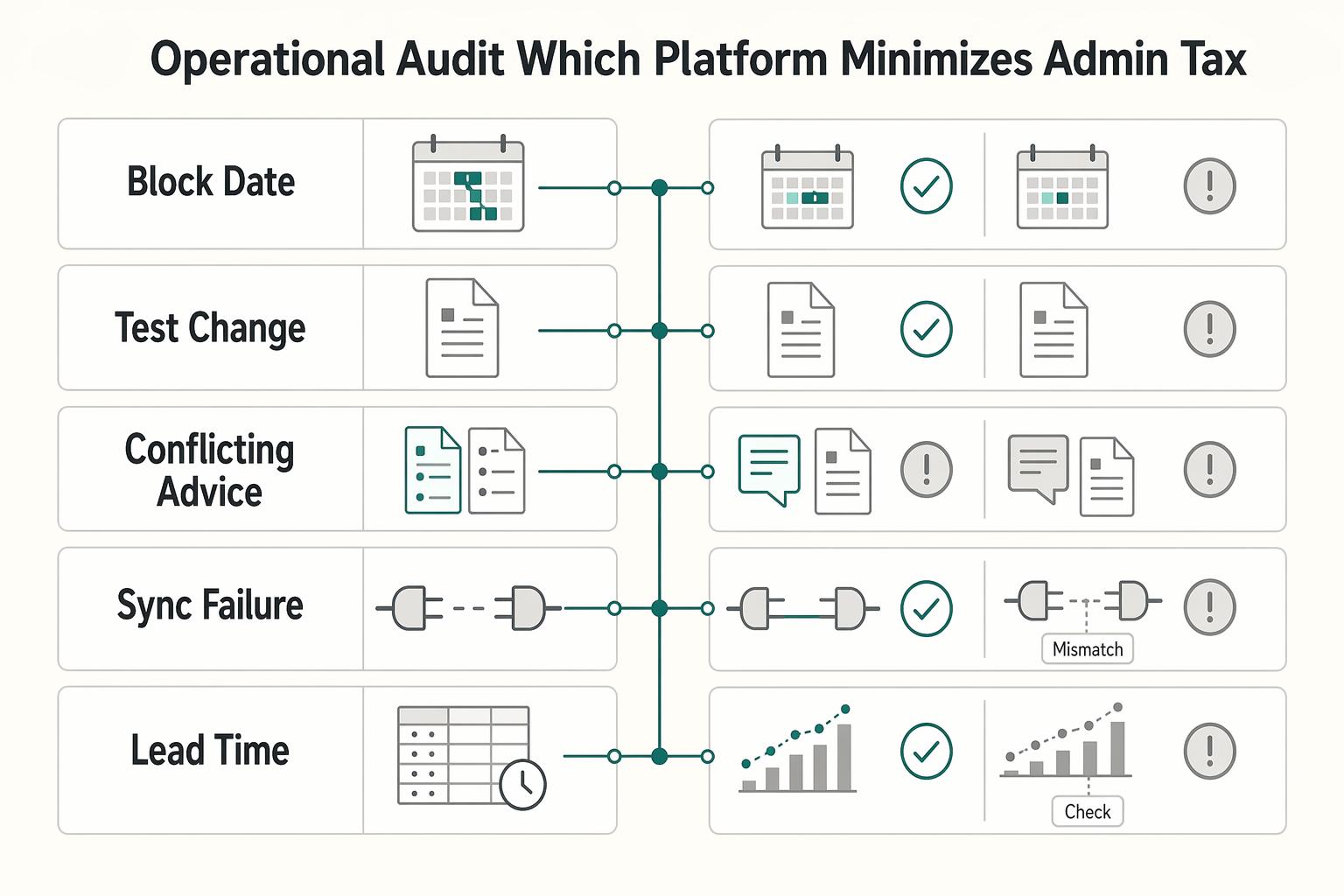
For a professional short-term rental operator, choosing between Airbnb and Vrbo is not about brand preference. It is a portfolio decision that affects revenue, operating load, and risk. If you treat your property like a real business, the comparison has to go well beyond surface fee checks.