
Quick Answer
Start by tightening contract and billing controls, then use credit insurance for b2b sales only for the exposure that remains. Require an upfront deposit, documented acceptance, written change orders, and a stop-work trigger before more work begins. If you still carry open-account risk across multiple buyers, compare policies on insurer-approved credit limits, waiting periods, and claim documentation instead of headline coverage percentages. Use Merchant of Record only when provider scope and payout terms are explicit.
Stop Worrying About Unpaid Invoices: Your Defense Framework#
If you want fewer unpaid invoices, fix the way you sell and bill before you shop for protection. Start with your system: tighten the contract, control delivery and billing, then choose a financial backstop. That order matters because trade credit insurance is a supplement to prudent credit management, not a replacement for it.
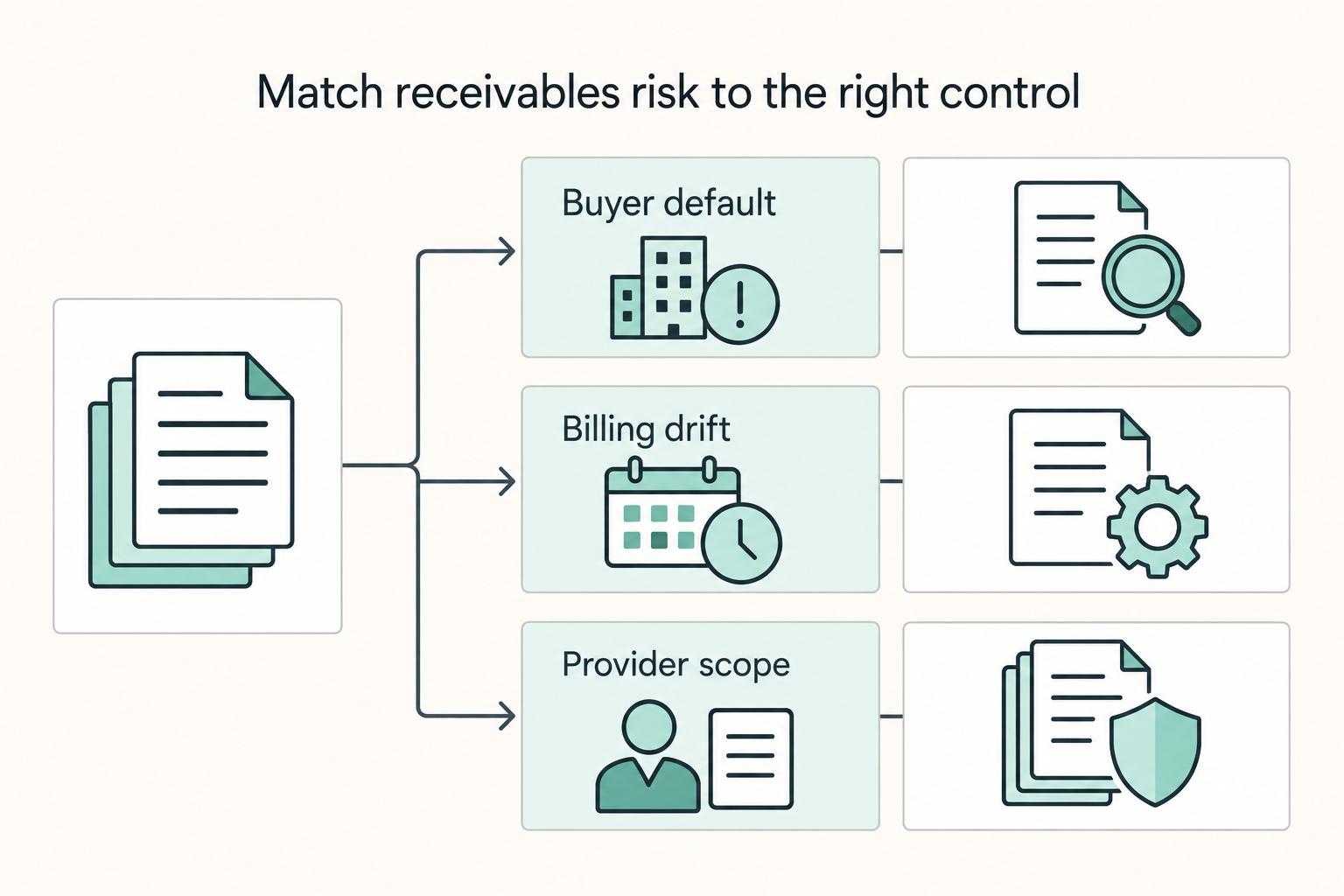
Use three tiers. Tier 1 removes contract ambiguity. Tier 2 limits exposure while work is in flight. Tier 3 helps you choose between insurance and a Merchant of Record.
Tier 1. Contract checklist#
Make payment expectations explicit and easy to prove:
| Checklist item | What to define | Why it matters |
|---|---|---|
| Deposit policy | Require an upfront payment before kickoff | No cleared funds, no work starts. |
| Acceptance criteria | Define what counts as acceptance for each deliverable and which written channel is valid | Billing should trigger from a documented acceptance point. |
| Scope boundaries | State what is included, excluded, and assumed | Vague scope can become a payment dispute. |
| Change-order rules | Use written change control | Contract changes happen only by written agreement of both parties. |
| Late-payment clause | State due dates, interest, and recovery costs where your governing law allows it | Use the rule that applies to your contract jurisdiction. |
| Termination compensation | Require payment for completed work plus documented committed costs | A practical structure is percentage of work completed plus documented termination-related charges. |
- Deposit policy
Require an upfront payment before kickoff. No cleared funds, no work starts.
- Acceptance criteria
Define what counts as acceptance for each deliverable and which written channel is valid, such as email, a project tool, or signed acceptance. Billing should trigger from a documented acceptance point.
- Scope boundaries
State what is included, excluded, and assumed. Vague scope can become a payment dispute.
- Change-order rules
Use written change control. Contract changes should happen only by written agreement of both parties.
- Late-payment clause
State due dates, interest, and recovery costs where your governing law allows it. For example, UK B2B statutory interest is 8% plus the Bank of England base rate, but use the rule that applies to your contract jurisdiction.
- Termination compensation
If the project ends early, require payment for completed work plus documented committed costs. A practical structure is payment for the percentage of work completed plus documented termination-related charges.
If a buyer resists written acceptance, avoids clear scope, or will not identify billing ownership, tighten terms or walk away. Build your evidence file from day one: signed SOW or MSA, PO requirements, invoice schedule, approval records, and written changes.
Tier 2. Process flow from onboarding to collections#
Once the contract is solid, the next failure point is execution. Prevention is the priority. Before you extend terms, verify legal entity details, AP contacts, billing requirements, and whether PO or vendor setup is mandatory. If the contract entity and paying entity do not match, fix it before kickoff. If you need deeper screening, use a checklist like How to Vet a New Client for Financial Stability.
| Stage | Control | Grounding in the article |
|---|---|---|
| Before extending terms | Verify legal entity details, AP contacts, billing requirements, and whether PO or vendor setup is mandatory | If the contract entity and paying entity do not match, fix it before kickoff. |
| During delivery | Invoice by milestones instead of waiting until the end | Each milestone should end with documented approval so the billing event is clear and defensible. |
| Stop-work trigger | If an invoice is overdue past agreed terms, or approval for the next phase is missing, issue a written stop-work notice and pause work | Government contracting treats stop-work as a specifically identified written order; that is a useful drafting model for private contracts. |
| Escalation | Define escalation before problems start | Project lead, budget owner, AP contact, then formal notice under contract terms. |
During delivery, invoice by milestones instead of waiting until the end. Each milestone should end with documented approval so the billing event is clear and defensible.
Set a written stop-work trigger. If an invoice is overdue past agreed terms, or approval for the next phase is missing, issue a written stop-work notice and pause work. Government contracting treats stop-work as a specifically identified written order. That is a useful drafting model for private contracts, even if the clause itself is not universal law. Define your escalation path before problems start: project lead, budget owner, AP contact, then formal notice under contract terms.
Tier 3. Choose the right backstop#
If Tiers 1 and 2 are working and you still carry meaningful exposure, compare the backstops by mechanism, not by label. When people look at credit insurance for b2b sales, trade credit insurance and MoR often get lumped together, but they solve different problems.
Trade credit insurance, also called accounts receivable insurance, protects B2B receivables against buyer non-payment risk. Providers include Allianz Trade (Euler Hermes rebranded in 2022) and Atradius. Policies commonly focus on B2B receivables due within 12 months, may include customer creditworthiness analysis, and can indemnify up to 95% under some terms. Coverage still depends on policy conditions such as per-buyer credit limits and waiting periods for protracted default claims.
MoR works differently. The MoR is legally responsible for the transaction and liable for disputes or refunds for that purchase. Fit matters. Some MoR programs are designed for digital products, not every service model, and enforcement risk is real. Stripe warns MoR rule violations can lead to significant fines. The FTC alleged misuse of MoR or reseller accounts in its June 16, 2025 action against Paddle, which included a $5 million settlement.
| Decision question | Trade credit insurance | Merchant of Record |
|---|---|---|
| What is the mechanism? | Insurance on eligible B2B receivables against buyer non-payment. | Transaction structure where the MoR is legally responsible for the sale. |
| Who carries default risk first? | You do first, subject to policy terms, credit limits, and later indemnification. | Depends on provider setup, but the MoR carries legal transaction responsibility and handles disputes or refunds. |
| When do you get paid? | After insured-event conditions and any policy waiting period, subject to claim terms. | Depends on provider payout terms. Confirm timing in writing. |
| What admin burden stays with you? | Credit management and meeting policy terms for claims. | Provider onboarding and operating-model fit. |
| When is it a poor fit? | If you need immediate certainty on every invoice without claim conditions. | If your business model is unsupported by provider scope or transaction rules. |
Choose your path based on the problem you are trying to solve:
- Fix Tiers 1 and 2 first if your main issues are approvals, scope drift, or billing discipline.
- Consider trade credit insurance if you extend terms across multiple B2B buyers and can operate within policy conditions.
- Consider MoR if your business model fits and you want transaction responsibility shifted to a provider.
- Pause any option if liability, payout timing, supported business types, and dispute handling are not clear in writing.
If you want a deeper dive, read The Silent Profit Killer: How to Stop Margin Erosion in Your Freelance Business. Before you compare insurance options, pressure-test your payment terms with this practical template: Freelance Contract Generator.
Credit insurance works best when it sits on top of clear contracts, clean approvals, and a documented stop-work rule.
- List the buyers, invoice sizes, and payment terms you actually want the insurer to evaluate.
- List the documents you can already produce on demand, including contracts, approvals, and invoice history.
- List the overdue stages that trigger reminders, escalation, and a stop-work decision.
- List any concentration risk that would make one late client disproportionately painful.
A 2026 Quote Sheet Before You Buy#
Before you compare premiums, force every provider to answer the same operating questions in writing. According to the International Trade Administration, export credit insurance is designed to protect exporters against buyer non-payment. Data from the Export-Import Bank of the United States says eligible export receivables can be insured up to 95% under program terms. Atradius also says buyer limits and waiting periods are not side notes. They decide whether a claim is collectible in practice.
| Question for the quote | Write down | Decision effect |
|---|---|---|
| Buyer limit | Approved limit per buyer, last review date, and whether a nil limit blocks cover | Tells you whether 1 large client can actually be insured. |
| Waiting period | Number of days before a protracted-default claim can move forward | Tells you how long cash flow stays exposed after non-payment. |
| Indemnity rate | Coverage percentage, exclusions, and deductible or retention | Separates a 90% to 95% backstop from marketing language. |
| Document pack | Exact contract, invoice, approval, and collection records required at claim stage | Shows whether your current workflow can support the policy. |
| Collections role | Whether the insurer, broker, or your team runs first-line collections | Changes how much operational burden stays with you. |
The quote sheet also makes your internal routing cleaner. Use How to Vet a New Client for Financial Stability before you extend terms, pressure-test the acceptance and billing language in the Freelance Contract Generator, and decide whether your real problem is transaction liability rather than pure credit risk in Merchant of Record for Freelancers. If your payment process itself is messy, the Free Invoice Generator is a faster fix than buying cover for a weak workflow.
- Review the last 12 months of receivables by buyer, not just total overdue balance.
- Flag any single client whose open invoices exceed the loss you are willing to absorb in 2026.
- Ask each provider what happens if the buyer limit is reduced after delivery but before payment.
- Do not accept a quote comparison until the payout timing, exclusions, and required claim documents are all written down.
What the Numbers Mean for Your Cash Flow#
A strong quote changes your operating decision only when the numbers line up with your receivables reality. If a policy covers invoices due within 12 months and can reimburse up to 95%, that still leaves timing, exclusions, and per-buyer limits to test against your own exposure. Data from the UK late-payment rule shows how expensive delay can become in some commercial contexts: qualifying B2B debts can accrue 8% plus the Bank of England base rate. If a provider proposes a Merchant of Record route instead, write down the compliance and liability shift in the same worksheet. The FTC's June 16, 2025 action involving Paddle and the resulting $5 million settlement are a practical reminder to get the responsibility split in writing before you rely on the model.
- Use insurance when the main risk is buyer default across multiple B2B accounts.
- Use tighter onboarding and billing controls when the main problem is still contract slippage or approval drift.
- Use a Merchant of Record only when the provider scope, payout timing, and liability terms clearly match your business model.
Beyond Insurance: Architecting Your Autonomy#
Keep the sequence simple: run strong contracts and invoice controls first, then add risk transfer only when the remaining exposure or admin burden is outside your tolerance. Every B2B invoice on credit terms is an exposure point until payment lands, so the goal is predictable cash flow, not just eventual payment.
| Layer | What it covers | Examples from the article |
|---|---|---|
| Contractual firewall | Create cleaner boundaries in day-to-day work | Confirm the legal payer, make scope and acceptance explicit, and set stop-work rights in writing before delivery. |
| Procedural shield | Cut receivables surprises | Bill by milestone where appropriate, confirm PO and AP details before invoicing, and pause progression when payment conditions are not met. |
| Financial guarantee layer | Decide whether to transfer the residual risk | With trade credit insurance, focus on the insurer-approved buyer credit limit; with a Merchant of Record, payment processing and related transaction legal/compliance responsibility moves to the MoR. |
Your contractual firewall should create cleaner boundaries in day-to-day work. Confirm the legal payer, make scope and acceptance explicit, and set stop-work rights in writing before delivery. When those terms are weak, non-payment issues can turn into disputes.
Your procedural shield should cut receivables surprises: bill by milestone where appropriate, confirm PO and AP details before invoicing, and pause progression when payment conditions are not met. That can lower chase effort and create early checkpoints before you extend more value.
Your financial guarantee layer is where you decide whether to transfer the residual risk. With trade credit insurance, focus on the insurer-approved buyer credit limit. Insurers assess buyers, update limits as conditions change, and a nil limit means that exposure is not covered. Claims can also run through collections before settlement. Even if you use insurance, keep an ongoing credit policy and regular client monitoring. With a Merchant of Record, the core shift is that payment processing and related transaction legal/compliance responsibility moves to the MoR.
Operating cadence#
Use a simple operating rhythm so the controls above do not stay theoretical. Keep it this simple:
- Review receivables by age bucket before new work starts each week.
- Check whether any buyer has drifted beyond the exposure you were willing to carry in 2026 planning.
- Decide whether the next step is a reminder, a hold, a claim discussion, or a stop-work notice.
- At contract setup, confirm legal payer, acceptance trigger, payment terms, and stop-work clause.
- Before each invoice, verify PO and AP details, milestone status, and payment approver.
- At first slippage, apply a written escalation rule instead of improvising.
- Before extending additional credit, decide whether to keep, reduce, or transfer the risk.
Use contract and process controls alone when your exposure is manageable and you can monitor clients on an ongoing basis. Escalate to trade credit insurance when open-account receivables create meaningful non-payment risk. Escalate to a Merchant of Record when payment operations and transaction compliance become the larger operational burden.
If you want a hands-on way to move collection and payout complexity out of your workflow, review how Gruv supports freelancer flows: Merchant of Record for Freelancers.
Bottom line: start with clean contracts, named acceptance triggers, and disciplined collections, then buy risk transfer only for the exposure that remains. A good quote should tell you what is covered, what documents you must keep, how long a claim may wait, and whether the tradeoff is still better than tightening the workflow you already control.
Frequently Asked Questions
How do you reduce unpaid-invoice risk in practice?
Start with clear contract and billing controls, then add risk transfer if you sell to other businesses on open account terms. A useful next step is to review your last three projects and mark whether the failure was contract, process, or credit-risk exposure.
Is there insurance for unpaid invoices?
Yes. Trade credit insurance is designed to support your business when a customer does not pay a trade debt, including insolvency and protracted default. It is typically used when you sell to other businesses on open account terms, and coverage is not automatic for every receivable. If you extend payment terms, ask the insurer which conditions must be met before you treat an invoice as covered.
What does it actually cover?
Treat it as partial indemnity, not a blanket promise that every invoice will be paid. Coverage can apply to insolvency or protracted default, but it depends on policy conditions, including whether you stayed within the insurer-approved customer credit limit. Before delivery, confirm buyer limits and keep your records organized.
How much does credit insurance for b2b sales cost?
Cost is risk-sensitive, so fixed online figures are usually not decision-grade. Pricing can change over time, and adding political risk generally increases cost. The practical move is to request quotes using your real receivables and buyer list.
How is it different from a Merchant of Record?
Trade credit insurance terms are well covered, but Merchant of Record mechanics aren't established. Compare both using written contract language before making a pricing decision. | Point | Trade credit insurance | Merchant of Record | | --- | --- | --- | | Trigger point | Covered non-payment event under policy terms (for example insolvency or protracted default) | Confirm in provider contract | | Who holds risk first | Policy-based partial indemnity that applies only when conditions are met | Confirm in provider contract | | Payout timing | Policy-dependent; confirm in policy wording | Confirm in provider contract | | Admin burden | You must follow policy conditions, including insurer-approved customer limits | Confirm in provider contract | Get written terms from both providers on trigger, exclusions, required documents, and timing.
Can you cover just one client or one invoice?
Do not assume you can. Eligibility depends on policy design and conditions, and coverage may depend on insurer-approved customer limits rather than your preference to insure one exposure. Send the insurer the buyer name, invoice value, and payment terms, and ask whether that exact exposure is eligible.
What is the first thing to fix before shopping for cover?
Fix your contract and process basics first, then gather clean receivables data for insurer questions. Tighten intake using How to Vet a New Client for Financial Stability. Build an evidence file before you extend terms.
Try a related tool
Researched and edited by the Gruv editorial team. Gruv builds cross-border billing, payouts, and finance-operations software for global businesses.
Sources
Includes 2 external sources outside the trusted-domain allowlist.
- acquisition.gov/far/52.242-15trusted
- exim.gov/solutions/export-credit-insurancetrusted
- ftc.gov/news-events/news/press-releases/2025/06/padd...trusted
- trade.gov/export-credit-insurancetrusted
- atradius.us/our-solutions/frequently-asked-questions/a-g...external
- gov.uk/late-commercial-payments-interest-debt-recov...external
Educational content only. Not legal, tax, or financial advice.
Related Posts

Stop Freelance Profit Margin Erosion Before It Hits Cashflow
Revenue can hold steady while the business underneath it gets weaker. What comes in matters, but what you keep after the work is delivered is the clearer signal of health.
Canada Digital Nomad Visa Planning for Visitor Status and Work Permits
The phrase `canada digital nomad visa` is useful for search, but misleading if you treat it like a legal category. It is shorthand for existing Canadian status options, mainly visitor status and work permit rules, not a standalone visa stream with its own fixed process. That difference is not just technical. It changes how you should plan the trip, describe your purpose at entry, and organize your records before you leave.
How to Vet a New Client for Financial Stability
For independent professionals, the biggest financial risk is rarely a lack of opportunity. It is taking on a new client whose payment process is shaky, slow, or hard to verify. Time spent chasing late invoices or untangling a messy accounts payable process cuts directly into margin.