
Quick Answer
To create an Airbnb Experience that works as a real business, first confirm local legal operability and real demand. Then validate pricing and unit economics, define a clear guest fit and differentiator, and build delivery with documented checklists, templates, and contingency plans so quality, compliance, and recovery do not depend on memory.
To turn an Airbnb Experience into a real business line, first confirm demand and legal operability. Then make sure the economics work and delivery can survive real use. You can see the potential in Airbnb Experiences: a way to monetize your expertise, diversify your income, and connect with people from around the world. But if you think like an operator, the upside is only half the picture. You also need to understand the tax impact, liability exposure, and what it takes to turn a good idea into a durable business line without getting stuck in endless what-ifs.
Most guides are written for hobbyists. This one is for a Business-of-One. The sequence is simple: confirm you can legally run it, make sure the economics work, then build delivery so it holds up under real use.
Phase 1: Build Your Compliance Foundation Before You Publish#
Before you publish an Airbnb Experience, make two go or no-go decisions first: is there real demand, and are you actually allowed to operate? This is not admin for its own sake. If demand is weak, pricing will not save you. If the rules block the activity, the rest of the work does not matter.
Start with a real go or no-go check#
Keep one file or folder for this phase and put every decision in it. Your first checkpoint is market support. Review comparable demand signals such as Average Daily Rate (ADR), Occupancy Rate, and seasonality for the broader market around you. Those may come from short-term rental data rather than experiences, but the operating lesson still holds. Premium pricing means little if bookings are thin.
Your second checkpoint is legal operability. Confirm you can legally operate in your specific location before you invest in a polished listing. Save written guidance and records of what you were told when rules are unclear.
Once you know the idea is viable and allowed, move to structure, insurance, tax, and permit planning with local guidance.
Pick a structure and coverage before you list#
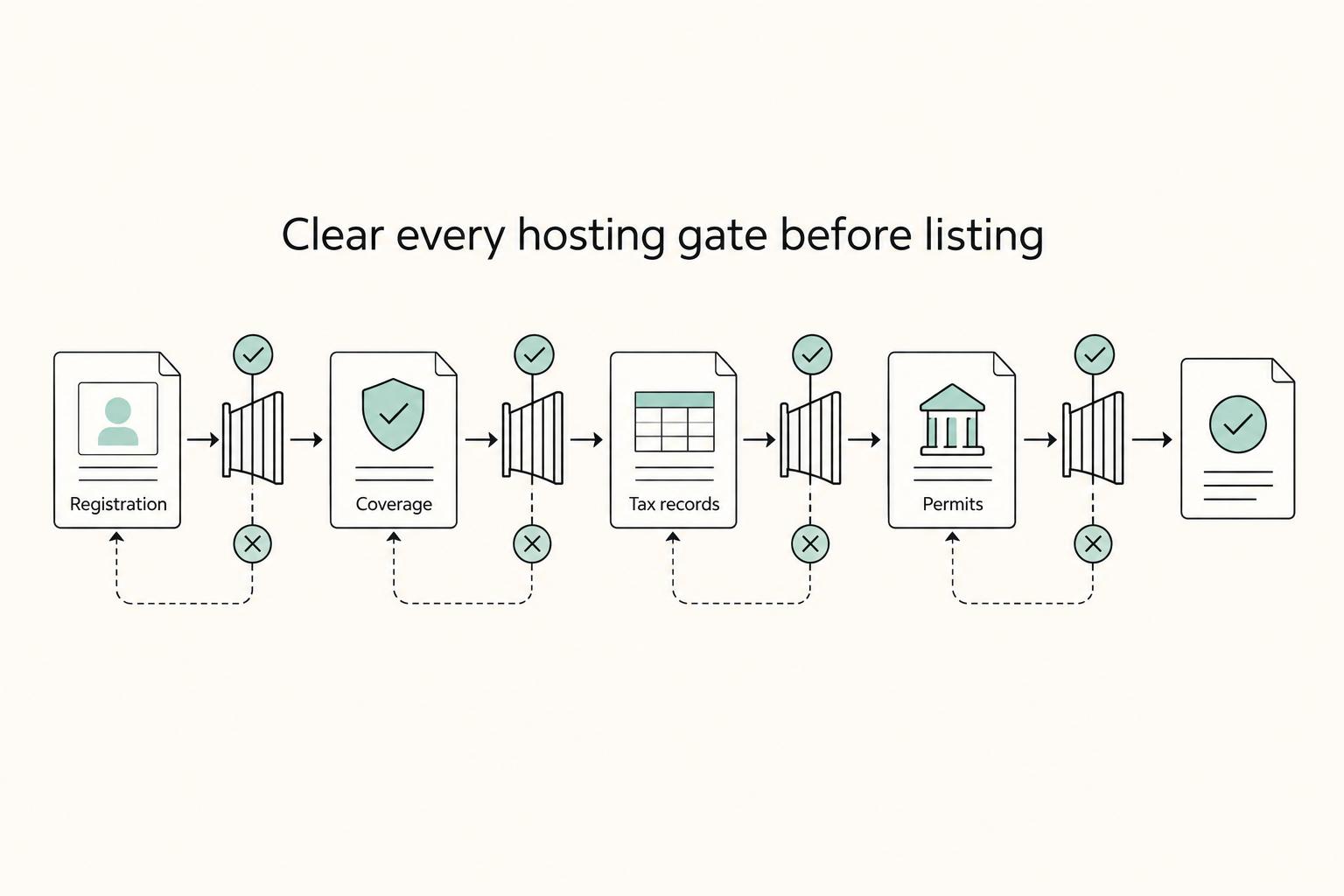
Entity type, insurance setup, and tax approach are jurisdiction-specific. Verify each locally before you publish.
| Area | What to verify |
|---|---|
| Registration | How your activity should be registered |
| Coverage | What coverage is required for how you will actually operate |
| Tax and recordkeeping | Which tax and recordkeeping obligations apply |
| Permits or licenses | Whether the activity or venue requires permits or licenses |
Before launch, get clear local guidance on each item above.
Wire your money and permissions like a real business#
Keep records organized from day one, and document the permission trail you relied on before launch. If your concept involves higher-regulation elements, for example food, transport, alcohol, tours, or public-land use, treat requirements as unknown until the relevant local authority confirms them.
Use a simple sign-off rule: do not publish until market viability is supported and legal operability is confirmed for the exact experience you plan to run.
Phase 2: Engineer a Profitable, Premium-Priced Experience#
After you confirm the offer is allowed, your next decision is whether it is worth running. Start with positioning and unit economics before copy: if you cannot define the right guest, your differentiation, and your net after real costs, a polished listing will not fix the core offer.
Position for one guest, not everyone#
Your niche is strong when the right guest says "this is for me" and everyone else self-selects out. Before you draft listing text, write these four inputs on one page:
| Input | What to define |
|---|---|
| Ideal guest | Your ideal guest |
| Closest substitute | The closest substitute they could book |
| Unmet demand or friction | The unmet demand or friction you see in current offers |
| Differentiation | The differentiation you can prove through real expertise, context, or access |
Then pressure-test that positioning against live competitors. Compare their promise, duration, inclusions, vague spots, and review/FAQ friction points, and save screenshots in your planning folder. If your route, pacing, and outcome are basically the same as everyone else, a new title is not real differentiation.
Model margin before you write sales copy#
If the math is weak, stronger copy just scales a weak model. Build three scenarios and compare net, time load, and delivery strain.
| Scenario | Price per guest | Avg. guests per booking | Gross booking revenue | Platform cost | Delivery costs | Total time load | Net before tax |
|---|---|---|---|---|---|---|---|
| Private high-touch | Set per-guest price | Estimate average guest count | Price multiplied by guests | Confirm current Airbnb platform fee | Materials, tickets, venue, assistant, and transport | Prep, delivery, and follow-up time | Gross revenue minus platform and delivery costs |
| Small shared group | Set per-guest price | Estimate average guest count | Price multiplied by guests | Confirm current Airbnb platform fee | Use the same delivery-cost categories | Prep, delivery, and follow-up time | Gross revenue minus platform and delivery costs |
| Larger shared group | Set per-guest price | Estimate average guest count | Price multiplied by guests | Confirm current Airbnb platform fee | Use the same delivery-cost categories | Prep, delivery, and follow-up time | Gross revenue minus platform and delivery costs |
Use one decision rule: keep the version where adding guests still improves net without degrading service quality or exceeding your delivery capacity.
| Model choice | Revenue quality | Delivery strain | Guest consistency | Repeatability |
|---|---|---|---|---|
| Private high-touch | Usually high per booking, lower volume | Lower group-management strain, higher personalization effort | Usually strongest | Good if your time budget supports it |
| Small shared group | Balanced | Moderate | Usually stable when itinerary is tight | Often easiest to repeat |
| Larger shared group | Can increase gross volume, quality depends on execution | Highest coordination strain | Most likely to vary by session | Fragile if staffing/process is not tight |
Track assumptions with proof, not memory: venue quotes, supply costs, transport costs, and timing logs from test runs.
Prove premium value with evidence guests can see#
Premium pricing works when your proof is visible at the point of booking. For each major claim, add evidence beside it:
| Claim | Evidence |
|---|---|
| Expert host | Credential, portfolio, or in-action proof |
| Special access | Specific setting, relationship, or inclusion guests cannot easily replicate |
| Clear outcome | What guests will leave with, do, or know by the end |
| Easy and safe to join | Meeting point, intensity, language level, accessibility notes, weather plan, and what to bring |
Build the listing as one conversion workflow: headline, promise, itinerary clarity, expectation setting, visual proof, and safety/accessibility notes so guests can self-qualify before booking. Keep photos and copy aligned with the same promise and real group format.
Treat platform dependency as an operational risk too. Airbnb has an "Airbnb account suspension" topic, so keep credentials, permissions, approvals, itinerary, and guest-proof assets outside the platform to protect recovery options.
For a step-by-step walkthrough, see A Guide to Airbnb SEO to Rank Higher in Search.
Phase 3: Build Your Operations System for Resilience and Scale#
If you want consistent quality and fewer operational surprises, run your experience with a written cadence from inquiry through incident recovery, and assign each task to either you or a co-host.
Set the operating cadence#
Keep one source of truth for SOPs, templates, and logs. Even if you are solo now, team-owned documentation helps the business keep operating if roles change later.
| Stage | What must happen | Owner now | Owner later (with co-host) |
|---|---|---|---|
| Pre-booking | Respond to inquiries/messages within 24 hours. Keep booking-related communication on Airbnb. Do not ask guests to move current, future, or repeat bookings off Airbnb. | You | You or co-host (co-host can accept/decline inquiries and reply to messages) |
| Pre-arrival | Confirm meeting point, what to bring, weather notes, and cancellation terms. Most experiences use a 1-day cancellation policy (full refund until 24 hours before start time; some hosts can use 72 hours). Review calendar weekly; daily experiences can be scheduled 60 days ahead, weekly 52 weeks ahead. | You | You set standards; co-host can run confirmations |
| Live hosting | Follow a checklist for timing, route, materials, guest count, safety notes, and vendor contacts. If someone else leads, define what can be improvised and what stays fixed. | You | Lead host or co-host, using the same checklist |
| Post-experience | Reconcile booking and payout (released the day after hosting), log issues, and request feedback while details are fresh. | You | You or assistant for admin; you review exceptions |
| Issue recovery | Use saved message templates for delays, weather changes, and partial-service failures. For payment disputes or requests, use the Resolution Center within 60 days of end time. | You | You handle escalations; co-host can prepare records |
Once a month, run your own process end to end and mark every step that depended on memory instead of documentation. Update that SOP immediately.
Control quality before reviews force the lesson#
Treat quality control as a routine, not a reaction. Airbnb evaluates ratings, reviews, and other quality signals, and you can review summary feedback in Insights.
Use a simple loop:
- Define 3-5 standards you track every session, for example: on-time start, instruction clarity, group-size fit, pacing, host presence.
- Capture structured feedback after each experience.
- Flag repeat failure points.
- Update the exact SOP after the second repeat.
This keeps you from treating recurring issues as one-off bad luck.
Reduce platform dependence without breaking policy#
Diversify discovery, not transactions. Build owned touchpoints, such as your site, email list, and social profiles, so people can find your brand outside Airbnb, but do not steer Airbnb bookings off-platform.
Your contingency plan should assume visibility can change because search placement depends on multiple factors, and suspended listings do not appear in search or receive new bookings. Keep core operating assets outside the platform: listing copy, photos, SOPs, vendor contacts, issue templates, and your feedback summaries.
| Role | Example tool | What it should handle | Selection check | Notes |
|---|---|---|---|---|
| Finance | QuickBooks | Expense tracking, bookkeeping, payout reconciliation | Can you match Airbnb payouts and keep receipts organized? | Confirm current pricing and feature fit before adopting |
| Scheduling | Calendly | Real-time availability across calendars | Do you need this beyond Airbnb host calendar controls? | Confirm current pricing and feature fit before adopting |
| CRM | HubSpot | Contact history and follow-up tracking | Will you use it consistently at your current size? | Confirm current pricing and feature fit before adopting |
| Automation | Zapier | Admin automation (routing, form-to-sheet, reminders) | Does it reduce manual work without adding fragility? | Confirm current pricing and feature fit before adopting |
| Documentation | Notion or shared drive | SOPs, templates, incident logs, vendor details | Can someone find the right file in under 2 minutes? | Confirm current pricing and feature fit before adopting |
For disruptions, make the escalation order explicit:
- Unsafe weather: cancel if conditions are unsafe (Airbnb allows cancellation without fees/consequences in this case).
- Host illness or vendor no-show: act early and document decisions; host cancellations may trigger a 20% fee.
- Guest injury: move everyone to safety and contact local emergency services immediately.
- Non-emergency safety issue: use Airbnb's 24-hour safety line.
- In every case, communicate in the reservation thread so the record stays attached to the booking.
Related: The Pros and Cons of Short-Term vs. Long-Term Rentals.
From Idea to Asset: Your Next Step#
Your next step is execution with checkpoints: launch only when you can show compliance readiness, pricing clarity, and repeatable delivery. Move quickly, but not at the expense of trust, service quality, or controllable risk.
| Phase | What done looks like | Common gap | Your next move |
|---|---|---|---|
| Phase 1 | You have documented your compliance assumptions, ownership choice, and required admin items in one place | You are still operating on assumptions you have not verified | Turn open legal and admin questions into a short decision list and close them before publish |
| Phase 2 | You can explain your price using written costs, time load, and delivery constraints | The price feels reasonable, but the margin logic is unclear | Rework your pricing sheet and confirm it still holds under weaker demand |
| Phase 3 | You can run delivery end to end with checklists, templates, and clear task ownership | Recovery steps depend on memory or one person | Run a full rehearsal and document every improv point as a process fix |
Use this checklist to convert momentum into action:
- This week: finalize unresolved compliance decisions, tighten your pricing model, and run one full operational rehearsal.
- Before publish: confirm guest instructions, service boundaries, contingency coverage, and who owns each task if you are unavailable.
- After launch: monitor outcomes for both efficiency and experience quality, track where humans must stay primary, and update your process when repeat issues appear.
If your entity choice, insurance position, pricing confidence, or platform-dependence plan is still unclear, resolve that before going live. Those are common final blockers, and the FAQ below is meant to help you close them.
You might also find this useful: Using the Peak-End Rule to Create a Memorable Client Experience.
Frequently Asked Questions
Do I really need a business license for an Airbnb Experience?
Maybe, but do not guess. License or permit requirements can vary by city, region, and country, so verify the current rules with the relevant local authorities before launch.
What are the key tax obligations I should know about?
Treat it as business activity with tax responsibilities, and keep clean records from day one. Open a separate bank account for experience-related transactions and, if you sell on multiple channels, route income through one payment processor. Ask a local accountant which income and expense records you must keep, since filing cadence, registration thresholds, deductible categories, and tax rates vary by jurisdiction.
Is Airbnb's insurance enough?
Do not assume platform protection is enough for your situation. Coverage and legal requirements can vary, so confirm details with your insurer or broker and verify any local requirements before launch.
How can I quickly calculate if my idea is profitable?
There is no single verified profitability formula here. Build a simple plan using expected revenue and costs, then test conservative scenarios before launch. Compare net, time load, and delivery strain before choosing a format.
How do I price a premium experience without seeming overpriced?
There is no single verified pricing formula across markets. Set a price you can clearly explain in terms of the experience delivered, and test whether it still works under less-than-ideal demand. Premium pricing is easier to support when guests can see proof of expertise, access, and outcomes.
What is the single biggest risk of building a business on Airbnb?
Tax handling is a common risk area for hosts. Keep records from day one, separate Airbnb-related transactions into a dedicated bank account, and use one payment processor to simplify tracking if you sell on multiple channels.
Researched and edited by the Gruv editorial team. Gruv builds cross-border billing, payouts, and finance-operations software for global businesses.
Sources
Includes 3 external sources outside the trusted-domain allowlist.
- academia.edu/32286548/Airbnb_Exciting_innovation_or_passi...trusted
- community.lawschool.cornell.edu/wp-content/uploads/2025/04/White-Thor-final.pdftrusted
- repository.rit.edu/cgi/viewcontent.cgitrusted
- sec.gov/Archives/edgar/data/1559720/0001559720210000...trusted
- sec.gov/Archives/edgar/data/1854275/0001104659231052...trusted
- airbnb.com/help/article/2799external
- airbnb.com/help/article/3745external
- execsintheknow.com/the-new-cx-question-what-should-ai-ownexternal
Educational content only. Not legal, tax, or financial advice.
Related Posts

Digital Nomad Health Insurance Comparison for Long-Stay Moves
Use focused time now to avoid expensive mistakes later. Start with a practical `digital nomad health insurance comparison`, then map your route in [Gruv's visa planner](/tools/visa-for-digital-nomads) so we anchor policy checks to your real plan before pricing pages pull you off course.
The Best Ways to Diversify Your Freelance Income: A Risk-First Framework
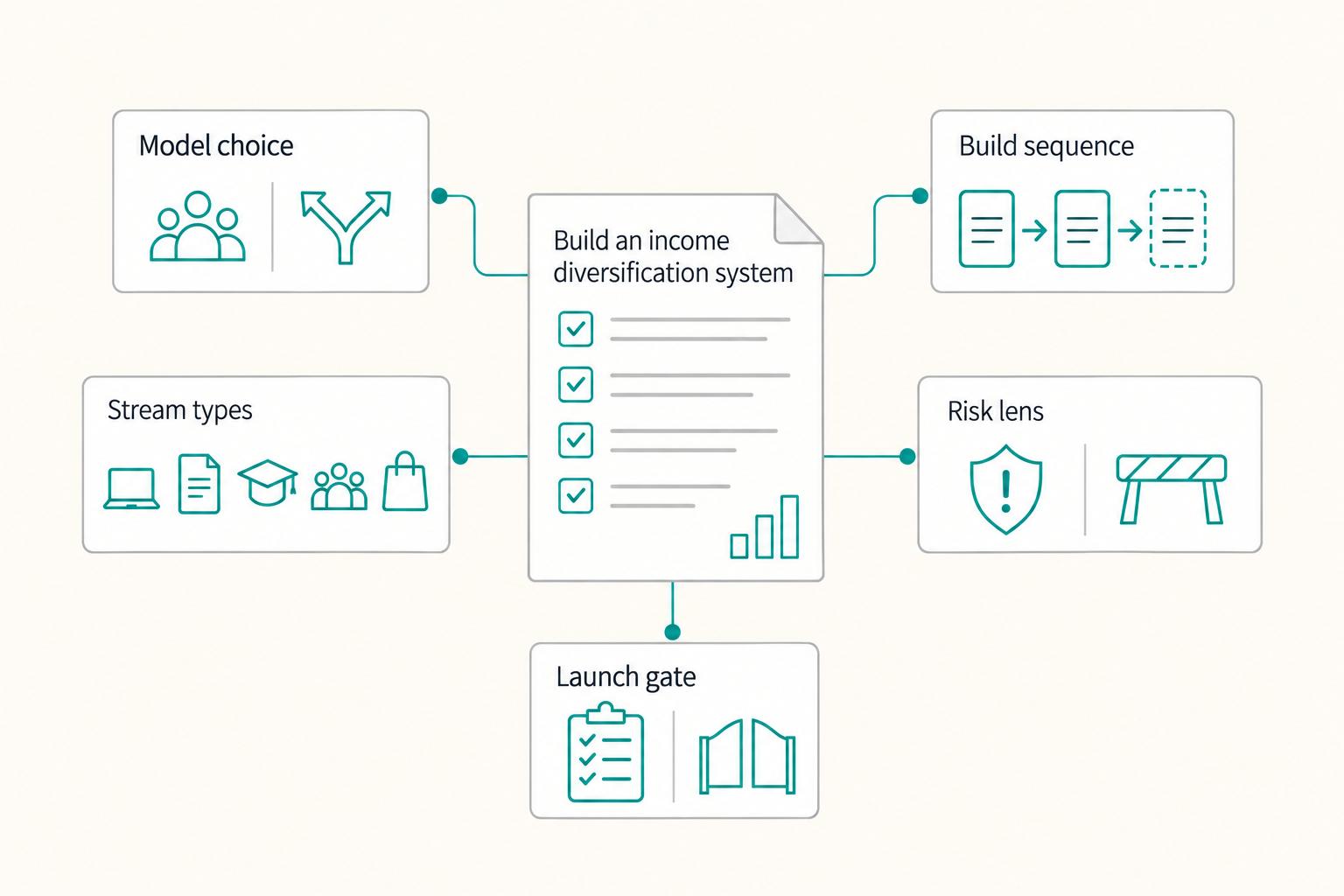
Most freelancers add new revenue lines reactively: a course after a slow month, an affiliate link because someone else said it works, a consulting offer because one client asked for it once. The result is usually the same: more moving parts, unclear priorities, and no real protection when one major client or platform wobbles.
The Pros and Cons of Short-Term vs. Long-Term Rentals
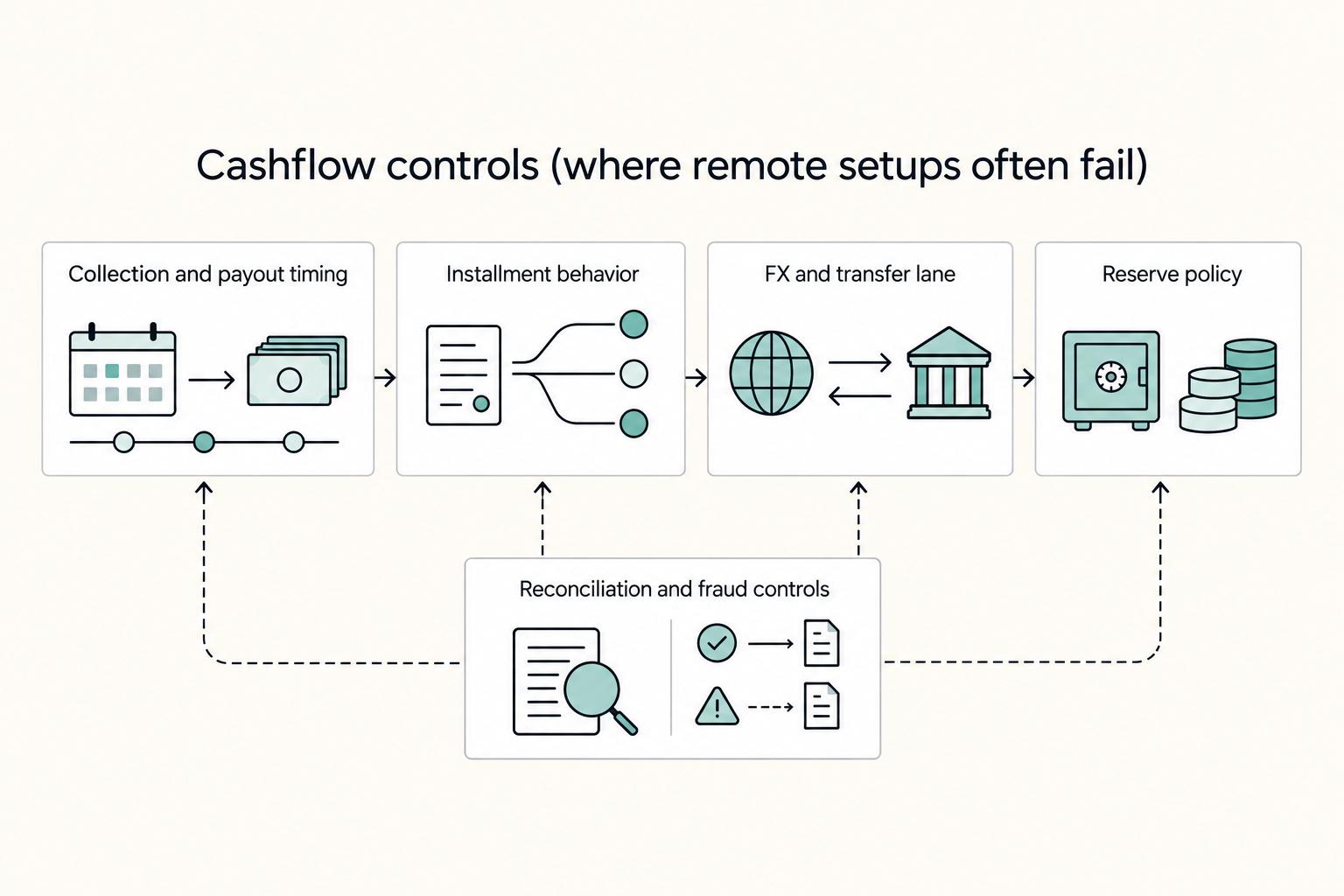
You are probably not chasing the biggest headline revenue number. You want rent that arrives, stays collected, and does not turn into a second job or a cross-border tax headache. For an owner living internationally, the real choice between a short stay and a long-term lease is about risk first. Which model gives you lower compliance exposure, less remote operating drag, and more cash left after fees, taxes, and reporting?