
Quick Answer
Preserve the agreement, scope/change history, delivery proof, invoices and payments, then write a chronology and check notice/cure deadlines. Send a factual clause-based message, agree owners and dates, and choose fix, renegotiate, formal escalation or exit. Confirm agreed changes in writing and close out payments, files and authorized access while recording unresolved obligations.
Treat partnership conflict as a process: separate listening from negotiation, then document every decision#
Conflict between business partners is inevitable. What protects you is a clear, documented response before it escalates. This guide applies that sequence to conflict resolution for freelance partners: listen early, address issues directly, document decisions, and follow up.
Treat conflict as a process, not a single blowup. Left unmanaged, issues usually escalate. Your first job is to slow that down and get to a shared view of what happened.
If a neutral facilitator is available, have them hear each person’s account before a joint discussion. If you are one of the disputing partners, write down both positions and invite a neutral person when direct discussion stalls. Agree who attends and how notes can be used; an ordinary business meeting is not automatically legally confidential.
In the joint meeting, keep outcomes concrete. Agree on actions, capture decisions in writing, and schedule follow-up review meetings. Documentation and follow-up are what turn a hard conversation into accountability.
Your BATNA also matters. Know your best alternative to a negotiated agreement before the discussion so you can negotiate with confidence.
The tools below connect listening to a written record: a clause matrix, a first-response sequence, example messages, formal-path choices and a documented closeout.
What conflict resolution means in a freelance partnership#
In a freelance partnership, conflict resolution means getting both partners back to one shared, written understanding of the work and the relationship. In practice, that means clarity on roles, responsibilities, deliverables, timelines, approvals, and payment.
Disputes often grow out of misaligned expectations, communication breakdowns, or financial disagreements, including payment friction. When expectations live in separate conversations instead of the same written terms, even a small issue can escalate quickly.
Your contract is the first line of defense, but only if both sides can use it the same way. Treat it as a verification tool: can both partners point to the same terms for scope, timing, approval, and payment? If not, close that gap first. If one person is relying on chat history and the other is relying on the signed agreement, the immediate task is to reconcile the record before debating fault.
Raise issues early, compare the written terms and actual record, and follow up on commitments. Confirm verbal changes with both parties in writing; an unacknowledged recap does not by itself amend the deal.
The contract clauses that prevent most disputes#
Many disputes are easier to prevent than to unwind. The main job of your agreements is to make scope, payment, revisions, and dispute handling clear enough that neither side has to guess later.
Identify the relationship first: co-owners of an entity, collaborators on a project, or a contractor supplying services to another business. Use the operating or partnership agreement only where it applies, alongside project contracts and approved statements of work. Compare relevant provisions and any agreed precedence clause; you cannot change which document controls through a unilateral note. Verify the parties’ legal names, addresses and contacts.
Build one clause matrix across the relevant agreements#
Use a compact matrix to catch contradictions fast, especially when the same deal appears in two documents:
| Clause | What to pin down | Useful checkpoint |
|---|---|---|
| Scope of Work | Deliverables, timelines, exact formats | Can both parties describe the same output, such as a website redesign of 10 pages? |
| Payment Terms | Price, due dates, deposit, late-payment terms | Does it state the agreed deposit, invoice trigger and due date, and any permitted late-charge treatment? A deposit such as 25% is a negotiated example, not a standard requirement. |
| Revision Policy | Included rounds and extra revision billing | Is there a clear cap, such as three revisions included, with extra rounds billed separately? |
| Change Request | How out-of-scope work is approved | Is written approval required before extra work starts? |
| Termination Clause | How the relationship can end | Is it clear what happens if the engagement ends early? |
Keep scope concrete enough that both sides can verify delivery. That is one of the simplest ways to reduce scope creep and avoid "we thought this was included" disputes. When you compare agreements, also check whether the same concepts are described with different wording. Small language drift between documents can create confusion later.
Put revision and change control in writing#
Revision disputes often start when revision limits are unclear. State included revision rounds and how extra rounds are billed in plain language.
Then add a change-request gate. If scope, timeline, or price changes, require written approval before work starts. That protects both sides from undocumented changes that can later turn into payment fights. It also gives you a clean moment to decide whether the work is still under the original deal or under a revised one.
Make dispute procedures specific#
A dispute clause needs to be usable, not just impressive on paper. State the process you want the parties to follow, how notice is given, and the practical steps to start it. A formal procedure only helps if both sides can trigger it without guessing.
If mediation is part of your process, mediation for resolving freelance disputes covers that path in more detail.
Keep risk clauses clear and consistent#
If you include risk-allocation clauses, such as Limitation of Liability or Indemnification, keep the language clear and consistent across your agreements so one clause does not quietly conflict with another.
Treat cross-border and exit terms as early-stage decisions#
For cross-border work, identify the chosen law, court or arbitration forum, notice procedure and language. Entity ownership or a partner exit may need a different procedure from ending one project. Restrictive covenants and risk-allocation terms require assessment under the law that actually applies.
Once the documents line up, the next question is not who is right in the abstract. It is which path fits the dispute you actually have. Related: How to Create a Buy-Sell Agreement for a Partnership.
Decide whether to fix renegotiate escalate or exit#
Start from the current reality, not from who feels most wronged. In partner conflicts, people often experience the same situation very differently, and that mismatch is where costly mistakes begin.
Before you act, use this four-way checkpoint as a practical heuristic, not a formal rule:
| Path | Use it when | Practical focus |
|---|---|---|
| Fix | The issue is clear and both sides still want to solve the same problem | Confirm facts in writing and close the specific gap |
| Renegotiate | The original plan no longer fits the current situation, but cooperation is still possible | Reframe around today's status quo and define a workable reset |
| Escalate | Communication is hardening and each move is increasing conflict instead of resolving it | Use a more structured process and keep records tight |
| Exit | Repeated attempts do not produce a stable path forward | End the working setup in a controlled, documented way |
When you renegotiate, do not frame the discussion around what was lost from the original deal. Anchor on what still works now. A useful test is whether both sides can treat avoiding the worst outcome as a shared gain. If they can, you may still have enough alignment for a practical reset in writing.
When you escalate, skip performative toughness. Signals meant to look strong can trigger an escalatory spiral that is harder to contain than the original issue.
If you are stuck between escalation and exit, check one thing: is cooperation still realistic, or is each round making outcomes worse? If cooperation is no longer credible, further renegotiation may not be productive.
Once you choose a path, document your next step clearly. If you need to redraft terms during renegotiation, use this freelance contract generator.
Organize the first response, with a 48-hour planning window#
Use 48 hours as an internal organization goal, not a legal deadline. Record contractual notice/cure periods, provider evidence deadlines and any urgent filing or safety issue immediately; a meeting or private negotiation does not automatically stop those clocks.
| Step | Focus | Verification |
|---|---|---|
| Collect evidence pack | Build one chronological file before arguing the merits | Relevant executed operating/partnership/project agreement, written scope/change records, invoices, payment confirmations and later approved amendments |
| Send fact-only notice | Tie the dispute to the written clauses and record | Agreement, parties, disputed item, date range, governing clauses, confirmation or cure needed, invoice history for payment disputes |
| Structured call and recap | Confirm facts and assign next actions | Fact confirmed, dispute still open, owner, deadline, written recap the same day when practical |
| Set checkpoints | Measure progress through documented actions | Completed deliverable, invoice received, cleared payment, revised obligations accepted in writing and next deadline |
- Collect the evidence pack first.
Pull the relevant executed agreements, scope/change records, invoices, delivery and acceptance evidence, and payment confirmations. Mark missing facts as uncertain. Keep originals, messages and version history intact, then create a chronology with the final signed terms and later approved amendments. Restrict access to the people who need the file.
- Send a fact-only notice tied to contract clauses.
Identify the agreement, parties, disputed item, date range, and the specific clauses you are relying on, especially the termination clause and any written notice terms. Keep the notice to three things: what the record shows, what clause governs it, and what confirmation or cure you need. For payment disputes, anchor to the written pay basis, whether hourly or flat fee, and the invoice history. If part of the record is still missing, say that directly instead of filling gaps with assumptions.
- Run one structured call and recap it in writing.
Use the call to confirm facts, define the decision needed, assign one owner per action, and set one deadline per action. Track: fact confirmed, dispute still open, owner, deadline. Send a written recap the same day when practical so both sides have one shared reference point. A useful recap format is issue, contract reference, agreed action, owner, deadline, and unresolved point. That way, the summary can function as a working checklist instead of a vague meeting note.
- Set checkpoints you can verify.
Treat progress as documented actions: agreed delivery, acceptance, invoice receipt, cleared payment and approved revised obligations. Distinguish a promise to pay, provider submission and actual receipt. Ask what record proves completion, and keep unresolved sums or scope items separate.
If facts are still missing after this sequence, push for the missing document before escalating your language. The faster you close factual gaps, the less room there is for the dispute to become about memory, tone, or motive instead of the actual record.
Use scripts that protect the relationship and your leverage#
When tension rises, clause-first communication is usually safer than blame-first communication. State what the contract says, what the record shows, what happens next, and send the message to the correct legal party using the contract notice method.
| Script | Use when | Include |
|---|---|---|
| Opening | Tension is rising and clause-first communication is safer than blame-first communication | Governing clause, business impact, documented fact, confirmation or correction needed by a specific date and time |
| Boundary | Resolution is still possible and you need a clear choice | One or two options tied to the Revision Policy or Change Request path, each with a date |
| Escalation | The deadline passes without resolution | Invoke the dispute process as written, request mediation if the clause provides for it, ask for the authorized contact |
| Exit | The relationship is no longer workable | Termination Clause, effective date, handoff or final-settlement actions, legal entity name, notice address, authorized signer |
Opening script#
Lead with the governing clause and the business impact. Reference the exact Scope of Work or Payment Terms language, then state the documented fact and the confirmation or correction you need by a specific date and time.
Hypothetical opening: “Our signed SOW of 1 September covers a ten-page website and two consolidated revision rounds. The third-round request received 20 September adds three pages. I have not accepted that added scope. Please confirm by 5 pm on 6 October whether you want an estimate for the addition or completion of the original ten pages.” Adapt dates and notice delivery to the actual agreement.
Use the actual contracting party named in the executed agreement, which may be an individual or entity; a trading/branch name alone may not identify it. Send formal notice by the agreed method and address. Attach the relevant approved scope and dated request rather than the entire project archive.
Boundary script#
If resolution is still possible, force a clear choice using the written process. Offer one or two concrete options tied to the Revision Policy or Change Request path, each with a date.
Hypothetical boundary: “Option A is delivery of the original ten pages by 12 October, with any corrections needed to meet the agreed acceptance criteria confirmed by 8 October; the two included revision rounds are exhausted. Option B adds three pages for USD900 and moves delivery to 16 October, subject to a signed change order. Please confirm the chosen option by 6 October; the extra pages remain unapproved until then.”
If amendments or approved scope changes exist, include them so the script reflects the full record. The point is not to sound rigid. It is to stop the dispute from drifting between different versions of the deal.
Escalation script#
When the applicable trigger and notice/cure period are met, invoke the agreed next step. Request mediation where required or propose it by mutual agreement. Identify the person authorized to negotiate and sign a settlement; your preferred reply deadline cannot shorten the contract’s cure period.
Hypothetical escalation: “The cure period in clause 12 for my notice delivered 6 October expired on 13 October. The three-page change remains unresolved. I request the mediation step in clause 14. Please identify the authorized contact and available dates, and point out any factual error in the attached chronology.” Use this only when the actual clause, delivery and dates support it.
Keep the tone firm and non-performative. Dominance-style pressure can backfire. A clear process message usually preserves more leverage than a threatening one.
Exit script#
If the relationship is no longer workable, use the Termination Clause as written. State the effective date and the clause invoked, and list any handoff or final-settlement actions the agreement defines.
Hypothetical exit: “Under clause 15, this notice ends the project on 20 October after the required notice period. The attached closeout schedule identifies accepted work, unfinished items, the remaining invoice balance and the agreed file/access handoff. Please confirm any corrections. The disputed USD900 change request remains separate from the undisputed balance.” The example assumes a valid termination route; it does not establish one for your contract.
Final check before sending: legal entity name, notice address, and authorized signer.
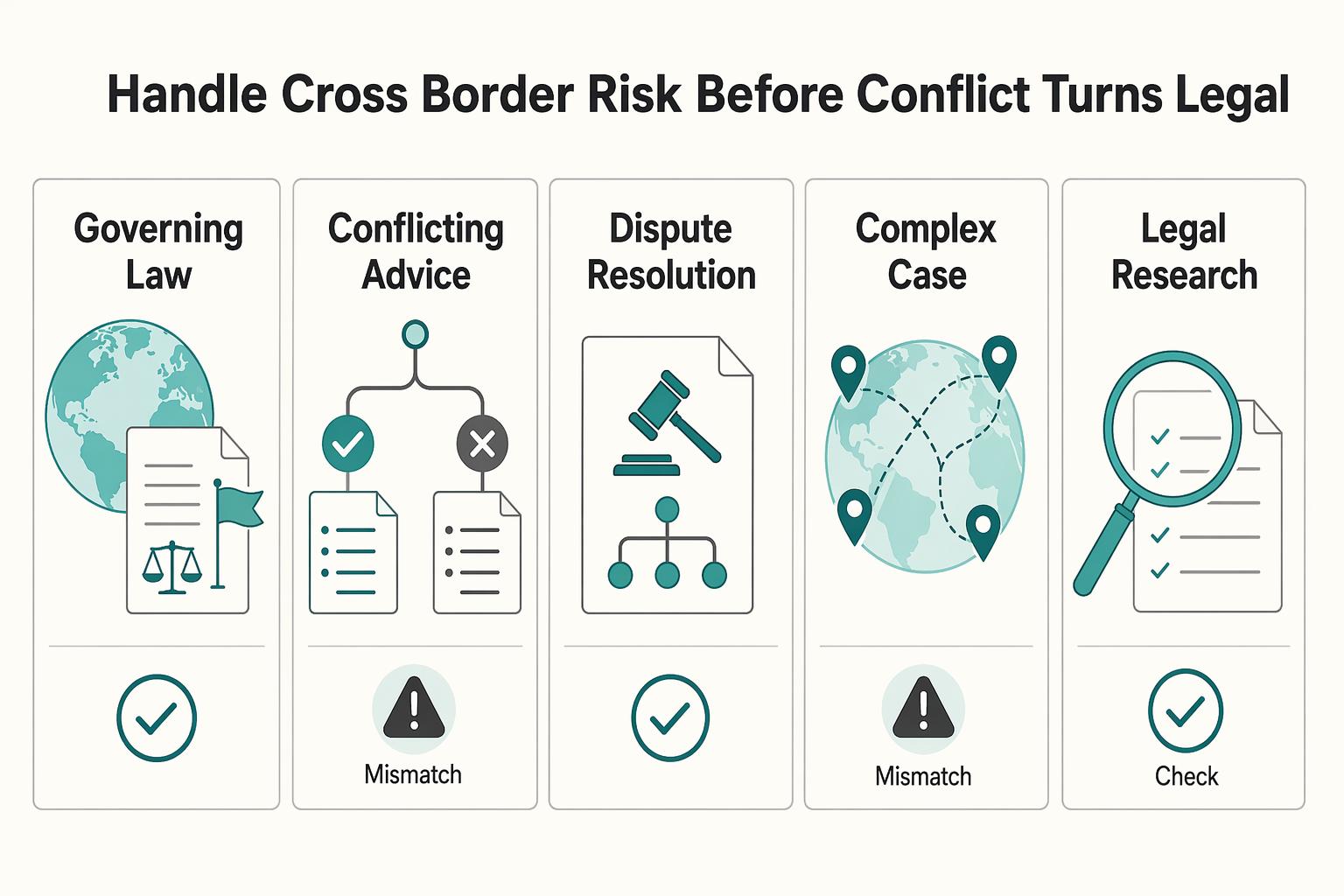
Handle cross border risk before conflict turns legal#
Cross-border disputes can get harder fast when the contract has favorable language but no usable process. Before anything formal goes out, check the executed agreement for the exact Governing Law Clause, Jurisdiction Clause, and any Dispute Resolution Clause. Then verify that the clause text is internally consistent and practical for both parties.
| Item | Check | Note |
|---|---|---|
| Governing Law Clause | Check the exact clause in the executed agreement | Governing law language alone does not settle enforcement outcomes |
| Jurisdiction Clause | Verify the exact forum or court named | Treat law, forum, and notice mechanics as one package |
| Dispute Resolution Clause | Confirm the clause text is internally consistent and practical for both parties | Check it before anything formal goes out |
| Legal entity names | Confirm the full legal entity names in the signature block | Use the signed version as the pre-dispute checklist |
| Forum consent and notices | Check whether forum consent is explicit and where formal notices must be sent | Process risk rises when forum and notice mechanics are unclear |
| Procedural deadlines | List notice/cure periods, evidence deadlines and any filing limits separately | Do not assume private talks or mediation suspend an external deadline |
| Restrictive and risk-allocation clauses | Treat Non-Compete Agreement terms, Indemnification, and Limitation of Liability as unconfirmed until local review | Note the country where enforcement may be needed and whether local counsel has cleared it |
Use this pre-dispute checklist in the signed version:
- full legal entity names in the signature block
- exact forum or court named in the Jurisdiction Clause
- whether forum consent is explicit
- where formal notices must be sent
The chosen law and dispute forum serve different purposes. A choice-of-law clause does not by itself ensure a chosen court accepts jurisdiction or that an award/judgment can be enforced elsewhere. Record where the other party and relevant assets are located. Review a concrete forum or enforcement gap before relying on it; preserve deadlines while seeking clarification.
Check classification risk before relying on the contractor label#
A contractor label does not settle worker status where the actual relationship is employment. As checked October 4, 2026, the DOL rulemaking page describes a February 2026 proposal to replace the 2024 analysis and says the 2024 rule is no longer used in its investigations. A proposal is not a final replacement, and agency investigation policy does not decide every court, state-law or tax test. Record the actual working arrangement and resolve a genuine classification issue through the applicable route rather than using a contract title as proof.
Keep classification separate from the commercial settlement: agreeing invoice amounts or project handoff does not automatically waive employment rights or cure a classification issue. For co-owners, identify their actual role rather than treating every partner as a service contractor.
Treat restrictive and risk-allocation clauses as unresolved until locally confirmed#
For restrictive covenants, indemnification and liability limits, record the exact clause, the proposed action and where enforcement would occur. Check the applicable mandatory rules before threatening enforcement or assuming a liability cap closes the dispute. Keep this focused on a clause that affects the current decision.
If the dispute later moves into a formal process, keep a tight record set: executed agreement, amendments, notice trail, and the exact clause version you are relying on. That file should let someone else see, without reconstruction, which document controls and how the issue was raised.
For an ownership exit, keep the project closeout separate from the entity’s buyout or dissolution procedure: How to Create a Buy-Sell Agreement for a Partnership.
Control scope revisions and payment friction before they become disputes#
Scope and payment fights often start when the original baseline and later changes blur together. Keep the baseline Scope of Work separate from later changes. If a request is not in the current scope or an approved Change Request, treat it as pending, not included.
A vague Statement of Work makes misinterpretation more likely. Small additions then stack up without matching changes to budget, timeline, or resources, which leads to unbilled work, delays, and quality loss on the original deliverables.
Use one practical gate before new work starts:
- Check the request against the latest approved Scope of Work and approved Change Requests.
- If it is not documented there, pause and log it as a proposed change.
- Confirm impact on budget, timeline, or resources before proceeding.
| Control | Keep explicit | Verify before continuing |
|---|---|---|
| Scope of Work | Deliverables, exclusions, assumptions | Request matches approved scope |
| Change Request | What changed and project impact | Any impact is documented before work starts |
| Revision Policy | How revisions are handled | Feedback stays tied to agreed scope |
| Payment Terms | How billing is handled and documented | Records support each invoice |
For revisions, keep the rule simple: feedback should map to agreed work, and direction changes should go through the change gate. That keeps revision traffic from turning into open-ended rework. It also helps to separate one round of feedback from the next in writing. That way, you can tell whether the comments are refining the same deliverable or replacing the prior direction.
Use records both sides can verify: scope, approved changes, dated submissions, feedback, invoices and cleared payments. Negotiate a pause or scope reset for disputed additional work; do not withhold an otherwise due deliverable, undisputed payment or client access without an applicable contractual/legal basis.
Choose the right formal path for unresolved disputes#
When direct negotiation stops working, follow the escalation path in your agreement and choose the method that fits the situation. Escalate when the trigger is met, the process is clear, and your records are ready. Use this quick check before each step:
| What to confirm | Why it matters |
|---|---|
| The escalation steps and trigger for moving up | A conflict process works best when escalation is defined in advance. |
| Which method fits this stage (for example, negotiation, mediation, or arbitration) | The method should match the situation. |
| Your documentation is complete | Keep written records of conflicts, attempted solutions, and outcomes. |
When Mediation may be the next step#
In mediation, a neutral helps the parties negotiate rather than imposing a decision. Use the agreed process or obtain consent to a proposed process. Confirm mediator, cost split, attendees with settlement authority, issues and document exchange. Record any partial agreement and remaining issues. A settlement can create binding obligations once properly agreed, even though the mediator does not decide the merits.
When Arbitration may be the next step#
Arbitration asks an arbitrator to decide the dispute and can result in a binding award. Check the arbitration agreement and applicable rules before starting: covered disputes, seat, administrator, filing/cost requirements, deadlines and decision-maker appointment. You cannot impose arbitration simply because it seems suitable. Preserve the agreement, notices and evidence; assess the value and enforcement needs of the claim against the process cost.
When private escalation is not working#
If a required mediation stalls, record the attempt and the agreed next step. Court proceedings, urgent relief or another formal route depend on the agreement and applicable law. Check filing/service requirements and any time limit before waiting for another informal reply. Mediation for freelance disputes explains preparation for that route.
Close the engagement while preserving unresolved obligations#
Termination is a contract process, not an improvised reaction. Follow the written agreement and document the closeout so you do not create a second dispute while ending the first.
Start with the executed agreement and match your termination steps to its written terms. Keep a clear record of notices, decisions, and what each side acknowledged during closeout.
Then close open work in writing with a practical closeout summary:
- invoice and payment status
- deliverable handoff status (complete, incomplete, excluded)
- access changes across shared tools, files, and portals
- any continuing confidentiality duties stated in the agreement
| Closeout record | What remains explicit |
|---|---|
| Accepted and unfinished work | Delivered/accepted items, unfinished scope, agreed handoff date and any continuing correction obligation |
| Invoice balance | Gross fee, prior receipts, credits and remaining undisputed balance; separate any disputed extra scope |
| IP and materials | Ownership/license and transfer conditions under the actual agreement; no assumed transfer merely from project termination |
| Access and records | Authorized ownership handoff, access revocation date and preserved evidence |
| Settlement scope | Who can sign, what the settlement resolves, deadlines and obligations that continue |
Worked closeout example: the agreed project fee is USD4,000 and USD1,000 has been received, leaving USD3,000 before any agreed credit. A separate USD900 extra-page request was never approved and remains disputed; it is not automatically added to the agreed invoice balance. If the parties settle by an authorized USD300 credit, the remaining agreed balance becomes USD2,700. Record the credit and its basis, retain the original invoice/payment history, and do not treat a promise to pay USD2,700 as cleared cash. The agreement still determines payment timing and any handoff conditions.
Preserve evidence before changing tool access. Transfer account ownership through the service’s authorized process, avoid sending passwords, and revoke only access you are entitled to revoke after the agreed handoff. Retain the records needed for open payment, confidentiality, IP and classification questions; do not delete the dispute file as part of cleanup.
Where disputes remain, use negotiation to resolve issues in a way that can preserve the working relationship. Closeout should leave one clear file showing what ended and what, if anything, is still open.
Conclusion#
Strong conflict resolution for freelance partners starts before conflict does. Clear contracts, early boundaries, documented triage, and disciplined escalation can protect cashflow and working relationships before trust slips.
For the current dispute, verify the signed terms and deadlines before sending the next notice. Record any settlement or amendment accepted by both parties. Use lessons from the case to improve future dispute, notice and termination clauses without rewriting what was already promised.
Use a simple checkpoint: review the signed agreement, active SOWs, invoices, payment tracking records, and written change approvals. Then ask two questions. Can a neutral reader tell what was promised, what counts as extra work, when payment is due, and what the escalation and exit path is? If those answers depend on chat history, you have a contract hygiene gap.
The common failure modes are usually straightforward: scope creep, payment friction, and blurred authority. Prevent them with consistent habits. Set boundaries early, run regular check-ins, keep expectations explicit, document commitments, and follow up. Keep payment tracking and records current so you are not rebuilding evidence after a dispute starts.
Prioritize these first:
- Dispute Resolution Clause: make the process clear enough that you do not improvise under pressure.
- Governing Law Clause and related jurisdiction language: keep wording clear and consistent across the agreement set.
- Termination Clause: make the exit process and expectations explicit.
- Scope of Work and Payment Terms: align revisions, change approvals, due dates, and payment method so delivery and invoicing are verifiable.
Know your BATNA before a dispute becomes formal. The goal is not to win every argument. It is to protect cashflow and workable partnerships without losing leverage to vague terms or delayed decisions.
If payment records are part of the dispute, reconcile the invoice balance and transfer references first. Clear records help both parties distinguish an overdue amount from a disputed change or a pending bank receipt.
Frequently Asked Questions
What usually causes conflict in a freelance partnership?
Common triggers are payment issues, communication problems, blurred authority, misaligned expectations, and scope creep. When extra work is discussed but not clearly agreed, small delivery friction can escalate quickly.
What is the first step to resolve a dispute with a freelance partner?
Start with triage: check whether the issue is miscommunication, expectation misalignment, or a true break from what was agreed. Then compare the signed agreement to the current work record before reacting. A practical first response is simple: listen, acknowledge, propose.
What should a freelance partnership contract include to prevent disputes?
Your first defense is a well-structured contract with clear terms both sides can verify. Make sure it states expectations across scope, payment terms, change handling, responsibilities, and how conflicts or termination are handled. The goal is simple: both sides should be able to tell what was agreed without guesswork.
When should I use Mediation instead of Arbitration?
Mediation helps parties seek an agreed solution; the mediator does not impose it. Arbitration asks an arbitrator to decide and can produce a binding award. Follow an applicable agreed sequence, or obtain consent to a new one; do not impose arbitration unilaterally. Consider settlement authority, cost, urgency and enforcement. A properly agreed mediation settlement can itself be binding.
How do I handle revision disputes without giving unlimited free work?
Separate correction of nonconforming agreed work from a new request. Compare the request with the approved scope and revision allowance, then price and obtain approval for additions. Record the impact on delivery dates. Pause only the unapproved additional work or follow an applicable agreed pause procedure; a change dispute is not an automatic right to abandon existing obligations.
What should I avoid doing during a conflict with business partners?
Avoid vague communication, undocumented decisions, and unclear ownership of next steps. Those are the conditions that usually make disputes worse, especially when authority lines are already blurred. Keep check-ins regular, expectations explicit, and decisions documented while the issue is still manageable.
How do Governing Law and Jurisdiction affect cross-border dispute outcomes?
Governing law selects the legal framework; jurisdiction or an arbitration clause identifies the intended dispute forum. Mandatory rules, court authority and enforcement where the other party or assets are located still matter. Check the exact terms, notice method and deadlines for the current dispute rather than assuming the clauses guarantee an outcome.
Try a related tool
Researched and edited by the Gruv editorial team. Gruv builds cross-border billing, payouts, and finance-operations software for global businesses.
Sources
Educational content only. Not legal, tax, or financial advice.
Related Posts
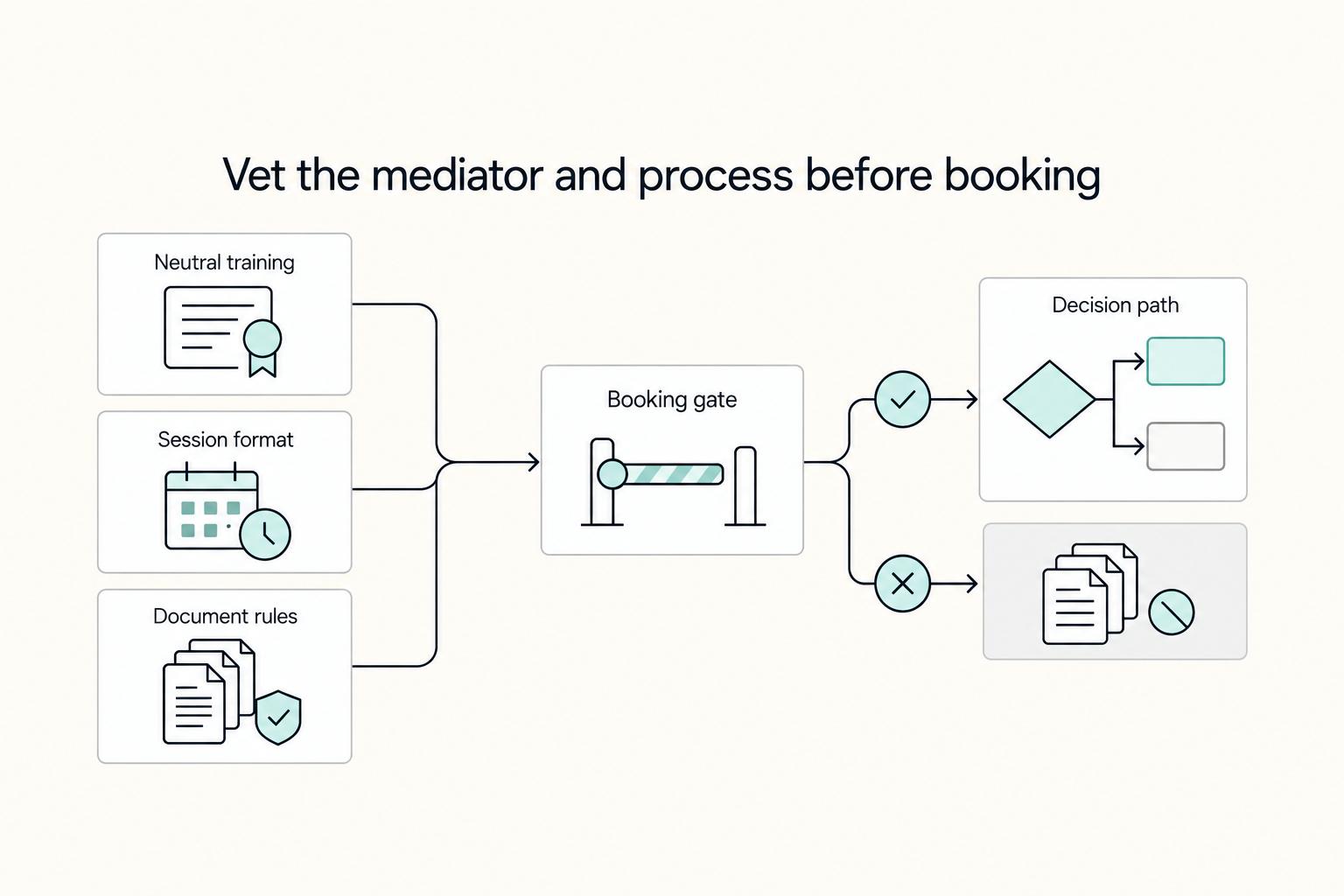
Freelance Mediation for Client Disputes That Need a Clear Outcome
When direct negotiation stalls, consider mediation if both parties can participate safely and make informed choices. Set the issues, documents, cost limit and review date before booking. Track claim deadlines separately: an invitation, scheduled session or continuing conversation does not automatically stop a filing clock.
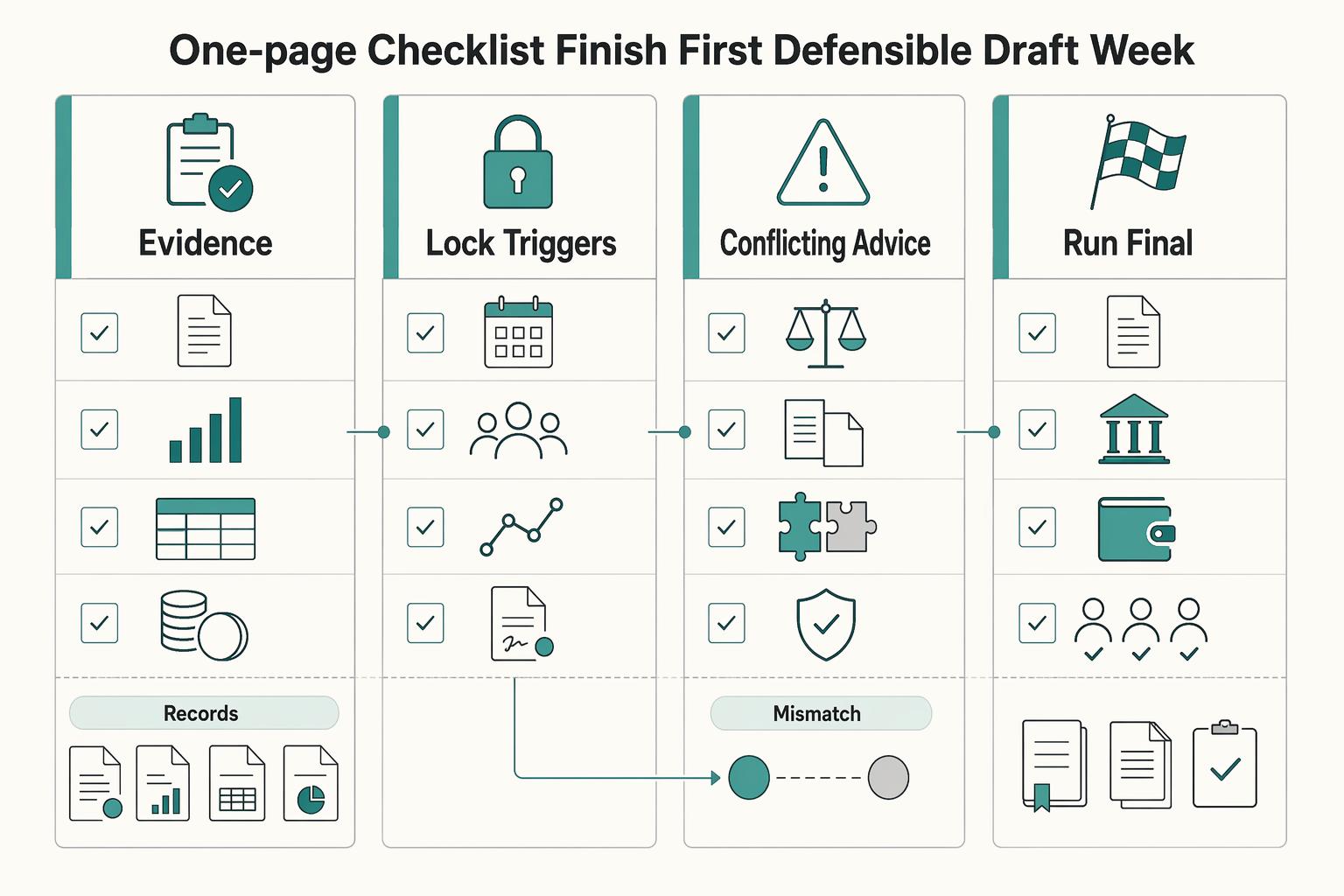
How to Create a Buy-Sell Agreement for a Partnership
**Treat your buy-sell agreement for partnership as core operating infrastructure, not paperwork for later.** Freelancers and consultants move fast on client delivery, but shared ownership risk keeps running in the background until one partner leaves, becomes disabled, goes bankrupt, or goes through a divorce.

The Freelance Payment Penalty: A Modeled Audit of Platform Fees, FX Spreads, and Payout Delays
The money rarely disappears through a single, easy-to-spot fee. The real loss is stacked. A marketplace takes its commission, a processor adds a charge for international cards, a bank or payment company converts the currency at a spread, a platform holds the funds before release, and a wire sheds a little to intermediaries on the way in. Each layer looks defensible on its own, but the worker feels the combined result as a smaller deposit and a later payday.