
Quick Answer
Yes. For independent contractors, California break rules are less about your own compliance and more about spotting employer-style control that can support misclassification under AB 5 and the ABC test. The safer move is to center contracts and daily operations on deliverables, response expectations, and scheduled meetings, while rejecting fixed shift windows, lunch directives, and payroll-like break logs.
Why California's Employee Break Laws Are a Critical Red Flag for Your Business#
If you are a contractor, California meal and rest break laws are not your compliance checklist. They matter because they show what California treats as an employer-managed workday - the pattern you do not want a client creating around your work.
| Break rule | Trigger | Note |
|---|---|---|
| First meal period | When work exceeds 5 hours | 30-minute meal-period trigger |
| Second meal period | When work exceeds 10 hours | 30-minute meal period |
| Rest period for nonexempt employees | Per 4 hours worked or major fraction thereof | Paid; minimum 10 consecutive minutes |
That matters even more in California because the ABC test starts from the opposite assumption many freelancers make. Under the state's AB 5 framework, a worker is considered an employee unless the hiring entity satisfies all three parts of the test, subject to exclusions and exceptions. Part A is the piece that should shape your day-to-day client boundaries: you must be free from the hiring entity's control and direction.
Break rules are useful here because they are built around employer control: when work stops, whether the person is fully relieved of duty, and whether that time is paid. Those employee rules include a 30-minute meal-period trigger when work exceeds 5 hours, a second 30-minute meal period when work exceeds 10 hours, and, for nonexempt employees, paid rest periods at a minimum rate of 10 consecutive minutes per 4 hours worked or major fraction thereof. If a client starts managing your day in the same way, read that as a classification warning, not a benefit.
Employee-rule signal versus contractor-safe boundary#
| Employee-rule signal | Why it points to control | Contractor-safe boundary |
|---|---|---|
| Client tracks whether you took a meal period after working more than 5 hours | Mirrors an employer duty to provide meal periods to employees | You control your own workday and pause timing. The contract focuses on deliverables, not mandated lunch windows |
| Client tells you to stay reachable or remain on site during lunch | California treats meal periods differently when a worker is not relieved of all duty. Required on-site meal periods for employees must be compensated | If the client needs response coverage, define response times for the project, not your personal lunch availability |
| Client schedules paid short breaks throughout the day | Rest periods are framed as an employer duty for nonexempt employees and counted as time worked | You price and schedule your service independently. Any pauses are your own business decision |
| Client specifies exact break placement in the day | Exact break timing can show day-to-day supervision | Break-timing requirements should come from verified employee-compliance guidance, not contractor terms |
The point is not that any one fact automatically proves misclassification. It is that these facts make you look more like someone being managed than a separate business providing a service.
Off-duty control shows up in ordinary client behavior#
The clearest red flags usually appear before the real work starts. A master services agreement, statement of work, onboarding email, or kickoff deck may quietly import employee-style controls. Watch for language that sets a daily schedule, requires you to be available from 9 to 5, assigns a lunch window, or says you must follow the employee handbook for attendance or timekeeping.
A practical rule is to pause whenever the client is controlling when you work rather than what result you deliver. A better response is: "I can commit to delivery dates, meeting times, and response-time expectations, but I manage my own work hours and breaks." If they insist that you log breaks in the same tool employees use, that is another sign to separate your status from their HR process.
Before signing, search the contract and onboarding materials for "hours," "schedule," "availability," "meal," "rest," "timekeeping," "timesheet," and "handbook." If those terms show up, ask whether they apply to vendors at all or whether they were copied from employee documents. That review catches a lot of avoidable trouble.
The common failure mode is paperwork drift. You start with a contractor agreement, then get added to Slack status rules, attendance forms, and manager approvals for time away from your desk. If that happens, keep the evidence pack that shows you pushed back: redlined contract language, emails clarifying that you control the manner and means of work, invoices tied to milestones or deliverables, and your own business records showing that you set your schedule.
Use this checklist in contract review and kickoff calls.
- Remove clauses that dictate daily hours, lunch timing, or required break logging.
- Replace "must be available during business hours" with specific meeting windows or response-time commitments.
- Decline employee handbook provisions unless a section is clearly limited to site safety or security access.
- Keep billing tied to deliverables or agreed scopes where possible, not employer-style attendance records.
- If a client wants close schedule control, treat that as a pricing and classification issue, not a minor admin request.
For related handbook language issues, see A Guide to Employee Handbooks in California.
The Real Danger: How a Lunch Break Becomes Exhibit A#
The risk is not the lunch break itself, but who controls your day around it. In real disputes, the evidence is often ordinary messages like "stay online through lunch," "log your break," or "message before stepping away." When a client directs your time instead of buying a result, those messages can become relationship evidence.
In California, classification debates are often framed around AB 5 and the ABC test, but the practical screen is simple: outcome control versus day-to-day control. A client setting deliverables, deadlines, and meeting touchpoints looks more like a customer. A client managing your availability window and break behavior looks more like an employer.
Federal wage law reflects the same high-level split: covered employers owe employees minimum wage, overtime, and recordkeeping, while an independent contractor is not treated as an employee under the Act. One narrow exception is worth noting here: for property-carrying CMV drivers covered by FMCSA hours-of-service rules, California meal and rest break rules were found preempted under 49 U.S.C. 31141(c). Treat that as sector-specific, not a general rule for all work.
| Client sets outcomes (lower risk) | Client controls process or time (higher risk) |
|---|---|
| "Send the draft by Friday at 3 p.m." | "Be online from 9 to 5 and clear lunch with the manager." |
| "Join the Tuesday review call." | "Keep Slack green all day except during your assigned lunch window." |
| "Respond within four business hours on project days." | "Use the employee tool to log hours, breaks, and away time." |
If status is challenged, reclassification review can trigger:
- review of minimum wage and overtime obligations under the FLSA
- recordkeeping scrutiny where labor was tracked informally but not as employment records
- California meal/rest-break exposure where applicable; remedy formulas require current official, legal, or adviser verification
- other state-law employment obligations based on current law and facts
What to do now:
- scan SOWs, kickoff notes, and messages for "hours," "online," "coverage," "lunch," "break," and "timesheet"
- reframe terms toward deliverables, meeting times, and response standards
- keep an evidence file with redlines, screenshots, and final signed scope
- if you verify federal rule text, do not rely only on the FederalRegister.gov display page, which is marked unofficial for legal notice
Want a quick next step? Try the SOW generator.
Four Contractual Safeguards to Protect Your Independence#
When you see language about lunch, coverage, or availability, fix it in the contract immediately. Your agreement should show that the client is buying outcomes, not controlling your day. That is the core Part A issue in California's ABC test, which looks at control in both the contract and real-world practice.
1. Put control where it belongs. State that the client sets scope, deadlines, and acceptance criteria, and you control the manner and means of doing the work. In plain terms: your methods, workflow, location, and daily schedule are yours. Keep the line clear: client-set outcomes are fine; client-set hours, break timing, and step-by-step supervision are not.
2. Write the SOW around deliverables, not labor time. Define what you will deliver, when milestones are due, and how acceptance works. If time appears for budgeting, keep it secondary and avoid shift-style language. This helps prevent the engagement from drifting into employee-style control patterns.
| Contract language that supports independence | Language that creates employee risk |
|---|---|
| "Contractor will deliver a revised onboarding audit by May 30, subject to one review round." | "Contractor will work 40 hours per week for the client team." |
| "Client may request status updates at agreed milestones." | "Contractor must remain available from 9 a.m. to 5 p.m." |
| "Fees are tied to project phases or accepted deliverables." | "Contractor will submit daily hours and break logs." |
3. Make the business-to-business structure explicit. Identify your business entity in the agreement, require invoicing in that name, and define invoice-based payment terms. State that you handle your own tax treatment, provide your own tools/software, carry your own insurance where applicable, and stay free to serve other clients. Include an independent-business representation aligned with being customarily engaged in your own trade or business. Keep expectations realistic: these terms help, but they do not cure day-to-day control.
4. Use a narrow employee-benefits disclaimer. Keep this clause precise: you are not eligible for client-sponsored employee benefits, paid leave, or other employee-only programs, and the agreement does not create an employment relationship. California-specific phrasing should be verified against official, legal, contract, or adviser records before use. This clause is not a safe harbor if actual practice looks like employment, and workers can still file misclassification claims.
Before any renewal or new SOW, run this quick check:
- any fixed work hours, coverage windows, or break-approval requirements
- any daily timekeeping or break-log language that reads like employee supervision
- missing B2B basics: business identity, invoicing terms, tax responsibility, and multi-client freedom
- benefits disclaimer is vague or missing California-specific legal review language
Hiring Subcontractors: How to Delegate Work Without Inheriting Liability#
When you hire subcontractors, treat onboarding as risk control: your paperwork and your instructions should show a business-to-business vendor relationship, not employee-style supervision. In practice, that means you buy outcomes and quality, while the subcontractor controls their own workday.
This distinction matters because California meal-period rules in the DIR guidance are framed as employer duties to employees. For employees, a meal period of at least 30 minutes is required when work exceeds 5 hours in a day, a second meal period is required after more than 10 hours, and a noncompliant missed meal period can trigger 1 additional hour of pay per workday. If you direct a subcontractor's lunch timing, require continuous availability, or ask for break logs, your records start to resemble employee management.
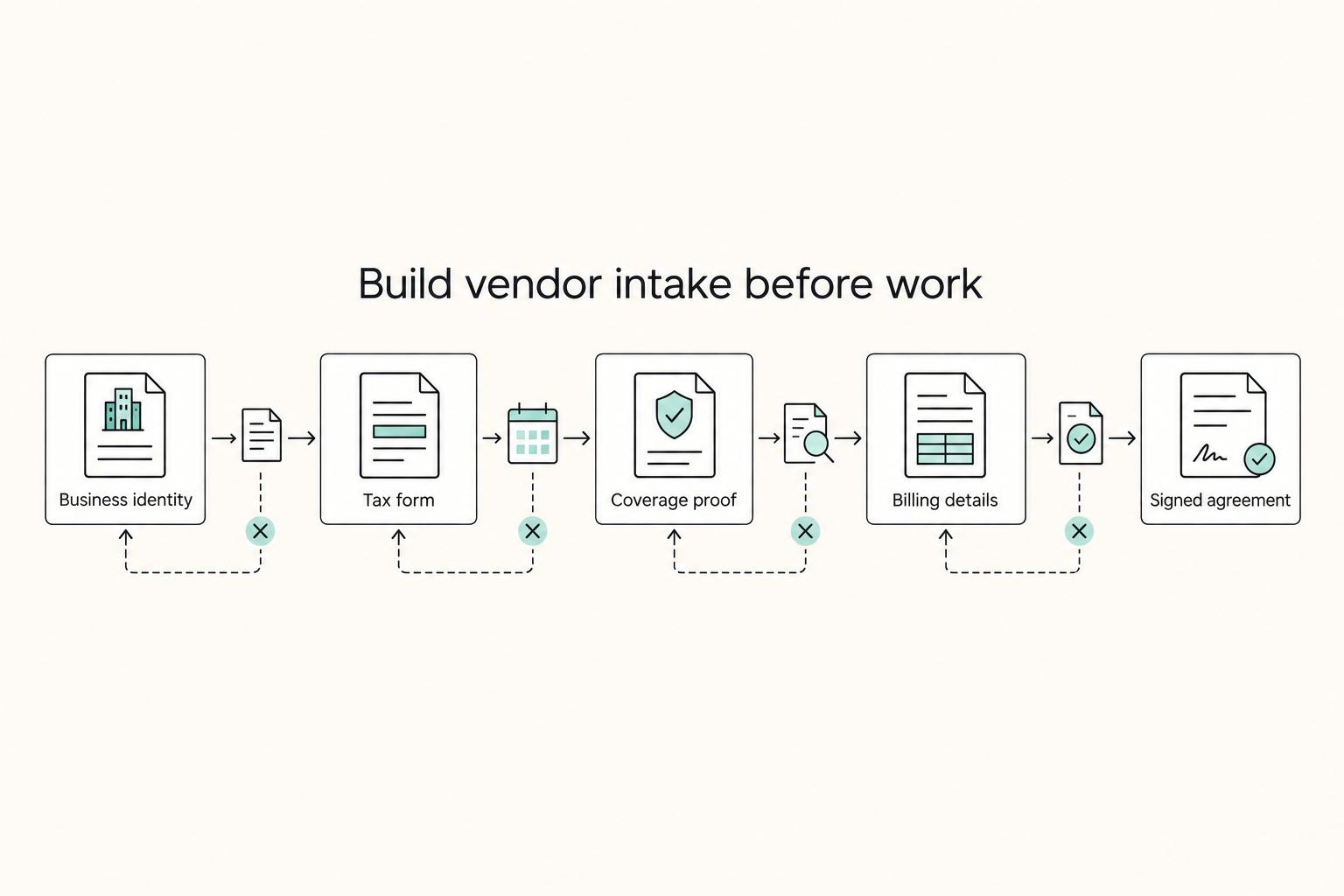
Build a vendor intake file before work starts#
Use a consistent intake checklist. The items below are operational controls, not universal California legal requirements for every subcontractor.
| Item | Details | Note |
|---|---|---|
| Business identity | Legal business name, entity type, and primary business contact | Operational control item, not a universal California legal requirement for every subcontractor |
| Tax form | Tax form collection | For example, Form W-9; where applicable to payment reporting |
| Coverage proof | Certificate of insurance or other business coverage proof | If appropriate for the work |
| Billing details | Business address, billing email, invoice contact, and remittance details | Part of the vendor intake checklist |
| Signed agreement | Signed services agreement and SOW | Current California-specific clause language pending official, legal, contract, or adviser verification |
If work starts before the signed agreement, tax form, and invoicing details are complete, your file is harder to defend later.
Set outcomes, not their day#
You can set delivery expectations and quality controls. You should avoid controlling schedule, breaks, or moment-to-moment presence.
| Outcome oversight you can set | Process/time control you should avoid |
|---|---|
| Milestones, deadlines, and acceptance criteria | Fixed daily hours, shift windows, or coverage blocks |
| Required check-ins at defined project points | "Stay online," "ask before stepping away," or break-approval instructions |
| Security, confidentiality, and handoff requirements | Directions on when to take lunch or whether to work through breaks |
| Revision rounds tied to scoped deliverables | Timekeeping that functions like payroll, especially with break logs |
A clear warning sign is requiring a subcontractor to remain on-site or continuously online during mealtime. In the employee context, if an employer requires someone to remain at the worksite during a meal period, that meal period must be paid. You do not want your subcontractor communications to mirror that control model.
If your work involves property-carrying CMV drivers covered by federal hours-of-service rules, verify jurisdiction-specific language before reuse. FMCSA states California meal and rest break rules are preempted in that covered context under 49 U.S.C. 31141(c).
Make contract terms and payment records match#
Your subcontractor agreement should cover core protections for both sides:
| Agreement term | What it should cover |
|---|---|
| Status | Independent-status representation |
| Work control | Subcontractor control of the manner and means of performance |
| Delegation | Substitution or delegation rights where appropriate |
| Taxes and insurance | Responsibility for taxes and insurance |
| Legal compliance | Compliance with applicable law |
| California clause | Current California-specific clause language pending official, legal, contract, or adviser verification |
Then make your records tell the same story.
| Strong documentary evidence | Weaker documentary evidence |
|---|---|
| Invoices tied to SOW milestones or deliverables | Flat recurring payments with no milestone link |
| Written approvals tied to scoped completion | Approvals based on attendance or time online |
| Complete business-to-business billing trail | Missing invoices or ad hoc payment records |
Before engagement, run a quick pre-check:
- Do you have signed agreement, SOW, business identity details, and billing setup completed?
- Do your instructions focus on outcomes, quality, and deadlines instead of hours, breaks, or availability?
- Will your payment file show invoice-based vendor treatment rather than wage-like supervision?
Related: Moving From Hourly to Project-Based Rates.
Beyond Compliance: Owning Your Status#
Treat break-related demands as a classification warning, not routine admin. California's framework starts with a presumption of employee status, and AB 5's ABC test makes control and direction a core issue, so client control over your schedule can become evidence against contractor status even though meal/rest break rules are employee rules.
Use this operating standard: keep the relationship centered on deliverables, preserve control over how you perform the work, and maintain a business-to-business posture in contracts and day-to-day operations. If your agreement says "independent contractor" but the client dictates hours, tracks breaks like payroll, or requires lunch-time availability, your file is moving in the wrong direction.
| Risk behavior | Protective action | What to say/do next |
|---|---|---|
| Client sets fixed start/end/lunch times | Reset expectations to milestones, deadlines, and required meetings only | "I can commit to delivery dates and scheduled meetings, but I manage my own work hours." |
| Client requests timesheets or break logs that function like payroll records | Bill by scope, milestone, or phase tied to the SOW | "I invoice against deliverables and scope, not employee-style break tracking." |
| Client requires on-site or chat availability during meals | Remove on-duty or continuous-availability language from contract/email instructions | "Please remove any requirement that I remain on duty during meal periods." |
Before kickoff, review each SOW and onboarding packet for schedule-control language. Keep the signed contract, redlines, invoices, and written pushback on attendance-style requirements. If you use subcontractors, keep vendor boundaries intact with a services agreement, billing/tax paperwork, and workflows outside employee timekeeping channels.
Daily execution checklist:
- Contracts: Confirm scope and acceptance are deliverable-based, not attendance-based.
- Communications: State delivery commitments and meeting windows, not shift-style availability.
- Tools/invoicing: Keep records and billing in a vendor-style workflow tied to scope.
- Subcontractors: Manage outcomes and deadlines, not meal/break schedules.
Need a second set of eyes on the paperwork and workflow? Talk to Gruv.
Frequently Asked Questions
Do california meal and rest break laws apply to independent contractors?
The DIR materials here describe employer duties to nonexempt employees, not true contractor relationships. The practical takeaway is simple: if a client starts assigning lunch times, break logs, or required availability during meals, stop treating it as routine admin and start a classification review. Check your contract for schedule-control language and remove anything that reads like employee supervision.
What is the core difference between an employee and a contractor on breaks?
It comes down to control over your day. For employees, California rules require things like a 30-minute meal period after more than 5 hours and paid 10-minute rest periods each 4 hours or major fraction. DLSE treats more than 2 hours as a major fraction. For you, that means a client who tries to script those breaks is borrowing an employee-management model you should push back on.
If a client requires me to stay available during lunch, is that a red flag?
Yes. In the employee setting, if the employer requires the worker to remain at the worksite during the meal period, the meal period must be paid. An on-duty meal is only allowed when the work prevents relief from all duty and there is a written agreement that the employee can revoke in writing. If a client asks you to stay online, stay on site, or sign an “on-duty meal” form, escalate for legal review before work starts.
If I hire a subcontractor in California, do I have to manage their breaks?
Treat this as classification-sensitive. The break rules in these DIR excerpts address employee obligations, so avoid running a subcontractor relationship like employee supervision. Focus your agreement on scope and deliverables, and escalate for legal review if your process starts to mirror employee timekeeping or break control.
How should I think about AB5 or the ABC test here?
Use break issues as one signal, not the whole analysis. If your file shows fixed hours, meal supervision, required presence, or payroll-style logs, get current California classification advice before work starts. For a deeper status check, see A Guide to California's 'AB5' Law for Independent Contractors.
What should I do if a contract already includes break rules or attendance language?
Do not sign and hope operations stay informal. Redline anything that sets your lunch, requires continuous availability, or ties approval to hours rather than deliverables, then keep that trail with the final agreement. If the client refuses, pause and get legal review before proceeding.
Try a related tool
Researched and edited by the Gruv editorial team. Gruv builds cross-border billing, payouts, and finance-operations software for global businesses.
Sources
- dir.ca.gov/dlse/RestAndMealPeriods.pdftrusted
- dir.ca.gov/smallbusiness/Wages-Breaks-and-Retaliation.htmtrusted
- dol.gov/sites/dolgov/files/WHD/flsa/IC_NPRM_092220.pdftrusted
- edd.ca.gov/en/Payroll_Taxes/ab-5trusted
- federalregister.gov/documents/2020/09/25/2020-21018/independent-...trusted
- fmcsa.dot.gov/sites/fmcsa.dot.gov/files/docs/safety/454936...trusted
- labor.ca.gov/employmentstatus/abctesttrusted
- labor.ca.gov/employmentstatus/workerstrusted
Educational content only. Not legal, tax, or financial advice.
Related Posts

Germany Freelance Visa Application Path for Freiberufler and Gewerbe
Choose your track before you collect documents. That first decision determines what your file needs to prove and which label should appear everywhere: `Freiberufler` for liberal-profession services, or `Selbständiger/Gewerbetreibender` for business and trade activity.
Moving From Hourly to Project Rates Without Hurting Cashflow
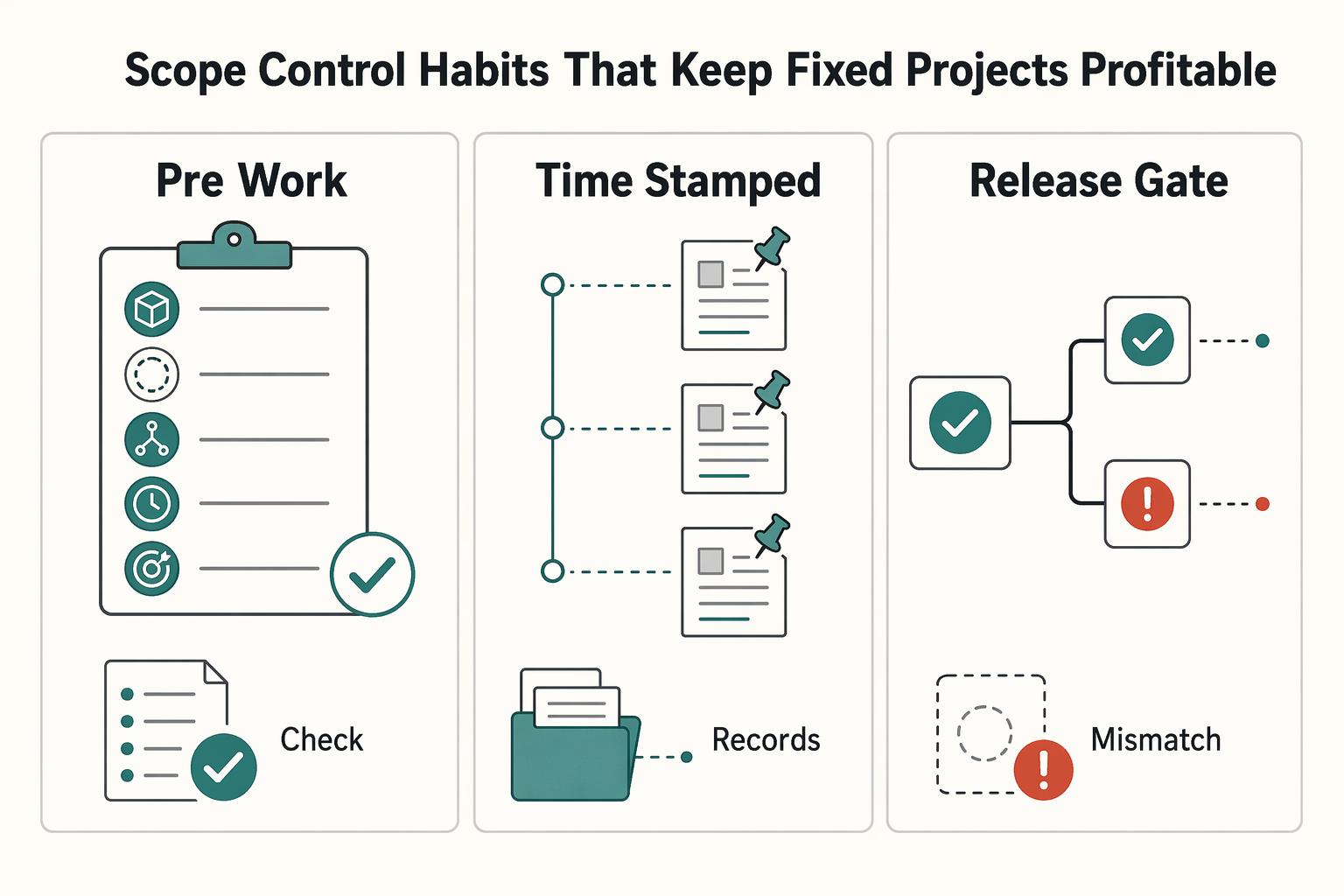
The right pricing model matches uncertainty and cashflow risk. It should fit how clearly the work can be defined, approved, and defended, not just what you are used to selling. Hourly billing gives you room to work while requirements are still moving. Fixed project pricing gives the client stronger budget clarity once deliverables are stable enough to pin down.
Your First California Employee Handbook Without Guesswork
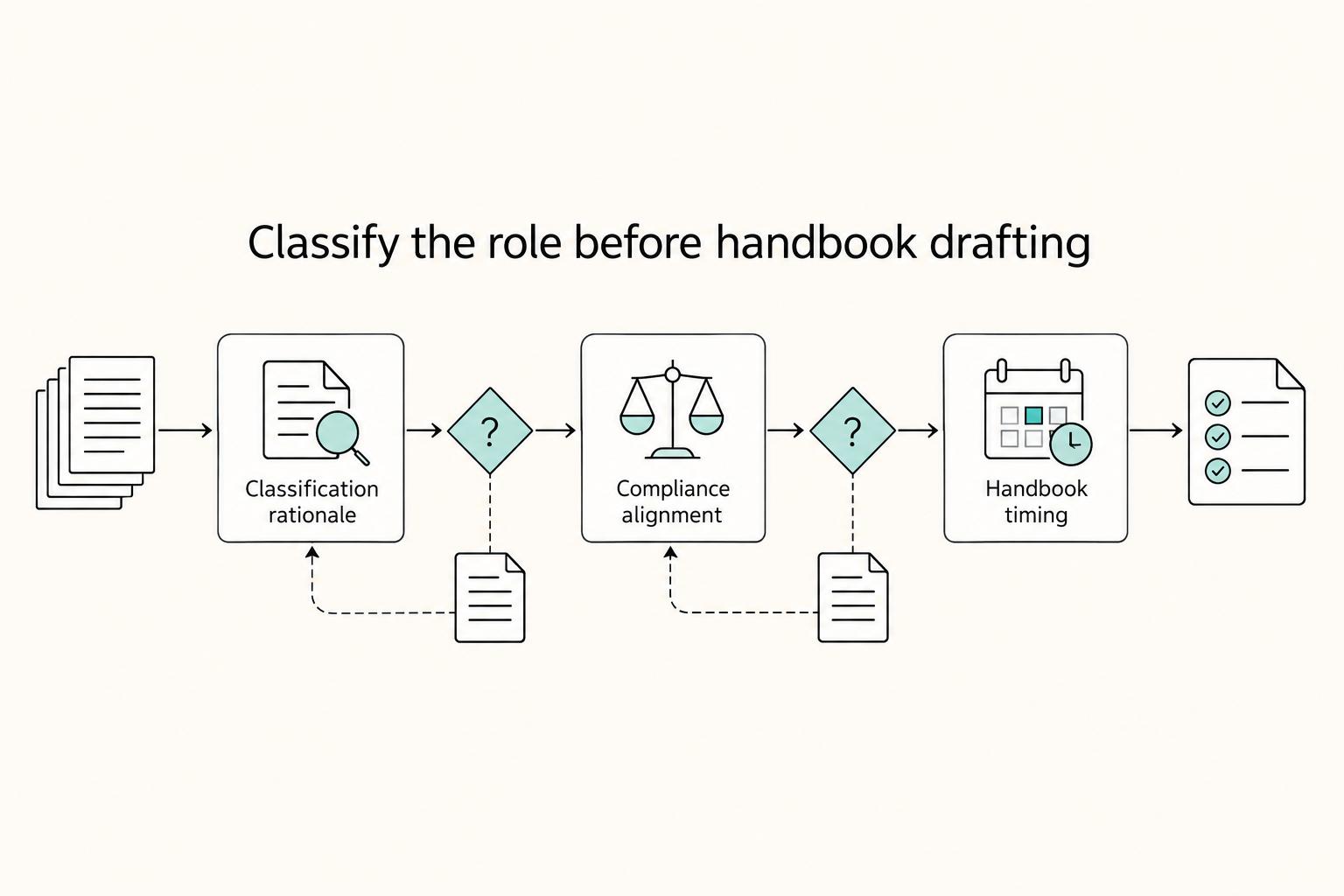
If you are making your first hire in California, one major risk is sequence, not templates. The practical order is to make three decisions: classify the worker, set written policy foundations, and complete onboarding paperwork on time.