
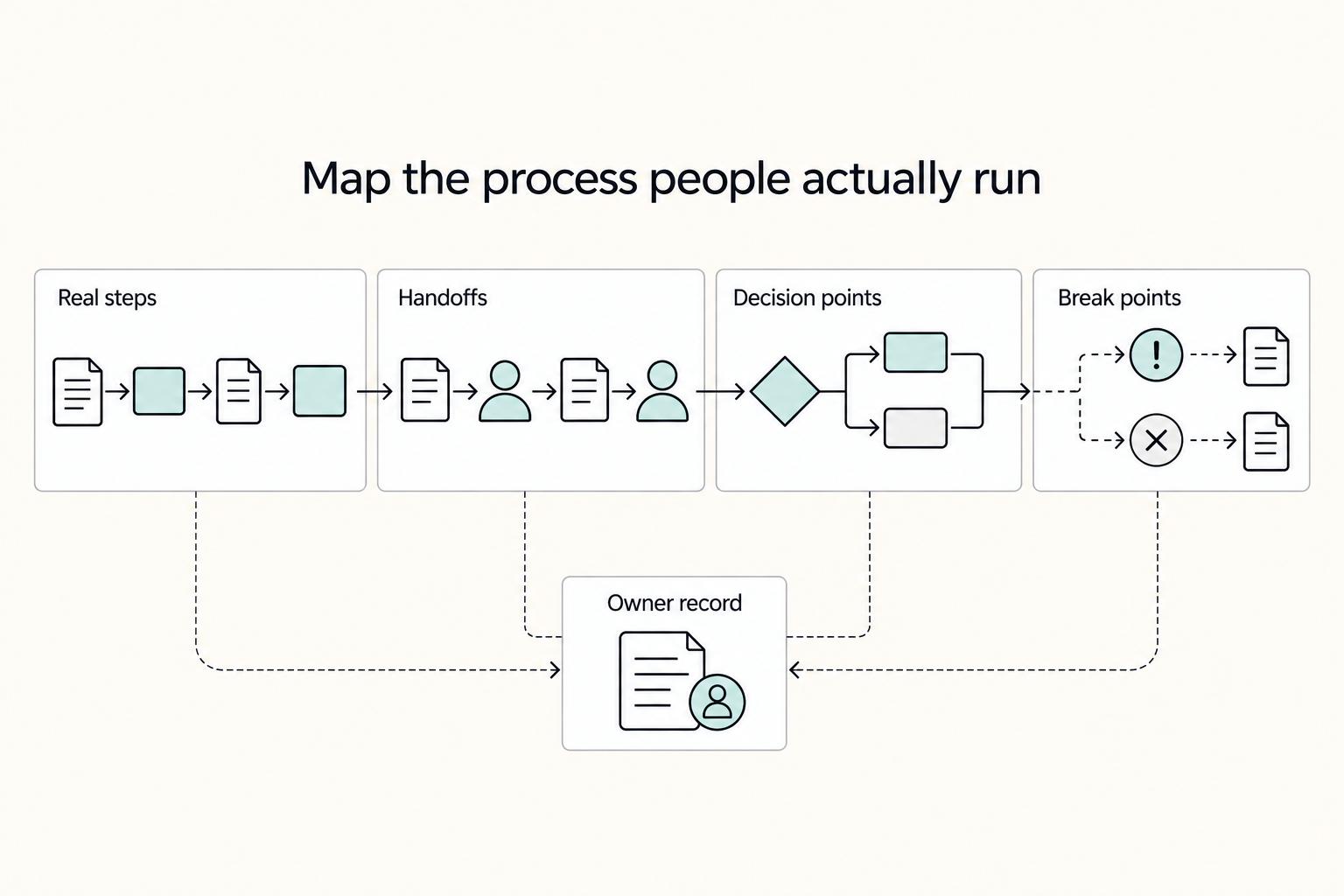
Quick Answer
Start with a business process mapping agency mindset in-house: pick one revenue process and one delivery process, document the current-state process map with evidence, then design a future-state process map with explicit owners and gates. Convert the final version into SOPs immediately so handoffs and QA are enforceable, not memory-based. If your team cannot produce a reliable map after focused sessions, that is the point to consider outside facilitation.
Start here if your agency feels busy but fragile#
If your agency is shipping work but still depends on memory, Slack threads, and founder rescue, the near-term job is straightforward: use the next few weeks to build an SOP baseline for the few processes that keep revenue moving and delivery stable. Timelines vary by team, but a short first cycle is often enough to start replacing ad hoc execution with something your team can repeat.
This guide is written for a small agency in a practical sense. You might be solo, or you might have a few people covering sales, delivery, admin, and client communication. The symptoms are usually similar either way. Handoffs get fuzzy, approvals live in someone's head, and quality drops the moment the founder steps away. If that sounds familiar, you do not need a giant operating model. You need a clear picture of how work actually moves today, who owns each step, and what "done" means at each handoff.
It also helps to be clear about what this is not. This is not a pitch for process mapping consulting services, and it is not an enterprise-heavy exercise where you spend weeks polishing diagrams nobody uses. A visual map is only useful if it shows the real steps, decision points, and handoffs instead of the cleaner version people tell from memory. Once you automate or delegate a broken process, you usually reproduce the same problems faster.
A good early checkpoint is brutally simple: can you point to the current client intake form, the proposal approval step, the kickoff owner, and the final QA check without asking three people where they live? If not, your agency is still running on recollection rather than a shared operating baseline. That is fixable, but only if you map what actually happens, not what should happen.
Here is the sequence we will follow:
- Define the core terms so you know what a map is, what it is not, and where BPMN can help if you need formal notation.
- Choose the first few processes based on risk and frequency, not on what feels interesting.
- Build a current-state process map that captures how work runs now.
- Design a future-state process map that removes avoidable friction and makes owner decisions explicit.
- Turn the final version into standard operating procedure (SOP) documents with checkpoints, evidence, and review ownership.
Start smaller than you think. Pick the main revenue path and one delivery path first. That is usually enough to expose common failure modes: missing intake information, unclear approvals, stalled handoffs, or QA happening too late. Once those are visible, the rest of this guide becomes practical instead of theoretical. If you want a deeper dive, read Value-Based Pricing: A Freelancer's Guide.
What business process mapping means in a small agency#
In a small agency, business process mapping means making work visible from start to finish so it can be handed off, checked, and improved consistently.
Use these terms in a practical way:
- Business Process Management (BPM): the broader improvement practice around how work gets done.
- Process map: the visual diagram of tasks, decisions, and flow across people or systems.
- Workflow optimization: the result you want after unclear, redundant, or inefficient steps are fixed.
For this guide, keep two map views separate:
- Current-state process map: how work actually runs today, including detours and informal approvals.
- Future-state process map: the cleaner path you intend to run after removing redundancy and clarifying ownership.
Keep notation lightweight. Process maps can be simple flowcharts or use BPMN symbols, so use BPMN only when it improves clarity. If your team can quickly see who owns each step, where decisions happen, and what must be true before the next handoff, the map is doing its job. If you want tool options or a faster next step, see The Best Tools for Business Process Mapping or Browse Gruv tools.
Pick the first processes to map with a simple selection table#
Start with the processes that are both frequent and costly to get wrong. Do not map everything at once. Build a short, risk-based shortlist, often 3 to 5, from your recurring agency work, such as lead intake, proposal-to-contract, kickoff, delivery QA, and invoicing or collections.
Use a simple table to compare candidates before you choose what to map first.
| Criterion | What to look for |
|---|---|
| Client impact | Mistakes create visible delays, confusion, or quality issues for clients |
| Frequency | The process runs often, so small defects repeat |
| Error cost | Breakdowns lead to lost time, margin, trust, or cash flow friction |
| Founder dependency | Work stalls unless you step in to approve, clarify, or unblock |
| Rework rate | Work is repeatedly redone because inputs or handoffs were incomplete |
Decision rule: map a process now if it is frequent and error-prone; defer it if it is rare and low-risk. In practice, most small teams should start with the top one or two processes so the work changes behavior instead of becoming a side project.
If finance or compliance is already creating friction, include one finance-sensitive process on the shortlist, for example, invoice approval, payout release, or tax document collection, so operational improvements and back-office discipline mature together.
For a step-by-step walkthrough, see A Freelancer's Guide to Business Process Automation (BPA).
Build a current-state process map your team can trust#
A current-state map is only useful if it shows how work actually happens today, not how people remember it. Build it so your team can see the same process, follow it consistently, and spot where steps connect or break.
Use a fixed order so debates stay grounded#
Use one sequence each time to keep the conversation concrete: scope boundary, trigger, steps, owners, decision points, systems or records touched, handoffs, and exit condition. This is a working method, not a formal requirement. It helps your team map reality before proposing fixes.
Set the start and end points first so the map does not sprawl. Then break the workflow into clear start-to-finish steps, and show who owns each step and where decisions change the path. Keep handoffs explicit so gaps are visible.
Demand evidence, not recollection#
Treat "we usually do X" as a draft, not a confirmed step. Validate with recent real examples from your tools and messages, including screenshots, form names, templates, and timestamps where available.
If two people describe a step differently, check completed cases and map what actually happened. When a step has no visible artifact or record, mark it as unverified instead of smoothing it over.
Pick a format that fits, then make ownership explicit#
Use an Excel process map when the flow is straightforward and you need speed. Use BPMN when you need to show branching paths or more complex step relationships. In either case, pair the visual with a responsibility table so ownership is explicit at approvals and handoffs.
| Checkpoint area | What to inspect | Evidence to pull | What to mark on the map |
|---|---|---|---|
| Work stalls | Long waits between steps | Timestamps, task history, calendar gaps | Exact wait point and current owner |
| Errors recur | Repeated corrections or rework | Revision notes, returned forms, rework comments | Step where bad input enters |
| Approvals fail | Signoff pauses or off-record approvals | Email threads, chat approvals, missing records | Decision point and approver |
| Client communication breaks | Missed updates or conflicting messages | Message history, templates, meeting notes | Handoff where communication ownership changes |
Done once with evidence, this map becomes a reliable baseline for improvement, not just a diagram.
For broader operating context, see How to Perform a Business Valuation for a Small Agency.
Design the future-state map with owner decisions and constraints#
Build the future-state process map by making a clear decision on every pain point: remove the step, merge it, automate part of it, or add a gate before work can move forward. The point is not a cleaner diagram. The point is a process someone can run reliably after improvements.
Turn complaints into design decisions#
Translate each issue from the current state into a specific design choice. "Kickoff details are missing" becomes "add an intake gate before kickoff until required fields are complete." "Too many status updates" becomes "merge two check-ins into one owner review."
| Pain point | Design choice | What changes | Main risk |
|---|---|---|---|
| Duplicate data entry | Remove or merge | Fewer touchpoints and less rework | Important detail can be lost if fields are not standardized |
| Slow manual admin | Automate | Tool handles routing, reminders, or record creation | Weak logic can scale bad inputs faster |
| Work moves with missing info | Gate | Required approval, field, or checklist before handoff | Team may feel slower at first |
| Founder handles edge cases informally | Reassign ownership | Named role and visible decision record | Escalations can stall if backup ownership is unclear |
If client or payment risk is high, favor fewer steps and stronger controls over faster handoffs.
Use gap analysis before rollout#
Run gap analysis next to the future map. For each changed step, define ownership changes, required tools or templates, and missing SOP instructions. Without that layer, the map can look complete while execution is still improvised.
Document constraints early in the map or gap list: budget, team capacity, and any regulatory or program-dependent checks. Keep scope explicit and involve the right stakeholders so the design stays aligned with business goals. After approval, convert changed lanes into SOP drafts and review/update the map regularly so it stays useful. For related tool options, see The Best Tools for Creating SOPs and Process Documentation.
Decide when to do it yourself and when to hire a mapping agency#
Choose DIY when your team can produce a reliable, evidence-backed map without getting stuck; hire outside help when progress repeatedly stalls or ownership conflicts block decisions.
| Decision factor | DIY is usually enough | Outside help is usually worth it |
|---|---|---|
| Scope size | One or two processes with clear boundaries | Multiple linked processes, messy handoffs, or cross-team dependencies |
| Internal expertise | Someone on your team can map steps, owners, and decisions without guessing | The team cannot separate observed steps from opinions, or keeps skipping evidence |
| Timeline pressure | You can spend focused working sessions refining it | You need faster alignment because delays or errors are already visible |
| Change-management burden | Team is small and aligned on ownership changes | Ownership changes are politically sensitive or likely to face resistance |
Use this as a practical heuristic, not an industry benchmark: if you still cannot complete a reliable current-state map after two focused sessions, external facilitation is usually a reasonable next move. "Reliable" means you can point to artifacts like form names, approval records, timestamps, screenshots, and clear decision owners.
When you evaluate partners, do not assume every firm works the same way. Confirm that the engagement will produce something your team can operate day to day, not just a polished deliverable.
What to ask for before you sign#
Agency selection often takes more effort than expected, so get specific early. Referrals can help with trust, but they are still a starting point, not validation. Ask each vendor to confirm in writing:
| Item | What to confirm |
|---|---|
| Map format | What you will receive and whether your team can edit it |
| Decision ownership | How it will be documented |
| Mapping outputs | How they will translate into SOP-ready handoff materials |
| Post-engagement support | What it looks like after delivery |
The main red flag is a polished diagram without an adoption plan. If you do hire help, request one redacted sample to verify that handoffs, decision points, and completion evidence are explicit.
This pairs well with our guide on A Guide to Selling Your Freelance Business or Agency.
Turn maps into SOPs your team can execute without you#
Turn each high-risk lane into an SOP immediately, or your map will drift back into unwritten knowledge and you will become the fallback owner again. Each SOP should tell the team when work starts, who owns it, the step order, how quality is checked, and where it escalates when something breaks.
| SOP part | What it answers |
|---|---|
| Trigger event | When work starts |
| Primary owner | Who owns it |
| Ordered step list | The step order |
| Required quality check | How quality is checked |
| Escalation path | Where it escalates when something breaks |
| Exit condition | How to confirm this step is complete |
Start where mistakes hurt most: onboarding, delivery QA, invoicing, approvals, and fragile handoffs. Use the same structure every time so people can scan it fast under pressure.
The format can be simple, but the SOP must answer two operator questions clearly: what happens next, and how do I confirm this step is complete?
Build the minimum evidence pack#
An SOP is incomplete without proof artifacts. For each SOP, attach or link:
- the exact template to use
- required fields that cannot be skipped
- file or naming conventions
- approval record or signoff location
Teams often document sequence but skip artifacts, which is how output quality drifts. A quick check: pick one completed job and confirm a different team member can reconstruct the full record without asking you for context.
Add the controls that keep it usable#
Use a weekly SOP review for processes that change often or carry client risk. Keep the review short: what changed, what broke, what confused people, and whether the definition of done still matches reality. Maintain a version log with date, editor, and change summary so the current instruction is always clear.
Define handoffs as verifiable outcomes, not status labels. "Sent to finance" is vague; "invoice drafted with required fields complete, approval recorded, and file named to convention" is enforceable. If someone still misses your quality bar six weeks later, tighten the quality check and add one concrete example of acceptable output.
If pricing, documentation depth, or tool choice is still unsettled, tie this section back to those decisions so your SOPs stay usable in practice. For the writing side, see How to Create a Standard Operating Procedure (SOP) for Your Freelance Tasks. Need the broader operating model? Read Write an IT Outsourcing Agency Business Plan You Can Run Weekly.
Avoid the mistakes that make process mapping fail#
Most process maps fail for four predictable reasons: scope is too broad, teams polish before testing, language is too abstract for operators, and nobody owns maintenance.
| Mistake | Why it fails | Fix |
|---|---|---|
| Mapping everything at once | Weak boundaries create confusing, low-trust maps and wasted effort. | Start with two high-friction processes and run one continuous improvement loop before expanding. If a workflow is complex, split it into smaller maps. |
| Polishing diagrams before testing | A clean diagram can still hide broken handoffs, missing fields, or unclear approvals. | Run one live cycle first and log defects. Fix what breaks before you beautify the map. |
| Using enterprise language without operator detail | Over-modeled documentation is hard to use under pressure. | Keep Business Systems Analysis and Data Modeling & Analytics depth proportional to team size, and prioritize explicit operator steps and decision points. |
| Treating mapping as one-time documentation | "Fire and forget" maps drift out of date and execution falls back to founder rescue. | Assign one process owner per SOP and hold one monthly update checkpoint with stakeholder feedback from people who run or oversee the process. |
If you keep scope tight, test in live work, and maintain maps as living instructions, your process mapping stays practical instead of performative.
Build once, then improve on a steady cadence#
You do not need enterprise complexity. In a small agency, one clear current-state map, named owners on risky handoffs, and consistent SOP follow-through will do more than a one-time overhaul.
| Timing | Action |
|---|---|
| This week | Schedule two mapping sessions with the people who actually run the work |
| After those sessions | Publish one current-state map with owners, decision points, and exit conditions |
| Before rollout | Approve one future-state change set and update the SOP so execution and handoffs are clear |
Start with discovery, not tool shopping. Then make small, targeted changes and judge them by business outcomes, not only time saved.
Then test the revised process on one live cycle. If progress stalls, check the common agency friction points first: unnecessary meetings, inbox-driven handoffs, and siloed work between functions.
When you measure results, track the core outcome tied to the process, not just hours saved.
Where payment, tax, or compliance requirements vary, verify the exact requirement by market and program before rollout. If your agency handles global payments and needs audit-ready controls, read the docs or request access before rollout so you can confirm coverage for your specific markets and program setup. For a related workflow example, see How to Use Airtable Automations to Simplify Your Agency Workflow.
Frequently Asked Questions
What is a business process mapping agency, and do I need one as a small agency?
A business process mapping agency helps visually document the real workflow steps, decision points, and participants so you have a baseline you can improve. As a small agency, you may not need one immediately. If you can define a clear scope, involve the people who run or oversee the process, and map how work happens today, starting in-house can work.
What is the practical difference between a current-state process map and a future-state process map?
A current-state process map shows how work really happens now, including bottlenecks, redundant tasks, and hidden inefficiencies. A future-state process map shows the path from where you are today to where you want to be after improvements. If you skip the current-state step and jump straight to automation or redesign, you risk reproducing the same problems.
How many agency processes should I map first to see real results?
There is no universal number that guarantees results, so do not turn this into a quota. For a small team, a practical move is to start with a small set of high-friction processes, learn from that work, and then expand. If a process is broad, narrow the scope first instead of forcing one giant map.
Can I use an Excel process map, or do I need BPMN from day one?
You can start with an Excel process map if it helps your team capture steps, decision points, participants, and handoffs clearly. BPMN can be useful when it improves clarity, but it is not a requirement from day one. The real check is whether someone outside the founder can follow the map and understand who does what, where decisions happen, and what happens next without guessing.
When should I switch from DIY mapping to process mapping consulting services?
Make the switch when scope keeps drifting, stakeholder involvement is weak, or your team cannot agree on how work actually happens today. Outside help is also useful when current-state mapping is not surfacing bottlenecks clearly or when maps are created but never updated. If your version goes stale quickly, the issue is usually ownership and maintenance, not diagram style.
How do process maps become SOPs that survive team growth and turnover?
A map becomes a usable SOP when it clearly documents workflow steps, decision points, participants, and how work is currently executed. Keep the scope clear, involve the people closest to the process, and review and update it regularly because process maps are not one-time documentation. If you want a simple format for that handoff, this guide on how to create a standard operating procedure (SOP) for your freelance tasks is the right next step.
Try a related tool
Researched and edited by the Gruv editorial team. Gruv builds cross-border billing, payouts, and finance-operations software for global businesses.
Sources
- berkeleyca.gov/sites/default/files/documents/Appendix%20B%2...trusted
- catsr.vse.gmu.edu/pubs/Dissertation_FormalAnalysisSOPContent_0...trusted
- clame.nyu.edu/fulldisplay/E1BI44/316239/CustomerLifecycleJ...trusted
- connect.ncdot.gov/projects/Project-Management/Documents/NCDOT%...trusted
- dodcio.defense.gov/Portals/0/Documents/CMMC/AssessmentGuideL2.pdftrusted
- dot.ca.gov/-/media/dot-media/programs/project-managemen...trusted
- gao.gov/assets/127570.pdftrusted
- nucats.northwestern.edu/docs/cecd/overview-of-sops.pdftrusted
Educational content only. Not legal, tax, or financial advice.
Related Posts
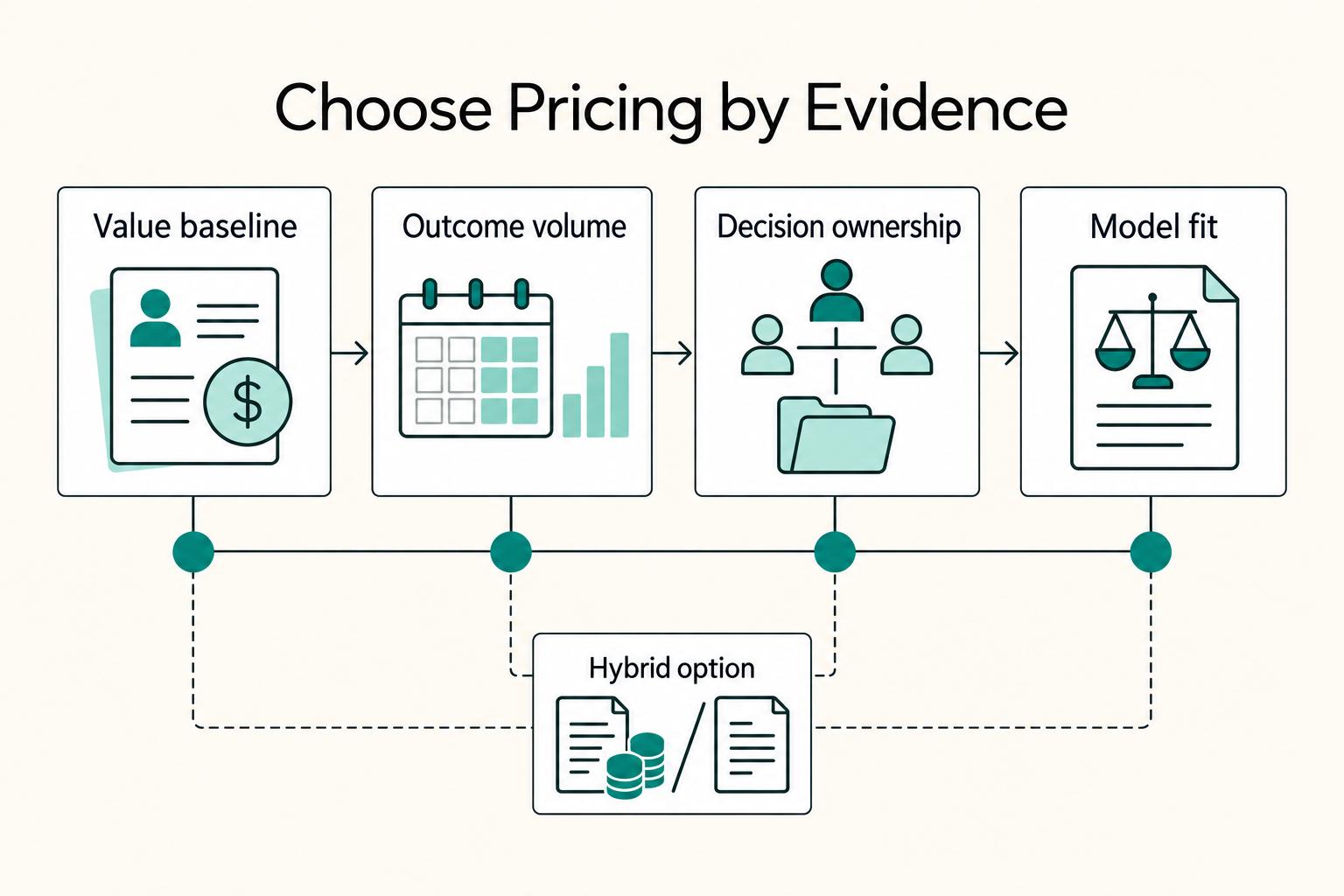
Value-Based Pricing for Freelancers Under Real Payment Risk
Value-based pricing works when you and the client can name the business result before kickoff and agree on how progress will be judged. If that link is weak, use a tighter model first. This is not about defending one pricing philosophy over another. It is about avoiding surprises by keeping pricing, scope, delivery, and payment aligned from day one.
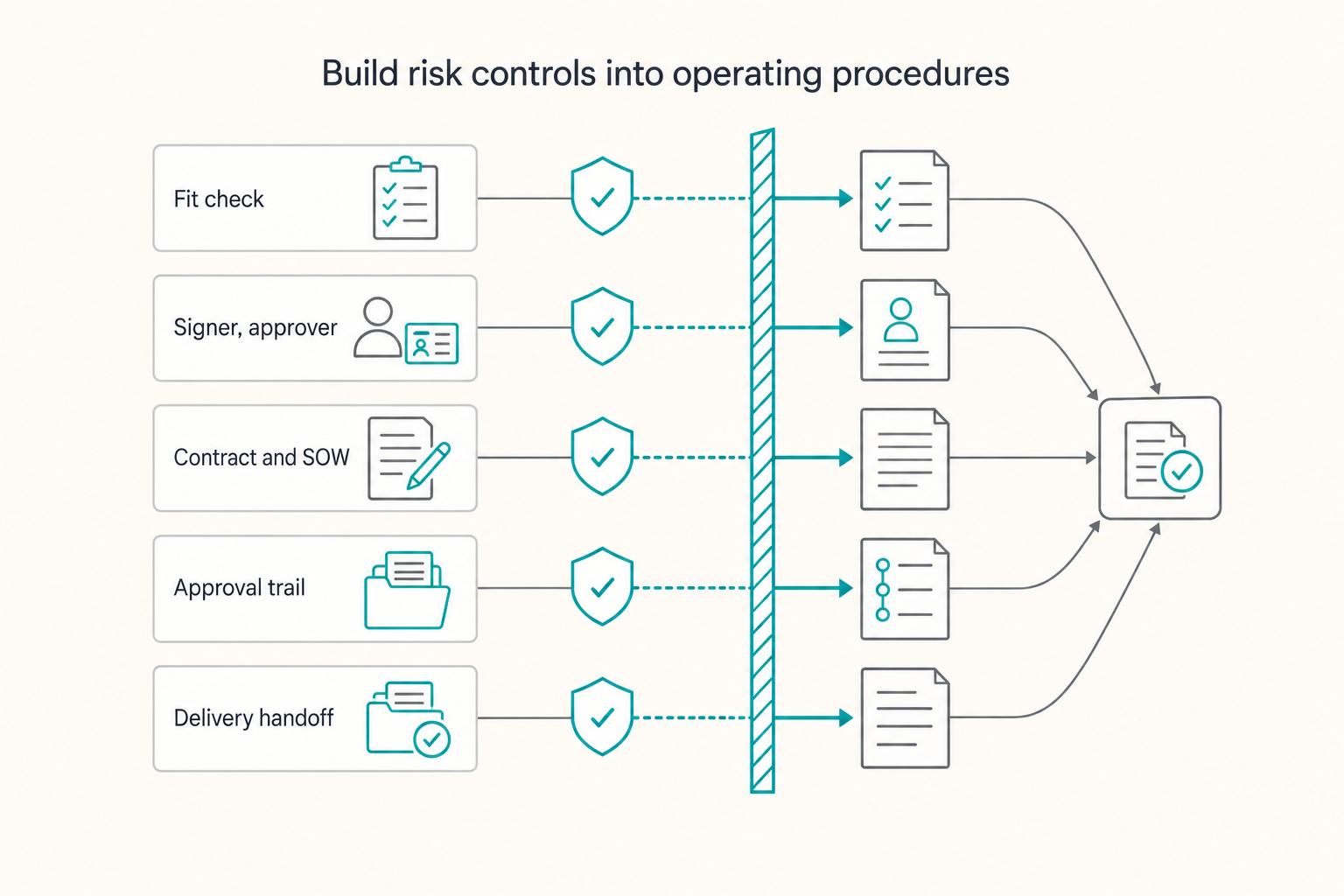
How to Create a Standard Operating Procedure (SOP) for Your Freelance Tasks
If the same workflow issues keep showing up, a bigger to-do list usually will not fix them. What helps is a simple operating structure: what starts a task, what gets checked, and what must be true before work moves forward. This guide shows you how to document recurring freelance tasks so the work is easier to repeat and maintain.
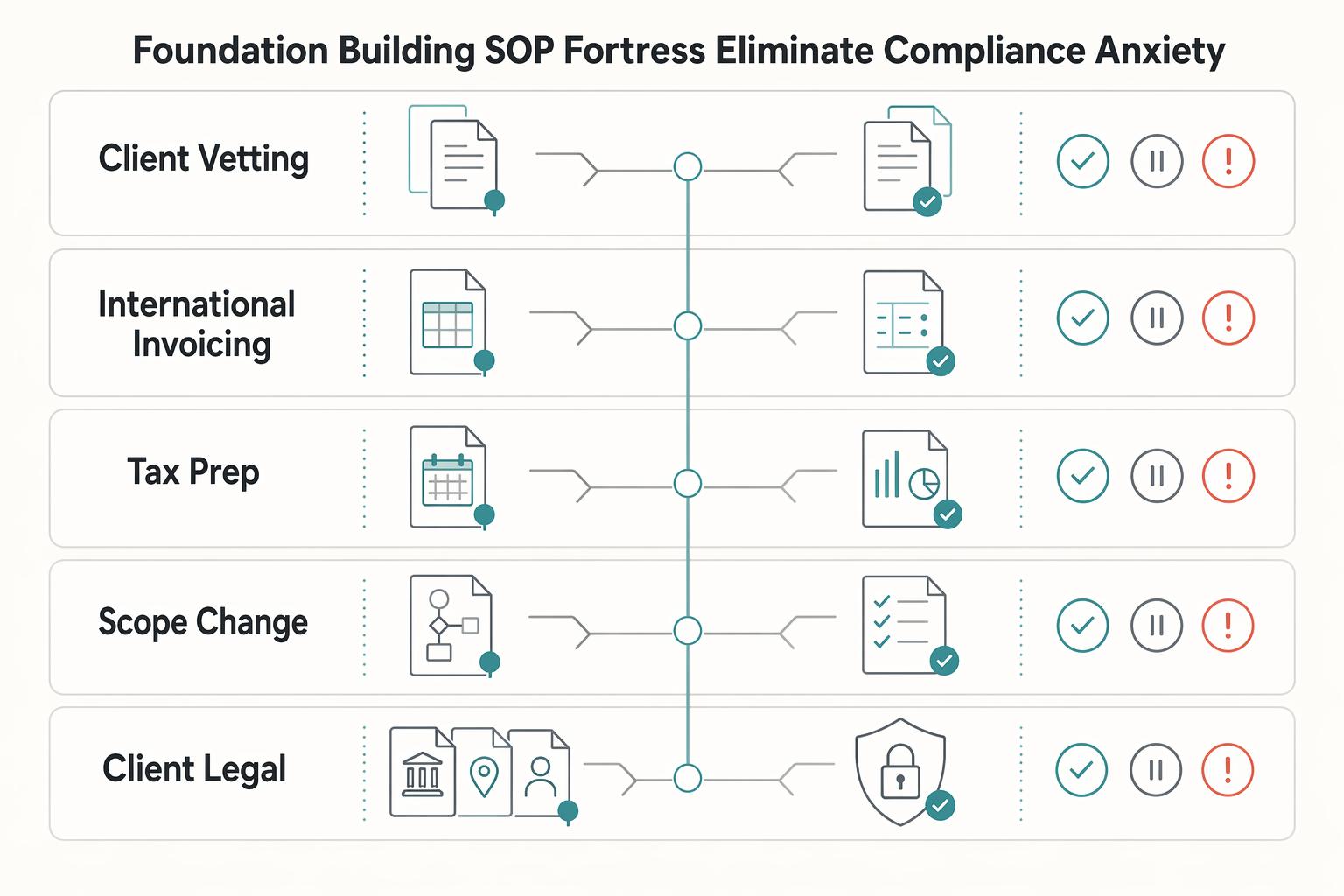
The Best Tools for Creating SOPs and Process Documentation
If compliance anxiety is the problem, do not start by documenting everything. Start with four SOPs that can help prevent expensive mistakes: client vetting, invoicing, tax close, and scope changes. If any of these still lives in your head, write it down now. In a January 2019 [simulated SOP study](https://www.researchgate.net/publication/330301419_Retention_of_a_standard_operating_procedure_under_the_influence_of_social_stress_and_refresher_training_in_a_simulated_process_control_task) (76 engineering students), stress impaired performance, while refresher training improved follow-up performance after a two-week retention interval.