
Quick Answer
Start with a cashflow-first system: map every required bill to its due date, estimate uneven earnings conservatively, and pay essentials before anything optional. In budgeting in college, treat client invoices and aid-related funds as usable only after they are actually received, then adjust the plan each week. Finish each month with a close that compares planned vs actual and resets the next cycle using real numbers.
Why a cashflow-first college budget beats generic budgeting tips#
If you invoice clients while in school, your budget has to solve for timing first. Categories still matter, but bills hit on specific dates, while freelance payments, family support, and some aid funds may arrive on a different schedule.
Timing is the real problem#
The real challenge is not just how much you owe. It is whether cash clears before each due date. In college, cashflow can be volatile by design. Income and expenses both move around, and larger costs often cluster at the start of a term.
Your obligations also go well beyond tuition, including housing, food, books and supplies, and transportation, so cash commitments can stack up fast.
A workable plan has to match expected expenses to expected income and aid, not just list what you owe. Title IV disbursements are tied to payment periods, and timing rules can delay when funds are actually available. In some cases, that can mean up to 14 days after the first day of class. In some Direct Loan cases, it can mean the 30th day after the payment period begins. If you treat expected aid as already cleared cash, your plan can fail early in the term.
Why generic budgeting tips miss it#
A category budget tells you where money went. It does not tell you whether cash clears before each bill is due. A cashflow budget closes that gap by pairing month-level planning with week-to-week timing.
That matters even more when income varies. Households with variable income report bill-payment difficulty more often than households with stable income, so the core risk is often not overspending alone. It can be a timing shortfall that may lead to late or missed payments.
Use one quick check for every required bill: due date, amount, expected funding source, and whether that source is cleared or not yet cleared. If rent is due on the first and your invoice usually pays on the fifth, that bill needs a different funding plan.
What a cashflow-first budget changes#
This approach gives you a repeatable order of operations: what must be funded first, what can wait, and how much timing uncertainty you can absorb before using credit. That can lower late-payment risk, reduce reliance on card debt, and help protect your credit score.
That matters in practice. How you repay debt and use available credit affects your score, and payment history plus credit usage make up a large share of common scoring models. One potential failure mode is covering a timing gap with credit, then carrying that balance longer than planned when money arrives late.
If your income is uneven, use this rule: budget around when cash actually lands, not when you expect it to. That is what separates a clean-looking budget from one that keeps essentials paid all semester. For a step-by-step walkthrough, see How to Build Credit in College.
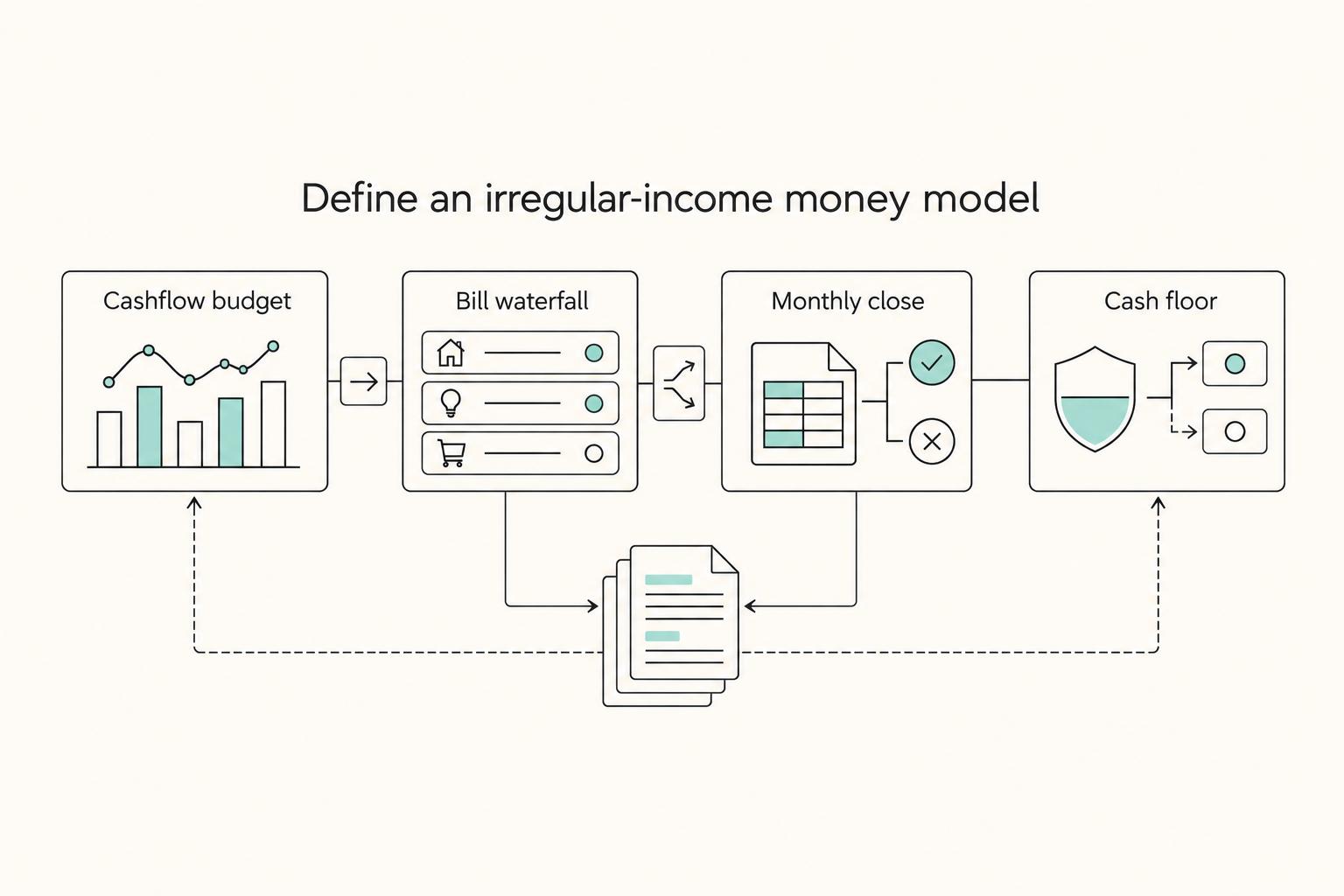
Define the money model before you pick a budgeting app#
Choose the money model first, then the app. The core decision is how you treat timing: what cash is actually available, when it lands, and what gets paid first if timing slips.
Use working definitions#
| Term | Practical meaning |
|---|---|
| cashflow-first budget | Track when income and expenses happen so cash is available when bills are due, week to week. |
| bill-priority waterfall | Your ranked payment order for periods when you cannot pay every bill at once. |
| monthly close | End-of-month review of planned vs. actual spending, then use that result to set next month's plan. |
| minimum cash floor | A personal buffer you choose and protect for essential bills while income or aid timing is unsettled. There is no official federal formula, so set this as your own operating rule. |
Why this is different from generic advice#
Category totals are not enough when timing is uneven. Some aid may be paid once per term, which can make a simple monthly category budget misleading if you do not map when cash becomes usable.
Use one rule: if income is variable, plan from a conservative baseline, not your best month. StudentAid.gov supports this by advising that uneven income can be estimated annually and divided by 12.
Tie checkpoints to StudentAid.gov and Federal Student Aid#
Before you choose any app, anchor your setup to real aid timing.
- Confirm FAFSA windows and deadlines. For the 2026-27 form, federal receipt is October 1, 2025 through June 30, 2027, and school or state deadlines may be earlier, including October 1, 2025.
- Map when aid is actually usable. Title IV disbursement is tied to payment periods, and some Direct Loan timing cases are treated as disbursed on the 30th day after the payment period begins.
- Only count spendable aid after tuition and fees are covered. A possible aid credit balance refund is the part that can flow into your living-expense plan.
Before you open an app, do one control check: list every required bill with a due date, funding source, and whether that source is cleared or not cleared.
Build your real income baseline from uneven sources#
Treat income as separate streams, not one monthly number. List each inflow, convert uneven inflows into a conservative monthly estimate, and give more weight to money with stable timing or confirmed receipt.
| Inflow source | What to record | Monthly planning rule | Reliability |
|---|---|---|---|
| Other irregular income payments | amount expected, expected date, actual paid date | Base your estimate on what has actually been received over recent months | Usually low to medium |
| Campus job or work-study | expected pay, pay schedule, net deposit amount | Use typical net pay when hours are stable | Usually high when hours are stable |
| Family support | amount, expected transfer date, actual receipt pattern | Use the amount that arrives consistently | Medium unless formal and predictable |
| Financial aid credit balance refund | disbursement notice, estimated refund, refund method, actual receipt date | Plan from the amount left after allowable charges, and treat timing as variable until disbursed | Medium to low until disbursed |
For irregular income, use a simple baseline method: estimate annual income, then divide by 12. If you have full records, use the past 12 months of deposits. If you do not, use as many months as you have, at least 3 months, and keep the estimate conservative.
Score each inflow before you trust it#
Not every dollar deserves the same confidence. Use a quick reliability label so your plan reflects actual timing risk. A conservative baseline can feel tight in strong months, but it lowers the risk of missing essential bills in weak weeks.
- High: amount and timing are usually consistent, with repeated deposits or paystubs.
- Medium: likely to arrive, but amount or timing varies.
- Low: irregular, conditional, or often delayed.
Handle aid refunds as timing-sensitive cash#
Awarded aid is not the same as usable cash. Federal student aid includes grants, work-study, and loans, and schools must send disbursement timing and amount notice before disbursing.
A refund only enters your living-expense plan after charges are covered and you are eligible for a credit balance. If a Title IV credit balance occurs, federal rules set a 14-day deadline point after the balance occurs for paying it to the student or parent. Use that as a compliance timing reference, not a guaranteed arrival date. Estimated disbursement dates can change, and holds can block disbursement until resolved. Confirm your refund method on file. Schools may present direct deposit as a way to reduce mailed-check delays.
Keep proof next to each number#
Keep each income line tied to evidence. For every inflow, track four fields: normal date window, expected amount, proof document, and cleared status.
Store supporting records together, including bank deposits, paystubs, transfer history, aid notices, and refund setup confirmation. That keeps your plan tied to available cash, not hoped-for cash. Related reading: A Guide to Financial Therapy.
Map every required cost and its due date#
Once you know which dollars are likely to land, build a bill map. Put each obligation in one place before you start making cut decisions.
Use a due-date ledger, not a loose expense list. Keep one row per obligation so deadlines stay visible.
| Cost item | Due date | Fixed or variable | If missed | Payment method | Priority tag | Owner | Fallback |
|---|---|---|---|---|---|---|---|
| [Your item] | [Calendar date] | [Fixed/Variable] | What your statement or agreement shows | How it is paid | [Priority level] | [Who executes payment] | Your plan if cash arrives late |
Use your own bill, agreement, portal, or notice to fill the due date and terms for each row. Treat this as a working checklist, not a mandated format.
As a verification step, review your records and use keyword search (Ctrl+F / Command+F) to confirm you did not miss anything.
If you log into government accounts to verify details, confirm you are on an official .gov site and a secure https connection before entering sensitive information. Related: How to Connect Wise to QuickBooks for Automatic Reconciliation.
Pick a budgeting method that matches variable income#
When income timing is uneven, choose a method that protects required bills first. For students with variable income, one workable setup is to zero-base essentials first, then use the 50/30/20 Rule as a range check for wants, savings, and debt payments after income is in hand.
| Method | What it does well | Where it can break down | Better fit when |
|---|---|---|---|
| 50/30/20 Rule | Fast to set up and easy to follow | Works best when monthly income is stable enough for percentage targets to stay meaningful | Income is relatively steady |
| Zero-based budget | High control: every dollar is assigned and the balance ends at $0 | Requires forecasting upcoming expenses before assigning income | Income is irregular, bills are tight, or impulse spending is an issue |
| Hybrid approach | Prioritizes must-pay costs first, then uses percentage guardrails for flexible spending | Less simple than using one method alone | Costs are predictable but pay timing is not |
What each method is asking you to do#
The 50/30/20 approach is a percentage split of monthly net income. One common framing is 50% needs, 30% wants, 20% savings. CFPB worksheet language also frames it as 50% needs, 20% savings or debt, and up to 30% wants. Treat it as an allocation guide, not a bill-payment sequence.
Zero-based budgeting assigns every dollar to a category so the remaining balance is $0. Its main advantage is control because you forecast upcoming expenses before assigning income.
How to run a hybrid approach carefully#
For uneven income, start from a conservative baseline. If pay is irregular, you can estimate monthly income from last year divided by 12, then assign essentials first.
After essentials are covered, use 50/30/20 ranges as guardrails, not automatic entitlements. In practice, wants are funded from what remains after must-pay costs and planned savings or debt payments, instead of forcing a fixed percentage in a low-income month.
Before you trust the plan, confirm the monthly math does not fall below zero.
House rule for low-income months#
Use this as a personal rule, not an official standard: if essentials stay high for multiple months, pause wants and reforecast before taking on new debt. The point is to reset the plan early instead of borrowing to maintain nonessential spending.
When to switch methods mid-semester#
Switch methods when the current one stops helping. Changing approach is normal.
- Switch from 50/30/20 to zero-based if you miss bills, income drops, or category caps are too loose to control spending.
- Switch from zero-based to a lighter percentage approach if income stabilizes and the upkeep is causing you to stop updating the budget.
- Keep a hybrid approach if required costs are predictable but income timing stays uneven.
If you switch, do one clean reset: update due dates, recalculate baseline income, and confirm planned expenses still leave you above zero.
Set your bill-priority order and minimum cash floor#
A budget only works under pressure if you already know what gets paid first. Set a fixed pay order so essential bills are covered before discretionary spending.
One practical order is to cover essential living costs (housing and food), transportation, and tuition-critical items before optional spending. This is not a federal rule, but it follows the same discipline: cover needs before wants.
Build the order around consequences, not preference#
Prioritize the costs that keep school and daily life stable. Living expenses like food and housing, plus transportation, are core college costs, so they should stay near the top of your list. Tuition-critical charges should stay high-priority as well. Discretionary categories come last so nonessentials absorb pressure first in tight weeks.
Use a simple control check for each bill: due date, payment method, minimum required amount, and consequence if missed. If any field is missing, that bill is not fully controlled yet.
Set a cash floor you do not casually raid#
Your cash floor should be a protected reserve for timing gaps and unplanned expenses, not spendable money. Set it based on essential bills due before your next reliable inflow clears, not on a random round number. If you count pending money as available, you raise the chance of covering essentials with debt.
Treat only cleared funds as spendable. If you breach the floor, treat it as an exception that requires an immediate plan reset.
Add red-flag rules before the month slips#
Preset triggers make decisions easier when cash gets tight.
- If available cash hits your floor, pause nonessential subscriptions and dining spend.
- If you dip below the floor, reforecast quickly and set discretionary spend to zero until essentials are covered again.
- If income is delayed, avoid adding new recurring commitments.
These rules help stop a short timing gap from turning into debt. Missed payments can hurt your credit score, and negative payment history can generally remain on credit reports for up to seven years. For federal student loans, delinquency starts when a payment is 1 day late. Default can begin at 270 days without payment. The point of the pay order is to stop short-term cash stress from becoming long-term damage.
Make your client payment flow harder to break#
Client income only helps your budget when it arrives on time, clears cleanly, and can move to your bank when you need it. That means tightening the payment side of your business, not just tracking invoices after the fact.
Tighten invoice terms before the work is delivered#
Clear terms cut avoidable delay. Late payment is often a prioritization problem, so put payment rules in both the contract and the invoice to reduce back-and-forth.
At minimum, include these items:
- an exact due window such as Net 15 or Net 30
- any late-fee language you choose to use, written clearly and checked against local rules
- accepted payment methods
Use a simple test: if the client can still ask when payment is due or how to pay, the terms are too loose.
Be selective with payment methods when dispute risk is higher#
Payment method is a risk decision, not just a convenience choice. A chargeback is a cardholder-initiated dispute, and a filed dispute can immediately reverse the payment and also deduct a dispute fee from your balance.
That does not mean never accepting cards. It means matching the method to the risk. If a client or invoice amount feels higher risk, prioritize methods that can reduce card-dispute exposure when the client will accept them. If you do accept cards, keep proof organized from day one: signed agreement, invoice, dated delivery record, and written acceptance where possible.
If you want a fuller tradeoff on card acceptance, Should Your Freelance Business Accept Credit Cards? is the next useful read.
Use traceability tools when your volume or complexity grows#
As volume grows, payment matching errors can become their own cashflow problem. Traceability tools can reduce reconciliation mistakes.
For eligible users, Virtual Accounts assign unique identifiers linked to a physical account, which helps match incoming payments to the right customer or purpose.
A Merchant of Record (MoR) setup is a larger structural choice. The MoR is the legal entity responsible for processing customer payments and related compliance duties, and refunds and chargebacks are part of that responsibility set. It can centralize operational handling, but it is not available or suitable for everyone.
Expect KYC and AML checks to affect payout timing#
Treat verification as part of cash planning, not a side task. On some platforms, KYC checks are required before payment processing or payouts are enabled, and AML obligations can be part of the compliance layer, including in MoR-style arrangements.
Operationally, payouts may be paused when required tax or account information is missing. Your account may still receive payments while paused, but you cannot transfer funds to your bank. If the hold is tied to missing tax forms, Stripe says payouts should unpause within two business days after successful W-8 or W-9 submission when no other requirements remain. In some Custom account flows, a due date appears 14 days after requirements take effect. Another 14 days later, payments can be paused if unresolved.
Before you count platform funds toward bills, confirm your tax profile, legal name, bank details, and pending verification requests are all clear.
Before you lock your weekly close, tighten due dates and payment terms with the free invoice generator.
Run a weekly check and a monthly close#
A budget for uneven income stays accurate only if you keep closing the gap between plan and reality. One simple routine is a weekly check plus a month-end review, whether you use paper, a spreadsheet, or an app.
Weekly check#
Use your bank records and credit card statements to answer three questions:
- What money actually arrived? Record only cleared funds, including take-home pay and any financial aid credit balance refund.
- What is each bill's status? Mark bills as paid, scheduled, or still due, including automatic payments.
- Where did spending drift? Flag categories that ran over plan so you can adjust before month end.
Monthly close#
Federal Student Aid says you can budget by month, academic year, or calendar year, and it suggests considering a monthly budget for an academic term. At month end, compare planned vs. actual by category, then set next month's baseline from what actually happened.
For uneven income, keep the math explicit. If you estimate yearly income, divide by 12, then replace estimates with actuals as money lands, for example "$2,100 total / 12 = $175" for a monthly planning amount.
Include larger and seasonal costs in your close so they do not surprise you later. Keep the month's supporting records organized while the details are still fresh.
Keep records organized#
Clean records make follow-up easier. Keep income and expense records, payment dates, and supporting statements in one monthly folder structure.
Track missed or delayed bills in your monthly notes so you can tighten the next cycle.
Handle bad months without blowing up the semester#
Bad months do not need a perfect response. They need a fast one. Use triage in this order: cut optional spending, protect high-consequence bills, then contact billers early if you need timing relief.
Start with the fastest cuts#
Make the cuts that are immediate and reversible first: unused subscriptions, nonessential shopping, entertainment, and trips you can replace. Use a quick keep / pause / cancel pass on recent bank and card charges so recurring costs do not keep draining cash after income drops.
Prioritize bills by consequence#
If you cannot pay everything, do not pay randomly. Make a short-term plan and pay in consequence order. Focus first on what protects housing, income, insurance, and court-ordered obligations, then sort the rest into pay now and ask to move.
Renegotiate before you miss#
Ask for relief before the due date, not after. Contact creditors and billers early and ask for timing changes, such as a new due date that better matches income. Early outreach can improve your options.
For student loans, contact your servicer right away if payments are unaffordable. Ask about deferment, where payments are postponed, or forbearance, where payments are suspended or reduced while interest continues to accrue. A student loan can become delinquent one day late, so timing matters.
Plan for predictable spikes#
Not every bad month is a surprise. Semester starts can bring larger costs, including non-direct costs like transportation and personal expenses.
Plan ahead for those periods: if seasonal costs and a weak income week happen together, can you still cover essentials without new debt? If not, cut early, renegotiate due dates, and protect any emergency savings you have.
Use debt and credit guardrails before problems compound#
Set debt guardrails early. High card balances and student-loan delinquency can hurt your credit score, and lower scores can reduce approval odds and raise borrowing costs.
Use one clear boundary for credit cards: only charge what you can pay in full by the due date from cleared cash, with a known payoff date before you spend. Also watch utilization, because balances close to your limit can hurt your score even when payments are current.
Do not use cards as the default way to cover tuition gaps or routine living costs. If you carry a balance month to month, new purchases on most cards can start accruing interest from the transaction date, so costs can compound quickly. If balances start rolling, reduce nonessential card use and work from a defined payoff plan.
Revolving balances and student loan default are separate, but card debt can leave you with less room when repayment starts. For most federal student loans, delinquency starts when a payment is 1 day late. Reporting can begin at 90 days past due, and default is generally at 270 days without payment. Consequences can include higher borrowing costs, wage garnishment, and loss of access to additional federal student aid. Keep card statements, due dates, and payoff notes in one place so you can spot pressure before delinquency grows.
Know which rules vary by country and program#
A solid budget can still fail if your tax or filing assumptions are wrong. Cross-border rules can change by country, student or tax status, and program context, so verify with official guidance before you file.
| Rule | When it matters | Article detail |
|---|---|---|
| FBAR | Certain foreign financial accounts | FinCEN Form 114 applies when aggregate value exceeds $10,000 at any point in the calendar year. |
| FEIE | Qualifying people | Not automatic or universal; the IRS maximum is $130,000 for tax year 2025 and $132,900 for 2026. |
| VAT | Sales into another country | Rules are local; in the EU framework, each member state sets its own VAT rates, so check the local tax authority portal. |
If you are an international student in the U.S., treat filing as status-specific, not income-optional. The IRS says students and exchange visitors are subject to special rules. For nonresident aliens, including foreign students and scholars, there is no minimum income amount that automatically removes filing requirements. Treaty relief is not a free pass to skip filing. Treaty-exempt income may still need to be reported, and IRS treaty tables are summaries, not a substitute for the actual treaty text.
For cross-border student freelance work, keep three labels in view: FBAR, FEIE, and VAT. Use the thresholds in the table above as a starting point, then verify them against your own facts. VAT rules are local, so check the relevant tax authority portal instead of copying forum advice from another country.
If your situation includes treaty claims, foreign accounts, or sales into another country, start with official portals and use a qualified preparer when facts are unclear. Even then, you are still responsible for what is on your return.
Keep one dated document folder as your verification step:
- payment receipts and bank records
- filed forms and drafts
- tax authority messages and support tickets
- client invoices, contracts, and residency or treaty notes
This is not optional admin. The IRS requires records that support reported income, and the general assessment window is 3 years, with exceptions.
Your 30-day college budget setup checklist#
The goal of the first 30 days is not to build a perfect system. It is to build one you can actually run. Use this as a practical setup timeline, then adjust as real numbers come in.
Days 1 to 3#
Start by choosing your budget time span, then gather records. A monthly budget for an academic term is a practical starting point, even if you also track a longer view.
Pull the records that show real cash movement: bank and credit card statements, school billing details, aid information, and income records you rely on. Check statements for automatic payments so recurring charges are not missed.
If you expect a financial aid credit balance refund, track it as a separate income line and update it when the amount is confirmed.
Days 4 to 10#
Build the first working draft with separate income lines and a due-date table. Keep income sources split out, such as work pay, family support, financial aid, and other income, so month-to-month changes are easier to see.
For uneven income, estimate yearly amounts and convert to a monthly planning figure by dividing by 12. The same logic used in StudentAid.gov examples applies here: $2,100 ÷ 12 = $175 and $360 ÷ 12 = $30.
Next to income, list each required expense and mark what varies month to month. Include seasonal costs, since expenses are not the same every month.
Pick one tool you will actually maintain: paper, spreadsheet, app, or a bank budgeting tool.
Days 11 to 20#
Now move from setup to updates. Compare your draft to real cash movement, and revise income and expense lines where actual amounts differ.
Review statements again for automatic payments and add any recurring expenditures you missed in your first pass.
Days 21 to 30#
Close the month with a full review against your records. Note where estimates were off and carry those changes into next month's plan.
Recording every expense takes effort, but it is worth it and gives you a more reliable baseline for the next cycle.
Adjust your plan for known seasonal or term-based costs before the next cycle starts.
Build a budget that keeps you paid and in control#
A strong college budget is the one that keeps essential payments on time and cash available through the month, not the one with perfect category math. Use it to protect must-pay obligations first, reduce fee leakage, and lower preventable debt risk when cash is tight.
Judge the budget by payment outcomes#
At month end, use a simple pass or fail check:
- Did every must-pay bill clear by its due date?
- Did you keep enough cash available through the month?
- When money was tight, did you prioritize bills instead of paying randomly?
If any answer is no, fix a likely failure point first: spending against expected income instead of cleared cash, no bill ranking by consequence, or scattered due-date tracking. Prioritization should protect obligations tied to housing, income stability, insurance, and court-ordered payments.
Run your first monthly close the practical way#
Your next step is to complete your first monthly close. Compare planned vs. actual spending, then use what happened to set next month's budget.
For that first close, confirm:
- every required bill is marked
paid,pending, orlate - each payment has a cleared date, not just a scheduled date
- income counted for the month actually arrived
- major variances have a written reason
- next month's plan reflects what changed
Keep a simple evidence folder with statements, servicer screens, invoices, and confirmations so next month starts from facts.
Prevent fee leakage before it becomes debt#
Treat on-time payments as a control, not a nice-to-have. For credit cards, paying on time helps you avoid late fees and interest. For federal student loans, a missed due date makes the account delinquent immediately, delinquency can be reported starting at 90 days past due, and missed payments can lead to default at 270 days.
The best budget is the one you keep closing: essentials first, decisions based on cleared cash, and a lower risk of late or failed payments over time.
After your first monthly close, choose one practical next step from Gruv tools and apply it in your next cycle.
Frequently Asked Questions
How do I start budgeting in college in one sitting without overcomplicating it?
Start with records, then list money in and money out. Pull bills and pay stubs, then make a list of expenses with amounts before you adjust categories. If you only do one step today, finish that expense list so required payments are visible.
What exactly should be included in a college budget besides tuition?
Build your budget around total cost of attendance, not tuition alone. Include required fees, books and course materials, supplies, room, board, transportation, and other personal expenses. For each category, assign an amount using a real record, such as a statement, school charge, or prior transaction.
How do I budget if my income changes every month from freelance work?
Use a baseline from last year’s income to estimate a monthly amount when pay is irregular. Then update your budget monthly, using this month’s information to plan next month.
Is the `50/30/20 Rule` a good fit for college students with irregular cashflow?
Treat 50/30/20 as a check, not a strict control system. The CFPB split is 50% for needs, 20% for savings and debt payments, and up to 30% for wants. With uneven income, fund required bills first, then use the rule to limit discretionary spending.
How can I avoid debt and overspending when expenses spike mid-semester?
Plan for known spikes early by keeping irregular costs visible in your monthly plan. If you use a credit card to bridge timing gaps, keep utilization at or below 30% of your total limit when possible. Even one late or missed payment may affect credit reports and scores.
How often should I update my budget during the academic year?
Update it at least monthly. Federal worksheet guidance is to use this month’s information to plan next month’s budget. Rework it sooner when your income or major expenses change.
What should I do first if I cannot cover all bills this month?
Do not pay bills randomly when cash is short. Make a short-term priority plan based on the consequences of nonpayment, then contact each company you owe as soon as possible. If aid timing is part of your plan, verify school disbursement timing directly instead of assuming funds will arrive in time.
Try a related tool
Researched and edited by the Gruv editorial team. Gruv builds cross-border billing, payouts, and finance-operations software for global businesses.
Sources
- consumer.gov/your-money/making-budgettrusted
- consumerfinance.gov/documents/10038/cfpb_creating-cash-flow-budg...trusted
- cri.studentaid.gov/content/loandelinquencytrusted
- dcc-app-int.studentaid.gov/resources/prepare-for-college/students/choos...trusted
- dcc-app-int.studentaid.gov/resources/prepare-for-college/students/budge...trusted
- ecfr.gov/current/title-34/subtitle-B/chapter-VI/part-...trusted
- files.consumerfinance.gov/f/documents/cfpb_building_block_activities_b...trusted
- files.consumerfinance.gov/f/documents/cfpb_your-money-your-goals_prior...trusted
Educational content only. Not legal, tax, or financial advice.
Related Posts
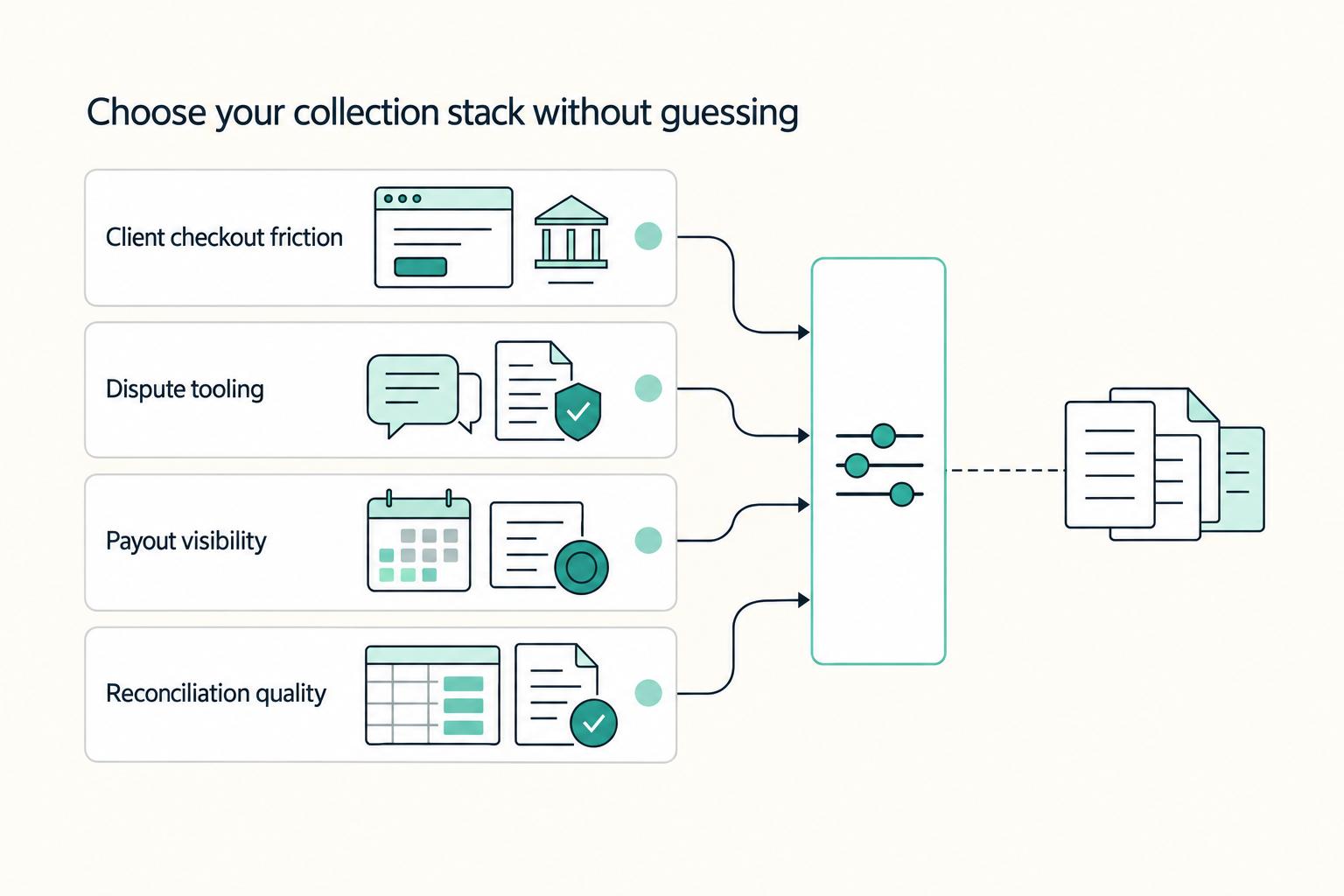
Should Your Freelance Business Accept Credit Cards?
Offer card payments, but stay in control of how money reaches you. The goal is not a smoother checkout screen. It is predictable cash you can use to run the business.
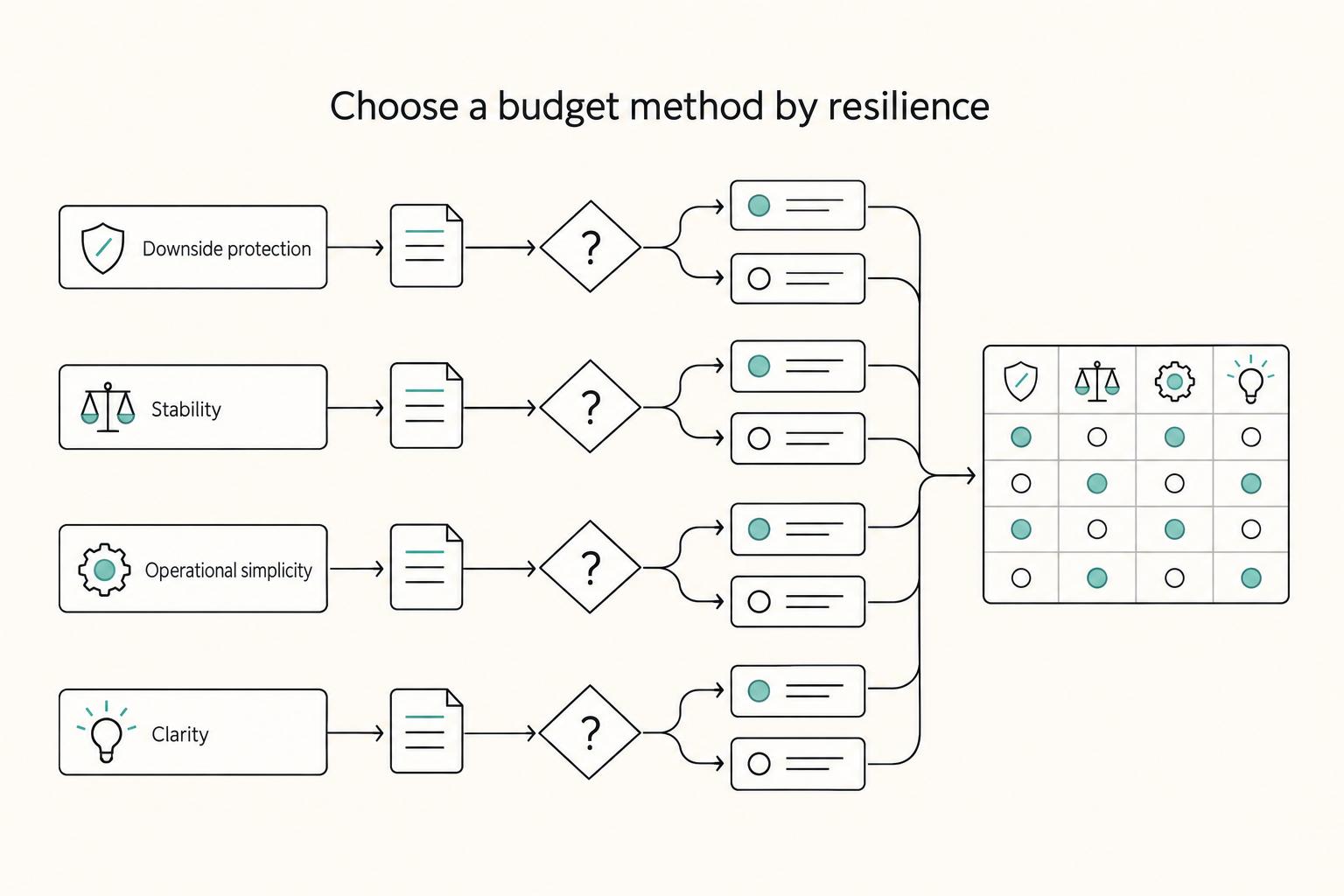
The Best Budgeting Methods for People with Irregular Income
Budgeting with irregular income works better when you separate "money arriving" from "money you're allowed to spend," then run the same transfer routine each cycle.
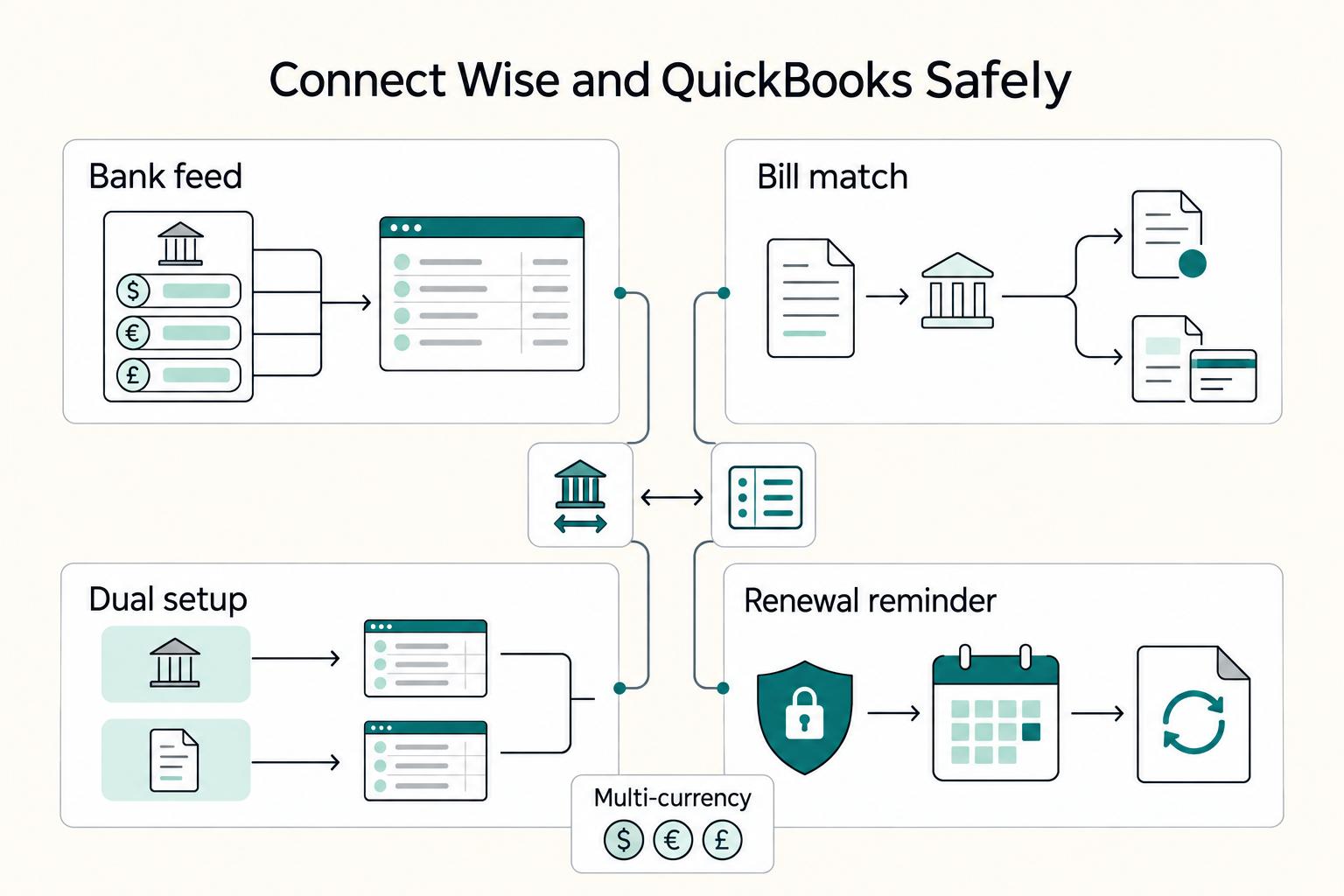
How to Connect Wise to QuickBooks for Automatic Reconciliation
**Use a risk-first Wise to QuickBooks setup to tighten transaction visibility and make reconciliation more predictable.**