
Quick Answer
Start by making written approval part of each material action, not a cleanup task after the fact. For a Delaware C-corp, your record should clearly show who can act, what was approved, when it became effective, and the terms tied to that decision, then link to the final documents. Use this whenever cash commitments, equity, or binding contracts change. For remote stockholder participation, follow § 211(a)(2) requirements for authorization and participant-verification procedures.
Your Delaware C-Corp is Official. Now, Don't Let It Fail.#
Your filing is done, but the company still needs the meeting mechanics it will run on. In practice, your bylaws and certificate of incorporation can set where stockholder meetings happen, and if they do not, the board sets that under § 211(a)(1).
That matters because undocumented decisions create avoidable confusion later. You may not be able to show what was approved, when it was approved, or which company rule controlled the decision. Meeting format and voting are a good example. Delaware allows flexibility for remote participation and voting, but only if the board authorizes it and sets procedures first.
| What incorporation gives you | What you still need to operationalize | Why it matters |
|---|---|---|
| A Delaware corporation | A clear meeting-location rule in the certificate, bylaws, or board determination (§ 211(a)(1)) | You need a concrete governing source for how meetings are set |
| The ability to hold stockholder meetings within or outside Delaware | An actual location designation when governing documents do not already provide one | The record should show who made the determination |
| The option to run stockholder participation remotely | Board authorization plus procedures under § 211(a)(2) | Remote participation and voting are conditional, not automatic |
One easy checkpoint to miss is remote participation. If you want it, the board must authorize it and the company must implement procedures, including a way to verify who is permitted to vote. A meeting link alone is not the full process under § 211(a)(2).
From here, the sequence is simple. Use the Foundation section to set your initial approvals, use Triggers to catch decisions that need formal action, and keep Toolkit close so you can document those actions while the details are still fresh. Related: Delaware C-Corp vs. Wyoming LLC: Choosing a US Business Entity.
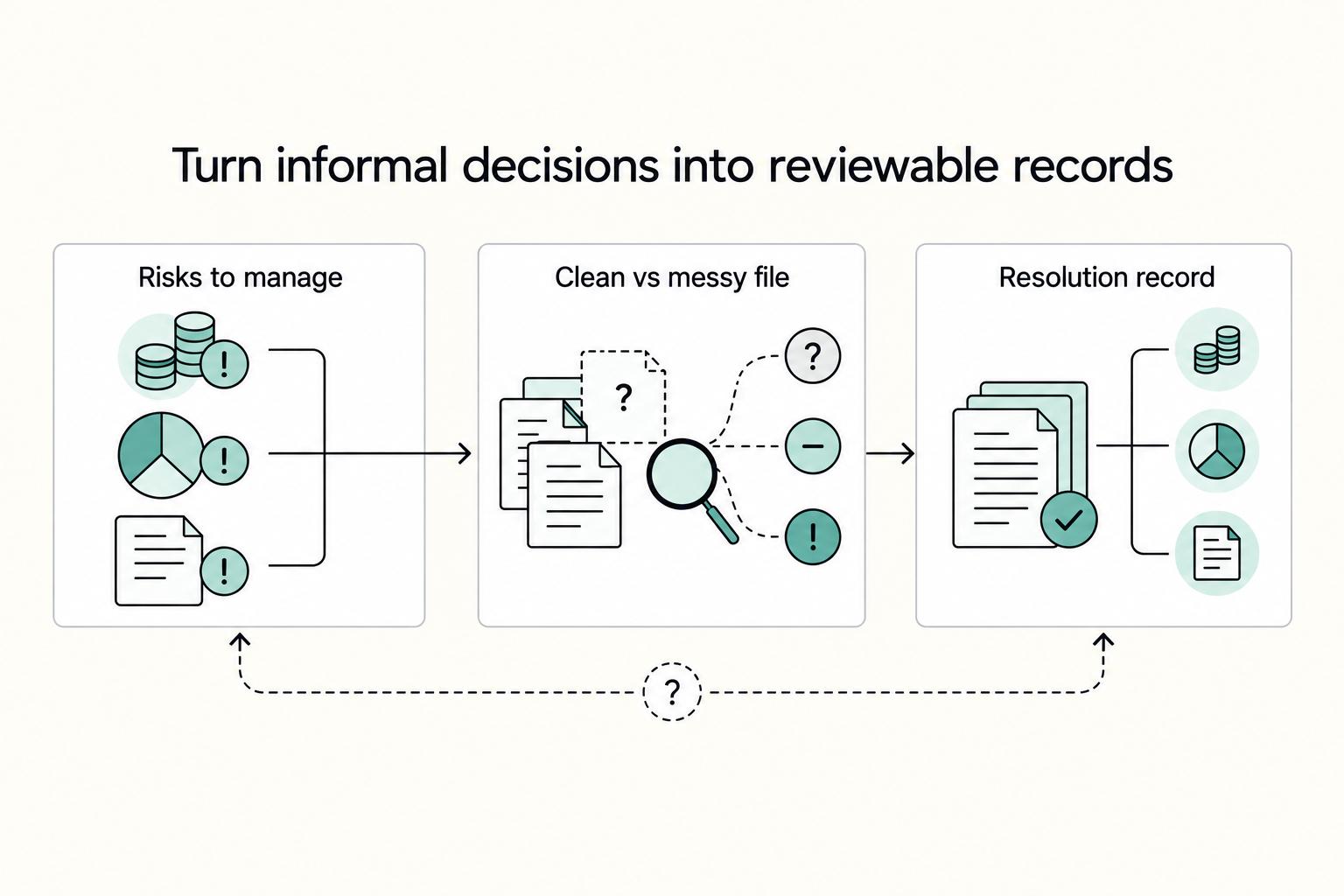
Why Your "Informal" Decisions Create Catastrophic Risk#
An "informal decision" is any material company action taken without clear written corporate approval. Treat documentation as an operating discipline, not a legal shortcut. If a decision changes money, ownership, or obligations, record it while the facts are still fresh.
As a founder, you may be acting both as an individual and on behalf of the company. Corporate formalities help keep those roles distinct in the record. One missing document does not decide a legal outcome by itself, but weak records can make authority and separation harder to show during review.
The risks to manage#
- Authority ambiguity: if a dispute or review turns on who approved a contract, payment, or equity action, missing records can make that harder to show.
- Ownership confusion: if equity records are unclear on recipient, terms, or timing, cap-table cleanup may become more complex.
- Transaction friction: diligence and internal reviews can take longer when approvals, dates, and supporting documents do not line up.
- Finance-process delays: if authority is unclear, counterparties may ask for repeated clarifications before moving forward.
What reviewers see in a clean vs messy file#
You do not need public-company complexity, but the review logic is similar. In public-company benchmarking, analysis relies on proxy disclosures plus organizational documents, such as charter and bylaw materials, governance principles, committee charters, and related policies, and checks whether the record is internally consistent.
| Review point | Documented decision | Undocumented decision |
|---|---|---|
| Verification effort | Approval trail is easier to check | Timeline and authority may need reconstruction |
| Record consistency | Documents support each other | Gaps and contradictions trigger follow-up |
| Response quality | You can answer with records | You rely on explanations and later cleanup |
What to capture in each resolution#
For major approvals, capture at least who is authorized or approved, what is approved, and the effective date used in your records.
| Action type | Include |
|---|---|
| Major approvals | Who is authorized or approved, what is approved, and the effective date used in your records |
| Equity-related actions | The recipient, amount or core terms, and the related documents |
| Operational actions | The institution or transaction, the authorized person by name and title, the scope of authority, and any limits |
For equity-related actions, include the recipient, amount or core terms, and the related documents. If a jurisdiction-specific detail matters, verify it before you finalize the record.
For operational actions such as account opening or major contracts, record the institution or transaction, the authorized person by name and title, the scope of authority, and any limits. Before you sign, do a consistency check so names, titles, dates, and amounts match the underlying agreements and forms.
Part 1: The Foundation (Your First 72 Hours)#
The first job is not volume. It is getting your core governance documents organized so anyone reviewing the company can see which baseline rules and disclosures are in place. This is an operating checklist, not a statutory deadline.
| Item | What to do | Done when |
|---|---|---|
| Core governance set | Keep the Certificate of Incorporation, bylaws, and Corporate Governance Guidelines (CGGs) together as your base governance record | Each document version is identifiable and stored in one place |
| CGGs posting | Post the CGGs on the company website for shareholder review | The posted CGGs match your current internal version |
| Shareholder-rights policy | Disclose the policy or explain non-adoption in your governance materials | Policy status is clearly disclosed or explained in your governance materials |
These three records do most of the early work. If they are clear and stored together, the rest of your governance file is much easier to maintain.
-
Assemble the core governance set. Keep the Certificate of Incorporation, bylaws, and Corporate Governance Guidelines (CGGs) together as your base governance record. Done when: each document version is identifiable and stored in one place.
-
Publish the CGGs for review. In the cited NYSE framework, CGGs are posted on the company website for shareholder review. Done when: the posted CGGs match your current internal version.
-
Use a disclose-or-explain approach on shareholder-rights policy. Companies are not required to include shareholder-rights information in CGGs, and that gap can weaken investor monitoring value. If a policy is not adopted, disclose that and explain. Done when: policy status is clearly disclosed or explained in your governance materials.
Mini-checklist for the governance record
- core documents: Certificate of Incorporation, bylaws, and CGGs are stored together
- website posting: CGGs are published and aligned with the current internal version
- disclosure clarity: shareholder-rights policy is disclosed, or non-adoption is explained
- version control: one current version/date is used consistently across the governance file
Complete these three records now and store them together. That gives you a clean base for the next step: documenting approvals each time a real business trigger appears.
Part 2: The Triggers (Your Ongoing Compliance Operating System)#
A useful trigger is any action that changes company cash, ownership, or legal obligations. That is the practical threshold. If the company is about to commit, pay, issue, transfer, borrow, sign, or update something official, document the approval while the terms are settled and easy to verify.
Treat this as an internal governance checklist, not a fixed statement of Delaware board-resolution requirements. Exact approval mechanics depend on your charter, stockholder agreements, and counsel.
Use this filter before you act. Ask:
- Does this commit company money, create debt, or change compensation?
- Does this alter the cap table, share rights, or who can sell shares?
- Does this bind the company to a contract, filing, or official change?
If any answer is yes, create a written approval record as part of that action, for example, a board consent where your governing documents require it. The goal is not ceremony. It is a clean approval trail that matches what the company actually did. For each approval record, capture at least:
- What action is approved: the specific account, loan, issuance, transfer, contract, update, or purchase
- Who is authorized: the named officer, director, or signatory
- Key terms: dates, amounts, counterparties, share counts, price, duration, restrictions, or termination terms
- Where records are stored: your governance repository, for example, minute-book records, plus attached or referenced support documents
- Any detail that needs verification before final copy: especially if company-specific or jurisdiction-specific wording matters
| Action taken | If documented | If undocumented |
|---|---|---|
| Open bank account or credit line | Authority and key terms are clear in one place | Authority and terms may need reconstruction later |
| Issue shares, approve transfers, or repurchase equity | Cap table can be tied to signed approvals and deal documents | Ownership history can become unclear or contested |
| Sign major contract or lease | Record shows who bound the company and on what terms | You may need to rebuild authority history under pressure |
| Change registered agent or official address | Internal governance record matches current company profile | Company profile and minute book can drift out of sync |
Financial triggers#
Money commitments need a record before they become memory problems. Use a written approval record when the company takes on a meaningful financial obligation, not only when cash actually leaves the account.
- Banking: record the institution, account or facility type, and the exact authorized signer.
- Debt: record the lender, principal, repayment terms, and signing authority.
- Compensation: record the role, pay basis, effective date, and who can approve or process changes.
Minimum fields each time are the action, authorized person, key terms, record location, and any item you still need to verify before finalizing the document.
Equity triggers#
Ownership decisions deserve tight recordkeeping because they affect the cap table, rights, and future diligence in one shot. Keep the approval specific and tie it to the supporting deal documents.
- Issuance: recipient legal name, class and number of shares, consideration, effective date, and supporting documents.
- Option pool or reserved equity: number of shares reserved and the governing documents.
- Repurchase or transfer: current holder, shares affected, price or formula, and any continuing restrictions.
In private companies, shares are often illiquid and transfer-restricted, so sale rights usually come from express contract terms. If you use a Voting Agreement, check it before you approve share sales or transfers. Those terms may include drag-along rights, where specified holders can require others to join a third-party sale on identical terms, and tag-along rights, where minority holders can participate when a defined group sells. In some deal structures, drag-along mechanics are drafted to operate through contract rights rather than separate board involvement. Keep the approval record, cap table, and investor agreements aligned. In practice, ambiguous drafting here is a common source of disputes.
Operational triggers#
Operational commitments are easy to under-document because they feel routine, but they still matter when they materially bind the company. Capture the exact transaction and the authority to sign it.
- Major contracts: counterparty, agreement name, effective date, core terms, and signing or amendment authority.
- Leases and significant asset purchases: premises or asset, payment terms, duration, and signer authority.
- Registered agent or official address updates: the exact change plus supporting filing or provider confirmation.
Minimum fields each time are the action, authorized person, key terms, record location, and any item that still needs verification before the final version is signed.
Part 3: The Toolkit (Your Solo Founder Resolution Library)#
This section is about execution. Once you know a decision needs documentation, the next question is how to record it cleanly with the least friction.
The current grounding for this section does not include Delaware corporate-law material, so treat it as an internal documentation workflow, not legal guidance.
Written consent first if terms are settled#
A written consent can work well when the terms are settled and the final paperwork is ready. In this playbook, "UWC" simply means your written approval format: a dated record of the decision, signed by the people who must approve it, with the final supporting documents attached.
Use a formal board meeting when discussion still matters. If the terms are moving, the tradeoffs are still being worked through, or you want the file to reflect that deliberation happened before approval, a meeting record may be the better fit. This is a workflow choice, not a Delaware-law rule. Before you finalize anything, verify current Delaware authority and any company-specific requirements in your bylaws and governing documents.
Do you need a resolution now?#
Use this as an internal decision rule, not a legal determination. If the answer is yes, document the action now while the details are current.
| Area | Yes | No |
|---|---|---|
| Equity | You are issuing, transferring, repurchasing, or otherwise changing ownership terms | You are only drafting private planning notes |
| Banking or debt | You are opening or changing accounts, signers, or financing terms | You are only comparing providers |
| Contracts or commitments | The company is about to be bound to terms, payments, or obligations | A draft exists, but no one is authorized to sign yet |
| Governance or company-profile changes | Authority, officer roles, or official company details are changing | Internal reminders that do not change obligations or authority |
The anatomy you actually need#
The practical test is simple: could a third party look at the file and tell what was approved, by whom, when, and with which final documents? If not, the resolution is still too vague.
| Practical element | Why it matters | Common founder mistake |
|---|---|---|
| Clear title | Makes retrieval and review faster | Generic names like "Board Consent.pdf" |
| Exact action approved | Shows what was actually authorized | Vague phrasing that hides scope |
| Named authorized person | Clarifies who can act for the company | Missing signer name or role |
| Key terms | Helps avoid ambiguity later | Omitting core terms from the final record |
| Effective date and signature | Anchors timing and finality | Unsigned files or unclear dates |
| Attachments/storage reference | Links approval to final evidence | Missing final attachment set |
For a bank-account approval, keep the draft plain and complete. Identify the institution, the account or facility type, the authorized signer, and where the final paperwork will be stored. Before you sign, run one consistency check across the company name, signer details, dates, and attached files.
E-signatures and software should protect record integrity#
Software helps only if the record stays coherent after signing. Store the signed resolution, the final attachment set, and the related evidence together, with consistent names and explicit versions such as date, action, and status. If a document changes after approval, save a new version instead of overwriting the old one.
The main failure mode is version drift across approvals, attachments, and operating records. A simple folder structure by year and action type, along with stable naming and preserved prior versions, makes the file easier to review and easier to defend in diligence.
Your Corporate Shield is Now Active#
The next step is simple: keep your governance file current as decisions happen, then store signed approvals with final attachments so they are easy to retrieve later. This is not a one-time setup task. It is an operating habit.
Use the same three-part loop going forward. Foundation: make sure your core setup records are complete and signed. Triggers: pause at major decisions and document approval before the company acts. Toolkit: keep reusable documents and filing habits ready so you are not rebuilding the process under pressure.
When records are complete, a reviewer can follow who approved what, when, and with which final document. When records are missing, the review can turn into backfill requests, follow-up questions, and cleanup.
A good quality check is traceability: can someone find a decision quickly without guessing? One example shows the value of indexing, with a dated meeting, stated place and time, and an index entry like "Dolores Smith 10." Treat this as a recordkeeping pattern rather than a legal rule. Your records do not need that level of formality, but the approval, signer, and final attachment should be easy to locate.
- Maintain a current minute book or equivalent central records folder.
- Document major decisions promptly, and file signed approvals with final attachments.
- Organize records by date and topic so future review does not depend on memory.
Run governance as routine business discipline, not as something you only think about at incorporation. For a related checklist, see Delaware C-Corp Franchise Tax: Filing Methods, Deadline, and Annual Checklist.
When you are ready to run this governance workflow in live operations, contact Gruv to confirm coverage and controls for your specific markets and payout flows.
Frequently Asked Questions
What is the difference between board minutes, a board resolution, and unanimous written consent?
This Delaware excerpt does not define these record types or tell you when one must replace another. From this excerpt alone, those differences are not established. What it does address is stockholder meeting place and remote participation under § 211(a). | Record | Use it when you need | What this excerpt confirms | |---|---|---| | Board minutes | Not established in this excerpt | Not defined here | | Board resolution | Not established in this excerpt | Not defined here | | Unanimous written consent | Not established in this excerpt | Not defined here | | Stockholder meeting record | Confirmation of meeting place or remote participation format | Meetings may be inside or outside Delaware, and remote participation depends on board authorization and procedures under § 211(a) |
Do I need a lawyer to write every board resolution?
There is no fixed legal line for when counsel is required, so whether you need a lawyer for every resolution isn't settled by a single rule. What it does confirm is that remote stockholder participation requires board authorization and board-set procedures, plus reasonable measures to verify each person deemed present and permitted to vote.
What are the most common mistakes when writing a founder stock resolution?
This guide does not provide a Delaware founder-stock checklist, so common mistakes for founder stock resolutions are not established.
How often should I be creating board resolutions?
There is no required calendar cadence for board resolutions, so frequency isn't fixed by a general rule. For stockholder meetings, it does state that meetings may be inside or outside Delaware, and if your certificate or bylaws do not designate place, the board determines it; the board may also choose a remote-only meeting under § 211(a)(1).
Where should I store my signed board resolutions?
This guide does not require a specific digital minute-book format, backup schedule, or access-control model, so storage method is not established. For remote stockholder meetings, it does require board authorization and procedures, and reasonable measures to verify that each person deemed present and permitted to vote is a stockholder or proxyholder under § 211(a)(2)(i).
Try a related tool
Researched and edited by the Gruv editorial team. Gruv builds cross-border billing, payouts, and finance-operations software for global businesses.
Sources
Educational content only. Not legal, tax, or financial advice.
Related Posts

Sole Proprietorship vs LLC for Global Freelancers in 2026
For most freelancers in 2026, the practical default is still simple: use the simplest structure you can run cleanly, then formalize when risk actually rises. If your work is still in validation mode and the downside is contained, a sole proprietorship is often the practical starting point. When contract exposure, delivery stakes, or dispute risk starts climbing, forming an LLC deserves earlier attention.

Delaware C-Corp vs Wyoming LLC for Your Next Growth Stage
Choosing between a Delaware C-Corp and a Wyoming LLC is a stage-fit decision, not a state popularity contest. For `delaware c corp vs wyoming llc`, the real question is which structure you can run cleanly over the next 12-24 months while keeping room to scale.
Bank Secrecy Act Fintech Decisions That Prevent Review Delays
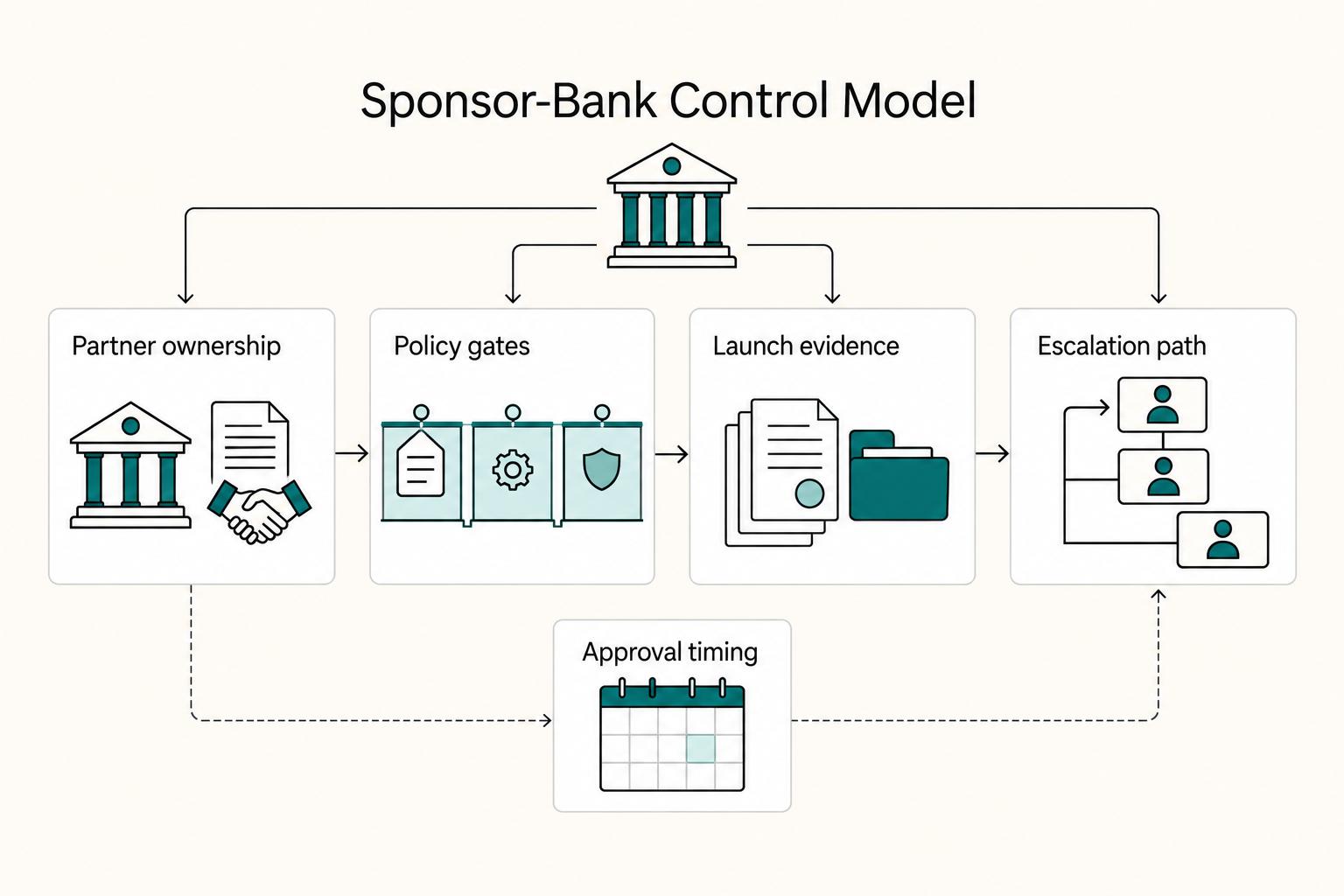
Start with one decision: choose the control model you can prove before launch. Know what to put in place before go live, what a bank partner will likely ask for, and which proof points help avoid long review loops.