
Quick Answer
Successful backcountry cooking on a multi-day hike starts with choosing one simple meal strategy and planning for water, fuel, cleanup, and no-cook backups. Build a day-by-day menu matrix, portion food by meal, and pack a backup stack with one no-cook lunch, one no-cook dinner, and one high-calorie snack reserve. The goal is dependable fuel with low-friction execution when you reach camp tired.
Start here and choose your backcountry cooking approach#
Backcountry cooking is a planning problem before it becomes a food problem. Start by thinking about the tradeoffs you will actually feel on trail: carried weight, water needs, fuel use, cleanup, and how much effort you can handle when you reach camp tired.
That matters because food mistakes tend to show up when your margin is thinnest. If you underfuel, you risk the classic "bonk," meaning a sudden drop in energy from depleted glycogen. If you pack food that does not match your trip, meals can feel harder than they need to when you are cold, wet, or simply done for the day.
What you are really deciding#
On a multi-day hiking trip, you are building a small field food system. The goal is not gourmet variety. It is dependable fuel and low-friction execution. A solid trail plan usually includes nutrient-dense foods and a mix of carbohydrates, fats, and protein-heavy options, because long days outside require both hydration and enough usable energy.
The easiest mistake is choosing meals in isolation. A dinner that looks great at home may be a poor fit on trail if it does not match your water, fuel, or cleanup tolerance. The same goes for fresh foods. Some fresh add-ins can make sense, especially pre-chopped vegetables like carrots, celery, apples, or sugar snap peas. They can add nutrients without much weight penalty.
Use a decision-first approach#
This guide is built for busy people who do not want to improvise hungry at camp. Instead of recipe hunting, you will make a few decisions in order:
- choose one default meal strategy for this trip
- prep in stages instead of doing everything the night before
- pack by meal event so food is easy to find and hard to mess up
- keep a fallback option for when your stove, time, or energy runs short
Before you shop, do one blunt check: make sure every day has enough fuel for long movement, and every dinner is realistic for your water, fuel, and cleanup tolerance. A clear red flag is any meal you have never tested, cannot portion quickly, or would not want to make in bad weather.
What you will leave with#
By the end, you will have three working artifacts you can reuse: a strategy decision table, a day-by-day menu matrix, and a stove-failure fallback checklist. Those are the pieces that keep you from overbuying, underpacking, or ending up with a food bag full of disconnected ideas.
If your route and loadout are already set, pair this with How to Plan a Multi-Day Hiking Trip so your food choices match your actual days, pace, and pack constraints. That link between route, load, and meals is what makes the rest of this guide useful instead of theoretical. Related: How to Use Gaia GPS for Backcountry Navigation.
Build the mental model before you buy ingredients#
Decide your system first, then your meals. In backcountry cooking, you are choosing the full setup you can execute when tired: meal format, water demand, fuel use, cleanup, and storage. Backpacking meals are the individual items inside that system.
DIY dehydrated food works best when you want control over what you eat and how you portion it. With a dehydrator, meals can be tastier, more nutritious, and more varied, but they do not guarantee savings.
Use caloric density as a quick reality check before you commit to a recipe. One field-tested example (Peanut Noodles) lists 809 calories at 5.7 oz, which is 141 calories/ounce.
DIY has real tradeoffs:
- You need a dehydrator, prep time, and time to test rehydration.
- Cost can swing either way.
- One cited DIY dinner is $1.83 per person, per meal, but postage and electricity can reduce or erase savings.
Keep one operating rule: if a dinner needs more water, fuel, or cleanup than your camp setup can handle comfortably, simplify it before the trip.
Compare meal strategies and choose one default for this trip#
Choose one default strategy before you shop, then repeat it across most dinners. For most schedules, freeze-dried or powdered meals are the simplest default because they keep carried weight low and fit a boil-and-rehydrate workflow. If you have prep time, DIY dehydrated meals can work well, but only after you portion and test them.
| Strategy | Prep time at home | Carried weight/bulk | Perishability management | Water demand | Cleanup/trash load |
|---|---|---|---|---|---|
| Freeze-dried or powdered meals | Low | Low | Low | Higher (rehydration) | Lower if portioned well |
| DIY dehydrated meals | Higher | Low to medium | Low | Higher (rehydration) | Low to medium |
| Fresh-first hybrid | Medium | Higher | Higher | Low to medium | Medium to high |
Use this as a decision screen, not a promise. Prioritize "bang for the pound": pick meals that deliver strong calories for the weight or bulk you carry. Keep portions in serving-size sealable bags where possible, since that can reduce both carried packaging and trail trash.
Menu variety matters less than most people think. Trips longer than 2-3 nights are the exception, and even on longer trips repetition can still work because appetite usually rises. A small set of reliable favorites is often a better default than a large menu that adds planning overhead.
Before final packing, weigh one full day of food. A practical check is about 1-2 pounds per day; if you are above that range, review bulky extras, duplicated "just in case" items, and unnecessary packaging first.
Prep timeline that prevents last-minute mistakes#
The most reliable way to prevent last-minute mistakes is to split food prep into three passes: plan, organize, and verify. Keep decisions earlier and packing later so you are not improvising when tired or rushed.
Planning pass#
Build your hiking nutrition plan before the trip and map meals day by day. Treat this as a working draft you can test and adjust, since meal planning for backpacking takes practice. Focus on whether each meal works with how you actually cook in the field, then simplify anything that feels fragile.
Organization pass#
Use a dedicated pass to portion, label, and group food by day and meal. Clear groupings prevent the frustrating mess where food is packed but hard to find when you need it. Keep add-ins and backup options attached to the meal they belong to, not loose in your food bag.
Final pack check#
Your last pass should be about packing order and fallback options, not recipe changes. Stage meals so they are easy to pull at camp, and confirm each day still works if conditions, appetite, or fuel use shifts. Strong planning usually shows up as a smoother trip; weak planning usually shows up when you are already on trail.
This pairs well with our guide on A Guide to Leave No Trace Principles.
Build a menu matrix instead of collecting random recipes#
A menu matrix works better than a recipe pile because it shows, at a glance, what you will eat each day even when plans slip. Build one row per day with the same four slots: breakfast, trail lunch, dinner, and one emergency snack.
| Day | Breakfast | Trail lunch | Dinner | Emergency snack | Backup note |
|---|---|---|---|---|---|
| Day 1 | No-cook or low-fuel option | No-cook option | Planned dinner | Separate reserve snack | Cold fallback if cooking gets skipped |
| Day 2 | No-cook or low-fuel option | No-cook, no-refrigeration option | No-refrigeration option | Separate reserve snack | Backup meal from your own list |
| Day 3+ | Repeatable no-cook or low-fuel option | No-cook, no-refrigeration option | No-refrigeration option | Separate reserve snack | Backup meal from your own list |
Use one rule for every row: the day should still work if meals run late, you are low on energy, or you decide not to cook. If a row only works when everything goes right, it is not finished yet.
Keep substitutions inside the matrix#
Write replacements before packing night, not during it. If one planned meal is unavailable, your matrix should already point to another meal you have planned and are willing to eat. This keeps decisions simple when you are tired and helps avoid random add-ons that do not improve an actual meal.
Use no-cook options as part of the main plan#
No-cook meals are not only a backup lane. They are a practical default for day trips and multi-day trips, especially when you want nutritious, energy-rich food that you can prep ahead. Mark which options need no refrigeration so you can push them later in the trip with less friction.
Keep any fresh-food choice in one clearly limited slot#
If you want a fresh first-night meal, keep it in one labeled slot and avoid building later days around it. Treat it as a bonus, then transition to no-refrigeration meals for the rest of the plan so your matrix stays reliable.
Keep the document plain: one page, one row per day, one backup note per row. If you can scan it in ten seconds and still know what you will eat without cooking, the plan is ready.
Pack and store food so it survives transport and camp life#
Once your menu matrix is done, treat packing as an access-and-protection task, then switch to strict storage habits in camp. You have to carry every ounce, so bulky packaging and loose extras usually create more problems than they solve.
Pack for access, not grocery logic#
Keep same-day food easy to reach so you are not unpacking everything at camp. Group meals in a way that reduces digging, crushing, and spills, and give fragile items enough protection to survive transit.
A simple check helps: if your setup creates repeated retrieval trips or leaves key items hard to find, repack before you leave. A cleaner layout is usually more reliable than a clever one.
Repack small ingredients by meal use#
Portion powders and condiments by meal instead of carrying one large shared bag. That lowers waste, reduces overpour, and makes each meal easier to execute when conditions are rough.
Label portions clearly so you can confirm what belongs to each meal at a glance. The goal is fewer decisions and less mess when you are tired, cold, or in bad weather.
Treat camp storage as a wildlife issue, not just tidiness#
At camp, storage rules are non-negotiable: do not keep food, trash, or scented products in your tent, and do not leave food unattended. Scented products include aromatic toiletries, not just food.
This protects both you and wildlife. Animals can chew through tents or packs to reach food, and when bears become habituated to human food, the outcome can be serious. Before sleep, do a full check that all food, trash, and scented items are secured outside the tent.
Run camp cooking in a fixed order to save fuel and cleanup#
A fixed dinner routine usually works better than improvising each night: set up first, cook second, clean while food rests. The goal is to avoid stop-start resets once the stove is on.
Use the same sequence each time:
- Get your dinner water ready first.
- Stage the full meal before ignition (packets, add-ins, utensil).
- Boil only the water you need.
- Rehydrate or heat.
- During the wait, wipe the pot, seal scraps, and store scented items.
For stove setup, treat category guidance as a starting point, not an absolute rule: canister systems are often the easier fit for lighter three-season trips, while liquid gas systems are commonly preferred in harsher winter conditions. Match your cooking complexity to the system and conditions you actually have.
For one-pot nights, keep your own order consistent so cleanup stays manageable. If weather or fatigue is high, downgrade to your fastest meal instead of forcing a complex cook. Before you settle in, do two checks: stage tomorrow's breakfast for quick access and confirm fuel status.
Handle failure modes before they happen#
Decide your fallback before dinner starts: if conditions worsen or your setup underperforms, switch to your no-cook plan immediately instead of troubleshooting longer.
| Situation | Immediate action | Backup note |
|---|---|---|
| Conditions worsen or your setup underperforms | Switch to your no-cook plan immediately instead of troubleshooting longer | Decide your fallback before dinner starts |
| Stove fails | Move straight to the cold meal you packed for that moment | Keep the backup stack where you can reach it quickly |
| You are not confident an item is still good | Discard it and use shelf-stable options | Freeze-dried meals |
| Before you leave the trailhead | Point to the exact bag you would use if the stove stopped working | Confirm everything inside can be eaten cold |
Treat failure prep as a normal part of trip planning, not an edge case.
If your stove fails, move straight to the cold meal you packed for that moment. Keep perishable add-ins conservative: if you are not confident an item is still good, discard it and use shelf-stable options such as freeze-dried meals.
Pack a simple backup stack per person where you can reach it quickly:
- one no-cook lunch
- one no-cook dinner
- one high-calorie snack reserve
Before you leave the trailhead, point to the exact bag you would use if the stove stopped working and confirm everything inside can be eaten cold. You might also find this useful: The Best Backpacking Stoves.
Wrap up with a simple decision and next step#
Choose your default strategy today: freeze-dried, DIY dehydrated, or hybrid, and plan everything else around that choice. Keeping one clear default makes food planning and packing decisions faster and more consistent.
Food issues usually start in planning, not at camp. The practical reminder is simple: both food type and food amount shape the trip. One hiker reported finishing a 62 mile section with leftover food and sore shoulders. Treat that as a reminder to avoid overpacking and mismatched meal choices.
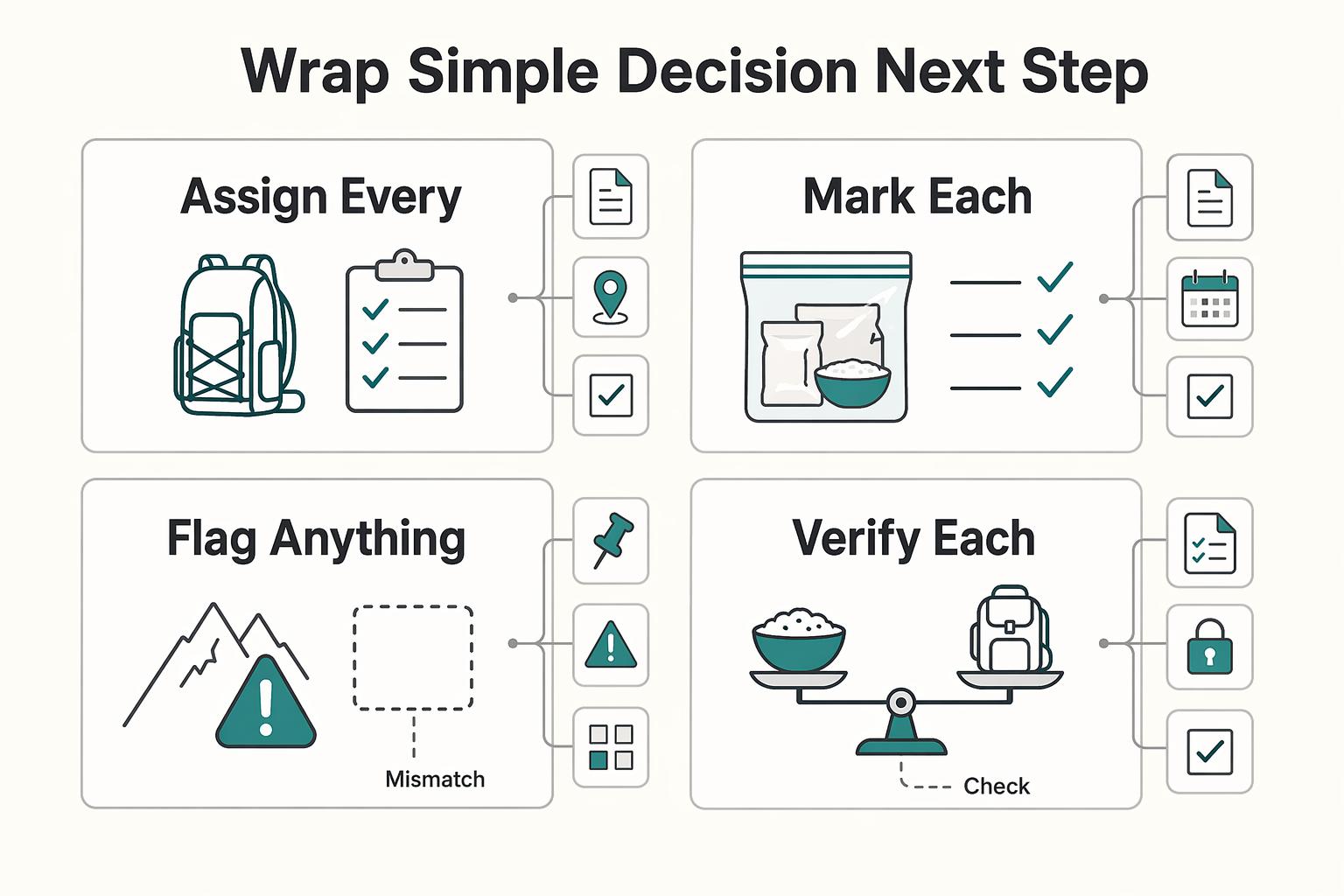
Before you shop, build a one-page menu matrix and backup checklist:
- Assign every item to a specific day and meal.
- Mark each dinner as hot, low-fuel, or no-cook backup.
- Flag anything that increases water, fuel, or cleanup needs.
- Verify each day includes at least one meal you can eat cold.
Keep your first trip conservative, then improve one variable at a time. If your route allows it, use shorter learning blocks first, then scale: one example describes learning on three to four days of food before stretching to seven to ten day carries.
Final practical step: lock your food list next to your packing list so weight, fuel, and meal complexity stay aligned. Use How to Pack a Backpack for a Multi-Day Hike as your companion checklist.
Frequently Asked Questions
What is backcountry cooking, and how is it different from just bringing freeze-dried meals?
Backcountry cooking is the full field food plan, not just the individual meals. It includes what you eat, how much water and fuel it needs, and what you do on no-cook nights. Freeze-dried meals are one tool inside that system, usually a pouch you rehydrate according to the package.
Should I choose freeze-dried meals, DIY dehydrated food, or a hybrid plan for a multi-day hiking trip?
If prep time is tight or this is your first serious trip, start with freeze-dried meals or a hybrid. Choose lightweight foods you already know you like. DIY dehydrated food makes sense if you want more control and can portion and test meals ahead of time. If you are buying far in advance, check shelf life because it varies by product.
How do I prep backcountry cooking in stages if I only have evenings free before departure?
Split prep into three short sessions. First, sketch your meal plan, include no-cook meals, and do a calorie sanity check against the rough range of 2,500 to 4,500 calories per person per day. Next, portion dinners and add-ins by meal. Last, stage food by day and verify that every dinner has a no-cook backup and every breakfast has a low-fuel fallback.
What are the easiest ways to add protein and calories without making camp cooking complicated?
Use simple add-ins with meals you are already carrying instead of building extra recipes. Keep choices simple, lightweight, and familiar. A practical formula is one main meal plus one easy add-on. If an ingredient adds prep time, fuel use, or cleanup, skip it.
What should I do if my Jetboil fails or I cannot make a fire?
Switch immediately to the no-cook backup meal you packed. Do not spend more time troubleshooting while you get colder, wetter, or more depleted. If food safety is uncertain, discard that item and use shelf-stable backpacking food.
How can I reduce cleanup time and water use during outdoor cooking?
Choose pouch meals, no-cook lunches, and simple dinners that rehydrate. Check the package before camp so you know the exact water amount, then boil only what you need. This cuts extra water and fuel use caused by meals that are more complex than your camp setup can support.
Try a related tool
Researched and edited by the Gruv editorial team. Gruv builds cross-border billing, payouts, and finance-operations software for global businesses.
Sources
Includes 4 external sources outside the trusted-domain allowlist.
- congress.gov/event/117th-congress/house-event/LC66722/texttrusted
- epa.gov/system/files/documents/2022-05/Pebble-Deposi...trusted
- sos.ms.gov/ACProposed/00018454b.pdftrusted
- weblink.auburnwa.gov/External/DocView.aspxtrusted
- andrewskurka.com/backpacking-dinner-recipe-peanut-noodlesexternal
- andrewskurka.com/backpacking-meal-recipes-case-for-fewer-favo...external
- backcountry.com/bulletin/backpacking-meal-planning-basicsexternal
- backcountry.com/bulletin/canister-or-liquid-gasexternal
Educational content only. Not legal, tax, or financial advice.
Related Posts

The Best Travel Backpacks for Digital Nomads
Start by ruling out bad fits, not by chasing a universal winner. If a bag does not match how you move, how you work, or what you can comfortably carry, drop it early. That matters far more than one extra pocket or a slick product page.
How to Plan a Multi-Day Hiking Trip
If you want to plan a multi-day hiking trip with fewer avoidable mistakes, treat it like something you build on purpose, not something you improvise the night before. By the end, you should have a practical phase-by-phase plan and a checklist mindset you can use right away.
How to Pack a Backpack for a Multi-Day Hike
If you want to pack a hiking backpack without constant repacking on trail, the work starts before anything goes into the bag. Define the trip first. Then match gear to functions. Then place each item by access needs and load balance.