
Quick Answer
An LLC annual report is a required state filing that keeps your entity record current and helps maintain active or good standing status. It is separate from tax filings and from licenses or permits. Missing it can move your business into late or delinquent status, create friction with financing or licensing, and, if not cured, lead to administrative dissolution.
Treat your annual report as recurring compliance maintenance#
Treat your LLC annual report as recurring compliance maintenance, not one-time formation paperwork. It keeps your state record current, can support active or good-standing status, and sits on a separate track from your tax filings. If you treat it like setup paperwork you can ignore, you increase the chance of delays right when the business needs to move. Three terms matter here:
- Corporate veil: the liability boundary between you and the LLC. Courts generally presume that boundary holds, but standards for setting it aside vary by state.
- Good standing: your entity is current on required state filings and fees, and the state can often issue a certificate confirming that status.
- Administrative dissolution: a state compliance action when an entity stays noncompliant past the allowed cure period.
That is why timing matters. In Washington, missing the annual report due date can move an entity to delinquent status and may lead to administrative dissolution. Domestic entities there have 120 days from notice to submit a past-due report. North Carolina law also ties dissolution risk to an LLC not delivering its report by the 60th day after it is due. Treat filing readiness as a go or no-go check before you:
- apply for financing or close a loan
- renew licenses or complete registrations that require proof of status
- bid on certain state contracts or enter deals where a certificate of status may be requested
| Checkpoint | Filed on time | Filed late or missed |
|---|---|---|
| State status | More likely to remain active and in good standing | May show delinquent or other noncompliant status |
| Growth actions | Easier to provide proof when a bank, agency, or counterparty asks | Financing, licensing, or contract steps can stall if proof is required |
| Your records | Receipt, confirmation page, and any certificate saved | You may need cure filings and status verification before moving forward |
Before you move on anything important, confirm your due date, current status, and filing cadence on your state's official site. Then save proof right after filing. Rules vary by jurisdiction. Washington allows filing up to 180 days early, New York uses a biennial statement, and Pennsylvania moved most domestic and foreign filing associations to annual reports beginning in 2025. Next, turn that into a repeatable routine.
If you want a deeper dive, read Sole Proprietorship vs. LLC: The Definitive Guide for Global Freelancers.
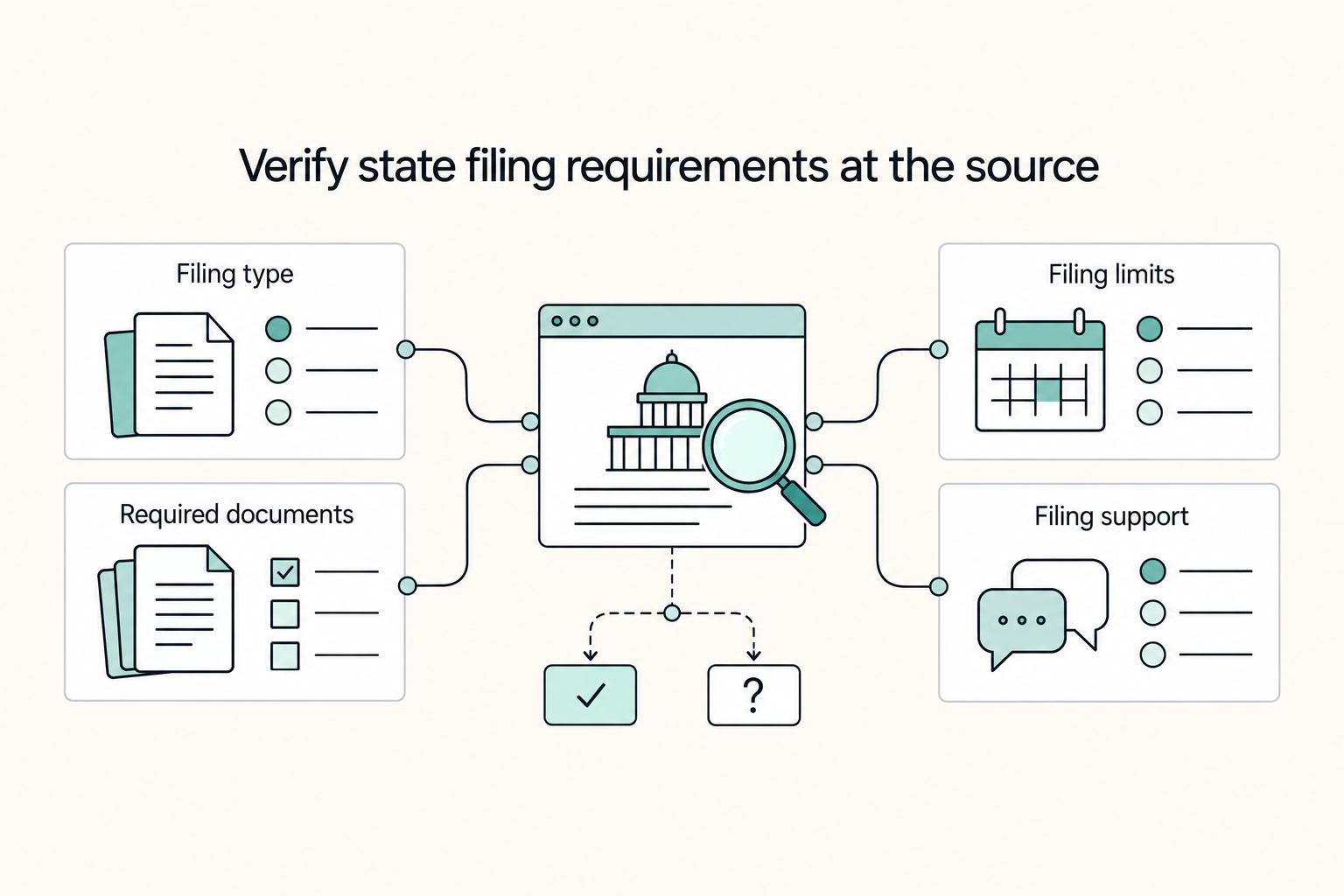
Verify your requirements on your state filing portal#
Start with one habit: verify your requirements on your state filing portal before every submission. Once you confirm the exact filing name, timing rule, and fee model for your state, the task is usually straightforward.
Know the filing you are actually making#
An annual report (or similarly named periodic filing) is a required state filing used to keep your LLC active and typically in good standing. Good standing means the state record lists your entity as active and in good standing.
| State | Filing label | Cycle |
|---|---|---|
| California | Statement of Information | Within 90 days, then every two years |
| New York | Biennial Statement | Every two years |
| Kansas | Information Report | Every two years |
States use different labels and cycles. California uses Statement of Information (Form LLC-12), New York requires an LLC Biennial Statement every two years, and Kansas uses an Information Report every two years. Different names, same job: keeping the state record current.
Your registered agent is the person or company designated to receive official legal and state paperwork for the LLC. If that contact information is outdated, important notices can be missed.
| What varies | Common model | What to confirm on your Secretary of State portal |
|---|---|---|
| Filing frequency | Annual, every two years, or another periodic rule | Confirm the current filing frequency rule on your Secretary of State portal |
| Deadline model | Fixed date, anniversary month/date, or initial filing plus recurring cycle | Confirm the current filing deadline on your Secretary of State portal |
| Fee model | Flat fee, late fee, or different fees by entity type or filing method | Confirm the current fee model on your Secretary of State portal |
Keep this verification habit even when you know the general rule. For example, New York's online filing requires the exact entity name and DOS ID number. Washington also allows filing up to 180 days before the expiration date.
Pull the right documents before you log in#
Do not rely on memory. Open your source documents first:
- Exact legal entity name and state ID number from prior state records or formation documents
- Principal office and contact details from current internal records
- Registered agent name and street address from your agent agreement or formation records
- Officer or equivalent details your state requests
- Nature-of-business description if the form requires it
- Most recent filed report, and any amendments, to confirm consistency
Before you pay, compare entries line by line against your current records. After filing, save the confirmation page, receipt, and final PDF together.
Know what this filing does not do#
This filing maintains your state entity record. It does not replace federal or state tax filings. IRS LLC tax treatment is a separate track.
| Item | How the article classifies it | Key note |
|---|---|---|
| Annual report or similar periodic filing | State entity record maintenance filing | Used to keep your LLC active and typically in good standing |
| Federal or state tax filings | Separate track | IRS LLC tax treatment is separate |
| Business licenses or permit renewals | Separate requirements | Can come from different agencies based on your activity and location |
It also does not replace business license or permit renewals. Licenses and permits are separate requirements that can come from different agencies based on your activity and location.
Decide whether to self-file or use outside help#
Self-filing can be practical when your records are current and someone internally owns the compliance admin work. State portals support direct filing, and some states allow an owner to serve as registered agent if qualified, for example, Virginia.
Using a third-party registered-agent or compliance provider is also an allowed option in some states, including Virginia. Either way, review the data before filing and verify post-filing status on the state portal. Related: The 'Profit First' Method Part 2: Setting Up Your Bank Accounts.
Make the filing hard to miss and easy to prove later#
Once you know your state rule, the real work is operational. Make the filing hard to miss, hard to submit incorrectly, and easy to prove later. This three-step routine does that.
Put deadline control in one dedicated compliance process#
Put deadline control in one dedicated compliance process, not in memory. State obligations vary. Florida requires an annual report to maintain active status and lists May 1, 2026 as the deadline before a $400 late fee. Pennsylvania LLCs file between January 1 and September 30 with a $7 fee. Delaware LLCs do not file an annual report but still owe a $300 annual tax by June 1.
| State | Requirement | Timing or fee |
|---|---|---|
| Florida | Annual report to maintain active status | May 1, 2026 deadline before a $400 late fee |
| Pennsylvania | Annual report | File between January 1 and September 30; $7 fee |
| Delaware | Annual tax, not an annual report | $300 annual tax due by June 1 |
Build reminders only after you verify the current rule on your state portal.
- Create one calendar entry for the exact state obligation and link the official filing portal.
- Set reminder intervals only after the official due date is verified.
- Add a second internal owner check even if a registered agent or service is involved.
- Reconfirm the due model each year before filing.
Keep the redundancy on purpose. For example, Virginia sends annual report notices to the registered agent two months before the due date, but you should still maintain your own controls.
Pull your data from source records before you file#
Many filing mistakes come from stale entity details, not from the form itself. Before you open the filing screen, pull your data from source records and use portal prefill as a cross-check, not as proof.
| Item to verify | Best source document | What you are confirming | State portal cross-check |
|---|---|---|---|
| Exact legal entity name | Formation document or most recent accepted filing | Name, suffix, and entity type match exactly | Confirm prefilled name matches your source record |
| State ID / file number / DOS ID | Prior filing receipt, prior report, or state search result | You are in the correct entity record | Match on-screen ID to your saved records |
| Principal office address and contact email | Current internal company record | Address and email are current | Review prefilled contact fields line by line |
| Registered agent / registered office details | Agent agreement, formation record, or latest amendment | Correct agent name and physical street address | Review current registered office or commercial registered office provider details |
| Members, managers, officers, or equivalent | Internal governance records | Required names and roles reflect current structure | Confirm required fields align with your state form |
| Business description (if required) | Current business records and prior accepted filing | Description is current and consistent | Check whether older prefilled wording needs updates |
Do your final review on the submission screen, because that is the version that counts.
Close each filing cycle with a records routine#
Close each filing cycle with a records routine so proof is easy to retrieve. Save the confirmation artifacts immediately, since states can rely on receipt details to locate or reconcile a filing.
- Save the confirmation page, receipt, submitted PDF, and confirmation email the same day.
- Use one file naming format, for example
EntityName_State_FilingType_Year_YYYY-MM-DD. - Store everything in one permanent folder, such as
Legal > State Filings > [State] > [Year]. - Assign one primary owner and one backup owner for retrieval and annual review.
This helps when you need to show status during licensing, financing, or reinstatement-related events. If you need more detail on status documents, see What is a Certificate of Good Standing and When Do You Need One?.
Use a simple decision rule. Self-manage when you have one entity, stable details, and clear internal ownership. Delegate to a registered agent or compliance service when complexity rises, for example, multi-state exposure or frequent record changes. Delegation can improve execution, but accountability for filing and data accuracy remains with the business owner.
You might also find this useful: Can I Use a US-Based P.O. Box for My Foreign-Owned LLC?. If you are turning this filing checklist into a repeatable operating process, browse Gruv tools.
How a missed filing unfolds in stages#
A missed filing usually unfolds in stages, not all at once. First you become late, then your status can fall out of good standing, and unresolved noncompliance can end in administrative dissolution.
Late status#
Treat late status as a decision window, not a harmless delay. Your deadline passes, the report is still unfiled, and your state may assess a late fee or other penalty. Do not treat this as a standard national rule. Verify the current penalty model with your state filing office before using it in your checklist.
Do not assume "late" means you have plenty of time. In some states, this is a short warning phase before status consequences. In others, timelines are longer, and penalty models differ. Verify your entity's current record directly in the state business database.
Loss of good standing#
Once status drops, practical friction can show up quickly. If the issue continues, your entity may move into bad standing, inactive status, or a similar noncompliant label. In plain terms, your LLC is no longer current on a required state filing.
That status change can interfere with transactions that require current status documents. If a bank, lender, or counterparty asks for a certificate of existence, or a similar status document, defects can delay the process.
| Stage | Cash impact | Financing friction | Contract risk | Operational restrictions |
|---|---|---|---|---|
| Late status | Confirm the current penalty model with your state filing office | Usually limited at first, but can surface during diligence | Delays if current status proof is required | Filing remains open, but the clock is running |
| Bad standing | Past-due fees may continue where applicable | Harder to provide clean status documents for loans, banking, or onboarding | New deals or renewals can stall when active status is required | State record shows noncompliance |
| Administrative dissolution | Reinstatement may require missing reports, fees, and additional filings | Financing may pause until reinstatement is complete | Higher failure risk when legal status is impaired | Ordinary operations may be limited to wind-up activities, depending on state law |
Administrative dissolution#
Administrative dissolution is the state's formal escalation for unresolved noncompliance. It does not always mean your LLC instantly disappears for every legal purpose. In at least one state framework, a dissolved LLC continues in limited form and can still be involved in legal proceedings, but normal operations may be limited to winding up.
Keep the liability point precise: missing a report does not automatically create personal liability for every owner in every state and fact pattern. But once your entity is dissolved or operating outside normal authority, treat it as a higher-risk posture and get state-specific guidance before continuing normal operations.
Same-day triage when you discover the miss#
When you discover a miss, work from facts, not assumptions. Check your status in the state business search and save proof of what the record shows.
- Confirm exactly what is overdue: annual report, related fees, and whether multiple years are missing.
- File the overdue report if allowed, or confirm whether you must submit an application to reinstate with supporting documents.
- Pay delinquent filing fees and complete required missing-year filings.
- Save an evidence pack: status screenshot or PDF, state notice, submission receipt, payment confirmation, and any reinstatement approval.
If the record already shows dissolution, treat reinstatement as a separate process and verify the required submission path before you resume normal operations.
We covered this in detail in How to Properly Document LLC Meetings and Decisions.
Five repeatable actions for your recurring state filing#
You can delegate execution, but not responsibility. For your LLC's recurring state filing, executive control comes down to five repeatable actions: set the deadline, choose the filing path, verify details before submission, keep proof, and recheck status after filing.
"Good standing," or active status, is a record-status issue, not a vague legal slogan. It means your state record is current for that jurisdiction's recurring filing requirement. In Florida, the annual report maintains active status and is explicitly not a financial statement. In Texas, a Certificate of Fact - Status is evidence of existence or authority to transact business, not proof of complete tax, licensing, or litigation compliance.
Use this control sequence#
- Own the cadence: track your exact state cycle, since schedules differ. New York LLCs file a Biennial Statement every two years with a $9 fee, while California LLCs file a Statement of Information within 90 days, then every two years.
- Verify before you submit: confirm your entity details and registered agent information against the current state record. Some state systems warn that once submitted, a filing cannot be changed, removed, canceled, or refunded.
- Capture proof immediately: retain the receipt and filing confirmation in your compliance records.
- Recheck status: confirm the public entity record after filing, then review it on a recurring schedule.
Do not treat service offers or reminder notices as your only control. Virginia warns that solicitations can look official, can cost more than filing directly, and still do not guarantee acceptance.
Choose your filing model#
| Filing model | Best when | Watch-outs |
|---|---|---|
| Self-file | Your LLC details are stable and your state portal process is clear | You must verify every field and retain your own proof |
| Registered-agent add-on | You want operational help with timing and submission handling | Legal responsibility stays with you, and service pricing may exceed direct filing cost |
| Attorney or CPA support | Your filing overlaps with broader legal or tax record changes and you want a second review | Outside support does not guarantee state acceptance |
If your goal is stronger personal-asset separation, pair filing discipline with governance discipline: keep business and personal funds separate, retain confirmations, and document each recurring state filing.
For a step-by-step walkthrough, see How to Get a Registered Agent for Your US LLC.
When you want compliance-first money movement with traceable records and payout visibility, talk with Gruv.
Frequently Asked Questions
What should you do if you miss the deadline?
Check your state record the same day and confirm exactly what is overdue, including any missing reports or fees. File the overdue report if allowed, or verify whether reinstatement is required. Save your status screenshot, notice, receipt, and payment confirmation because late or delinquent status can progress to administrative dissolution if it is not cured.
Is an annual report the same thing as filing taxes?
No. An annual report is a state entity-record maintenance filing, while tax filings and tax payments follow IRS and state tax agency rules. It also does not replace business license or permit renewals, which are separate requirements.
Does missing one report mean you lose personal liability protection?
No. One missed report does not automatically create personal liability. The bigger risk is continued noncompliance that pushes the LLC out of good standing or into administrative dissolution. If the entity is inactive or dissolved, normal operations may be limited depending on state law.
How does reinstatement work if your LLC is already dissolved?
Reinstatement is the process used to return an administratively dissolved or revoked entity to active status. You typically clear overdue filings and fees, then submit the reinstatement filing your state requires. Confirm the timing window, eligibility, and required documents before you file.
Can your registered agent handle this for you?
Sometimes. A registered agent can receive official legal and state paperwork, and a third-party compliance provider may also help with filing. But responsibility for deadlines, data accuracy, and post-filing verification stays with the business owner.
Do all states require the same filing on the same schedule?
No. States use different filing names, timing rules, and fee models, and some require an annual report while others use a biennial statement or an annual tax. For example, Delaware LLCs owe an annual tax and do not file an annual report, while California and New York use different periodic filings.
Try a related tool
Researched and edited by the Gruv editorial team. Gruv builds cross-border billing, payouts, and finance-operations software for global businesses.
Sources
- businessexpress.maryland.gov/manage/maintain-good-standing-statustrusted
- corp.delaware.gov/alt-entitytaxinstructionstrusted
- dat.maryland.gov/businesses/Pages/Internet-Certificate-of-Sta...trusted
- dir.ca.gov/dlse/regulation_detail/FnLC/llc-12.pdftrusted
- dos.fl.gov/sunbiz/manage-business/efile/annual-reporttrusted
- dos.ny.gov/biennial-statements-business-corporations-an...trusted
- irs.gov/businesses/small-businesses-self-employed/ll...trusted
- irs.gov/businesses/small-businesses-self-employed/li...trusted
Educational content only. Not legal, tax, or financial advice.
Related Posts

Sole Proprietorship vs LLC for Global Freelancers in 2026
For most freelancers in 2026, the practical default is still simple: use the simplest structure you can run cleanly, then formalize when risk actually rises. If your work is still in validation mode and the downside is contained, a sole proprietorship is often the practical starting point. When contract exposure, delivery stakes, or dispute risk starts climbing, forming an LLC deserves earlier attention.
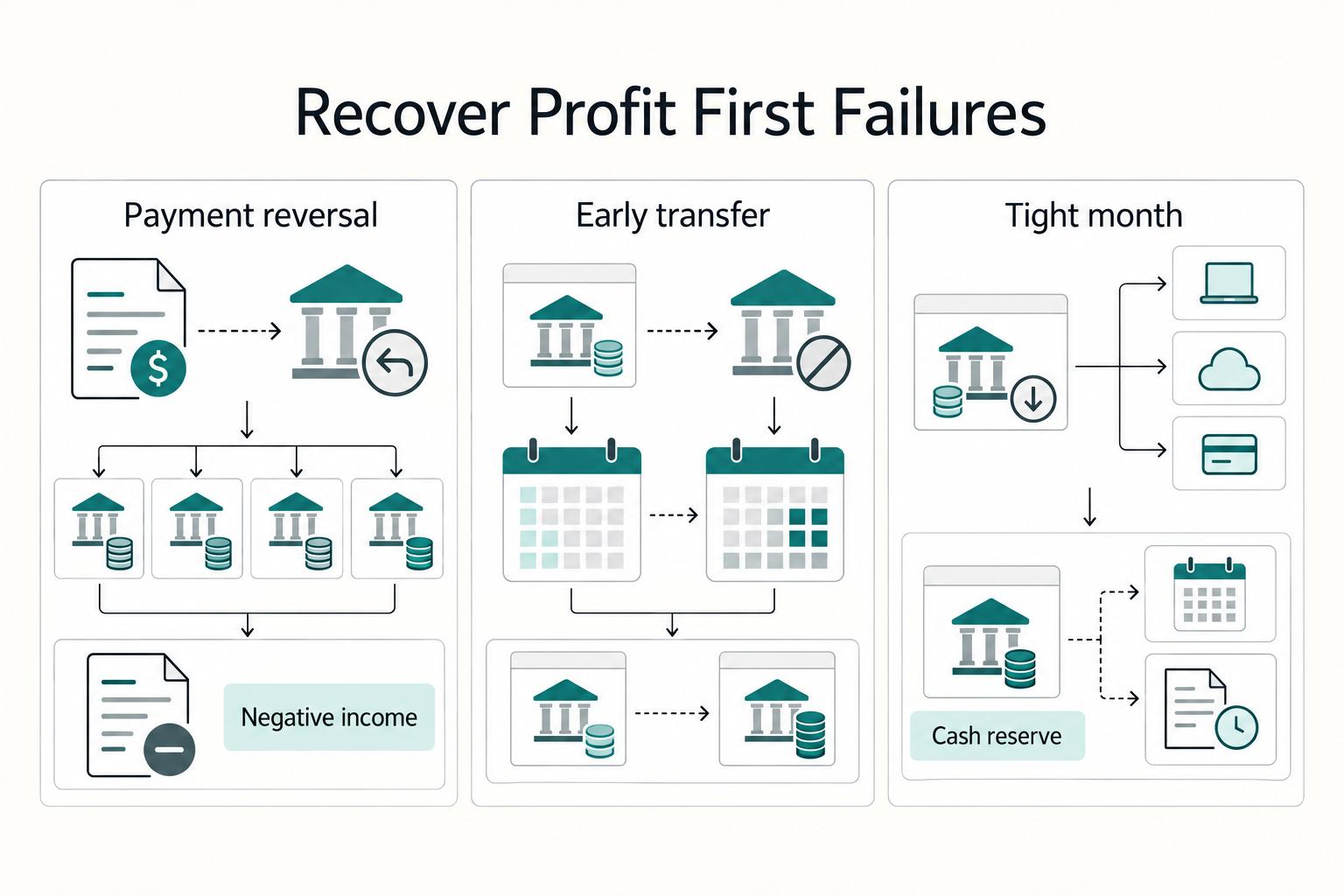
The 'Profit First' Method Part 2: Setting Up Your Bank Accounts
Most freelancers who try Profit First open a few extra bank accounts and call it done. That's the wrong move.
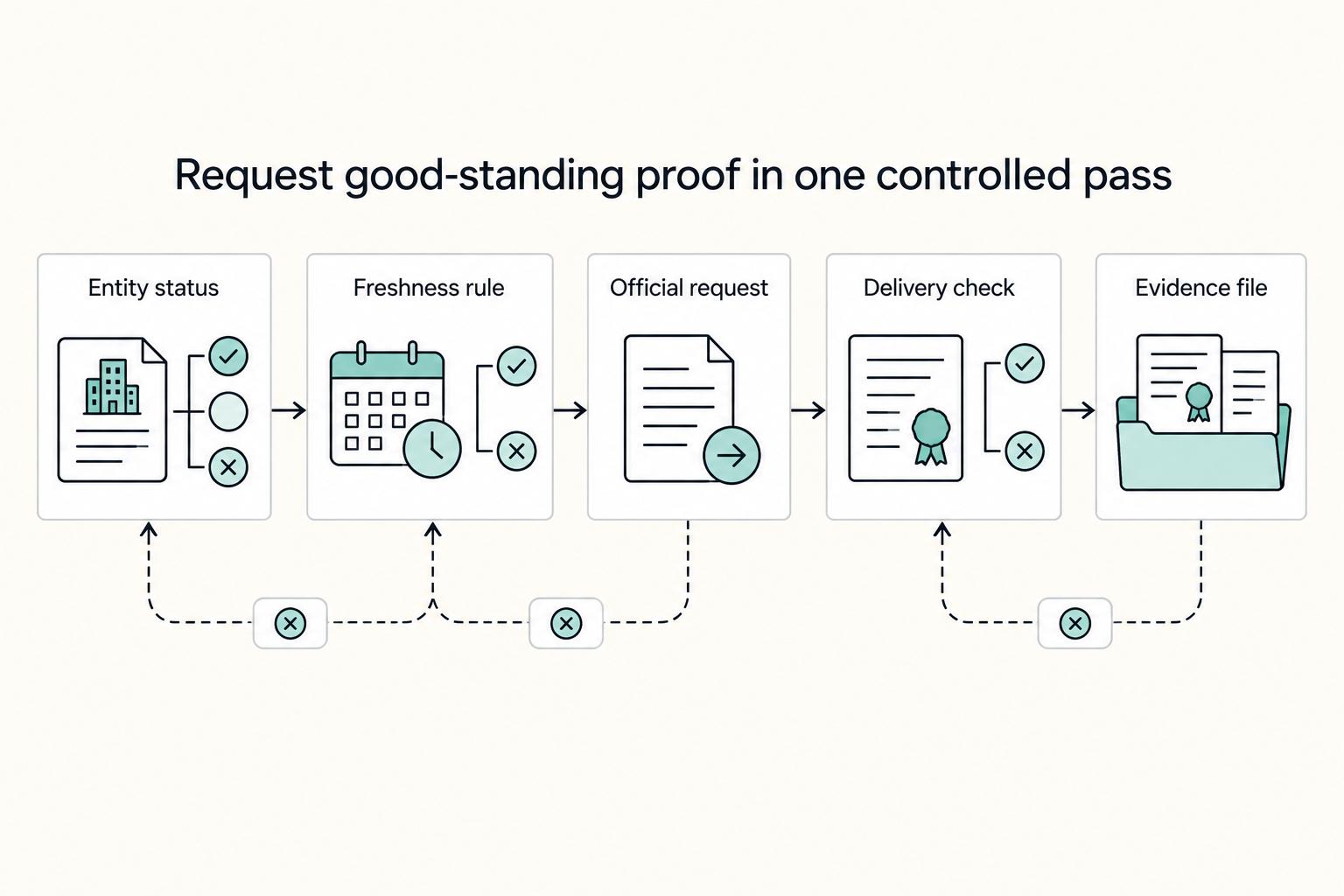
When You Need a Certificate of Good Standing and How to Avoid Delays
Start with two moves, in this order: confirm your entity status, then request the exact document title your reviewer will accept. That sequence removes the most common avoidable delay and keeps you from paying for the wrong output when the clock is already running.