
Quick Answer
No, treat us-singapore tax treaty saas planning as no presumed treaty relief until you confirm live status on official pages. The article’s core distinction is that a Tax Information Exchange Agreement is for authority-to-authority information exchange, not automatic rate relief. Start with residency facts, then filing exposure, then payment operations. Keep dated decision notes and supporting records so your position is defensible if reviewed.
Start here with the one fact that drives every later decision#
Use a verification-first default. Do not rely on assumed treaty benefits until you confirm the legal source on primary government pages. For a solo SaaS operator, that habit reduces avoidable compliance mistakes.
This article is built for risk reduction, not loophole hunting. The goal is to help you build a defensible position, keep records consistent, and know when to stop self-managing and bring in a specialist.
Use a verification-first rule#
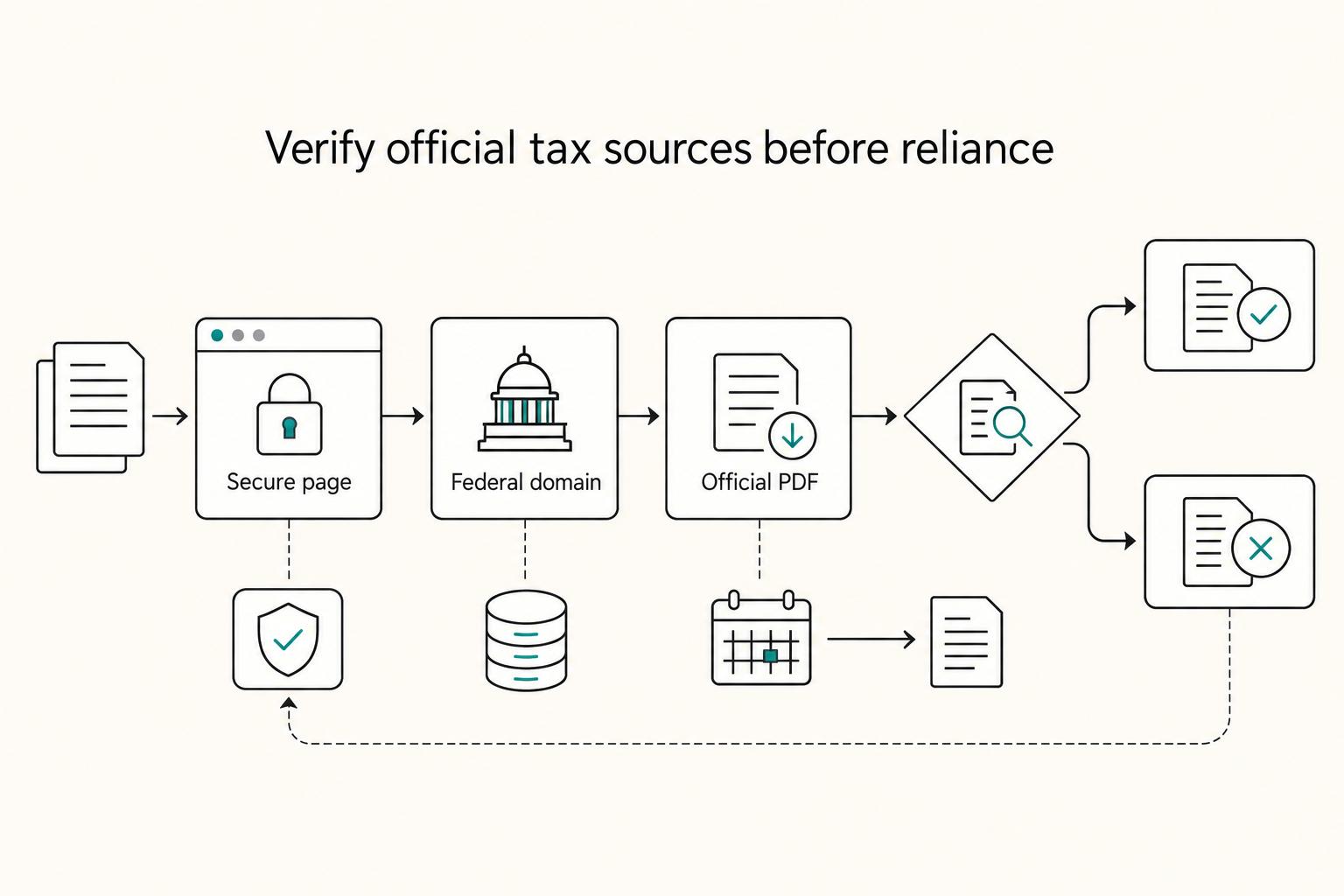
Start by checking source authenticity before you trust any compliance guidance:
| Check | What to confirm | Article note |
|---|---|---|
| Page security | https:// | Check source authenticity before trusting compliance guidance |
| U.S. federal domain | .gov or .mil | Use this check for U.S. federal sources |
FederalRegister.gov text | Verify the linked official PDF on govinfo.gov | Treat the web text as informational |
- Confirm the page uses
https://. - Confirm the domain is
.govor.milfor U.S. federal sources. - If you use a
FederalRegister.govpage, treat its web text as informational and verify it against the linked official PDF ongovinfo.gov.
That last step matters. If the wording is legally important, your working copy should be the official artifact, not just the display page.
Why this starting point works. Status can change, and pages can point to newer actions, including later final rules. When you verify something, log the page date in your notes. The source-pack example showing "Date Updated: March 19, 2026" is a good model because date stamps help you catch stale research before you act.
From here, the article gives you three practical deliverables:
- A decision sequence that starts with verification and residency, then moves to classification and payment handling.
- A documentation checklist focused on evidence that supports your position.
- Clear escalation triggers for when self-service should stop and cross-border tax advice should start.
Before you continue, create a dated research note with the pages you checked, the https and domain checks you completed, and any official PDFs you saved. That note becomes your audit trail if you ever need to defend or retrace your decisions. Related: Tbilisi Digital Nomad Guide for 2026 Long Stays in Georgia.
The treaty status you should assume until proven otherwise#
Use a conservative default. Treat the United States of America and the Republic of Singapore as a no presumed income-tax-treaty-relief case until official, current sources show otherwise.
Do not treat an Avoidance of Double Taxation Agreement and the U.S.-Singapore Tax Information Exchange Agreement as interchangeable for relief decisions. A TIEA, by itself, is not proof that reduced withholding, exemption claims, or similar taxpayer relief applies to your SaaS income.
Nothing in this section supports presuming income-tax treaty relief, so keep your operating assumption conservative. If you check status pages, confirm they are official and current before acting. A FederalRegister.gov page can help with research, but it is not the official legal edition. Verify it against the linked govinfo.gov PDF and watch for newer actions, including a 10/29/2024 proposed-rule page pointing to a 01/08/2025 final rule.
Use a simple decision rule. If your plan depends on treaty-rate relief, pause execution until you confirm current status on official sources. Do not lock contract terms, withholding assumptions, invoice language, or margin expectations to unverified relief.
For a step-by-step walkthrough, see A Deep Dive into the US-Ireland Tax Treaty for Tech Consultants.
What the U.S.-Singapore Tax Information Exchange Agreement actually does#
The U.S.-Singapore Tax Information Exchange Agreement (TIEA) is an information-sharing framework between tax authorities, not a taxpayer-relief document for reduced withholding, exemptions, or double-taxation claims.
Singapore's Ministry of Finance says the TIEA permits Singapore and the United States to exchange information for tax purposes. IRAS also separates Exchange of Information Arrangements from Avoidance of Double Taxation Agreements (DTAs), the agreements that may protect against double taxation. IRS guidance on income tax treaties reflects the treaty-relief side of that distinction: income tax treaties can provide reduced rates or exemptions, and if there is no treaty, normal tax rules apply.
That distinction matters because it changes how you manage evidence. If the agreement is about information exchange, your records matter more than any label you hoped would simplify the answer.
Article 1 in operator terms#
Article 1 (Object and Scope) says the competent authorities exchange information that is "foreseeably relevant" to covered taxes. In practice, the standard for you is straightforward. If a record could matter to a tax authority's review, keep it clean and consistent.
Make sure your contract language, invoice description, payment records, and ledger entries all point to the same underlying transaction. Mismatches create avoidable ambiguity.
Also assume the scope reaches beyond your internal folder. Available guidance notes that requests can potentially reach related entities, financial institutions, and other third parties holding relevant information.
Article 9 does not mean absolute secrecy#
Article 9 (Confidentiality) limits use of exchanged information to permitted purposes under the agreement. That protection matters, but it is not absolute invisibility.
The same text allows disclosure in public court proceedings or judicial decisions. A safe operating default is to write invoices, intercompany notes, and residency documentation as if another authority could eventually review them.
What taxes are covered at a high level#
The agreement applies to covered taxes. In the material referenced here, the Singapore side is explicitly listed, while the U.S. side is kept at a high level.
| Jurisdiction | Covered taxes at a high level |
|---|---|
| United States of America | Covered U.S. taxes (not detailed in the excerpt used here) |
| Republic of Singapore | Income Tax |
| Republic of Singapore | Goods and Services Tax |
| Republic of Singapore | Property Tax and Stamp Duties |
The IRAS-published text also shows: conclusion on 13 November 2018, entry into force on 5 March 2020, and effective date on 1 January 2021. That confirms a live information-exchange arrangement without changing the separate question of treaty-rate relief.
Make the tax residency call before you tune your SaaS structure#
Make your tax residency call first. Residency facts drive filing exposure, so settle that before you optimize banking rails, invoicing setup, or entity polish.
Residency is a facts question, not a preference#
Residency is not a branding choice. California guidance treats residency as a facts-and-circumstances determination. New York filing guidance follows the same sequence logic: first classify yourself as resident, nonresident, or part-year resident, then apply filing rules.
That order matters. In California, resident treatment means taxation on all income regardless of source. Nonresident or part-year treatment is designed not to tax non-California-source income.
Use this order of operations#
| Step | Action | Article note |
|---|---|---|
| 1 | Collect residency facts | Track where you lived and worked and the facts that support your position |
| 2 | Map filing obligations | Apply return mechanics from that classification; California nonresident or part-year treatment uses an effective-rate method on California taxable income |
| 3 | Tune payment operations | Align invoicing, payouts, and bookkeeping with the filing position you are actually taking |
- Collect residency facts first
Track where you lived and worked and the facts that support your position.
- Map filing obligations second
Apply return mechanics from that classification. For California nonresident or part-year treatment, tax is computed using an effective-rate method on California taxable income.
- Tune payment operations last
Align invoicing, payouts, and bookkeeping with the filing position you are actually taking.
If your residency position is uncertain, treat it as unresolved until you can support a clear classification.
Do not wait for pre-clearance#
In California, do not assume the FTB will pre-clear your status for you. The FTB says it will not issue written opinions on whether you were a California resident for a specific period.
Use an internal checkpoint instead. Document your residency rationale in writing before quarter-end bookkeeping closes. Treat that as a control step, not a legal deadline. Keep it short and specific: your position, the facts you relied on, the period covered, and what would change your conclusion.
Classify SaaS income before you make any withholding assumptions#
Classify the underlying transaction before you make withholding assumptions. If you skip classification, you can end up applying withholding logic to the wrong income type.
Cloud-era deals do not always fit clean labels, especially when service delivery and IP language are blended. Treat this as an evidence step, not a labeling exercise.
Start with transaction facts, not product labels#
Your checkpoint is the nature of the transaction and the geographic location of key transaction elements. For cross-border SaaS, review signed contracts and invoices as primary evidence, then ask what the customer is paying for: service access, technical work, IP-related rights, or a mixed bundle.
Also check whether the fact pattern could raise an effectively connected income (ECI) question, meaning income tied to a U.S. trade or business. There is no bright-line test here, so do not assume one from labels alone.
Where overgeneralization creates risk#
The shortcut that causes trouble is treating all SaaS revenue as one category and moving on. That can break when contract language mixes access, services, and license-style terms.
One failure mode is generic template language. If template clauses blend service promises and IP grants, your classification can be harder to defend later.
If contract language blurs service delivery and IP licensing, do not self-assign tax treatment without specialist review.
| Revenue pattern | Possible tax treatment risk | Evidence to collect | When to escalate |
|---|---|---|---|
| Hosted access subscription with no clear split of rights/features | Over-assuming one treatment without enough transaction detail | Signed contract, order form, invoice wording, product description at sale date | Escalate if any license-style language appears in customer docs |
| Bundled subscription plus onboarding, advisory, or setup work | Mixed elements may not map cleanly to one category | Scope of work, service records, pricing split if any, delivery evidence | Escalate if components are material and not clearly separable |
| Access deal with explicit IP or license clauses | Higher ambiguity around payment character | License or rights clauses, ownership terms, attached schedules, invoice descriptors | Escalate early when granted rights go beyond basic platform access |
| White-label, API, embedded, or reseller structure | Multiple party and location elements can complicate sourcing and characterization | Partner agreement, technical flow, customer relationship or control facts, party locations | Escalate before launch |
Keep a lean evidence pack#
Keep a short, defensible file: signed agreement, invoice language, a brief transaction-classification note, and a dated record of where key transaction elements occurred. Update it when the offer changes, because classification assumptions go stale as products evolve.
Build an audit-ready document stack you can actually maintain#
Build one document stack that answers filing questions quickly. Keep Form 8938, FBAR (FinCEN Form 114), and operating records in separate lanes, then connect them with short, dated decision notes.
The point is not to save everything everywhere. The point is to keep the right records in the right place so your reporting positions tie back to source documents.
Separate the stack by question, not by app#
Organize around the questions you may need to answer later: what you held, maximum values during the year, whether any accounts were closed, and whether contract-to-cash evidence matches what you filed.
| Document name | Owner | Storage location | Refresh cadence | Why it matters for reporting consistency |
|---|---|---|---|---|
| Residency evidence file and decision memo | You | /Tax/2026/Residency/ | Quarterly and when facts change | Supports your internal narrative with source records and a dated conclusion |
| Foreign account register | You or bookkeeper | /Tax/2026/Accounts/ | Monthly | Tracks open or closed status and valuation support used for Form 8938 and FBAR review |
| Form 8938 support packet | You or tax preparer | /Tax/2026/US Return/Form 8938/ | Year-end, then pre-filing | Form 8938 reports specified foreign financial assets when applicable thresholds are exceeded and is attached to the annual return |
| FBAR support packet (FinCEN Form 114) | You | /Tax/2026/FBAR/ | Year-end, with deadline check before filing | Separate FinCEN filing context. Filing Form 8938 does not remove possible FBAR obligations |
| Client contracts and signed order forms | You | /Revenue/Contracts/2026/ | On signature and amendment | Supports consistent classification and reporting treatment in your records |
| Invoices, payment confirmations, and reconciliation exports | You or finance ops | /Revenue/Evidence/2026/ | Monthly close | Ties billed revenue to receipts and supports consistent records used for reporting |
The U.S. items that get missed#
Treat Form 8938 and FBAR as separate checkpoints from day one. Filing Form 8938 does not remove possible FBAR obligations.
For Form 8938, keep the exact data the form asks for, including maximum account values and whether foreign accounts were closed during the tax year. Also avoid copying thresholds from the wrong taxpayer category. The instructions include $50,000 on the last day and $75,000 at any time for specified domestic entities, which is not a universal threshold.
For FBAR timing, do not hardcode a deadline from memory. FinCEN can post event-specific extension notices, so check current FinCEN guidance when you file.
Operating proof keeps your story consistent#
Your filing position is only as strong as the records behind it. Contracts, invoices, payment confirmations, and reconciliation exports should align with the position you take. If contract terms, invoice labels, and ledger treatment conflict, your position becomes harder to defend.
At monthly close, make sure you can trace one customer from signed contract to invoice to payment to ledger entry. That trace keeps reporting consistent instead of being reconstructed later.
Keep the source file and the dated decision note. Use one retention rule: if a file supports a reporting judgment, keep the source file and a dated decision note.
Your note can stay short:
- what question you were answering
- which source files you relied on
- the conclusion you reached
- the date you reached it
- what change would trigger a revisit
Related reading: A Deep Dive into the US-Israel Tax Treaty for Tech Freelancers. Turn your reporting rationale into a dated, reviewable record before quarter-end with the Tax Residency Tracker.
Filing touchpoints that create surprise penalties when ignored#
Keep two filing lanes separate from the start: Schedule SE (Form 1040) review for self-employment tax on net earnings, and FBAR for FinCEN foreign account reporting. Foreign clients or cross-border payment flows can blur the process, but FBAR does not replace income-tax filing work.
Schedule SE starts with self-employment status#
Start with status first: are you carrying on a trade or business for yourself, and do you have net earnings from self-employment? The IRS describes Schedule SE (Form 1040) as the schedule used to figure tax due on net earnings from self-employment. It defines self-employment tax as Social Security and Medicare taxes for people who work for themselves.
This is where founders often get surprised. You can focus on foreign invoicing and still miss core U.S. return mechanics. The IRS self-employment page lists a 15.3% rate, made up of 12.4% Social Security and 2.9% Medicare. It also notes that this tax can apply even if you already receive Social Security or Medicare benefits.
Practical checkpoint: if your books label revenue as foreign, but your return file has no documented Schedule SE review, treat that as a filing gap.
FBAR and FinCEN are a separate lane#
FBAR is a FinCEN foreign account reporting task, not part of your core income-tax calculation. Keep the FBAR lane separate even if the same preparer touches both.
A common miss is assuming that if account balances were discussed during return prep, FBAR was covered automatically. It may not have been. Keep account registers and account-value support in the FBAR lane, and keep revenue, expense, and net-earnings analysis in the return lane.
Use a checkpoint calendar instead of an annual scramble#
| Cadence | What to check | What to save |
|---|---|---|
| Monthly capture | Update foreign account register, collect statements, tie receipts to invoices and ledger entries | Statements, reconciliation exports, payment confirmations, notes on account opens or closures |
| Quarterly review | Confirm consistent self-employed treatment and whether quarterly payment questions need action | Quarter-close memo, profit summary, notes on business-activity changes |
| Annual filing prep | Build separate packets for Form 1040 support and FBAR support | Schedule SE support, account-value support, return workpapers |
| Pre-submission sanity check | Recheck current instructions and official due-date pages before filing | Dated note and copy or screenshot of current IRS and FinCEN pages used |
Two final checks help prevent stale assumptions. First, confirm that you are using the latest Schedule SE instructions. IRS corrections can happen, including a correction posted on 20-FEB-2026 for 2025 instructions. Second, check the FinCEN FBAR page right before submission, since due-date information and event-based relief notices can change.
Keep the caveat explicit: filing triggers, thresholds, and timing rules vary by form and can change. The IRS also states its self-employment tax summary is not all-inclusive, so verify current rules on live IRS and FinCEN pages before filing.
Keep your money movement records aligned with your tax position#
Once the filing lanes are separate, the next risk is mismatch: your tax position says one thing, but your transaction trail says another. For a solo operator with cross-border revenue, consistency across invoices, cash movement, books, and filing support can make your position easier to defend.
Pick an order and keep it consistent#
Use a stable internal sequence you can explain every time:
- Invoice issued
- Payment confirmed
- Ledger posted
- Payout made
- Reconciliation packet exported
If your stack gives you traceable transaction states, use them. A dated trail from invoice ID to payment event to ledger entry to reconciliation export is easier to defend than a bank balance plus memory.
Run a monthly spot check. Sample a few transactions and confirm that dates align across the invoice, payment confirmation, general ledger, and payout record. If a date keeps drifting, fix the process, not just the exception.
Make the filing narrative match the money trail#
Your withholding-tax and tax-residency positions should match the records behind them. Matching records do not prove those positions by themselves, but mismatches make them harder to defend.
In Singapore, the corporate filing package is a full set: Form C or Form C-S, accounts, and tax computation. Corporate income is assessed on a preceding-year basis. Your records should map cleanly to the relevant Financial Year Ending (FYE) and Year of Assessment (YA), not an ad hoc period assembled at filing time.
Example: if your FYE is 31 December 2024, that basis period feeds YA 2025, and the filing due date for Singapore companies is 30 November. Your reconciliation packet should already reflect that logic before accounts and tax computation are submitted.
When foreign cash is involved, keep this explicit: foreign-sourced income received in Singapore is taxable unless an exemption applies. Do not infer exemption from a payment label alone. Keep the receipt trail, invoice, and accounting entry tied together.
Treat manual payouts as high-attention items#
Use a clear operator rule: if a payout or correction is manual, attach a reason code and a timestamped note. Treat this as an audit-defensibility habit, not a substitute for tax analysis.
Manual events are where narratives can break. Off-flow payouts, refunds on the wrong invoice, or late corrections can create gaps between accounts, tax computation, and bank activity. Policy-gated payouts help because they force an approval or exception path instead of burying unusual movements.
Build the reconciliation packet before filing, not after assessment. In most cases, IRAS accepts the filed return as final and issues a Notice of Assessment (NOA). Your support should already be complete when Form C or Form C-S, accounts, and tax computation are filed.
Escalation triggers that mean you should stop self-managing#
Stop self-managing when your withholding position depends on contract interpretation, treaty-relief logic you cannot clearly support, or records you cannot defend.
Mixed services and IP language#
Escalate when one contract fee mixes services and intellectual property language. If the contract and billing language are not clear enough to support one withholding treatment, pause and get specialist review.
Use a simple check before you proceed: read the signed contract and invoice together. If they do not clearly support the same treatment, stop and escalate.
Relief logic you cannot clearly support#
Escalate when someone suggests reduced withholding based on country-to-country relief, but the legal basis is unclear. If treaty status is unclear, do not assume relief.
Form choice is part of this trigger. W-8BEN-E is for non-US entities, while W-8BEN is for foreign individuals or sole proprietors. Using the wrong form type can break your withholding position. If a U.S. payer defaults to 30% withholding, treat that as a hard stop for specialist review.
Conflicting filing positions#
Escalate when your filing position is not consistent across documents, or when your records cannot support the position you plan to file. If your classification or withholding narrative changes across documents, you are past the point of self-management.
Before filing, confirm that you can produce a defensible packet quickly: signed contract, invoice sample, payment confirmation, ledger entry, and a dated note of your rationale. If you cannot, stop and escalate.
Verify status from official sources before you lock decisions#
Before you rely on treaty logic, verify the live legal status on government pages, because agreement type and in-force status determine whether you have a usable position.
Check IRAS by agreement type and legal status#
Use the IRAS international agreements list and check all three categories separately: Avoidance of Double Taxation Agreements, limited DTAs, and Exchange of Information Arrangements.
| IRAS category | What to verify | Article note |
|---|---|---|
| Avoidance of Double Taxation Agreements | Search for United States of America, confirm the category, and apply the In Force filter | Check this category separately from limited DTAs and Exchange of Information Arrangements |
| limited DTAs | Search for United States of America, confirm the category, and apply the In Force filter | The IRAS-published U.S. limited agreement is for reciprocal tax exemption of shipping and aircraft income |
| Exchange of Information Arrangements | Search for United States of America, confirm the category, and apply the In Force filter | Do not treat an EOI arrangement or the U.S.-Singapore TIEA as proof of treaty-rate relief |
- Search for United States of America.
- Confirm which category the entry is in.
- Apply the In Force filter before treating anything as usable.
- If needed, switch In Force to No to see signed but not ratified items.
IRAS is explicit that signed-but-not-ratified agreements do not have force of law, so that status is a stop sign for filing positions. Also watch the limited-DTA trap: the IRAS-published U.S. limited agreement is for reciprocal tax exemption of shipping and aircraft income, so treat it as a narrow-scope agreement.
Why MLI references matter#
Check the Modified by the MLI filter on the same IRAS list. IRAS states that some DTAs are amended by the Multilateral Convention to Implement Tax Treaty Related Measures to Prevent Base Erosion and Profit Shifting (MLI). Those changes affect how treaty text should be read.
Use this as a verification rule: older treaty PDFs or commentary may miss later MLI modifications and effective-date updates. MLI context can change interpretation of an existing DTA, but it does not by itself establish relief where no relevant treaty basis is in force.
Terms you may see on IRAS pages#
- Mutual Agreement Procedure (MAP): a DTA-based competent-authority dispute process.
- Mandatory binding arbitration provisions: available only in some DTAs, including where modified by Part VI (Arbitration) of the MLI. IRAS says outcomes are generally binding on competent authorities.
Keep the scope tight. MAP and arbitration are treaty features, not automatic benefits under every international agreement. Do not assume they apply to an EOI arrangement or the U.S.-Singapore TIEA, which is framed as an information-exchange agreement, without text support.
After IRAS, cross-check the U.S. side on IRS treaty pages and U.S. State Department treaty-text pages. IRS guidance also notes that if no treaty applies, domestic tax treatment applies. If a blog claim conflicts with IRAS or U.S. government treaty pages, follow the government pages. If your records span multiple accounts and jurisdictions, run a quick exposure check with the FBAR Calculator.
Your next move this week#
This week, lock your facts first, flag ambiguity second, and decide whether you need specialist help before filing pressure starts.
Lock your residency story in one folder#
Create one folder for this year and write a one-page memo: where you lived, where you worked, who earned the revenue, and which filing is expected to report it. Keep it factual and plain.
Use one checkpoint: your memo and your records should match. If your contracts, invoices, payment records, and account activity point in different directions, pause optimization and fix the record first.
Review contracts and revenue classification with a narrow scope. Once your residency file is in place, review current contracts for one risk: unclear boundaries between services, IP rights, and potential tax treatment. You do not need final legal conclusions this week, but you do need to identify ambiguity now.
Focus on practical red flags:
- contract language that blends software access, services, and IP rights in one payment clause
- invoices that describe revenue differently from signed agreements
- side terms such as SOWs, emails, or add-ons that change usage rights without clear contract alignment
If you sell into the U.S. from Singapore, keep a separate state-level compliance note. U.S. compliance can require jurisdiction-by-jurisdiction review, and the referenced guidance describes over 12,000 tax jurisdictions as of 2025. Treat registration, filing, and compliance checks as distinct from treaty or income-tax logic.
Book help before deadline pressure starts. Escalate before the next filing cycle if your residency narrative is still split, contract language is still ambiguous on services versus IP, or your approach depends on unverified tax assumptions. The goal this week is a defensible file, a short list of open issues, and a clear call on whether you can continue solo or need cross-border tax support now.
Frequently Asked Questions
Is there a U.S.-Singapore income tax treaty for SaaS founders?
Treat income-tax-treaty relief as unverified until you confirm current status in official government treaty materials.
What agreement exists between the U.S. and Singapore if not an income tax treaty?
Treat references to a Tax Information Exchange Agreement (TIEA) as unverified until you confirm official text and status.
Does the TIEA itself provide double-taxation relief?
Do not assume relief applies, and do not assume it is unavailable, until you confirm the agreement text and legal status from official sources. The practical caveat is simple: agreement labels alone are not enough to support a filing position.
What should I do first if I run a SaaS business across the U.S. and Singapore?
Start with residency determination and evidence capture before tax optimization. Document where you live, where you work, which annual return reports the income, and which foreign financial accounts are relevant. If those facts are unclear, pause structural changes until your records can support your position.
Which documents matter most for audit readiness?
Keep a complete annual return file, including Form 8938 when your specified foreign financial assets exceed the applicable reporting threshold. IRS instructions say Form 8938 is attached to your annual return and filed by that return’s due date, including extensions. If you do not have to file an income tax return for the year, you generally do not file Form 8938 for that year. Keep FBAR (FinCEN Form 114) records where applicable, since filing Form 8938 does not replace FBAR when FBAR is otherwise required. Also retain the records needed to support foreign account counts and maximum values reported on Form 8938.
When should I hire a cross-border tax professional instead of continuing solo?
Escalate when you cannot clearly determine filing obligations, or when obligations appear to conflict across jurisdictions. Get help if you cannot tell whether Form 8938 applies to your facts, or cannot substantiate the foreign account details your filings require. Also escalate when you would be relying on assumptions about treaty status or foreign-asset reporting instead of verifiable records.
Try a related tool
Researched and edited by the Gruv editorial team. Gruv builds cross-border billing, payouts, and finance-operations software for global businesses.
Sources
- federalregister.gov/documents/2024/10/29/2024-24582/provisions-p...trusted
- federalregister.gov/documents/2024/10/29/2024-24582/provisions-p...trusted
- fincen.gov/report-foreign-bank-and-financial-accountstrusted
- ftb.ca.gov/forms/2024/2024-1031-publication.pdftrusted
- ftb.ca.gov/file/personal/residency-status/index.htmltrusted
- irs.gov/businesses/international-businesses/united-s...trusted
- irs.gov/businesses/small-businesses-self-employed/se...trusted
- mof.gov.sg/news-resources/newsroom/international-taxpre...trusted
Educational content only. Not legal, tax, or financial advice.
Related Posts

Digital Nomad Taxes in 2026 With a Defensible Filing Plan
With digital nomad taxes, the first move is not optimization. It is figuring out where you may be taxable, where filings may be required, and what proof supports that position.

Tbilisi Digital Nomad Guide for 2026 Long Stays in Georgia
Start with sequence, not excitement. If your income depends on delivering work on schedule, secure your legal footing, assemble your documents, and keep month one reversible before you optimize comfort.
DAO for Freelancers Who Need Payment Certainty
Treat any **dao for freelancers** opportunity as unconfirmed income until you verify who releases funds and how that release happens. A passed vote, active Discord, or busy forum thread may look encouraging, but none of it guarantees payment.