
Quick Answer
To assess services PE exposure, start with the current bilateral tax treaty's Permanent Establishment article and test fixed-place, dependent-agent, and any explicit services PE clause language against your facts. Do not rely on invoicing, payment flow, or day counts alone. Keep the treaty text, effective date, contract-authority records, and work-location facts, and treat the conclusion as provisional if wording or facts are unclear.
Start Here and What You Will Decide#
Start with the treaty, not assumptions. Form a treaty-first view of likely permanent establishment (PE) exposure, document the facts behind that view, and flag when the facts or treaty text are too thin to rely on without help. By the end of this guide, you should be able to make three decisions:
- Identify the governing Bilateral income tax treaty for the relevant country pair and confirm you are using the current text.
- Classify your fact pattern as lower, unclear, or elevated PE risk, instead of relying on shortcuts.
- Build a basic defense file with the treaty text, effective date, and core facts so you know whether to proceed or escalate.
This guide is for globally mobile consultants, freelancers, and small service firms working across borders. It focuses on treaty-based PE risk, including whether a service provision can create source-country tax exposure. It does not cover visas, lifestyle structuring, or general digital nomad tax tips. Keep these boundaries in view:
- Treaty outcomes are country-specific and income-item-specific, so conclusions are not one-size-fits-all.
- If the United States is involved, pull the treaty from the IRS United States Income Tax Treaties A to Z page and verify the treaty or protocol effective date before relying on a position.
- Domestic nexus and treaty nexus are different tests. Activity broad enough for a U.S. trade or business can still differ from what creates a U.S. PE.
- If U.S. tax is in scope and no treaty applies, or the treaty does not cover the income type, standard U.S. tax rules apply.
- A federal treaty position may not end the analysis because some U.S. states do not honor treaty provisions.
Build your file now, not at filing time. Save the treaty and protocol text. Note the effective date you relied on, and keep a dated fact summary, including where services were performed and who had authority to bind contracts. If key facts are unclear or treaty wording is ambiguous, treat your conclusion as provisional and escalate.
The Minimum You Must Understand Before Any PE Analysis#
Start with the treaty's Permanent Establishment Article before you make any PE call. Invoicing location, payment flow, and bank account location do not answer that treaty question.
Start with the two baseline triggers#
Most PE analysis starts with two baseline triggers, and both matter early:
- Fixed place of business: whether the enterprise maintains a fixed place in the country.
- Dependent agent: whether someone in-country has authority to negotiate or conclude contracts for the enterprise and habitually exercises that authority.
The second trigger is easy to miss. You can have elevated agency PE risk even without rented office space if someone on the ground regularly binds the business.
Why the PE article comes before business folklore#
PE is a treaty-defined threshold for when a source country can tax a foreign enterprise's business income. Treaty wording varies, and those differences can change the result, including for services-related exposure.
That is why the PE article comes first. The analysis should begin with the actual treaty definition, not payment mechanics or business folklore.
Keep domestic nexus and treaty nexus separate#
If the United States is involved, do not treat domestic tax concepts as a substitute for treaty PE analysis. Treaty treatment still turns on the applicable PE article language. Use this minimum checkpoint before concluding anything:
- Identify the governing treaty and pull the exact Permanent Establishment Article text.
- Save the version and effective date you are relying on.
- Test your facts against the fixed-place and dependent-agent language, especially contract authority.
If you cannot point to the governing Permanent Establishment Article text, you are not ready to conclude your PE position. Related reading: A deep dive into the 'limitation on benefits' clause of the US-Netherlands tax treaty.
Pull the Right Treaty Clauses Before You Make Any Call#
Build the treaty file before you make the PE call. Before you conclude anything, collect your facts, save the exact clause text, and log what is still unknown.
Build the input set first#
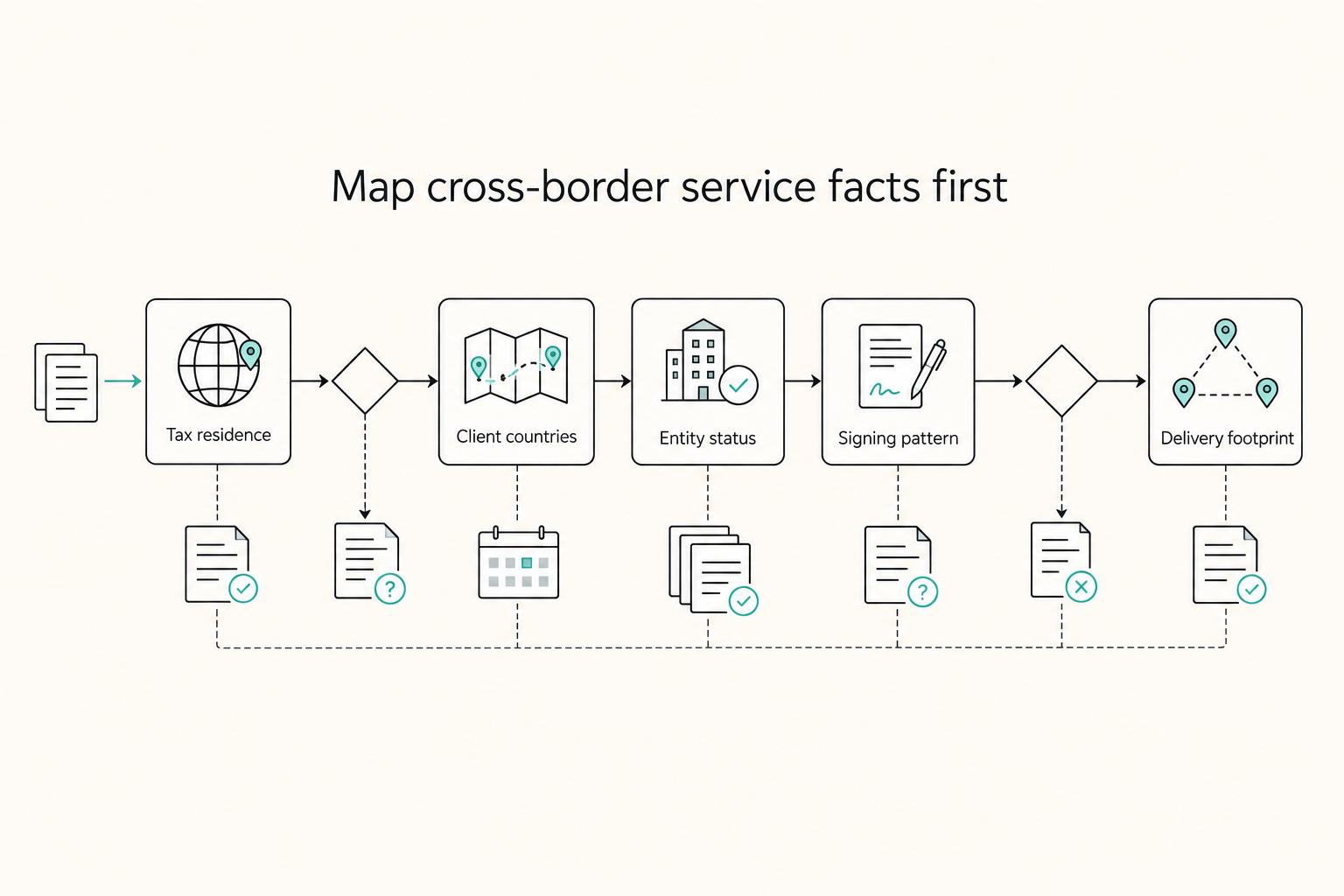
Use a checklist and fill every field before you decide anything:
| Input | What to capture |
|---|---|
| Tax residence country | Service provider's tax residence country for the period at issue |
| Client and service countries | Client country and any other country where services were delivered |
| Legal entity status | Legal entity status doing the work, for example, individual or company |
| Contract signing pattern | Who signs, where they sign, and whether anyone in-country negotiates or concludes contracts |
| Service delivery footprint | Where the work happened in practice, not just what the invoice says |
If the countries, actors, and signing behavior are not clear, your PE conclusion is not ready.
Pull the treaty text, not just a summary#
From the applicable bilateral income tax treaty, save the exact text for the Permanent Establishment and Business Profits articles first. Then check other income-type articles only after confirming they are relevant in that specific treaty. Keep the treaty text, any protocol text, and the effective date you are relying on in the same file.
If the United States is involved, use the IRS A-to-Z treaties page as a starting point to locate country treaty documents. Publication 901 includes a section on obtaining treaty copies, and IRS treaty tables, Table 3, are the checkpoint for general treaty and protocol effective dates.
Do not assume article numbering is consistent across treaties. In the U.S.-Canada technical explanation, Permanent Establishment is Article V and Business Profits is Article VII. In the U.S.-Israel technical explanation, Permanent Establishment is Article 5 and Business Profits is Article 8. Save article titles with the text, not numbers alone.
If the wording is hard to interpret, pull the treaty's technical explanation too. The IRS describes it as an official guide to the convention.
Check for a services clause explicitly#
Do not assume the treaty has an explicit services PE concept. Read the Permanent Establishment article and confirm whether a services clause is actually present. If you cannot identify a services clause in the text you saved, label it not identified instead of guessing.
Log unknowns before they become false certainty#
Keep an open-issues list in the same file. Use entries like:
- Relevant income-article mapping unclear
- Contract conclusion facts incomplete
- Protocol version not confirmed
Escalate for advisor review when the basics break down. If no treaty applies, or the income is not covered, regular U.S. tax rules apply when the U.S. is involved. Also remember that some U.S. states may not honor treaty provisions even when federal treaty treatment looks clear.
Decide if Services Activity Creates PE Exposure#
Run the PE analysis in this order under the PE article: fixed place, dependent agent, then any explicit services clause. If there is no services clause, place and agent facts will usually drive the analysis. If there is one, day-count and project-connection evidence become central, but agency risk still matters.
Use a strict sequence#
- Confirm PE-article scope
Read the full PE article and protocol text you saved. Confirm whether there is an explicit service-based PE rule or only fixed-place and agent tests. If you cannot point to the exact clause, mark it not identified and keep the conclusion provisional.
- Test fixed place of business
Check whether business was maintained in-country through a place there. Use operational evidence: where work actually happened, whether a recurring location was available, and what records support it.
- Test dependent agent PE
Do this even if no fixed place appears. The key checkpoint is whether someone in-country habitually exercised authority to conclude contracts on your behalf.
- Test any explicit services PE clause
Only after steps 2 and 3. Some service-PE formulations focus on duration and where or how services are furnished. One example uses more than 183 days in any 12-month period for the same or connected projects, but that is not universal.
A common failure mode is tracking travel days while missing contract-authority behavior. That can still support an agency PE position even without a fixed place.
Compare treaty styles before you decide#
| Treaty style | Main PE focus | Evidence to prioritize | Common mistake |
|---|---|---|---|
| OECD-leaning baseline | Fixed place and dependent agent tests first | Work-location facts, location availability, contract-conclusion behavior | Treating day counts alone as decisive |
| Treaty with explicit service-PE language | Can add a service-based path alongside place and agent tests | Day counts, where services were furnished, same or connected project mapping, plus agent behavior | Assuming model language controls without reading the bilateral text |
| Actual bilateral treaty and protocol | Signed treaty text controls differences and exceptions | Exact PE article text, protocol text, effective treaty package, open issues log | Relying on summaries or another treaty pair's structure |
Let clause presence change your evidence pack#
If there is no explicit services clause, prioritize your place file and agent file, and treat day counts as supporting context. If there is service language, build a time-and-project file with day-by-day location records, work logs tied to engagements, and connected-project support where relevant.
Do not force a universal physical-presence rule. Approaches differ, so the treaty wording and local interpretation should drive the call. If service-clause wording is ambiguous or in-country contract authority is present, keep the result provisional and escalate with the treaty text and evidence pack.
Related: How to Create a Financial Safety Net as a Freelancer.
Test the Agent Question Before It Tests You#
Treat the agent question as central whenever someone in the source country helps move deals on your behalf. That fact pattern can raise Dependent agent PE risk, so test it directly in your Permanent Establishment Article analysis.
Use three evidence screens, not shortcuts#
Separate potential Independent agent facts from potential Agency PE facts using practical, documentable checks. Use these as risk screens, not stand-alone legal conclusions:
- Legal independence
Check the contract or appointment terms, not just the title. What can the in-country person do on your behalf in writing, and what do they actually do in practice?
- Economic independence
Document how dependent that person or entity is on your business in real operations. Treat it as a risk signal, not a stand-alone legal conclusion.
- Who actually concludes contracts
Go beyond signature blocks. Record who negotiates core terms, who communicates that the deal is agreed, and who turns live opportunities into committed work.
Red-flag rule#
If someone in-country regularly negotiates or concludes deals on your behalf, treat Agency PE risk as elevated and test the treaty text carefully. Do not rely on legal form alone.
Put delegated authority in writing#
Build a short authority file tied to your PE-article analysis:
- signed delegation or contractor documents showing whether authority exists
- approval thresholds for pricing, scope changes, and client commitments
- email trails showing where final approval came from
- a contract-authority matrix by name, role, and country
For each person involved in in-country sales or renewals, you should be able to show what they could approve and what they could not approve.
Do not assume a local subsidiary removes the risk. The source material makes that point clearly: PE risk can still exist even with a local legal entity. In the India High Court ruling discussed in the source material (28 May 2024), the taxpayer prevailed under the U.S.-India treaty. The activities were still tested, and the taxpayer pointed to arm's-length support and objective transfer-pricing studies.
Same revenue, different risk#
| Scenario | Contract control in the source country | PE risk signal |
|---|---|---|
| Local support introduces prospects and schedules calls | Final pricing, scope, and acceptance are approved and communicated from outside the country | Potentially lower agency risk, if records match |
| Same client revenue, same services, same country | Local person negotiates terms, communicates agreement, and foreign signature follows as a formality | Potentially higher Agency PE risk; test against treaty text |
| Local subsidiary exists, but in-country staff act on behalf of the foreign entity in closing work | Legal structure says one thing, conduct says another | Red flag: test facts before relying on structure |
If your facts sit between these examples, keep the conclusion provisional, attach the treaty text, and complete the evidence pack before finalizing your position. If treaty benefits are part of the position, confirm residence and any LOB conditions before relying on treaty protection.
Classify Service Income Correctly Before You Estimate Tax#
Do not estimate tax until you classify the income under the correct treaty article. The same service fee can be tested under different treaty articles, and that can change the result.
In the U.S.-India Convention, Article 7 is titled Business Profits and Article 12 is titled Royalties and Fees for Included Services. That separation matters. In a PE context, Article 7 treatment often means net-basis taxation on income attributable to the PE after deductible business expenses, while Article 12 must be analyzed under its own treaty framework. Classify first, estimate second.
Start with treaty text, not commercial labels#
Labels like "consulting" or "technical assistance" are not enough on their own. Test the actual treaty article before deciding whether the income belongs under business profits, royalties, or fees language.
Use the full treaty materials, not headings alone. Where available, include the article text, related Protocol provisions, and the Technical Explanation.
| Contract pattern | First check | Why outcome can differ |
|---|---|---|
| Standard advisory or project scope with no clear rights language | Article 7 | PE and attribution analysis may drive net-basis treatment |
| Services bundled with additional rights or fee language | Article 12 | Income may need Article 12 review instead of default business-profits treatment |
| Professional services under a treaty that keeps independent-services concepts | Article 14 | Starting classification path may differ by treaty structure |
Flag hybrid scope early#
Misclassification can start when service scope is mixed. Flag these patterns before filing assumptions harden:
- Advice scope plus separate rights or use language.
- Consulting scope plus technical documentation or know-how language.
- Implementation support plus terms that go beyond pure services.
- One fee covering multiple elements without clear allocation.
These patterns are review flags, not treaty definitions. They do not prove Article 12 applies. They do mean you should not auto-classify everything as Article 7.
Article 14 context is treaty-specific#
Article 14 in OECD model materials addresses professional services and other independent activities. In treaties that still use that concept, Article 14 can change your starting point.
Do not carry conclusions from one treaty into another without rechecking the exact treaty. Model language is a baseline, but specific treaties can differ or include exceptions.
Freeze assumptions if scope is hybrid#
If scope language is hybrid, freeze your filing assumptions until article classification is confirmed.
The minimum file for this step is the exact treaty text for Articles 7 and 12, and Article 14 where relevant. Add related Protocol language, the Technical Explanation if available, the signed agreement, SOW, annexes, and clauses on use, access, and post-project rights. Until those documents support one article theory, treat the numbers as provisional.
Apply a U.S. Branch Test When the United States Is Involved#
When the United States is involved, run two tests at the same time: domestic U.S. trade or business and treaty permanent establishment (PE). They are different thresholds, and the domestic threshold is broader. A foreign company can have a U.S. trade or business, and effectively connected income, under domestic law, while an applicable treaty may still limit U.S. tax to profits attributable to a U.S. PE.
After classifying income as Business profits, do not jump to "fully taxable" or "fully exempt." Test whether the treaty changes the domestic result.
Use Publication 901 as a starting point, not the finish line#
Start with the relevant U.S. income tax treaty and IRS Publication 901 (09/2024). Publication 901 is useful for baseline expectations. Treaty residents may get reduced rates or exemptions on certain income, and it flags the need to evaluate disclosure of a treaty-based position that reduces your tax.
Treaty tables are summaries, not complete authority. If facts or documentation are messy, move to the full treaty text, including the business profits article, PE article, protocol language, and any applicable saving clause and Limitation on Benefits (LOB) provisions. If LOB eligibility is not clear, the treaty position may be weak before PE analysis.
Run this U.S. decision checklist#
- Confirm treaty access first.
Check treaty-country residence and whether the treaty covers the income type. If no treaty applies, or the treaty does not cover that income, tax follows normal return rules.
- Separate domestic exposure from treaty exposure.
Domestic law: a foreign company with a U.S. trade or business is taxed on effectively connected income. Treaty framework: it is generally taxed only on profits attributable to a U.S. PE.
- Check PE facts with U.S.-specific triggers.
A U.S. PE generally includes a fixed place of business in the United States. A dependent agent who habitually exercises authority to conclude contracts in the United States can also create PE exposure. Activity through a broker, general commission agent, or other independent-agent type channel is not automatically PE by itself.
- If claiming treaty relief, verify withholding and disclosure checkpoints.
For withholding relief, notify the withholding agent and provide the relevant treaty forms. IRS guidance indicates personal-services claims generally use Form 8233 and non-personal-services claims use Form W-8BEN. Also evaluate whether your return position requires tax treaty-based position disclosure before filing.
What stays unresolved without full facts#
This branch test does not settle everything. You still need the attribution method for any U.S. PE profits, the actual federal and state/local filing mechanics, and a review of treaty exceptions or anti-abuse limits that may change the result. Keep one practical risk in view: some U.S. states do not honor treaty provisions, so a federal treaty position does not automatically control state tax exposure.
IRS practice units can help frame the analysis, but they are not official pronouncements of law. Use them to guide review, not to replace treaty text and file facts.
For a step-by-step walkthrough, see Understanding the Independent Personal Services Article in Tax Treaties.
Build an Evidence Pack Before You Need to Defend It#
If U.S. reporting is in scope, build that file during the year, not after the fact, and use one hard rule: every reporting conclusion should map to a Form 8938 field and a factual record. Your position is only as strong as your proof of what assets were in scope, which tax year they relate to, and what you filed.
Keep these five artifacts current#
Keep one evidence pack per tax year, with dated support behind each item:
| Artifact | What it should show |
|---|---|
| Form 8938 account summary worksheet | Mirror the form's structure so each entry ties back to records |
| Tax-year and filer scope record | The applicable calendar year or tax year and the filer or entity being evaluated |
| Threshold and filing-trigger log | How you determined whether Form 8938 applies, including the threshold values you are relying on |
| Separate-regime check (Form 8938 vs. FBAR) | That Form 8938 and FinCEN Form 114 (FBAR) are tracked as separate filing regimes |
| Filing and account-change evidence | Proof Form 8938 was attached to the annual return by that return's due date, including extensions, and whether any foreign deposit or custodial accounts were closed during the tax year |
- Form 8938 account summary worksheet
Mirror the form's structure (for example, the foreign deposit and custodial accounts summary) so you can tie each entry back to records.
- Tax-year and filer scope record
Document the applicable calendar year or tax year for the filing and the filer or entity being evaluated.
- Threshold and filing-trigger log
Record how you determined whether Form 8938 applies, including the threshold values you are relying on for that filer type. Figures supported here include a baseline $50,000 trigger for certain U.S. taxpayers and, for specified domestic entities, $50,000 on the last day of the tax year or $75,000 at any time during the year.
- Separate-regime check (Form 8938 vs. FBAR)
Track Form 8938 and FinCEN Form 114 (FBAR) as separate filing regimes. Filing Form 8938 does not by itself remove a separate FBAR filing requirement when FBAR applies.
- Filing and account-change evidence
Keep proof that Form 8938 was attached to the annual return by that return's due date (including extensions), and document whether any foreign deposit or custodial accounts were closed during the tax year.
Use a collection cadence you can keep#
Use monthly collection, quarterly reconciliation, and a final lock before filing. This is an operating discipline, not an IRS mandate. The goal is simple: preserve complete records and keep your year, threshold, and filing decisions consistent.
Keep U.S. reporting spillovers on a linked checklist#
Keep this work linked by tax year, filer or entity, and account owner. At minimum, check:
- Whether Form 8938 applies for the year and filer, and whether it is attached to the annual return by that return's due date, including extensions.
- Whether no income tax return is required for the tax year. If no return is required, Form 8938 is not required for that year.
- Whether you are treating Form 8938 and FinCEN Form 114 (FBAR) as separate regimes.
- Whether the correct calendar year or tax year is identified on Form 8938.
- Whether any foreign deposit or custodial accounts were closed during the tax year.
- Whether threshold use is precise and limited to what you have documented support for.
If you are missing support for a conclusion, label it as provisional instead of final.
Turn this checklist into a repeatable monthly routine with the Tax Residency Tracker.
Use This Sanity Checks Section Before Filing or Signing New Work#
Treat your position as final only if all four checks pass. If one fails, mark the position as provisional in your memo and resolve the gap before filing or signing. Use these checks as a deliberate pause before you rely on an old conclusion, sign a new contract, or file on a changed fact pattern.
- If your conclusion depends on "everyone does this," restart from treaty text and facts.
Market habit is not authority. In U.S. cases, keep domestic nexus separate from treaty nexus: activity can be broad enough for a U.S. trade or business and still not create a treaty permanent establishment (PE). Your memo should tie the conclusion to the relevant PE treaty article and a dated fact record.
- If any key fact is unproven, downgrade confidence immediately.
Missing proof of work location, contract authority, or document execution weakens the position. List exactly what is missing and what record will close it, instead of filling gaps from memory after year-end.
- If service scope, contracting authority, or work location changed mid-year, rerun PE checks (and any treaty-specific services PE analysis, if applicable).
Do not carry forward an earlier conclusion when facts changed. Re-test fixed-place and dependent-agent risk, including whether anyone in the United States had and habitually exercised authority to conclude contracts binding on the foreign enterprise.
- If treaty article classification is uncertain, escalate before filing.
Do not file or sign on an unresolved classification call. If you use IRS practice unit TRE/9450.06_02(2014) in U.S. analysis, use it as a checkpoint tool, confirm it is still current, and validate against actual treaty text and primary authority.
Know Exactly When to Escalate to a Tax Professional#
Escalate as soon as your conclusion depends on unclear treaty wording, mixed-jurisdiction facts, dependent-agent indicators, or unresolved income-type treatment. The main risk is filing, signing, or invoicing before those issues are resolved.
Escalate immediately on these fact patterns#
- Treaty wording is ambiguous, or income-item coverage is unclear.
Treaty relief is country-specific and income-item specific. Pull the exact treaty text from official treaty-document pages, and pause final conclusions until reviewed. If no treaty applies, or the treaty does not cover that income type, domestic tax rules apply.
- Facts span multiple countries or include U.S. state exposure.
PE interpretation can differ by country even where treaties exist. If U.S. states are involved, treat that as a separate check because some states do not honor treaty provisions.
- Dependent-agent indicators are present.
In-country authority to conclude contracts on behalf of the enterprise is a concrete PE red flag. Support your view with records showing who negotiated, approved, and actually bound the business.
- Income-type treatment is genuinely contestable.
If the payment could reasonably be treated in more than one way under treaty or domestic rules, escalate before filing or locking in tax treatment.
Treat disclosure and reporting friction as escalation triggers#
If your U.S. filing position reduces tax under a treaty, review IRS Publication 901 (09/2024) for treaty-application context, including disclosure of a treaty-based position that reduces tax. Also escalate when one jurisdiction may accept the treaty position but another may not, including U.S. state-level divergence. If the U.S. saving clause may limit treaty benefits for a U.S. citizen or resident, escalate.
If PE is later found, consequences can include host-country tax, double-tax risk, payroll or reporting obligations, and potential penalties.
Send a clean handoff bundle#
Send a clean handoff bundle that includes:
- exact treaty extracts from official treaty-document pages
- a dated fact timeline by country, project, and person
- signed contracts and amendments
- an authority map showing who negotiated, approved, and concluded contracts
- prior filings or prior-year treaty memos on the same position
- an open-questions list marking what is known, unknown, and assumed
Turn This Into a 30-Minute Monthly Compliance Habit#
Treat this as a practical routine, not a guarantee of full compliance in every case. The goal is to keep your facts current so filing decisions are easier to verify before deadlines.
Use a simple monthly rhythm#
Use a simple monthly rhythm that you can actually keep. This cadence is operational, not an IRS requirement.
| Week | Task | Details |
|---|---|---|
| Week 1 | Update location and project logs | Record where you worked, for which client, and on which project so your timeline stays usable |
| Week 2 | Reconcile contracts and authority | Match new statements of work, amendments, and renewals to who negotiated, approved, and signed |
| Week 3 | Refresh treaty notes | Recheck the treaty text and your memo assumptions against current facts, then mark any open items clearly |
| Week 4 | Close action items | Collect missing signatures, save final invoice copies, export records, and flag anything that needs advisor review |
Keep one source of truth#
Keep treaty notes, timelines, contracts, authority records, invoices, and advisor notes in one place with dated, traceable updates. Scattered evidence across inboxes and chat threads can make errors harder to catch.
If you use Gruv where supported, invoice and payment status history and payout records can support chronology. Use those logs to support the record, but keep treaty conclusions grounded in legal text and contract-authority facts.
Add one annual pre-filing checkpoint#
Before filing, run one deliberate review for Form 8938, FBAR, and related U.S. foreign-asset checks:
- Confirm whether Form 8938 applies. IRS guidance states Form 8938 is used to report specified foreign financial assets when thresholds are exceeded. A baseline trigger cited for certain U.S. taxpayers is aggregate value over $50,000, and certain specified domestic entities may have $50,000 at year-end or $75,000 at any time during the year.
- Verify filing mechanics. Form 8938 must be attached to your annual return and filed by that return's due date, including extensions, and it must show the correct calendar year or tax year.
- Check return status. If you are not required to file an income tax return for the year, you do not file Form 8938 for that year.
- Review FBAR separately. Filing Form 8938 does not remove the requirement to file FinCEN Form 114 (FBAR) when applicable.
- Treat misses as high risk. FATCA guidance warns of serious penalties for failing to report covered assets.
If this annual check changes your facts or filing position, update the memo before you rely on prior conclusions.
The Main Takeaway for Low-Stress Compliance#
Low-stress compliance is treaty-first and evidence-first: pull the right treaty text, test facts in order, and document each conclusion before you lock a position.
- Start with the current treaty package, not memory.
Pull the treaty text, any amending protocol, and the Technical Explanation where available. Treaty versioning matters. Save the exact text you rely on, at minimum the Permanent Establishment and Business Profits articles.
- Run the PE analysis from the Permanent Establishment article before you estimate outcomes.
Do not skip straight to tax results. Work the facts against the treaty text, and mark anything unclear as unknown until you can support it.
- Classify income before assuming the governing article.
After PE analysis, test the Business Profits article and confirm whether another article applies to part of the payment stream. Do not assume numbering is uniform across treaties. In the U.S.-Netherlands convention, Royalties are Article 13, not Article 12.
- Build your evidence file while the work is happening.
Keep a dated fact log, project timeline, and the documents you relied on (for example, contracts, amendments, and authority records). Use a strict standard: each conclusion should tie to one treaty clause and one factual document.
One guardrail: the OECD Model Tax Convention can inform interpretation, and commentary has emphasized cross-border remote work and home-office PE issues under Article 5, but it is not law. Your filing position depends on the bilateral treaty text and your facts.
If facts are mixed or hard to prove, escalate early with treaty extracts, your working memo, and a short list of open questions.
If you want invoicing, payout status, and audit-friendly records in one freelancer workflow where supported, review Gruv for freelancers.
Frequently Asked Questions
What is a Services PE clause in a tax treaty?
It is treaty language in the Permanent Establishment article that can link services activity to PE exposure. The label alone is not decisive. Check the exact Permanent Establishment article in your bilateral treaty, and use the treaty's technical explanation if the wording is unclear.
Do all treaties include a Services PE clause?
No. You cannot assume service-specific PE wording exists in every treaty. Pull the exact bilateral treaty and confirm what the Permanent Establishment article actually says.
Does a day-count rule always determine services PE exposure?
No. PE analysis is not just a calendar count. Fixed-place facts and dependent-agent authority to conclude contracts can also drive the result.
Can I create PE exposure without renting office space?
Yes. A fixed place of business is one route, but not the only one. A dependent agent who habitually exercises authority to conclude contracts can create PE exposure even without rented office space, while preparatory or auxiliary activities are generally excluded.
If I earn U.S.-source consulting income, am I automatically taxed in the United States under treaty rules?
No. U.S. domestic trade-or-business concepts can be broader than treaty PE status, and treaty treatment may still limit U.S. tax to profits attributable to a U.S. PE. If no treaty applies or the treaty does not cover the income type, regular U.S. tax rules apply. Some U.S. states also do not honor treaty provisions.
What records should I keep to defend a PE position if questioned?
Keep the exact treaty text you relied on, especially the PE and business-profits provisions, plus the treaty technical explanation. Also keep contemporaneous facts supporting your fixed-place and dependent-agent analysis, including work-location records and contract-authority evidence. The article does not provide a mandatory IRS recordkeeping checklist.
Try a related tool
Researched and edited by the Gruv editorial team. Gruv builds cross-border billing, payouts, and finance-operations software for global businesses.
Sources
Educational content only. Not legal, tax, or financial advice.
Related Posts

Digital Nomad Taxes in 2026 With a Defensible Filing Plan
With digital nomad taxes, the first move is not optimization. It is figuring out where you may be taxable, where filings may be required, and what proof supports that position.
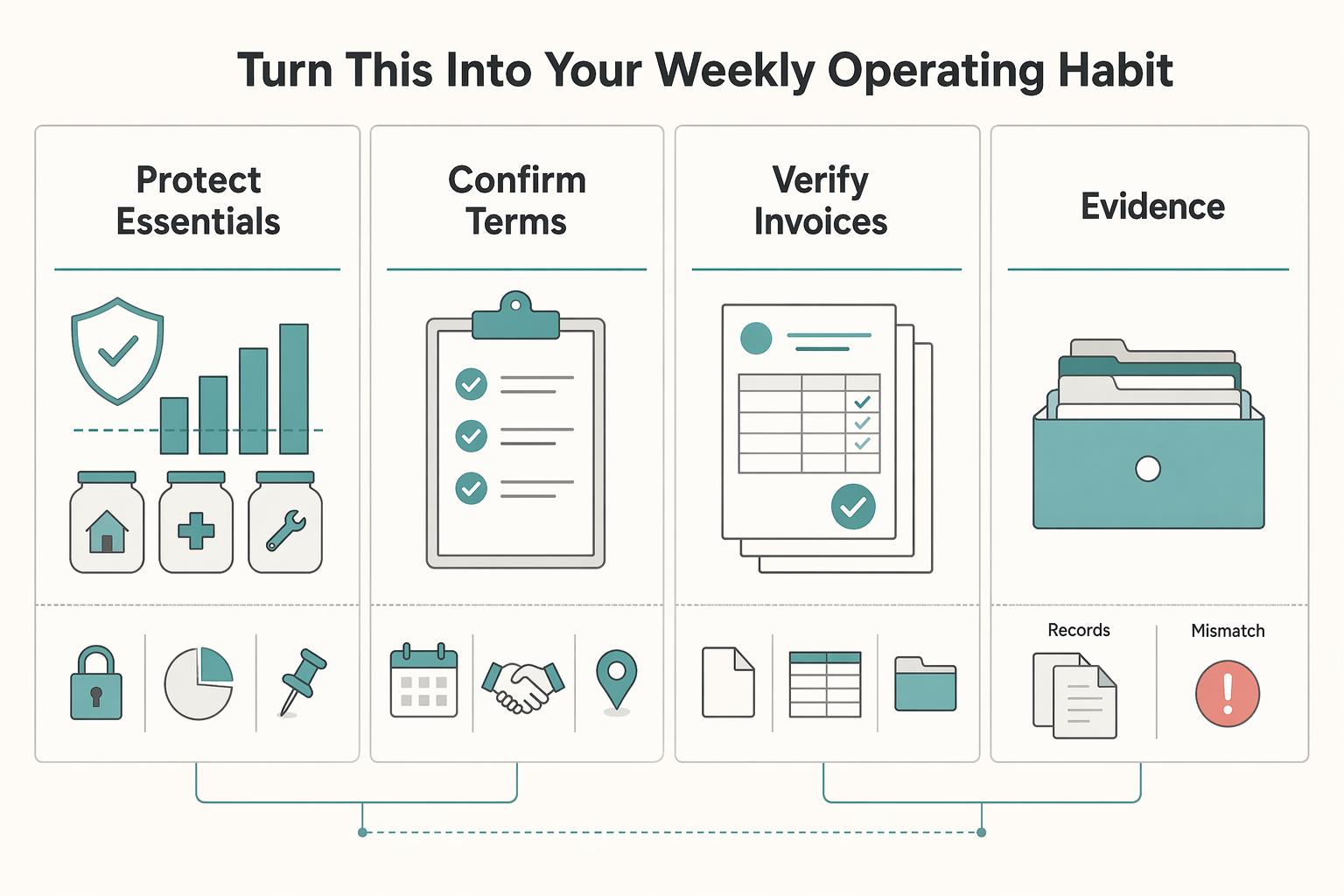
How to Create a Financial Safety Net as a Freelancer
Your **freelance financial safety net** is more than a savings balance. It is the set of controls that lets you cover fixed obligations on time when receipts are uneven, and it keeps invoiced revenue separate from cash you can actually spend. The goal is not to predict every slow month. The goal is to reduce the chance that one late client payment turns into missed bills, tax pressure, or borrowing.
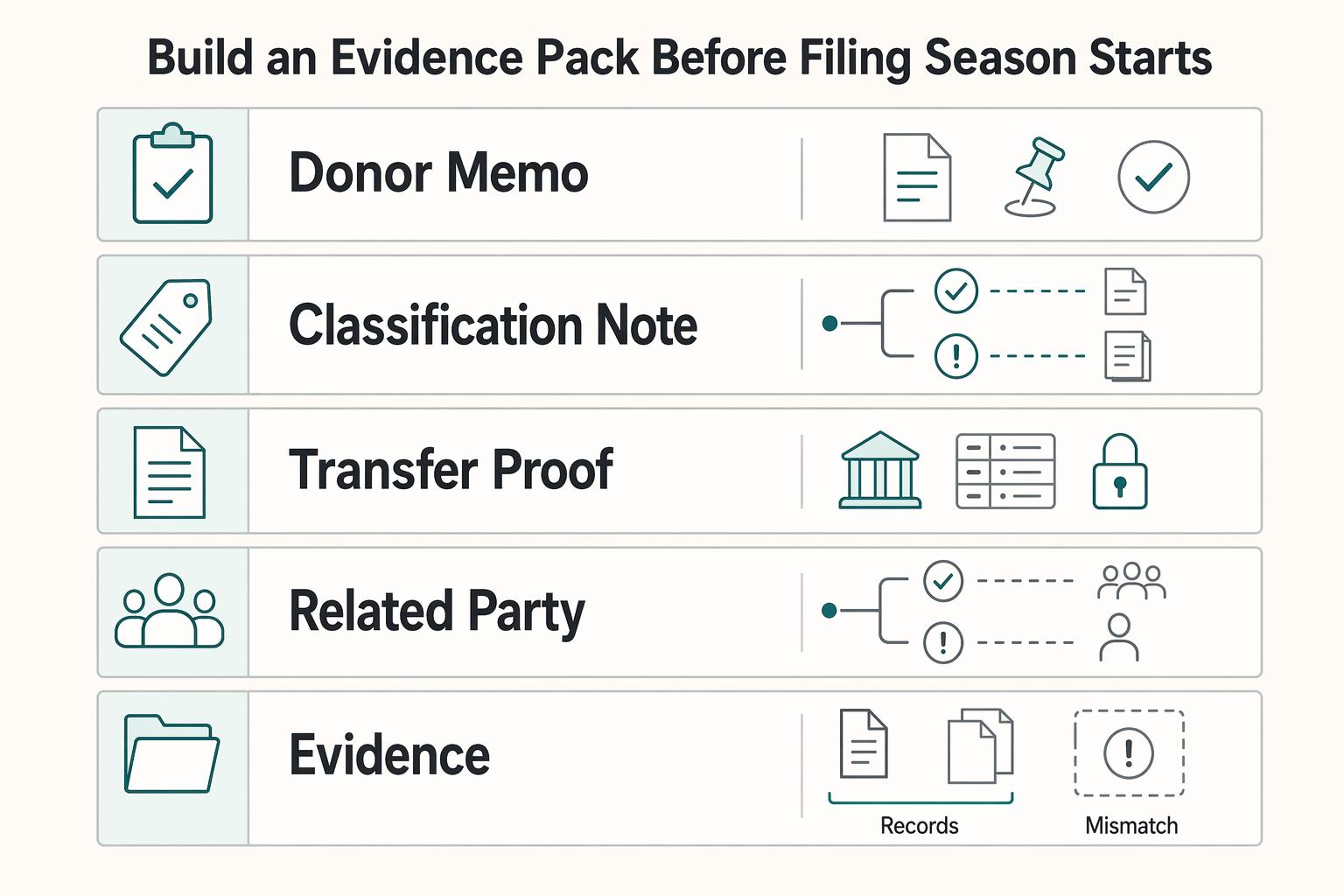
Gift Tax for US Expats Without Filing Surprises
Keep filing season calmer by deciding early which lane each transfer belongs in: `Form 3520` or not reportable under these rules. For a U.S. person living abroad, the practical order is to get the U.S. filing lane right first, then sort the cross-border details that raise risk.