
Quick Answer
Gewerbesteuer usually does not apply if your work is genuinely classified as Freiberufler, but it generally does apply if the activity is treated as commercial. For freelancers, the safest approach is to confirm classification first, then calculate from the adjusted profit base using the 3.5% base rate and your municipality's Hebesatz, and keep clear records in case your position is reviewed.
German trade tax for freelancers in plain English#
Start with one decision: does Gewerbesteuer apply to your work at all? Not every self-employed person in Germany pays it, and that classification drives the rest.
This guide helps you make a defensible first pass. You can decide whether trade tax is in scope, build a rough estimate using the right inputs, and keep the evidence you may need later if your position is reviewed.
What this article helps you decide#
The key issue is how your setup is treated in Germany, so work through these questions in order:
- Is your activity treated more like
Freiberuflerwork or a commercial business activity? - Are German tax obligations in play for you as a resident or non-resident?
- If yes, estimate trade tax using the 3.5% base rate and your municipality's
Hebesatz, which can vary by location.
Germany taxes residents on worldwide income and non-residents on German-source income. Treaty rules can override the basic residence result in some cases.
Who should actually read this#
This is for globally mobile consultants and solo operators with mixed client locations who want a practical way to think through the issue. It is not a playbook for larger teams or for structuring decisions through a GmbH or AG.
What this is not#
This is not individualized tax advice. If your activity is mixed or unclear, treat classification as an early escalation point, because unclear cases can be decided by the tax office.
That matters especially in IT and consulting work, where outcomes depend on the specific activity performed, not the label you use for yourself.
How to use this guide#
You can make a first-pass decision more reliably if you gather a small evidence set first:
- a plain-language description of what you actually do
- contracts or statements of work that describe your services
- proof of the municipality tied to your business activity
- your current legal form
- basic tax residence facts, including whether you were in Germany for more than six months
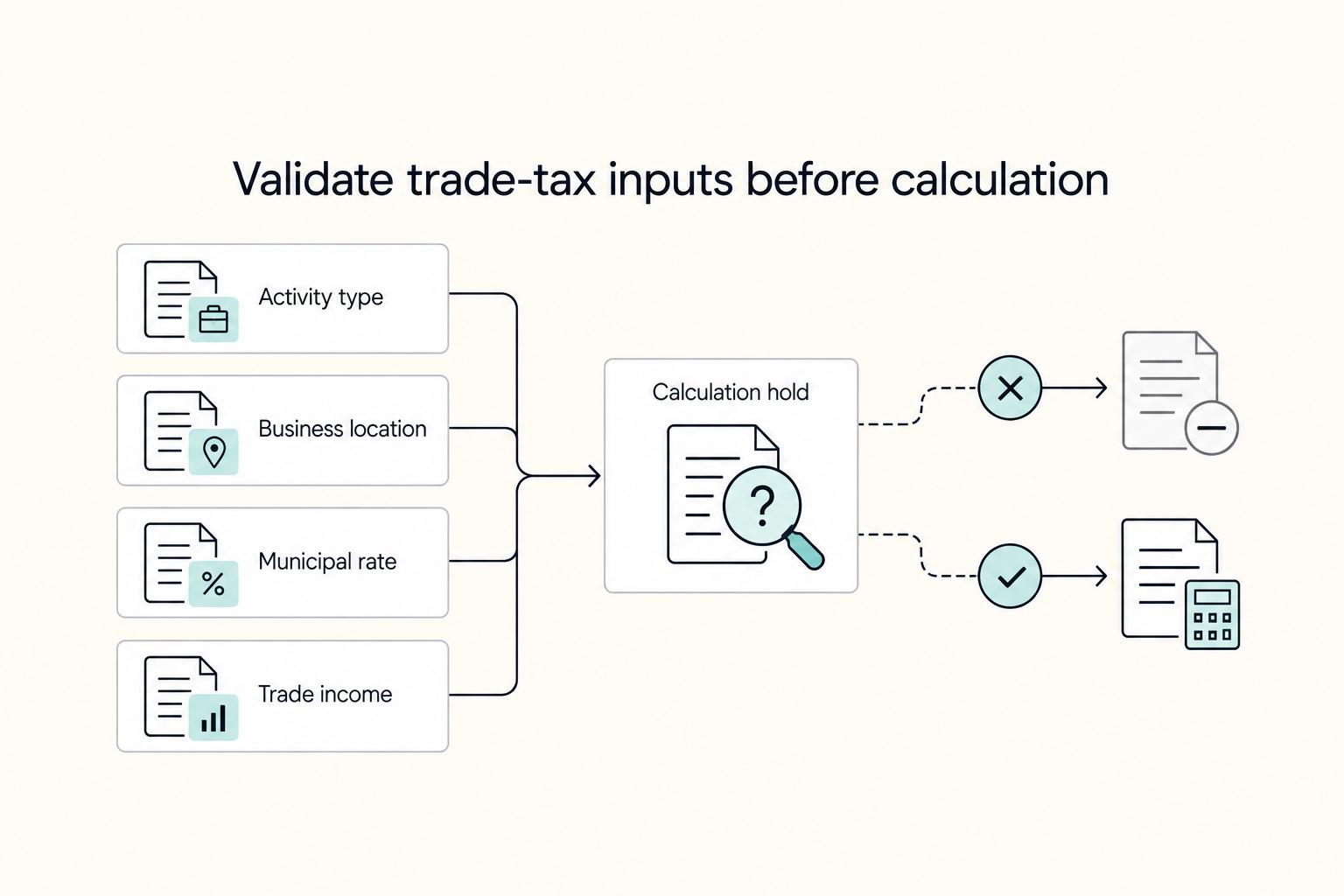
Checkpoint: determine your applicable tax obligations before you start any tax calculations. If your result depends on an uncertain activity classification or treaty interpretation, stop and escalate before filing.
This guide helps you avoid two expensive mistakes: calculating too early and documenting too late. Related: A Deep Dive into Germany's Tax System for Freelancers.
Start with the legal classification that decides everything#
Classification comes first because it decides trade tax exposure. True Freiberufler activity is generally outside Gewerbesteuer, while gewerbliche Tätigkeit as a Gewerbetreibender is generally inside it.
This is not a branding choice. The distinction is mandatory, and in unclear cases the Finanzamt decides. If your position is arguable, escalate early instead of spending time optimizing municipal rates.
Activity beats label#
In practice, classification depends on what you actually do, not just what you call yourself. Freiberufler status is anchored in Section 18 EStG, so "self-employed" or "Einzelunternehmer" alone does not settle the trade tax question.
Use a quick evidence check:
- plain-language activity description
- contracts or statements of work
- invoice line items
If those consistently show qualifying freelance-type services, your position is easier to defend. If they show mixed services or trade-like elements, treat that as a risk point.
Mixed activity is where problems start#
Mixed activity is where clean assumptions break down. Do not assume all income sits outside trade tax just because part of your work looks freelance. The commercial portion can still trigger liability.
Keep separate income tracking by activity type from day one. Blended revenue makes later classification harder and weakens your position if the tax office asks how you split freelance and commercial income.
If classification is challenged later, mistakes can lead to back taxes, penalties, and extra paperwork. It may also force late registration steps you should have handled earlier.
Legal form is a different question#
Legal form matters, but it does not replace activity classification. An Einzelunternehmer is not automatically a Freiberufler, and partnerships and corporations can still fall within trade tax rules.
The practical rule is simple. Commercially active businesses in Germany can be assessed for trade tax, including sole proprietors, partnerships, and corporations. For corporate setups, this fits Germany's two-tax framework on business profits: corporation tax plus trade tax.
If your setup is treated as a trade business, you also need a Gewerbeanmeldung at the local Gewerbeamt.
Rule for this guide: if your classification needs a hard argument, escalate before you optimize anything else. And if you do qualify as a Freiberufler, remember that income tax and VAT compliance still apply.
Use a 10 minute decision checkpoint before you calculate anything#
Do this before you estimate anything. A fast calculation built on bad inputs is still wrong.
| Checkpoint | What to confirm | Grounded detail |
|---|---|---|
| Activity bucket | Decide whether you are acting as a Freiberufler or doing gewerbliche Tätigkeit | Write a short note on what you do and what you invoice for, then keep the related registration proof. |
| Registration artifacts | Make sure your file contains the documents that match your activity bucket | For Freiberufler, use the Fragebogen zur steuerlichen Erfassung within four weeks. For Gewerbetreibende, use Gewerbeanmeldung at the local trade office plus the tax questionnaire, with trade registration before or immediately after the first invoice, and keep the Gewerbeschein if registration is accepted. |
| Legal form | Check legal form separately from activity type | If either classification or legal form is still uncertain, treat the estimate as provisional. |
| Unresolved facts | Flag unclear facts early | If key facts are still unclear, send the estimate for advisor review before you treat it as final. |
1. Confirm your activity bucket. Decide whether you are acting as a Freiberufler or doing gewerbliche Tätigkeit. Write a short note on what you do and what you invoice for, then keep the related registration proof with it.
For Freiberufler, use the Fragebogen zur steuerlichen Erfassung, submitted to the tax office within four weeks. For Gewerbetreibende, the path used here is Gewerbeanmeldung at the local trade office plus the tax questionnaire, with trade registration before or immediately after the first invoice. If registration is accepted, keep your Gewerbeschein on file.
2. Confirm your registration artifacts. Make sure your file contains the documents that match your activity bucket. Keep one dated record of what you filed so the basis of the estimate stays clear.
3. Confirm legal form separately. Check legal form apart from activity type. If either classification or legal form is still uncertain, treat the estimate as provisional.
4. Flag unresolved facts early. If key facts are still unclear, send the estimate for advisor review before you treat it as final.
As a practical risk check, trade registration is described as the formal start notification for profit-oriented activity, anchored in § 14 GewO. In the materials used here, skipping it is described as carrying fines of up to €1,000 plus retro-tax risk.
Calculate Gewerbesteuer from the right profit base#
The right calculation starts from tax-law profit, not whichever bookkeeping figure is easiest to pull. A raw profit number is only a draft input, not a filing-ready trade tax base.
Use this sequence every time:
- Start from profit determined under income tax or corporation tax rules.
- Apply GewStG Section 8 additions and Section 9 deductions.
- Apply the uniform 3.5% base rate.
- Apply your municipality's Hebesatz.
One error to avoid is skipping step 2 and multiplying a bookkeeping number by a city rate. That misses how the trade tax base is built, and the materials used here note that identical corporation tax and trade tax bases are unlikely in practice.
Adjustments can materially change the base. One grounded example is that 25% of financing costs over EUR 200,000 are added back, including implicit financing in leasing, rental, and royalty payments. So if financing, leasing, rental, or royalties matter in your business, check those lines before you finalize.
Once you have the adjusted base, keep the rate logic separate. Apply 3.5% first, then the Hebesatz. The Hebesatz is municipality-specific and tied to where business PEs are located, so estimates do not travel cleanly between locations. For municipalities with at least 80,000 inhabitants, the cited range is Hebesatz 250% to 580%, which produces an effective 8.75% to 20.3% when combined with 3.5%.
Before filing, save one exact calculation snapshot with:
- starting profit figure and source
- applied Section 8 additions and Section 9 deductions, or a note that none were identified
- the 3.5% step
- municipality and exact Hebesatz
- rounding treatment, including any rounding down to the nearest €100 used in your worksheet
If that snapshot does not clearly show the adjusted base, then the 3.5% step, then the Hebesatz step, treat the estimate as provisional until it does.
Compare municipalities before assuming your burden#
Municipality is not a small detail here. The local step can change the result when municipal rates differ. Do not copy a Berlin example into Hamburg, Munich, Cologne, or Frankfurt am Main without rerunning the city step.
A DIW Discussion Paper describes local business tax as a main revenue source for local governments in Germany and notes that it has been debated for decades. The practical takeaway is to treat city-level differences as a planning variable, not a background assumption.
What the current evidence supports#
Treat Hebesatz values for Berlin, Hamburg, Munich, Cologne, and Frankfurt am Main as unconfirmed until you check official municipal sources. One non-official social-media snippet gives different effective figures for Munich, Cologne, and Hamburg, but that is a verification prompt, not filing evidence.
| City | Supported by current evidence | What to do |
|---|---|---|
| Berlin | Confirm with the relevant authority | Verify the current official municipal rate for your tax year, then recalculate |
| Hamburg | Social snippet shows 16.45% and is not official or validated here | Do not use it as filing input. Verify the official rate first |
| Munich | Social snippet shows 17.15% and is not official or validated here | Confirm the official rate and keep the source with your worksheet |
| Cologne | Social snippet shows 16.62% and is not official or validated here | Re-run the calculation with the verified city rate |
| Frankfurt am Main | Confirm with the relevant authority | Pull the official rate for the relevant year before relying on any estimate |
Avoid this common mistake#
Do not treat observed city examples and legal-ceiling claims as the same thing. Based on this evidence, statements like "there is no statutory upper ceiling in Germany" should not be treated as verified.
Same business, different municipality, different liability#
If activity, legal form, and adjusted base are identical but the municipality changes, the final trade tax amount can change if the applicable municipal rate is different. The decision rule is straightforward: if the municipality changes, rerun the municipal step from scratch and archive the exact rate source used for that tax year.
Match allowances to legal form before estimating net cost#
Allowance questions only help after you have the classification right. One core rule applies: a correctly classified Freiberufler is generally outside local trade tax, while a Gewerbe is generally inside it.
This is where many freelancers slip. Allowance eligibility does not fix a wrong activity classification. If your facts point to commercial activity, treat allowance questions as a second-step check. If your facts support Freiberufler status, the material used here says that status "completely exempts you from the local trade tax," so allowance modeling is usually not the deciding issue. If classification is unclear, verify it first or use this deeper comparison.
| Entity type | What this evidence pack supports | Key caveat for your estimate |
|---|---|---|
| Einzelunternehmer | No authoritative allowance rule is stated here. One non-official guide mentions the first 24.500 € profit as exempt for a trade-classified business. | Treat that figure as a verification prompt, not filing input. Do not assume it applies automatically or across legal forms. |
| Personengesellschaft | Confirm the specific allowance amount with official guidance | Do not carry over sole-proprietor assumptions without a verified rule for your entity and tax year. |
| Kapitalgesellschaft (e.g., GmbH, AG) | Supported: corporate company taxation generally includes corporate income tax, solidarity surcharge, and trade tax. | This supports trade tax exposure, not a specific allowance outcome. |
| Verein | No specific allowance treatment is supported here. | Do not borrow allowance rules from other legal forms without verification. |
Use your registration and tax office paperwork as the checkpoint for legal form and tax treatment. A documented failure mode is overstating expected results in the initial Finanzamt questionnaire, which can trigger heavy prepayments quickly and strain cash flow.
Understand income tax credit interaction without overpromising#
Be conservative here. Do not reduce your trade tax estimate based on an assumed income tax payback. The supported position is narrower: both Gewerbesteuer and Einkommensteuer can apply in the same year, and the outcome depends on individual circumstances.
What is safe to assume#
If you register a trade in Germany, trade tax usually applies. If you have income, income tax applies, and additional tax effects vary by case. So when both taxes are relevant, plan for both instead of assuming one will automatically cancel the other.
Individual circumstances can change the outcome#
Even in similar situations, effective outcomes can differ because tax effects depend on individual circumstances. Do not assume someone else's result will match yours.
Use one hard decision rule#
If your plan only works because you assume "I'll get it back," treat that as an escalation trigger. Use that trigger when:
- your pricing or cash buffer depends on netting trade tax down
- your income situation changed during the year
- a structural business decision depends on an assumed offset outcome
Keep one limit explicit: do not assume any exact credit formula, cap, percentage, or guaranteed recovery result applies. The safer move is to keep the trade tax cash cost visible until your own case is reviewed under the actual tax-law rules.
Build the document pack that makes your position defensible#
A defensible position depends on records you can actually use later. Keep them current, accessible, date-stamped, and tied directly to your treatment. Treat this as a working standard for your own tax compliance, not as a claimed legal minimum.
Start with a lean pack you can maintain#
Use one working file or folder that keeps these items together. The goal is simple: someone else should be able to follow your logic without guessing.
- a short activity description of what you did during the year
- the contract set you relied on
- the invoicing trail used for your totals
- any municipality facts and source you used in your calculation, if applicable
- the exact calculation worksheet used for filing
Keep Section 8 and Section 9 tracking in one place#
If GewStG Section 8 additions or GewStG Section 9 deductions are relevant to your case, track your review and conclusion in one place. If an item is not applied, note that clearly instead of leaving a gap. Specific documentation standards for these items are not established.
Keep cross-border notes attached, but separate#
If your facts touch more than one country, add a short side note for Doppelbesteuerungsabkommen (DTT) and possible Betriebsstätte (PE) exposure. Keep it factual and scoped to your case. This section does not establish formal documentation standards for either topic.
Add an annual sign-off checklist (internal)#
Close the file each year with the same checks so it stays usable as an internal control, not as a claimed legal requirement:
- activity description still matches the year's work
- contracts and invoicing trail tie to your records
- municipality inputs used in the calculation are saved
- Section 8 and Section 9 review is documented, where relevant
- cross-border facts were captured and escalated if needed
- final worksheet and filed version are archived together
Apply an evidence-quality gate#
Do not rely on records you cannot open later. A password-locked file you cannot access is weak support.
Outdated or incomplete material is weak too. One historical source says its German tax-legislation section was omitted and would not satisfactorily describe contemporary institutions without extensive revision. Another source is a 2014 transfer-pricing exam manual rather than Gewerbesteuer filing guidance.
When you rely on a public document, keep the downloadable artifact and the access date. The OECD page, published 12 June 2025, explicitly provides a "Download PDF," which is the kind of retrievable record you want.
Before filing, keep your timeline and residency evidence in one place with the Tax Residency Tracker.
Follow a practical filing year timeline#
Timing is not admin trivia here. Rework can happen when municipality inputs or calculation logic are checked only at filing time.
| When | Action | Grounded detail |
|---|---|---|
| Newly formed / start of year | Treat registration with the local Finanzamt as an immediate checkpoint | The process is largely an online questionnaire and asks for estimated revenue and profits. If formal company roles apply, prepare identity and role documents up front. |
| Monthly | Close books and flag items that may change the trade-tax base | Keep profit, invoices, and contracts traceable. |
| Periodically during the year | Compare actuals to your opening forecast and update your working estimate when reality moves materially | Use the opening forecast carefully because it helps set initial prepayments. |
| Ongoing | Keep municipality and PE facts current | The municipal Hebesatz depends on where business PEs are located. |
| Before filing | Freeze the bookkeeping period, confirm assumptions, recheck municipality inputs and Hebesatz, rebuild the calculation, and keep support together | A late change to core inputs may require additional recalculation work. |
Start the year clean#
If you are newly formed, treat registration with the local Finanzamt as an immediate checkpoint. The process is largely an online questionnaire and asks for concrete inputs early, including estimated revenue and profits. If formal company roles apply, prepare identity and role documents up front.
Use that opening forecast carefully. It helps set initial prepayments, and weak inputs can create noise for the rest of the year. Delayed registration can also stall invoices, payments, and early revenue activity.
Keep a steady operating rhythm#
A steady operating rhythm keeps bookkeeping and tax prep aligned. Use a simple internal cadence:
- Monthly, close the books so profit, invoices, and contracts are traceable, and flag items that may change the trade-tax base.
- Periodically during the year, compare actuals to your opening forecast and update your working estimate when reality moves materially.
- Ongoing, keep municipality and
PEfacts current, because the municipalHebesatzdepends on where business PEs are located.
This matters because Gewerbesteuer is calculated from an adjusted profit base, not raw bookkeeping profit. The general sequence runs through the 3.5% base rate before the municipal Hebesatz is applied, so base errors carry into the final result.
Use this order before filing#
Before filing, use a practical internal order. It improves traceability because you settle records and location facts before final computation.
- Freeze the bookkeeping period and reconcile invoices, bank activity, and profit.
- Confirm your key assumptions and documented facts are still current.
- Recheck municipality inputs and
Hebesatz, including anyPEfacts that affect location. - Rebuild the calculation from the adjusted profit base.
- Keep the final worksheet, municipality support, and latest estimate-review notes together.
A late change to core inputs may require additional recalculation work, so it is safer to reconcile these items before final filing.
Avoid the mistakes that create most freelancer pain#
Most costly errors come from assumptions, not arithmetic. Use the same order every time: confirm classification, confirm locality, then build from the correct trade tax base.
The freelancer label is not the deciding fact#
Do not assume the word "freelancer" means no Gewerbesteuer. If the tax office classifies your activity as trade, gewerbliche Tätigkeit, trade tax can apply.
Treat classification as an evidence question tied to what you actually do. The 24.500 € figure applies to a trade-classified setup. Do not apply it automatically to every case. If you started paid or gifted work, file the "Questionnaire for tax registration" within four weeks and resolve classification early, not at filing time.
City examples do not travel well#
City examples are useful for method, not for reliance. Do not reuse one city example for another and expect the same result. Above the exemption, the burden depends on local trade tax rates, and the effective rate falls in an approximate range of 7-17 %.
Use outside examples as method demos only, then rerun the numbers with your own municipality inputs.
Gross cash is not your tax base#
Bank inflows are not the same thing as your trade tax base. Benefits received in exchange for work count as business income and must be recorded at fair market value, including non-cash compensation.
That means comparing only cash receipts to the 24.500 € profit exemption can give a false sense of safety. Build your estimate from the relevant trade tax base instead.
Edge cases are compliance questions#
Mixed activities and unclear classification facts are not just bookkeeping cleanup. Treat them as compliance decisions. If the facts are mixed, escalate before final filing numbers are locked.
Keep records that support your position, and retain digital records and receipts for ten years.
Know exactly when to involve a tax professional#
Bring in a tax professional as soon as your answer depends on classification, cross-border facts, tax-law adjustments, or a legal-form change. Those are the points where a wrong assumption can get expensive quickly.
Classification that is arguable or changed#
Escalate if your work sits between Freiberufler and commercial activity, or if your activity changed during the year. If your work is mixed, the commercial portion can still create Gewerbesteuer exposure even when part of the work is freelance.
Treat this as an evidence decision, not a label decision. Share a short facts pack on what you do and what changed, then confirm the position before filing assumptions are locked in.
Cross-border facts are an escalation trigger#
Cross-border facts should trigger review early. Germany has double tax agreements with more than 90 countries, and German tax exposure can arise from income connected to Germany, including through a Betriebsstätte (PE).
Give your advisor the core facts first: countries involved, where work was performed, where clients are, and whether you have a fixed local presence. You do not need to solve the treaty analysis on your own before asking for help.
Complex adjustments or a new company form#
Escalate when your estimate depends on trade-tax add-backs or reductions. Taxable income can differ from annual financial-statement profit, so do not guess when those adjustments materially change your estimate.
Also escalate before changing to a corporation solely for tax reasons. For corporations in Germany, taxation generally includes corporate income tax, solidarity surcharge, and trade tax. Municipal variation means there is no single nationwide result. Get advice before formation and before the online tax-registration questionnaire so structure and forecast details are consistent from the start.
Related reading: How to Get a German Tax ID as a Freelancer Without Mix-Ups.
Use Gruv records to reduce compliance friction#
Once you have escalated the hard judgment calls, the next win is operational: make your records traceable before you calculate. For this work in Germany, a safer pattern is evidence first and computation second.
If you use Gruv, treat it as one part of that evidence chain and confirm your market or program setup before you rely on any single report. Keep invoice, payout, amount, date, and counterparty records in clear chronological order so your filing worksheet can be traced back to underlying transactions when needed.
Build the evidence pack before you need it#
Build the evidence pack before a filing deadline forces you to. Think in exact identifiers, dated records, and version control. In formal German company records, that standard shows up as concrete references like commercial-register IDs (for example, HRB numbers) and dated shareholders lists (for example, October 31, 2018).
Even if you operate solo, the same principle applies: keep the exact document, the relevant date, and the version you relied on.
Reconciliation beats backtracking#
Reconciliation can save time later. A common risk is using one number set for estimates, then discovering later that timing, netting, or scope assumptions were different. That is when "close enough" records turn into rework.
Keep qualifiers explicit in your archive, especially when coverage depends on market or program setup. Also note what is excluded: public-filed documents can omit confidential details, so a file that looks complete may still miss context unless you preserve it directly.
The practical takeaway for a low-stress compliant setup#
The low-stress path is simple. Classify your activity first, estimate using your real municipality and legal form second, escalate early when facts are unclear, and keep an audit-ready file open all year.
Decide classification before you calculate#
Start with the basic question: are you treated as a Freiberufler or as a gewerbliche Tätigkeit? In these materials, trade tax applies to commercial activity, while freelancers are generally exempt unless their services are treated as commercial.
Do not rely on labels alone. If your work is treated as commercial, your exposure changes, and for sole proprietors and partnerships the supported allowance is €24,500, not a blanket exemption.
Estimate with your actual municipality and legal form#
Run your estimate with the municipality tied to your business, because rates are set at the municipal level. Use examples to understand the mechanics, but do not reuse another city's inputs as your own.
For sole proprietors and partnerships, the allowance is €24,500 annually. For other forms, verify the rule before relying on any allowance. A practical stress test is to model what happens once profit crosses €24,500, then check sensitivity at your local rate. Rates run in an approximate local range of 7% to 17% above the allowance.
Escalate early when the facts are messy#
If classification is mixed or key facts are unclear, escalate early. That cost is risk control, not admin overhead.
Use a simple rule: if you cannot defend a key assumption clearly in writing later, get professional review before filing.
Keep an audit-ready file open all year#
If the trigger applies, file the Questionnaire for tax registration within 4 weeks of your first paid or gifted collaboration. Keep digital records and receipts for 10 years.
Keep one dated folder with your activity description, municipality and rate used, legal-form note, calculation snapshot, invoices, and receipts. If trade tax is due, track advance-payment dates: February 15, May 15, August 15, and November 15.
If you want to sanity-check your workflow for cross-border invoices, payouts, and audit-ready records, contact Gruv.
Frequently Asked Questions
Do freelancers in Germany pay Gewerbesteuer?
Usually not if you are genuinely classified as Freiberufler. If your work is mixed or treated as commercial, the commercial portion can still trigger Gewerbesteuer, so your actual activity matters more than the label.
How do you calculate Gewerbesteuer from profit and Hebesatz?
Start with annual profit and determine Gewerbeertrag by applying the relevant add-backs and reductions. Then apply the fixed 3.5% Steuermesszahl and your municipality's Hebesatz. The article also notes a practical checkpoint of rounding profit down to the nearest €100 before applying rates.
Why is trade tax different in Berlin versus Frankfurt am Main?
Because Gewerbesteuer is municipal. Each municipality sets its own Hebesatz, so the same profit can produce different outcomes across cities. That is why a Berlin example should not be copied directly to Frankfurt am Main.
Is there a legal minimum or maximum trade tax rate in Germany?
From these materials, the safe conclusion is that there is no consistent nationwide rate because municipalities set the multiplier locally. One source says multipliers are often between 200% and 900%, but that is not confirmed as an official legal nationwide minimum or maximum. If the rate materially affects your estimate, verify the current municipal multiplier directly.
Do Einzelunternehmer and Personengesellschaft get an allowance?
The material supports a €24,500 annual allowance for sole proprietors. For Personengesellschaften, the article advises verification before filing rather than assuming the sole-proprietor rule automatically applies.
Do GmbH or other Kapitalgesellschaft entities get any allowance?
Kapitalgesellschaften such as GmbH and AG are taxable business forms. Do not assume a comparable allowance applies to them; the article recommends a conservative assumption and separate verification before modeling any allowance.
Can trade tax be offset through Einkommensteuer, and when is that uncertain?
A Berlin sole-proprietor example shows trade tax can interact with Einkommensteuer, but not as a full offset: 14.35% trade tax, 13.30% income-tax credit, and 1.05% more total tax. The article says the outcome depends on individual circumstances, so differences in municipality, income profile, or entity type can change the result.
Researched and edited by the Gruv editorial team. Gruv builds cross-border billing, payouts, and finance-operations software for global businesses.
Sources
Includes 3 external sources outside the trusted-domain allowlist.
- jct.gov/getattachment/fe81a245-7106-40f5-bec7-309991...trusted
- oecd.org/en/publications/oecd-economic-surveys-german...trusted
- oecd.org/content/dam/oecd/en/publications/reports/200...trusted
- sec.gov/Archives/edgar/data/1394056/0001193125260045...trusted
- sec.gov/Archives/edgar/data/1306843/0001193125051421...trusted
- archive.org/download/scienceoffinance00cohnuoft/scienceo...external
- docs.iza.org/dp17868.pdfexternal
- econstor.eu/bitstream/10419/27241/1/550042539.PDFexternal
Educational content only. Not legal, tax, or financial advice.
Related Posts

Digital Nomad Taxes in 2026 With a Defensible Filing Plan
With digital nomad taxes, the first move is not optimization. It is figuring out where you may be taxable, where filings may be required, and what proof supports that position.
Germany Freelance Tax Decisions for Globally Mobile Consultants
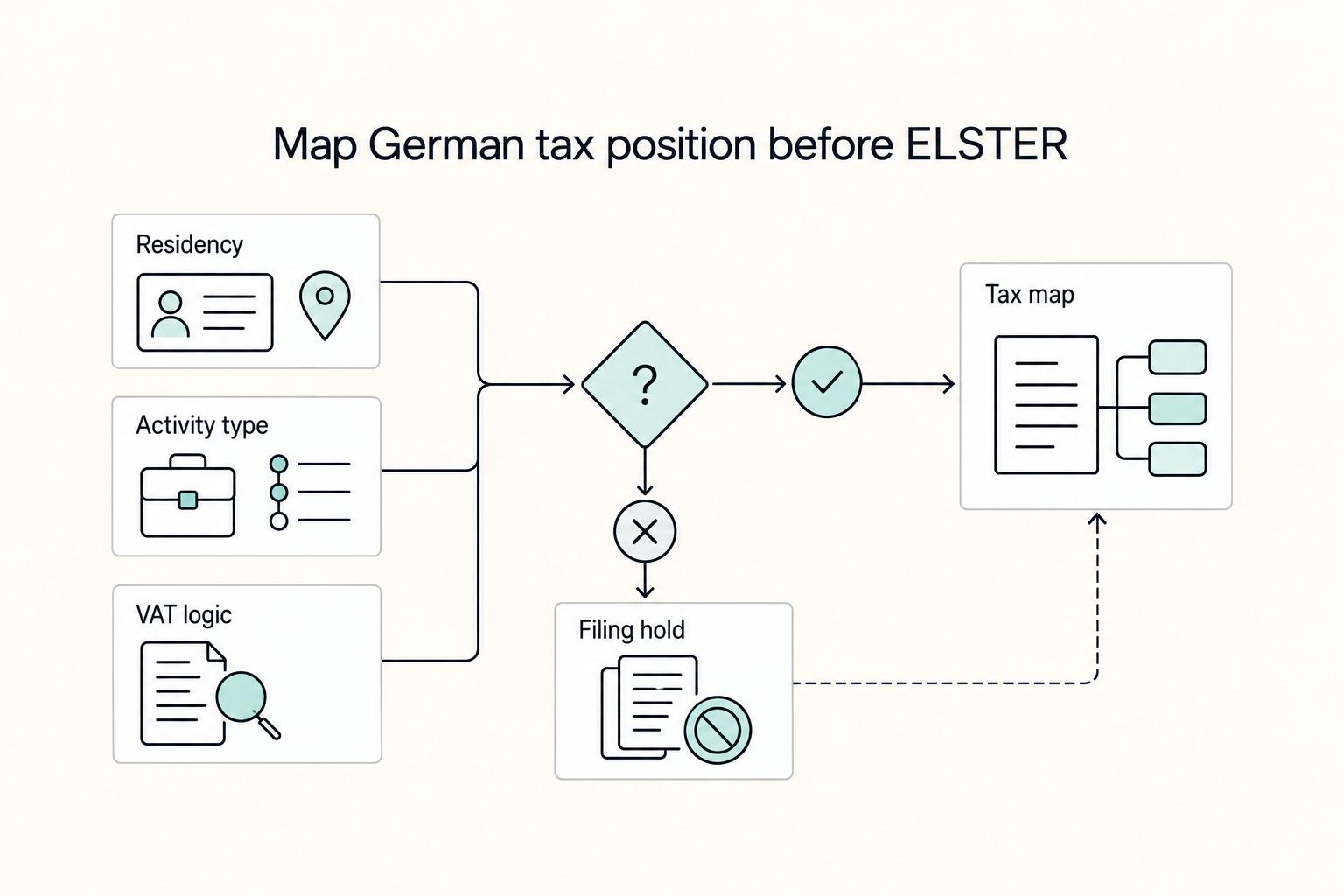
Set your German tax position first, then register and file. If you are a globally mobile consultant, a lower-risk approach is a clear decision order, not a tax shortcut.

The Best Analytics Tools for Your Freelance Website
Start with one sequence and keep it boring. Decide the business question. Choose one primary reporting source. Verify tracking against the origin. Then review it on the same day each week. That order matters more than which tool wins your shortlist.