
Quick Answer
Use a two-track rule for hong kong stamp duty: act on supported share-transfer mechanics, and verify property or lease details right before filing. For shares, the article supports a total duty split between buyer and seller, with a settlement-timing checkpoint when an exchange participant remits for clients. For property and leases, confirm liability, document basis, filing channel, and deadline before signing. Keep written confirmations and a dated record set so each transaction can be defended later.
Hong Kong stamp duty is not one rule so classify your transaction first#
Start by classifying the transaction and the document, not by looking up rates. In Hong Kong SAR, stamp duty is imposed on specific document types under the Stamp Duty Ordinance (Cap. 117), so your first step is to confirm what instrument you are signing and when it is executed.
Official guidance treats this as several document families, not one universal rule. Duty on sale, transfer, and lease of immovable property and on transfer of Hong Kong stock is charged at different rates, and stamping time limits are instrument-dependent, ranging from 2 to 30 days.
| What people casually call it | What the document usually is | Where to verify first |
|---|---|---|
| Property stamp duty | Sale or transfer documents for immovable property | Official stamp duty overview and rates pages |
| Tenancy duty | Lease of immovable property (Tenancy Agreement) | Documents for stamping page |
| Stock transfer duty | Transfer of Hong Kong stock, including share transfer instruments | IRD share transfer computation page and related IRD materials |
How to use the rest of this article#
This guide is built to help you make one defensible decision at a time. Use this order, then check rates, reliefs, or computation tools:
- transaction type
- document type
- execution date and current legal status
That sequence avoids a common mistake: applying the wrong regime. A property concept like ad valorem stamp duty does not stand in for a Tenancy Agreement, and neither is the same as transfer of Hong Kong stock. Also check legislative status before relying on proposed updates. Some 2026 rate items are explicitly stated as subject to enactment of the amendment ordinance.
Why this matters if you are globally mobile#
For cross-border freelancers and consultants, start with a practical question: what exactly is this document, and which Hong Kong stamping path applies? That matters in share-transfer scenarios involving specific instruments such as the instrument of transfer and contract notes.
Valuation can also change the outcome. IRD materials state that if transfer price is below market value, duty may be assessed on market value instead. Keep your signed instrument, execution date, stated consideration, and value support ready before filing.
What this guide will and will not do#
Where official excerpts are clear, this guide will be specific. Where excerpts are incomplete, it will flag uncertainty instead of guessing. Use a simple rule: if you cannot match your exact document to the relevant official or IRD page, pause and verify classification first.
You might also find this useful: Opening a Hong Kong Bank Account as a Foreigner With Fewer Delays.
Which stamp duty regime applies to your transaction#
Classify the instrument first, then calculate duty. If you cannot match your document to an IRD or official instrument category quickly, pause and classify before touching rates.
| Transaction lane | What your document usually is | First official path to check | What I still need to confirm with IRD |
|---|---|---|---|
| Property instrument | Sale or transfer documents for immovable property; property-side concepts include AVD, BSD, and SSD | IRD stamp duty page for immovable property transactions; official rates page | Is this actually a property transfer instrument? For the execution date, which AVD framework applies: Scale 1, Scale 1 Part 1/Part 2, or Scale 2? |
| Tenancy Agreement | Lease, agreement for lease, or similar-effect document | IRD tenancy agreement materials; official stamp duty computation page | Is this a tenancy agreement rather than a sale/transfer instrument? Has the 30-day stamping clock started from execution? |
| Share Transfers | Share transfer instruments: instrument of transfer and contract notes | IRD share-transfer materials; official share transfer computation page | Is this Hong Kong stock for duty purposes? Which document is being stamped: contract note, instrument of transfer, or both? Is market value relevant because price paid is below market? |
An avoidable mistake is forcing a securities transaction into property terms. If your intent is securities, go straight to the Hong Kong stock transfer lane and the share-transfer computation path, then check HKEX RMB/USD stamp-duty exchange-rate pages only if deal currency makes that relevant.
Use one red-flag check before you proceed: if your notes mix "contract notes" with "Scale 1 (Part 1)" or "Scale 2," you are likely combining different regimes. Also treat 2026 property change snippets as enactment-sensitive where they are still described as a Bill in process.
Before you look at rates, reliefs, or deadlines, keep a short evidence pack: signed instrument, execution date, stated consideration, and value support. That can be enough to confirm the correct lane with IRD and avoid rework.
The core terms you must keep separate#
Your classification works best when you keep four term groups in separate lanes: duty type, rate scale, legal status, and exchange-rate mechanics.
| Term group | What it covers | Keep separate from |
|---|---|---|
| Duty type | AVD is value-based and uses the higher of consideration or property value; BSD and SSD are separate property-duty categories | Scale labels and exchange-rate mechanics |
| Scale labels | Scale 1 and Scale 2 are separate structures; Scale 1 is split into Part 1 and Part 2; Scale 3 appears in the amendment context | Duty type and legal status |
| Legal status | "Proposed" and "in force" are different states; the Stamp Duty (Amendment) Bill 2026 is described as conditional on passage | Current operative rules |
| HKEX exchange-rate pages | Operational inputs for RMB/USD stamp-duty calculations | Legal duty classification or rate rules |
1) Duty type is not one label. Ad valorem stamp duty (AVD) is value-based and uses the higher of consideration or property value. IRD lists BSD and SSD as separate stamp-duty categories from AVD in its property-transfer materials. If your notes say only "AVD applies," that still does not answer whether BSD or SSD is in scope.
2) Scale labels are distinct structures. Scale 1 and Scale 2 are separate structures, and Scale 1 is split into Part 1 and Part 2. Scale 3 is also a separate label in the amendment context. If a draft mixes Scale 1 Part 1, Scale 1 Part 2, Scale 2, and Scale 3 without a clear instrument-and-date basis, treat it as a classification error and recheck.
3) "Proposed" and "in force" are different states. The Stamp Duty (Amendment) Bill 2026 is a Legislative Council process item, so do not treat it as enacted by default. Government wording is conditional, and the stated retrospective effect from 26 February 2026 is tied to passage. Check current status on GovHK, then confirm on e-Legislation.
4) HKEX exchange-rate pages are operational inputs, not legal definitions. HKEX RMB/USD stamp-duty exchange rates help with calculation mechanics. They do not define your legal duty category or replace applicable IRD, GovHK, or e-Legislation rate rules. A common mistake is using an exchange-rate page to answer a legal classification question.
If you want a deeper dive, read Digital Nomad Taxes in 2026 With a Defensible Filing Plan.
What is confirmed today and what is still uncertain#
The only reliable conclusion is process, not current stamp-duty outcomes in Hong Kong. If you are about to file, transfer, or budget, treat substantive duty claims as unconfirmed until you verify them on the current official Hong Kong page.
What is confirmed from the supplied excerpts#
- Not every Hong Kong-related page is stamp-duty guidance.
One source is a UK six-monthly Hong Kong report, covering 1 July to 31 December 2025 and published 26 March 2026, and another is a U.S. appropriations bill page. Neither is an IRD/GovHK stamp-duty instruction page.
- Legislative items can sit in non-final stages.
The supplied bill example shows staged progress and a dated Latest Action line, 01/15/2026 Received in the Senate, which is exactly why proposal versus enacted status must be checked before acting.
What remains uncertain until you verify live#
| Item | Status from this evidence pack | Action |
|---|---|---|
| GovHK/IRD scope, rates, liability, deadlines, relief entry points | Not confirmed | Verify on the current official page |
| Any bracket table, threshold, or payable rate, property or shares | Not supported | Do not calculate from summaries |
| Any Hong Kong amendment/bill status | Not supported | Confirm current status on the official legislative tracker |
| Full Stamp Duty Relief eligibility mechanics | Not supported | Check the exact relief rules line by line |
| Share transfer edge conditions | Not supported | Escalate non-standard or cross-border cases |
The operator rule before you act#
Use only two labels in your notes:
- Confirmed on GovHK/IRD: only after you have the live official page, page title, URL, and check date.
- Needs verification: anything from excerpts, commentary, screenshots, or third-party summaries, including proposed changes.
If a note does not show the official page and check date, treat it as incomplete and verify again before signing, paying, or submitting.
Property instruments and scale mapping without guesswork#
Stamp-duty mistakes in property deals often start with misclassification, not just calculation: the wrong instrument path, the wrong scale, or the wrong execution date. Start by classifying the document, then treat any 2026 item as proposal-stage unless you can confirm enacted law.
IRD already separates immovable-property duty paths into AVD, BSD, and SSD, so do not run everything through one table. For AVD, the official rates page says duty is charged on the higher of consideration or property value. It also shows Scale 1 and Scale 2 in place from 23 February 2013, with Scale 1 split into Part 1 and Part 2 from 5 November 2016.
| Instrument path | Property type | Scale or duty pointer | Timing checkpoint | Legal status check | Verify on official path |
|---|---|---|---|---|---|
| AVD on sale and purchase or transfer | Residential | AVD uses Scale 1 and Scale 2; Scale 1 includes Part 1 and Part 2; AVD is based on higher of consideration or value | Check execution date against live official date notes, including 23 February 2013 and 5 November 2016 | Current AVD framework is confirmed; any 2026 rate change is status-sensitive until enacted | Official rates page; IRD stamp duty landing page under immovable property transactions |
| BSD and SSD review alongside a residential deal | Residential | BSD and SSD are separate paths from AVD on IRD | Verify timing rules on live BSD/SSD pages before signing | No enacted 2026 change is confirmed here for BSD/SSD | IRD stamp duty landing page, then BSD or SSD page |
| AVD on sale and purchase or transfer | Non-residential | The official rates page says instruments executed on or after 26 November 2020 for non-residential sale/transfer are subject to AVD at Scale 2 rates in the cited context | 26 November 2020 is a hard boundary; also use the live table version in force, including Scale 2 table dated 26 February 2025 on the official page | Scale 2 treatment is confirmed in context; do not treat proposed Scale 3 as operative without enactment confirmation | Official rates page; IRD AVD FAQ |
| Post-budget 2026 items | Residential above stated threshold; non-residential proposal | The official rates page states a proposal to raise residential AVD above $100 million from 4.25% to 6.5% with effect from 26 February 2026, subject to enactment; IRD FAQ describes proposed Scale 3 for non-residential | If value is near $100 million or date is near 26 February 2026, verify status before pricing or signing | Proposal-stage only; LegCo second-reading speech item is listed, 18 March 2026; bill text and IRD amendments page must show enacted outcome before operational use | Official rates page; e-Legislation bill text; FSTB LegCo business page; IRD amendments page |
What matters most in practice#
Execution date is your primary control field. If the signed date, deal file, and payment instructions do not align, pause and fix that before calculating duty.
Then confirm the correct path: AVD only, or AVD plus BSD/SSD review. Use ird.gov.hk/eng/tax/sdu.htm as the control start point because it also links to Persons Liable for Stamping and Time Limit for Stamping Different Types of Documents.
Where people usually go wrong#
One failure mode is mixing historic scale changes, current tables, and bill-stage proposals in one note, then applying settings that are not actually operative. A mention in a bill or FAQ is not the same as enacted law.
Escalate before signing in these cases:
- property value is near the stated $100 million proposal threshold
- execution date is close to 26 November 2020 or 26 February 2026
- residential versus non-residential classification is unclear
- your file mixes Scale 1 Part 1, Scale 2, and Scale 3 assumptions
The verification trail to keep#
For each file, retain the signed instrument, execution date, consideration, and valuation support where value may exceed consideration. Then log the exact page title, URL, and check date for the official and IRD pages you used. If a 2026 item affects the deal, confirm it appears as enacted on the IRD amendments page before budgeting, paying, or advising.
For related tax context, see A Deep Dive into Australia's 'Temporary Resident' Tax Rules.
Share transfers and stamped security duty for freelancers#
For securities, do not assume property-duty rules apply unchanged. In practice, "Hong Kong stock transfer duty" usually means stamp duty on share transfers of Hong Kong stock, meaning stock whose transfer must be registered in Hong Kong. PwC's summary is useful for orientation because it uses that same base definition, but for signing, pricing, and filing decisions, use IRD and official government pages first, plus HKEX for market mechanics.
What the duty usually attaches to#
Start with the documents, not the headline rate. The government site frames share-transfer stamping around share transfer instruments: the instrument of transfer and contract notes. If your file cannot clearly identify those documents, pause before calculating.
IRD states contract notes are stamped by reference to price paid, and if consideration is below market value, assessment is based on market value. For quoted shares, IRD indicates market value normally uses the HKEX closing price on the last trading day before the transfer date, so capture that price checkpoint early.
For listed securities, HKEX states stamp duty is 0.1% per side on transaction value, for buyer and seller, rounded up to the nearest dollar. Use that as a common baseline, not as a substitute for classifying your exact documents and facts.
Timing and responsibility you should verify#
Misses usually come from timing and liability assumptions, so verify both against the document type.
| Document or scenario | Timing checkpoint | Responsibility checkpoint |
|---|---|---|
| Contract note for purchase or sale of Hong Kong stock effected in Hong Kong | Within 2 days after sale or purchase | Agent, or if no agent, the principal effecting the sale or purchase |
| Contract note for purchase or sale effected elsewhere | Within 30 days after sale or purchase | Same contract-note side check as above |
| Instrument of transfer, not a gift, executed in Hong Kong | Before execution | Check transferor/transferee liability by document type |
| Gift of Hong Kong stock executed in Hong Kong | Within 7 days after execution | Verify gift-specific liability directly on official and IRD pages |
Do not assume a broker or counterparty completed stamping. The government site states that if a chargeable instrument is not duly stamped, a person who uses it can also be liable for duty and penalty, so keep proof of completion in your file.
Where HKEX helps and where it does not#
Use HKEX exchange-rate tables when your transfer value is in RMB or USD and you need stamp-duty calculation support. That helps calculation accuracy, but it does not resolve legal edge cases.
The official share-transfer computation tool is useful for a first pass, but its output is informational only. Treat it as a sense check, not a final determination.
When to escalate instead of guessing#
Escalate early for non-standard facts. This section does not fully cover exemptions, split settlements, contingent or adjustment-based consideration, or other special scenarios. IRD e-Stamping also explicitly excludes some non-standard stock transactions, including derivatives/share swaps, indebtedness as whole or part of consideration, or consideration subject to adjustment.
Decision rule: if terms are non-standard or the deal involves cross-border entities, use summary pages for orientation only, then verify directly against IRD share-transfer materials before execution. Keep the signed documents, execution date, FX rate used (if any), and market-value support in your evidence pack. For related operating context, see A Guide to DAOs for Freelance Contributors.
Who is responsible and when action is due#
Responsibility and timing are document-specific, so classify the instrument first, then assign liability and deadline from that category.
Under official and IRD guidance, there is no single liable party across all stamp duty cases. Use your checklist to separate legal signatories on the instrument, parties acting as principal or agent, and operational stakeholders who need visibility. Beneficial ownership is not the general legal liability rule on these pages.
Liability and deadline checkpoints#
| Document category | Who is liable | Deadline checkpoint |
|---|---|---|
| Tenancy Agreement, lease, agreement for lease, or similar document | All parties and all other persons executing | Within 30 days after execution |
| Contract note for purchase or sale of Hong Kong stock | The agent, or if there is no agent, the principal effecting the sale or purchase | Within 2 days after sale or purchase if effected in Hong Kong; within 30 days if effected elsewhere |
| Instrument of Transfer of Hong Kong stock, not including gift | The transferor and the transferee | Before execution if executed in Hong Kong; within 30 days after execution if executed outside Hong Kong |
| Gift of Hong Kong stock | Check gift facts carefully under stock-transfer rules | Within 7 days after execution if executed in Hong Kong |
Two checks prevent avoidable misses. For tenancy agreements, IRD says the commencement date does not affect the deadline, so track from execution date. For share-transfer contract notes, IRD says the note should state whether the person effecting the sale or purchase is acting as principal or agent, so fix that field before submission.
A practical handoff you can defend later#
The law sets liability, but your process should still name one owner per step:
- Prepare: collect executed documents, confirm category, and record execution date, place of execution, and principal/agent status where relevant.
- Review: verify liability, deadline, and whether the official or IRD page used matches the instrument.
- Submit: assign one person to file through the applicable channel; the government site notes tenancy agreement applications can be sent by post.
- Store evidence: retain stamped instrument or confirmation, submission proof, and the source pages used for the decision.
Do not assume another party handled stamping. The government site states that if a chargeable instrument is not duly stamped, a person who uses it can also be liable for duty and penalty. IRD also notes an unstamped tenancy agreement is not receivable in evidence in civil proceedings.
Late stamping is possible, but penalties apply. The government site states late stamping may be accepted with penalties, including double, 4 times, or 10 times the duty depending on delay. If you request remission, the site supports requests with explanations of delay and supporting evidence.
Keep a timestamped internal log of the official and IRD pages used on decision day. It is not a statutory requirement, but it helps you defend document classification, responsibility assignment, and filing path.
Reliefs and exceptions that can change the outcome#
Relief review should happen before you pay stamp duty. Once you have classified the instrument and confirmed the deadline, check whether a relief or exception changes the result, and confirm whether that relief is currently in force.
Use relief logic only inside the correct transaction family. IRD separates tenancy, property-transfer, and share-transfer guidance, so do not port one family's relief rules into another.
| Transaction family | Relief path to check | Do not assume |
|---|---|---|
| Property transfers | IRD property-transfer pages, including DSMM and Talent Attraction Measures FAQs | Property-side relief logic applies to shares or tenancy |
| Share transfers | IRD share-transfer pages and listed relief/exemption items | A property concession applies just because parties are related |
| Tenancy agreements | IRD tenancy stamping guidance | Property or share relief rules apply to lease duty |
Intra-group relief is one case where a status check can change the result. IRD's "Stamp Duty Relief for Intra-group Transfers" path and section 45 procedures in IRSD124 are separate. The 2026-27 Budget expansion is still framed as a proposal, including the proposed threshold change from 90% to 75%, subject to enactment. Government news says the proposal would apply to instruments executed on or after 25 February 2026, but you still need an enactment check before relying on it.
What to verify before relying on intra-group relief#
IRSD124 indicates the application pack should include:
| Application item | What to include |
|---|---|
| Written application | Applicant's full address and the contact person's name and telephone number |
| Executed instrument(s) | Executed instrument(s) and certified true copies |
| Statutory declaration | An original statutory declaration |
| Organization chart | Show the parent, transferor, transferee, and any intermediate or concerned associated companies |
| Form IRSD121 | For property-transfer cases |
Also log the exact IRD page section and URL used for your decision, not just "IRD website."
Property-side programs and fact checks#
Treat DSMM and Talent Attraction Measures as property-specific tracks. IRD's DSMM FAQ states that the Government proposed cancellation of demand-side management measures on 28 February 2024 with immediate effect. It also records the 2024 Amendment Ordinance Gazette publication on 19 April 2024. Government news also states SSD, BSD, and NRSD were no longer charged from 28 February 2024 onward. That does not create a shortcut for share transfers or tenancy agreements.
For Talent Attraction Measures, IRD's FAQ ties eligibility to specific status evidence, for example, visa/permit label or notification slip, or extension-of-stay conditions, and separately lists HKPR proof as a valid Hong Kong Permanent Identity Card. The FAQ also references a refund mechanism window for residential property acquired between 19 October 2022 and 24 October 2023. If documents or timing do not match, pause and re-check the exact IRD FAQ path before proceeding.
This pairs well with our guide on A Deep Dive into the 'Habitual Residence' Test in the UK.
Late stamping and omission risks you can actually prevent#
Many late-stamping failures are operational. The instrument type or timing facts are logged incorrectly, the wrong deadline is used, key details are omitted, and the filing can become late, penalized, and harder to fix.
The government site states that stamping deadlines differ by document type, so there is no single default window. A lease is due within 30 days after execution. A contract note for purchase or sale of Hong Kong stock is due within 2 days if effected in Hong Kong, and within 30 days if effected elsewhere. An instrument of transfer of Hong Kong stock, if executed in Hong Kong, must be stamped before execution. If your file does not clearly identify the instrument and its exact deadline, pause before submission.
Omissions create a second preventable risk. The Stamp Office requires duty-relevant facts to be fully and truly set out in the instrument. Before filing, verify core facts such as execution date, place of execution, whether the deal was effected in Hong Kong or elsewhere, and any relief facts. If delay occurs and you seek penalty remission, IRD expects a written request with an explanation and supporting evidence.
Treat these red flags as stop signs:
- Unstamped document risk: chargeable documents generally cannot be received in evidence in proceedings unless duly stamped, with listed exceptions. For tenancy agreements, an unstamped document also cannot be filed or acted upon by a public officer or body corporate.
- Penalty exposure: maximum penalties can be up to double the duty for delay not exceeding 1 month, 4 times for delay exceeding 1 month but not exceeding 2 months, and 10 times in any other case.
- Rework burden: late e-Stamping is limited to non-bulk cases not exceeding 4 years and without a remission request.
If any core fact is still uncertain after first-pass checks, stop and get professional review before submission.
Cross-border decision checkpoints for globally mobile professionals#
Use a simple test first: if you cannot explain your duty path in one plain sentence and support it with documents, pause and get professional advice before filing your Hong Kong stamp duty position.
Cross-border complexity can affect more than one field at once: classification, valuation support, relief eligibility, and evidence quality. IRD structures stamp-duty guidance by document type, liability, and time limit, so keep cross-border facts from blurring those basics.
Scenario checkpoints#
| Scenario | First classification question | Residency-risk trigger | Evidence pack you should have |
|---|---|---|---|
| Solo consultant investor | Are you dealing with "Hong Kong stock," stock whose transfer is required to be registered in Hong Kong, or a different instrument? | You live and trade across multiple jurisdictions, or you are also assessing treaty residence elsewhere, so your wider tax posture is harder to explain even if the instrument looks simple. | Transaction documents, execution details, transfer records, valuation support, official/IRD page captures used on decision day, and a short internal note on why this instrument falls into this path. |
| Consultant using a Hong Kong SAR company | Is the company the legal party to the transfer, and is this quoted shares, unquoted shares, or another document type? | Company activity, management, and beneficial ownership span multiple countries, making it harder to explain who acted, where the deal was effected, and which records support value. | Company ownership records, approval records where relevant, latest accounts for unquoted shares, pricing support for quoted shares, source-page captures, and an internal rationale note that matches the signed documents. |
| Group structure with associated body corporate transfer relief | Are you eligible for intra-group relief, and what association threshold is currently in force versus only proposed? | Multi-entity cross-border structures, intermediate holding companies, or uncertainty about direct/indirect beneficial interest. | Executed instrument(s) and certified true copies, registers of members or annual returns for the parent, transferor, transferee, and intermediate companies, plus IRD page captures showing the relief basis relied on. |
What changes in practice#
For solo investors, do not let offshore accounts or mobility distract from instrument classification. Confirm whether the asset is "Hong Kong stock," then validate valuation support. If the price is below market value, duty is assessed on market value. For quoted shares, Stock Exchange closing price is normally accepted. For unquoted shares, value is taken from the company's latest accounts.
For a Hong Kong SAR company case, keep personal mobility facts separate from company filing facts. The filing must align with the legal party, instrument, and valuation record. If signed transfer documents name the company but internal notes describe a personal buy or sell, fix that mismatch before filing. For relevant share transactions with amounts in RMB or USD, use the HKEX stamp-duty exchange-rate page for the applicable window and save the page copy used.
For group relief, escalate earlier if records are incomplete. Intra-group relief materials require executed instruments and certified true copies, plus registers of members or annual returns across the parent, transferor, transferee, and any intermediate entities. If those are not already assembled, your relief analysis is not ready.
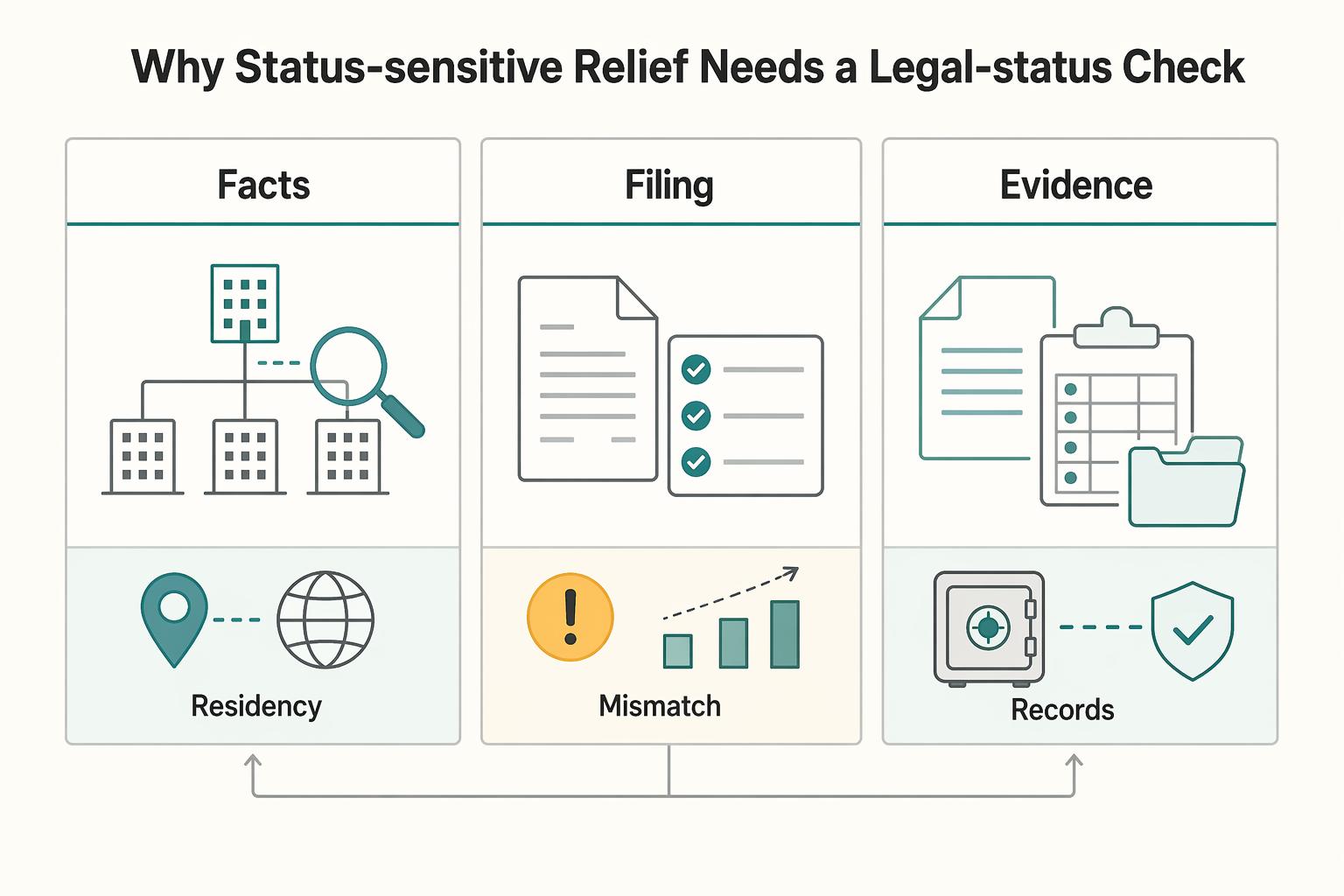
Why status-sensitive relief needs a legal-status check#
Treat associated body corporate relief as status-sensitive based on the cited 2026 materials. IRD materials describe a proposed change in the association test from 90% to 75%, and March 2026 press material says the Stamp Duty (Amendment) Bill 2026 was at first/second reading stage with commencement conditional on Legislative Council passage. Do not record "75% qualifies" unless you verify current enacted status on the decision date.
Residency posture can amplify error risk in these files. Not because treaty residence directly determines stamp duty, but because moving residence facts, multi-entity structures, and status-sensitive relief are easier to misstate together. IRD's DTA guidance says treaty effect depends on residency in Hong Kong or the treaty partner jurisdiction. Its territorial-source guidance says only Hong Kong-sourced profits are taxable in Hong Kong and recommends professional consultation for complex cases.
Practical rule: if you cannot explain the path in under a minute using instrument name, filing basis, and evidence held, stop and get advice. Keep that explanation with dated official/IRD page captures in your file. The same discipline also helps when this sits inside broader sourcing or residency planning, such as Hong Kong's Territorial Tax System: Is It Still a Viable Option?.
Need the full breakdown? Read A Deep Dive into the German Trade Tax ('Gewerbesteuer') for Freelancers.
Your execution checklist before you file pay or sign#
Do not file, pay, or sign until your file shows one consistent path from document class to legal status to evidence. If those pieces do not match, stop and reclassify before you proceed.
1) Lock the document class first#
Classify the document before you do any rate or timing work. On official pages, the core paths are property sale/transfer documents, tenancy agreements, and transfer of Hong Kong stock, and those paths are charged at different rates.
If your notes mix property AVD scale logic, for example Scale 1/2 references, into a share-transfer case, treat that as a classification error and restart from document type.
2) Confirm what is in force on your decision date#
For any item tied to 2026 AVD changes, check the government or IRD wording first. Then confirm legal status in Hong Kong e-Legislation before calling anything "current." If the page still says "proposed" or "subject to enactment," do not treat it as enacted.
If your decision depends on the post-26 February 2026 proposed AVD change, 4.25% to 6.5% above $100 million, save the exact page and date you relied on and confirm whether HKeL shows the amendment in force that day.
3) Build the evidence pack before payment or filing#
Keep enough evidence so another reviewer can reproduce your decision without guessing:
- Signed/executable documents
- Date of execution or sale/purchase
- Consideration and valuation basis
- Relief-support records, if relief is claimed
- Decision-day page captures from official sources, IRD, and HKeL
Also verify the document-specific stamping deadline from the official table, not from a default assumption:
| Case | Time limit |
|---|---|
| Several instruments, for example, conveyance/agreement/lease entries | Within 30 days after execution |
| Contract note for purchase/sale of Hong Kong stock, if effected in Hong Kong | Within 2 days after sale or purchase |
| Gift of Hong Kong stock, if executed in Hong Kong | Within 7 days after execution |
For share transfers, keep your valuation logic aligned with IRD guidance: contract notes are stamped by reference to price paid, with a market-value override when price is below market value. If you used the official share-transfer calculator, keep your assumptions because its output is informational and input-dependent.
4) Run one contradiction test and preserve the trail#
Before filing, check whether instrument type, liability assumption, time limit, and valuation basis all point to the same regime. If they do not, the file is not ready.
An unstamped chargeable instrument can create duty and penalty exposure for a person who uses it, so contradictions are a real risk, not a formatting issue. If you use Gruv tooling where supported, store source URLs, captures, and timestamps in your audit trail so your decision remains explainable later.
If you want one place to track your filing checkpoints before you submit, keep them in a single log, such as the Tax Residency Tracker.
The main takeaway for a low-stress compliant decision#
For low-stress compliance on Hong Kong stamp duty, do not start by hunting for rates. Start with correct document classification, confirm the rule is actually in force, and keep a complete record of how you reached your decision.
That order matters because stamp duty is document-based under the Stamp Duty Ordinance (Cap. 117), and different document types follow different rates, liability rules, and stamping timelines. If you compare percentages before confirming the right path, you can apply the wrong scale, the wrong liable-party rule, or the wrong deadline.
Use this practical sequence:
- Classify the instrument first. Confirm the exact document category before doing any rate or deadline work.
- Check legal status second. If wording says a change is "subject to the enactment of the amendment ordinance," treat it as proposed, not in force.
- Review reliefs before paying. Only apply relief positions that match your facts and required documents.
- Execute to the actual deadline. Stamping windows vary by instrument, 2 to 30 days, and some Hong Kong stock contract notes effected in Hong Kong have a 2-day clock.
- Keep an evidence trail. Save the official page, check date, execution date, signed instrument, and value or consideration basis.
A common failure pattern is treating summaries or tools as if they were final authority. The official share-transfer computation tool states its output is for information only, so use it for orientation, not as proof of correct treatment. The same caution applies to policy updates. The 2026 residential AVD move from 4.25% to 6.5% above HK$100 million is described as proposed and subject to enactment, and the Legislative Council notice says the Second Reading debate on the Stamp Duty (Amendment) Bill 2026 would be adjourned.
If your facts are unclear, escalate early. Pause and verify with IRD materials or get professional advice when category fit is uncertain, when you are relying on proposed rules or calculator output, or when your valuation basis could be challenged. That includes below-market share consideration, where IRD materials indicate duty may be assessed on market value.
Your target is simple: a defensible file. Keep the signed document, execution date, liable-party details, valuation or consideration support, relief documents if any, and timestamped official and IRD pages used that day. The goal is not to memorize rates. It is to explain your treatment clearly and defend it later.
Related reading: A Deep Dive into the Netherlands' 30% Ruling for Skilled Migrants.
Need an ops setup that keeps payout actions and supporting records traceable for audits? Talk to Gruv.
Frequently Asked Questions
What is Hong Kong stamp duty in plain terms?
Hong Kong stamp duty is a duty under the Stamp Duty Ordinance (Cap. 117) on specific document types, not every transaction. The main categories include sale or transfer of immovable property, tenancy agreements, and transfers of Hong Kong stock. Start by classifying your document, because rates and deadlines depend on that class.
Is stamp duty based on transaction price or market value?
It depends on the document type. For property AVD, duty is based on the consideration or property value, whichever is higher. For Hong Kong stock, contract notes are stamped by reference to price paid, but if that price is below market value, duty may be assessed on market value.
Does Hong Kong stamp duty apply only to property deals?
No. The regime also covers tenancy agreements and transfers of Hong Kong stock, with different charging rules across categories. If your transaction is a lease or share transfer, do not apply property tables or property timing assumptions by default.
Is Hong Kong stock transfer duty 0.2% and what details are still unclear from public summaries?
0.2% is a common shorthand, but it is not the full picture. IRD guidance states 0.1% per contract note, or 0.2% for a round transaction, and also a fixed $5 duty on each instrument of Hong Kong stock transfer. You also need to distinguish contract-note sale/purchase cases from other transfer instruments, because the duty components and liable parties are not identical.
Who is responsible for stamping and what happens if stamping is late?
Responsibility depends on document type. For sale or purchase of Hong Kong stock, liability is on the agent, or if there is no agent, the principal effecting the sale or purchase. For other Hong Kong stock transfers, both transferor and transferee are liable. Late stamping can trigger penalties, and an unstamped chargeable instrument is not receivable in evidence in proceedings unless duly stamped. Time limits vary by instrument and can range from 2 to 30 days.
How do I check current rates and rule status safely when policy changes are proposed?
Use a two-step check: confirm the current official or IRD page for your exact transaction class, then confirm whether the change is enacted or still conditional. Wording like “subject to the enactment of the amendment ordinance” or “subject to passage by the Legislative Council” means proposal-stage, not automatically in force. For the 2026 AVD change, public materials describe a proposed move from 4.25% to 6.5% with effect from 26 February 2026, while also stating it is subject to legislative passage. If you see conditional language, treat it as proposed and save the page and date you relied on.
Researched and edited by the Gruv editorial team. Gruv builds cross-border billing, payouts, and finance-operations software for global businesses.
Sources
Includes 2 external sources outside the trusted-domain allowlist.
Educational content only. Not legal, tax, or financial advice.
Related Posts

Digital Nomad Taxes in 2026 With a Defensible Filing Plan
With digital nomad taxes, the first move is not optimization. It is figuring out where you may be taxable, where filings may be required, and what proof supports that position.
Is Hong Kong Territorial Tax Still Viable for Mobile Consultants?
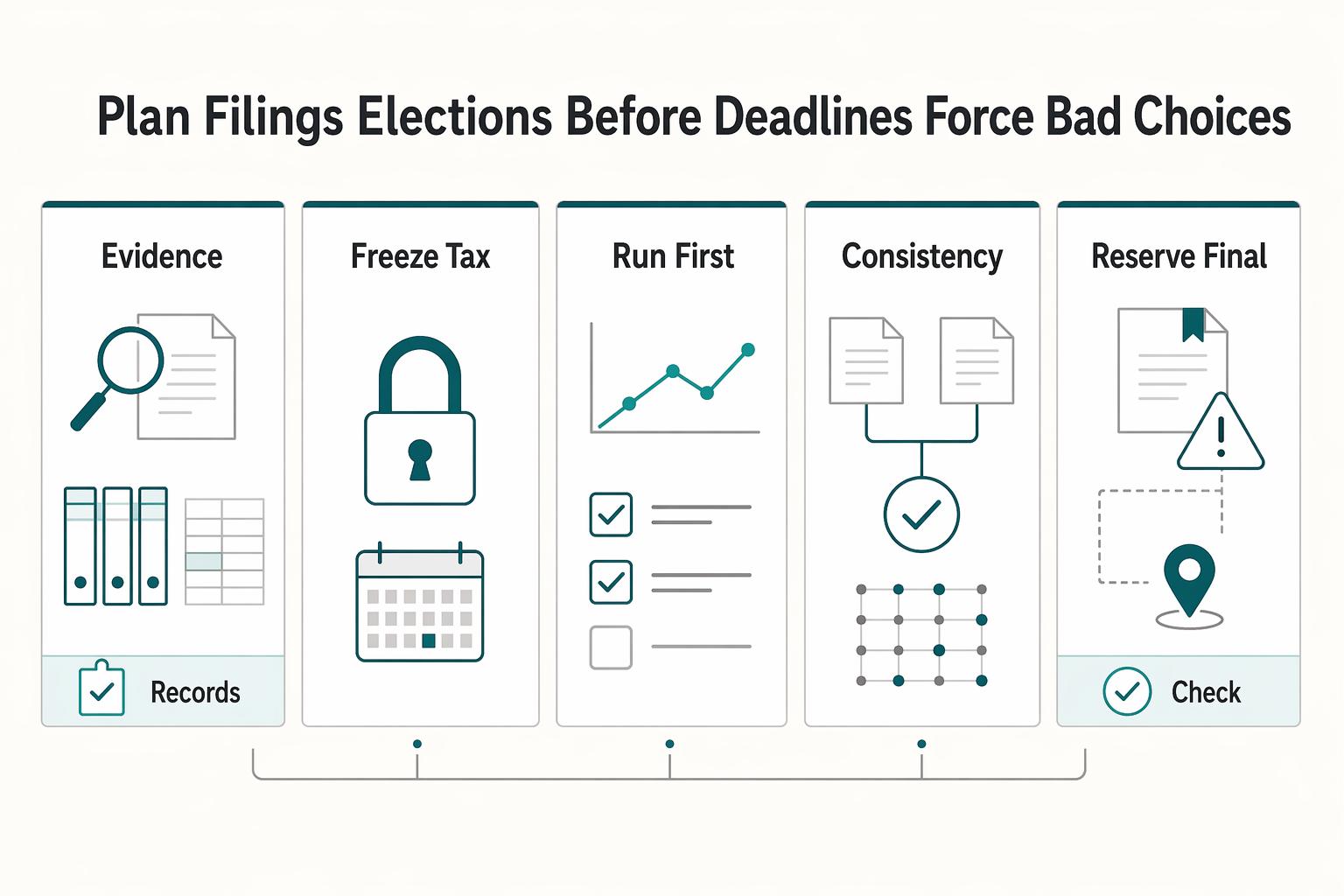
Hong Kong can still be a viable base for mobile consultants, but only when your filing position matches your facts. In Hong Kong SAR, profits tax turns on where profits arise or are derived, not on a blanket worldwide-income model.
DAO for Freelancers Who Need Payment Certainty
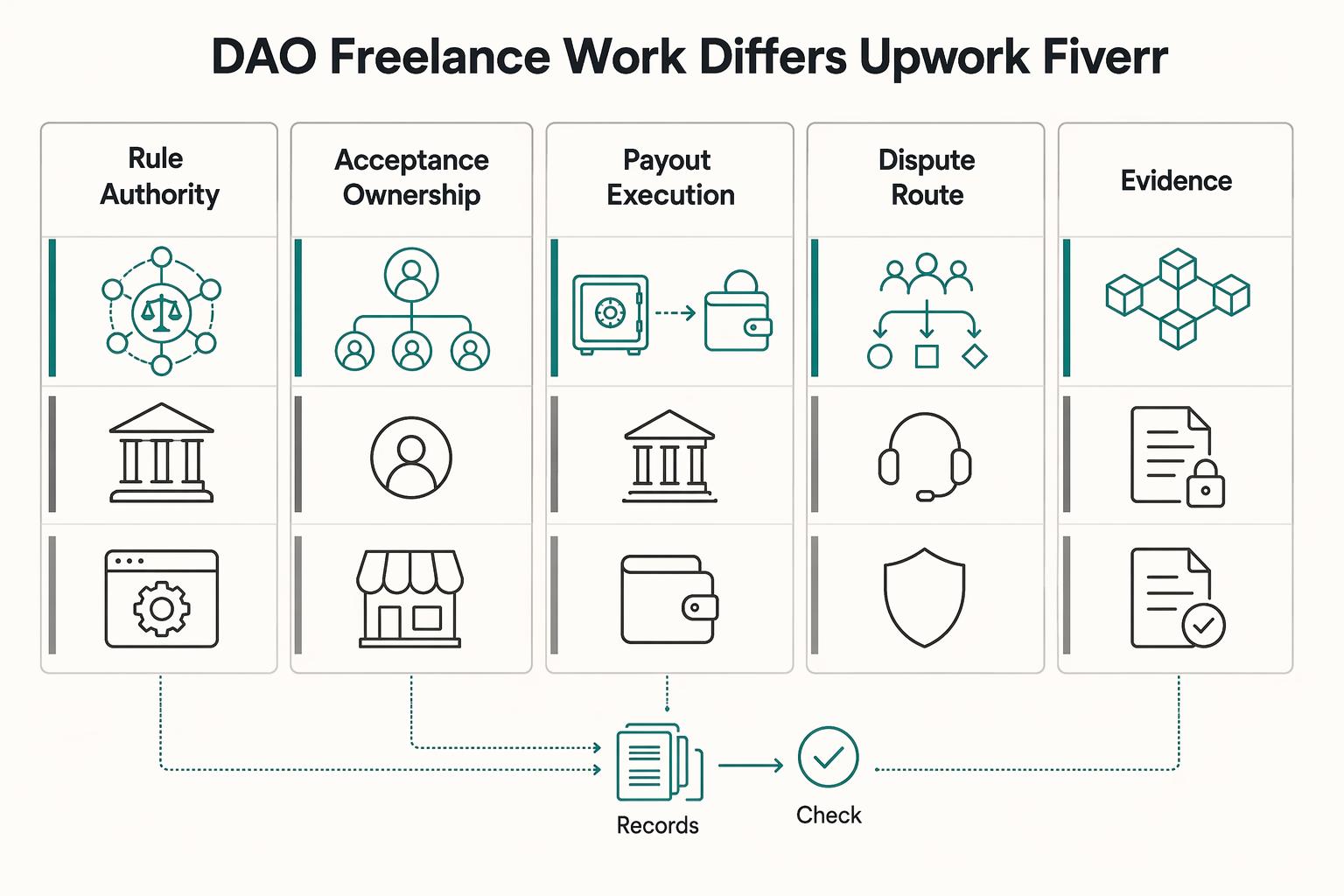
Treat any **dao for freelancers** opportunity as unconfirmed income until you verify who releases funds and how that release happens. A passed vote, active Discord, or busy forum thread may look encouraging, but none of it guarantees payment.