
Quick Answer
Yes - use the france cir tax credit as a conditional pricing framework, not a guarantee. Your client claims the credit, while you support eligibility by proving ministry approval for subcontracted research, separating R&D from routine delivery, and keeping dated records from the work itself. Keep positioning tied to the scheme’s EU/EEA perimeter and to what the client’s adviser validates, rather than promising recovery on the full invoice.
The French R&D Tax Credit: Your Guide to Winning High-Value Contracts#
Your client claims CIR, not you. Your job is to make sure your work can be treated as qualifying R&D. Your invoice should map cleanly to that scope, and the approval requirement should be met when subcontracted research is involved.
The Crédit d'impôt recherche (CIR) is France's R&D tax credit under CGI article 244 quater B. The ordering company may include eligible outsourced R&D in its CIR calculation base, subject to conditions. In practice, your work needs to fall within qualifying research activity, be carried out within the EU/EEA perimeter used by the scheme, and be documented in a way the client can defend.
As of the legal version in force from 1 January 2026, the published rates are 30% up to €100 million of eligible research spend and 5% above that. Treat this as a verification point, not a sales shortcut. Confirm current rates, caps, and approval process details before you quote outcomes to a client.
Is your work likely CIR-eligible?#
Start conservatively. If the project is mostly routine delivery using known methods, treat it as non-R&D unless the client's tax adviser confirms otherwise. Use this quick screen before you make any CIR-related promise:
- Does the work fit one of the CIR research categories: fundamental research, applied research, or experimental development?
- Are you tackling a technical unknown in a way that can be documented?
- Can the work satisfy the CIR R&D standard tied to the five Frascati criteria?
- Can you evidence the work as it happens, rather than reconstructing it after delivery?
These examples are directional only and do not replace a formal eligibility review.
| Service type | R&D-style work that may fit CIR | Delivery-style work that often needs separate review before CIR positioning |
|---|---|---|
| Software / product engineering | Systematic experimentation documented against a technical objective | Routine build or implementation work without a documented R&D objective |
| Data / AI consulting | Methodical testing of a new technical approach with traceable results | Standard analytics or model operations using established approaches |
| Technical / process consulting | Structured technical trials aimed at creating or materially improving a process | Execution support work where the method and outcome are already known |
Approval is a key compliance gate for subcontracted research. The provider must be approved by the ministry in charge of research, and clients can verify status on the ministry's approved list. In practice, you should be ready with proof of approval, clear R&D scoping, and support for the dossier justificatif built during execution. That file is supplied to the tax administration on request, and CIR reporting is tied to form 2069-A filed with the tax return.
If your work clears this first screen, the next question is whether accreditation is worth pursuing for your business. If you want a deeper dive, read the digital nomad tax guide.
Prepare an Accreditation File You Can Back With Dated Records#
Treat accreditation as a compliance step, not a slogan. Verify each assumption against current official materials and back it with dated records. If verification is incomplete, keep the point marked as unresolved.
Use a hard go/no-go screen first#
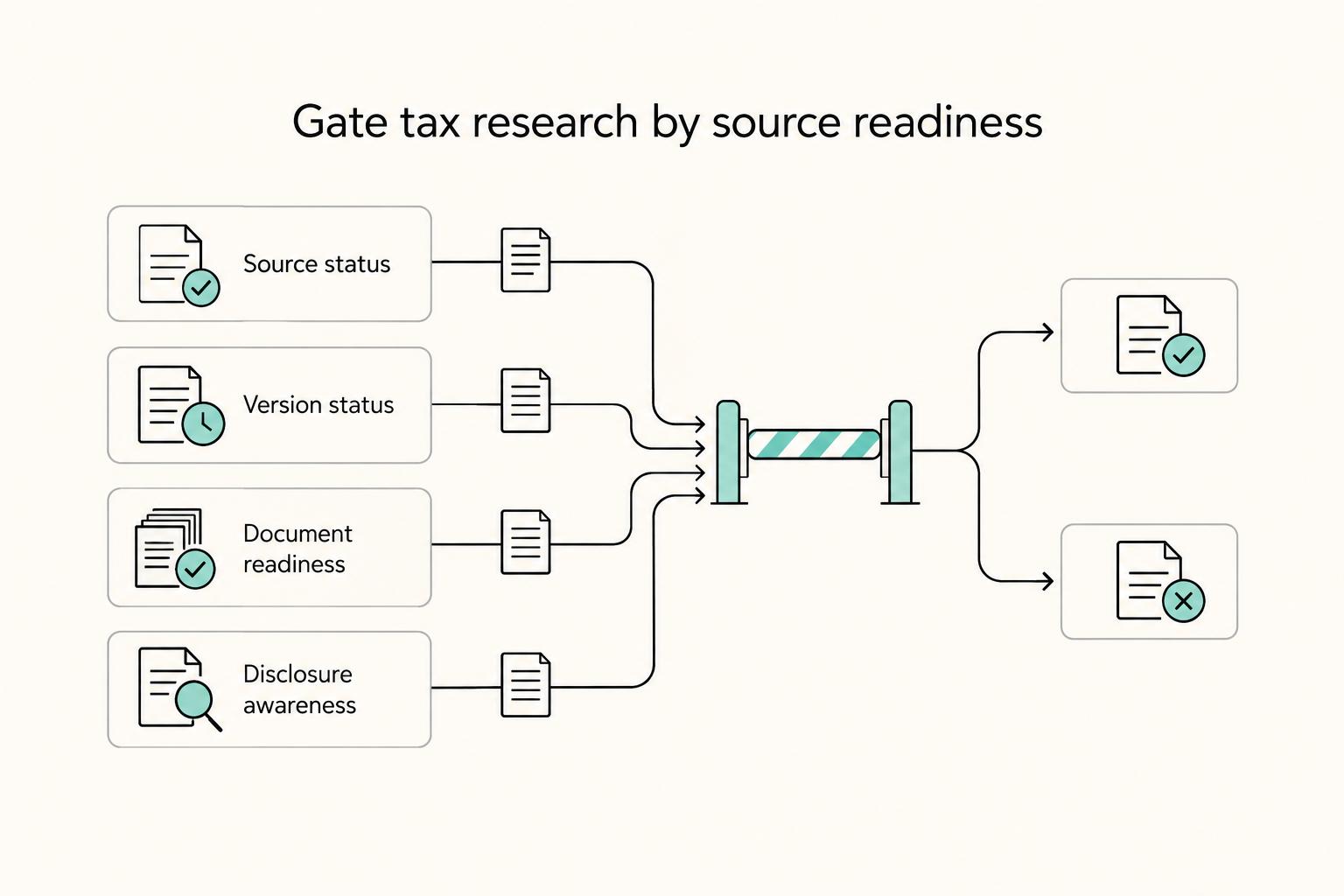
Before you invest time, test whether your assumptions are actually verifiable. Use this four-point screen:
| Check | What to verify | Note |
|---|---|---|
| Source status | Key regulatory points against the official legal edition/PDF, not only a website rendering | If "no" on multiple items, pause and close those gaps first |
| Version status | Updates or corrections, including the 04/17/2023 correction linked from the 03/23/2023 page | If "no" on multiple items, pause and close those gaps first |
| Documentation readiness | Dated, contemporaneous records created during delivery | If "no" on multiple items, pause and close those gaps first |
| Disclosure awareness | Prepared for a public posting workflow via Regulations.gov after agency review | If "no" on multiple items, pause and close those gaps first |
If your answer is "no" on multiple items, pause and close those gaps first. For independent professionals, keep CIR-specific items unresolved until they are confirmed in current official materials:
- Entity location: Confirm the current eligibility condition from the official source.
- Subcontractor role: Confirm the current condition for direct and indirect subcontracting from the official source.
- Cross-border setup: Confirm the current territorial and invoicing condition from the official source.
- Credit rate and filing mechanics: Confirm the current credit-rate and filing mechanics from the official source.
Build an evidence matrix, not a pitch deck#
Use this as an internal quality-control tool, not an official CIR checklist.
| Evidence item | Why it matters | Common weak point |
|---|---|---|
| Official source record (edition/PDF used) | A website rendering may not be the official legal edition | Team relies on page rendering without official-edition verification |
| Version log (publication + corrections) | Corrections can change details you rely on | Initial draft is used without re-checking updates |
| Legal-status note for each source | Some formats do not provide legal or judicial notice | XML/text copy is treated as legally sufficient on its own |
| Dated internal records for each claim | Reduces unsupported statements in the file | Claims are asserted without contemporaneous records |
| Open unresolved items list | Prevents over-claiming on unknown CIR rules | Unresolved items are silently converted into "facts" |
If a claim cannot be tied to a verified official source or dated internal evidence, rewrite it as uncertain or remove it.
Choose your preparation path honestly#
The tradeoff is not just cost. It is time, control, and how much challenge your file needs before submission.
| Aspect | Self-managed application | Specialist-supported application |
|---|---|---|
| Effort | Can mean lower cash spend, higher founder time | Can mean higher cash spend, lower internal drafting load |
| Risk | Verification gaps can be easier to miss | External challenge can reduce drafting gaps, but facts still remain your responsibility |
| Control | Maximum control of narrative and file structure | External challenge can improve quality, with less direct control |
| Best fit | Strong internal records and disciplined source/version tracking | Borderline facts, cross-border complexity, or weak existing records |
Guardrails before, during, and after submission#
Whichever path you choose, keep the process tight from the start.
| Step | Action | Detail |
|---|---|---|
| Before submission | Verify every legal/process assumption against the official publication/PDF | Log the exact version/date used |
| During review | Re-check for corrections or updates | Do this before relying on any previously copied requirement text |
| Escalate early | Bring in a qualified tax or legal advisor | Use this when eligibility depends on unresolved rules such as entity location, subcontracting chain, cross-border setup, rates, or filing mechanics |
Related: Can Digital Nomads Claim the Home Office Deduction?. Before you file, align scope, deliverables, and acceptance criteria in one draft so your narrative and contract stay consistent: Use the freelance contract generator.
How to Leverage Your CIR Status to Justify Premium Rates#
Once you have accreditation, the commercial question shifts from provider status to positioning. Use your accreditation to frame price as a compliance-first net-cost decision, not as a promise of automatic tax savings.
Lead with the gross fee, then isolate the portion that may qualify as outsourced R&D under current rules and client-side validation. The right pitch is simple: accreditation removes a key blocker for subcontracted R&D treatment, but it does not guarantee that the full invoice is eligible. Outsourced R&D spend is included only under conditions, so your proposal should make scope boundaries and review assumptions explicit.
For current-year inputs, anchor your model to Article 244 quater B and verify rates before sending anything out. The legal structure includes a 30% rate up to 100 million euros of qualifying research spend and 5% above that threshold. Large client R&D bases should be modeled by tranche, not with one flat assumption.
Use a simple fee stack in the proposal:
- Gross fee: your quoted amount
- Potential CIR-eligible amount: only the scoped outsourced-research portion, subject to conditions
- Indicative credit input: confirm current Article 244 quater B rate(s) from the official source
- Client net-cost view: gross fee minus advisor-validated expected credit impact
If your engagement mixes experimental work with routine delivery, split those lines in the proposal.
Show the decision in one table#
A side-by-side table is usually clearer for procurement and finance than a long explanation.
| Provider setup | Potential CIR-eligible amount | Documentation burden for client | Net-cost view |
|---|---|---|---|
| Non-accredited provider | Not positioned under approved-subcontractor CIR treatment | Higher uncertainty for finance/tax review | Usually modeled at gross fee unless client advisor confirms another basis |
| Accredited provider, tightly scoped R&D work | Confirm the eligible R&D-only portion with source records and the client's adviser, subject to conditions | Moderate with approval proof and evidence mapping | Gross fee minus advisor-validated estimate using current rate(s) |
| Accredited provider, mixed R&D and routine delivery | Confirm the separated eligible R&D portion with source records and the client's adviser, subject to conditions | Higher, because scope split and exclusions must be documented | Net view applies only to the separated eligible portion |
Include a verification note in your offer: clients can check accreditation status on the official ministry list. Attach your approval document so procurement and finance can validate it.
What every proposal should include#
Your proposal is doing its job when finance can review it without rebuilding the file from scratch.
| Proposal element | What to include |
|---|---|
| Accreditation proof | Proof of current accreditation status |
| Scope mapping | Scope language mapped to technical objectives, uncertainties, tests, and deliverables |
| Exclusions | Explicit exclusions for routine or non-qualifying work |
| Pricing table | Separate gross fee from potentially eligible outsourced-research work |
| Finance handoff note | List the evidence you will provide: approval proof, invoices, work description, and dated project records for the annual dossier justificatif CIR |
The compliance workflow matters here. CIR is computed through 2069-A-SD and reported on 2069-RCI-SD, with annual supporting documentation and mandatory telefiling for the 2069-A form set. If your package is audit-ready, premium pricing is easier for the client to defend internally.
Client Q&A with guardrails#
This is where good positioning matters most. Answer clearly, stay conditional, and do not slide into giving tax advice.
Can you tell us exactly what we will get back? You can explain the current rate structure and provide an indicative net-cost scenario. You should not present a fixed recovery percentage on the full invoice.
Can you confirm our project is fully eligible? No. You can explain how your accredited scope aligns with qualifying research work, but final eligibility belongs to the client and their tax advisor.
When should we escalate to a professional? Escalate when scope mixes R&D and routine work, when the client's existing R&D base may cross the 100 million euro tranche, when cross-border delivery facts are unclear, or when finance needs pre-filing certainty. In those cases, request written advisor guidance or consider a rescrit fiscal (silence-is-acceptance timeline shown as 3 months).
You might also find this useful: A Guide to France's Micro-Entrepreneur Regime for Freelancers.
Conclusion: Stop Competing on Price. Start Competing on Value.#
You win better conversations when you frame your offer around compliance-ready value, not just price. Subcontracted R&D spend is not automatically CIR-eligible: provider approval, qualifying R&D activity, and documentation discipline all matter, and outcomes depend on the rules for the client's filing year.
That framing matches how the Crédit d'impôt recherche works in practice. For subcontracted R&D, the provider must be approved by the ministry in charge of research, and the client still needs qualifying R&D activity. When you reference policy values, keep the wording conditional and tied to the current filing year. For example: "potential CIR impact based on eligible research spend under Article 244 quater B, to be confirmed for the client's filing year."
| If you sell on price | If you sell on compliance-ready value |
|---|---|
| Proposal stays at day rate or project fee. | Proposal states approval status, maps potentially eligible R&D scope, and explains likely net client impact without guarantees. |
| Procurement compares you as a generic vendor. | Procurement gets a concrete approval and scope checkpoint to review. |
| A cheaper supplier is easier to justify. | Switching may require re-checking approval, scope, and evidence quality. |
| Documentation is assembled late, if at all. | Technical and billing support is built as work happens, ready for a dossier justificatif CIR if requested. |
In your next proposal, do three things. State your approval status exactly as shown on your notice. Map the work package to potentially eligible R&D scope while separating non-R&D tasks. Frame value around documented potential client impact rather than a blanket savings claim. Do not present simulator output as proof; it is indicative only.
If eligibility is uncertain, consider a CIR rescrit before the R&D operation starts and within the applicable timing window. If the scope is borderline, the legal structure is unusual, multiple incentives apply to the same project, or the client wants filing-level certainty before signing, involve a qualified French tax adviser before you make eligibility promises or lock contract language.
If you want a lower-friction operating setup for cross-border invoicing, collections, and payout visibility with French clients, talk to Gruv.
Frequently Asked Questions
Can my work count for the France CIR tax credit if I am not based in France?
Possibly, but only in specific setups. The supported point is that subcontracting expenses paid to approved public or private subcontractors in the European Economic Area may qualify. If your entity, team, or billing chain falls outside that pattern, treat eligibility as uncertain until it is confirmed by a qualified tax advisor.
What does approval actually change in practice?
It can affect eligibility treatment because EEA subcontractor expenses are described as eligible when the subcontractor is approved by the French Ministry of Research. It does not, by itself, mean every cost will qualify.
Does approval mean my full invoice will be accepted?
No. Eligibility still depends on compliance with criteria set by the French Ministry of Research, and some qualifying expense categories are subject to ceilings. Approval is one condition, not blanket acceptance of every billed amount.
What does approval not guarantee?
It does not guarantee tax-credit acceptance, contract awards, or any specific pricing outcome. Final treatment still depends on eligibility criteria and capped expense rules.
Do I need special invoice wording because I am approved?
Do not assume mandatory wording without current primary-source confirmation. Keep your scope descriptions and records consistent so technical and financing documentation can support review.
What evidence should I keep ready for a client review or audit?
Keep technical and financing documentation ready from the start. Your records should clearly connect billed work to the R&D scope so they are usable for tax audit and authority review. Escalate early if your documentation trail is incomplete or the client asks for filing-level certainty.
Which dates matter most when tracking the work?
Track work by calendar year for eligible R&D expenses, regardless of fiscal year closing date. If work spans December and January, make sure records can be mapped cleanly to each year.
What if the client also receives subsidies or other support for the same project?
Use a conservative estimate. R&D subsidies can reduce the eligible expense base, so a simple headline estimate can overstate the outcome. Escalate when multiple incentives are stacked and the client needs a precise net figure.
Can I tell the client they will get cash back immediately?
No, not as a blanket statement. Unused credit can generally be carried forward against tax liability during the next three years, and amounts still unused after three years are generally refunded to the taxpayer. If they plan to transfer or sell the receivable, note that transferability is limited to credit institutions.
How should I handle approval validity, renewal, or reapplication?
Do not rely on memory for validity timelines. Verify the current validity period in current official documents before making commitments.
What if an application or renewal is rejected?
Treat the rejection workflow as unresolved until it is confirmed in current official materials. If an application or renewal is rejected, request written reasons and handle next steps with qualified tax counsel using current official guidance.
Who is the current approving authority and what is the process called?
Use the authority and process names shown on current official application materials. Confirm the current authority, process naming, and procurement verification instructions against those materials before use.
Try a related tool
Researched and edited by the Gruv editorial team. Gruv builds cross-border billing, payouts, and finance-operations software for global businesses.
Sources
Includes 3 external sources outside the trusted-domain allowlist.
- commission.europa.eu/document/download/97e481fd-2dc3-412d-be4c-f1...trusted
- federalregister.gov/documents/2022/01/04/2021-27887/guidance-rel...trusted
- federalregister.gov/documents/2023/03/23/2023-05871/advanced-man...trusted
- irs.gov/irm/part21/irm_21-008-004rtrusted
- taxpayeradvocate.irs.gov/wp-content/uploads/2024/12/ARC24_MSP.pdftrusted
- economie.gouv.fr/files/files/directions_services/dgfip/contro...external
- impots.gouv.fr/sites/default/files/formulaires/2069-a-sd/20...external
- legifrance.gouv.fr/codes/article_lc/LEGIARTI000053544409/2026-0...external
Educational content only. Not legal, tax, or financial advice.
Related Posts

Digital Nomad Taxes in 2026 With a Defensible Filing Plan
With digital nomad taxes, the first move is not optimization. It is figuring out where you may be taxable, where filings may be required, and what proof supports that position.

Can Digital Nomads Claim the Home Office Deduction?
Claim the deduction only when your facts and records can carry it. With the home office deduction for digital nomads, the real decision is usually a three-way call: claim it, do not claim it, or pause and get help because your file is not ready.

How Freelancers Can Decide on France’s Micro-Entrepreneur Regime
Low-stress compliance starts with one question: does the Micro-entrepreneur regime match your real setup right now? It is often presented as a simplified option for lower-revenue activity, so use it as a fit test, not a shortcut.