
Quick Answer
Form 3520 reports certain foreign trust transactions, U.S. ownership of a foreign trust, and certain foreign gifts or bequests. The article's low-risk approach is to classify the event early, keep a separate evidence file for each trust, track the correct due dates, and preserve written records in case a late filing, notice, or reasonable-cause issue arises.
Classify Early, Document as You Go, and Prepare for Exceptions#
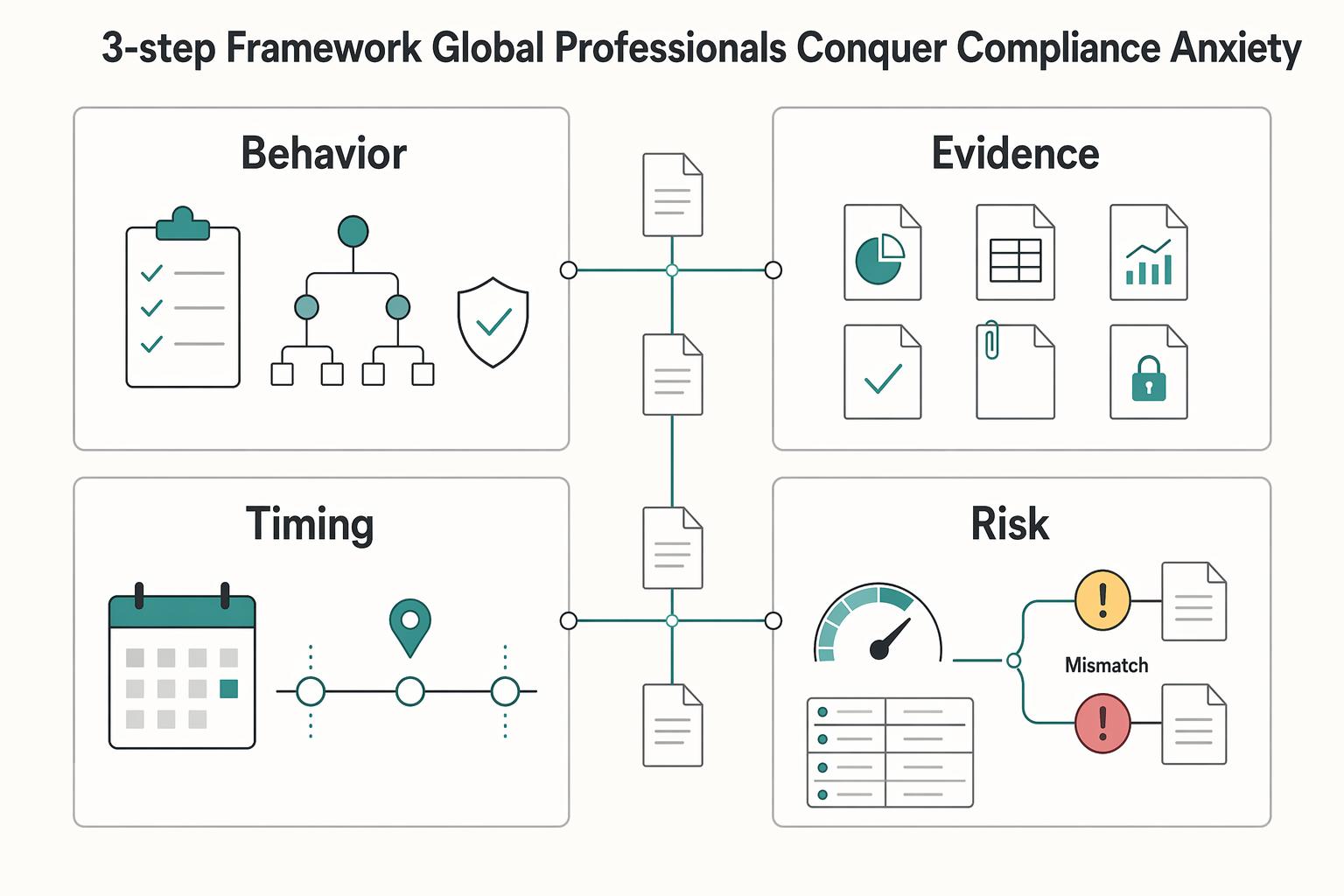
You can help lower Form 3520 filing risk with a simple three-step process: classify early, document as you go, and prepare for exceptions. This is an operations playbook, not a tax theory lesson. It is designed to help you make cleaner decisions before transactions, keep better filing records, and respond from evidence if questions come later.
| Aspect | Reactive filing | Playbook approach |
|---|---|---|
| Behavior | Wait until tax season, then reconstruct facts | Classify the event when it happens and assign responsibilities early |
| Documentation standard | Gather whatever is available near deadline | Maintain a complete file with transaction records, trust statements, and proof of follow-up |
| Timing | Deadlines discovered late | Due dates tracked up front, including related trust filings |
| Risk exposure | Higher risk of incomplete filing and weak support if issues arise | Lower surprise risk and better support for a reasonable-cause position if needed |
Phase 1 decides the filing path#
Everything else depends on getting the event classification right. Form 3520 is an annual information return used to report foreign trust transactions, U.S. ownership of a foreign trust, and certain foreign gifts or bequests. For foreign gifts, Form 3520 is an information return, not an income-tax return. In practice, the first check is simple: are you dealing with a transfer to a foreign trust, a distribution from one, ownership during the year, or a reportable foreign gift?
That call drives the rest of the work. Part IV may apply if you received more than $100,000 treated as gifts or bequests from a nonresident alien or foreign estate. If trust activity is involved, remember the per-trust rule early. A separate Form 3520 is required for transactions with each foreign trust.
Phase 2 builds a filing record you can defend#
Once the event is classified, execution matters more than theory. Form 3520 is generally due by the 15th day of the 4th month after your tax year ends. Taxpayers who live and work outside the United States have until the 15th day of the 6th month. If Form 3520-A applies, it is due by the 15th day of the 3rd month after the foreign trust's tax year ends.
Keep a file that shows what was filed, when, and why. Include filed forms, extension proof if applicable, transaction records, trust statements, and written requests for required annual statements. If the trust does not file Form 3520-A, a U.S. owner may need to attach a substitute Form 3520-A. It is due the same day as Form 3520.
Phase 3 prepares you for the messy cases#
The hard cases are manageable if you plan for them before they happen. If you are treated as a U.S. owner, you are responsible for making sure the foreign trust files Form 3520-A and provides required annual statements. In that Form 3520-A owner-responsibility context, the initial penalty language includes the greater of $10,000 or 5% of gross value.
You also need to account for process risk. If Form 3520 is late or incomplete, the IRS assessment period can stay open until 3 years after the required information is reported. You can attach a reasonable-cause statement to a delinquent international information return, but penalties may still be assessed during processing. Your best protection is still a complete evidence file.
Start with Phase 1 now: classify the transaction, confirm your role, and lock in the due date before funds move or year-end pressure starts. If trustee reporting is unclear, or you are unsure about U.S. owner status, pause and bring in a qualified advisor. If you want a deeper dive, read Digital Nomad Taxes in 2026 With a Defensible Filing Plan.
Phase 1: The Strategic Setup - Your Pre-Transaction Due Diligence Checklist#
This is the control point that prevents avoidable filing gaps. Before money moves, decide scope, lock down documentation, and assign responsibility for getting records.
Your objective in Phase 1 is straightforward: confirm whether Form 3520 is in play, confirm which trust facts you can actually document, and assign who is responsible for collecting the records. If any of that is unclear before the transaction, stop there.
Use a pass or fail screen for the trustee#
Treat trustee cooperation as a hard dependency. A trustee passes only if all three are true:
| Criterion | Pass standard |
|---|---|
| Prior handling of U.S. beneficiary reporting requests | They can explain prior handling of U.S. beneficiary reporting requests |
| English and U.S. dollar records | They can provide usable records with information in English and amounts shown in U.S. dollars |
| Written compliance process | They agree to follow a written compliance process instead of ad hoc back and forth |
If any of those fail, resolve that first. Form 3520 preparation requires English-language information and U.S. dollar reporting, so incomplete or informal records are an early warning sign.
Put the communication protocol in writing#
A short written process prevents drift and makes later follow-up much easier. Use a simple SOP that covers the owner of each request, the documents required, the expected delivery window, the follow-up cadence, and the escalation path if the trustee goes quiet.
- Request owner: one person on your side owns each request and tracking.
- Required documents: trust instrument, transaction records, trust accounting or statements tied to the event, and any trust-provided annual or beneficiary information your preparer requests.
- Expected delivery window: set your own deadline before funds move or before year-end close.
- Follow-up cadence: pre-set follow-up dates.
- Escalation path: define who is copied next and when the transaction pauses if the trustee is unresponsive.
Treat pre-distribution documents as a hard gate#
Do not proceed on "we will send documents later." Move forward only when the file is complete enough to support classification and reporting.
Before you proceed, confirm you have the governing trust document, records showing transaction date and amount, and the trust-provided information your preparer needs. Any current requirement should be verified against official IRS instructions and source records before use.
If the event is a foreign trust distribution, Form 3520 directs reporting through Part III. Use that as a practical test. If you cannot support a Part III filing with available records, pause. Apply the per-trust rule at the same time. If multiple foreign trusts are involved, you need a separate Form 3520 for each one, so split blended packets now instead of trying to untangle them later.
Ownership versus distribution is a documentation decision#
The label alone is not enough. What matters is whether the facts are documented well enough to identify whether Form 3520 reporting may involve ownership under IRC sections 671 through 679, distribution reporting in Part III, or both.
| Reporting posture before funds move | What you need confirmed | Documentation dependency | Risk if reporting path is unclear | When to involve a qualified tax professional |
|---|---|---|---|---|
| Possible ownership reporting | Whether a U.S. owner question may apply under IRC sections 671 through 679 | Trust instrument and records that support ownership facts | You proceed on an unsupported filing path | As soon as ownership status is unclear |
| Possible foreign trust distribution | Whether the event is a distribution that must be reported through Part III | Distribution records and trust-provided information needed to complete Part III | Distribution occurs before records are complete | Before accepting funds if records are incomplete or inconsistent |
| Multiple foreign trusts involved | Whether separate Form 3520 filings are needed for each trust | Trust-by-trust records and separated packets | One packet is used for more than one trust | Before the transaction if trust-by-trust records are not clear |
If you cannot reach a documented answer, treat that as your stop signal. Verify against current Form 3520 instructions and get qualified advice before proceeding. For background, see 183-Day Rule Explained: Stop the Tax Myths Before They Cost You. Before you accept a distribution or gift, organize your timeline and records so your filing decisions are easier to defend later: Use the Tax Residency Tracker.
Phase 2: Execution That Produces a Defensible File#
This phase is where good intentions either turn into a defensible file or fall apart. After Phase 1, disciplined execution is what protects you: clean records, controlled timing, and proof you can produce without rebuilding the story later.
Build a filing record you can actually defend#
Run one file per foreign trust from day one. Because a separate Form 3520 is required for transactions with each foreign trust, mixed files create avoidable confusion.
| File element | What to keep |
|---|---|
| Core filing set | Final filed Form 3520, plus any substitute Form 3520-A if required |
| Source documents | Trust statement or beneficiary information you relied on |
| Money movement proof | Bank or brokerage records showing date and U.S. dollar amount |
| Classification support | Governing trust document and any preparer memo you used |
| Communication trail | Written requests, replies, reminders, and escalations for missing items |
| Event log | A short note of what happened, when, who provided each record, and what each record supports |
For each reportable event, build a record that covers the filing itself, the source documents behind it, the money movement, the classification support, and the communication trail.
- Core filing set: final filed Form 3520, plus any substitute Form 3520-A if required.
- Source documents used for reporting: trust statement or beneficiary information you relied on.
- Money movement proof: bank or brokerage records showing date and U.S. dollar amount.
- Classification support: governing trust document and any preparer memo you used.
- Communication trail: written requests, replies, reminders, and escalations for missing items.
- Event log: a short note of what happened, when, who provided each record, and what each record supports.
Use consistent file naming and version control so you can audit your own file quickly, for example 2026-02-14_TrustA_DistributionStatement_v2.pdf and 2026-03-01_TrustA_Form3520_Draft1.xlsx. After filing, lock a final folder so filed forms, supporting records, and later corrections do not get mixed together.
Use written chasing, not informal reassurance#
Your standard here should be evidence, not memory. Send requests in writing, name the missing item clearly, and set a response date. If that date passes, send a timestamped follow-up that refers back to the earlier request and repeats exactly what is still missing.
If a trustee or payer sends incomplete records, document that immediately and state what is still missing. If your preset follow-up cycle runs out, escalate in writing to the backup contact or adviser and note that filing risk exists.
This matters because missing trustee action can become your problem. If the foreign trust does not file Form 3520-A, you as the U.S. owner must complete and attach a substitute Form 3520-A. That substitute filing is due the same day as Form 3520. Extending your income tax return does not automatically extend Form 3520-A. Form 7004 with the foreign trust EIN is required for a 3520-A extension request.
| Filing record | Filing confidence | Error risk | Defensibility if reviewed |
|---|---|---|---|
| Complete filing record | High, because each reported item ties to a source document | Lower, because classification and amounts are documented before filing | Strong, because your timeline, requests, and reliance are clear |
| Incomplete filing record | Low, because gaps are filled by assumption | Higher, especially on classification, dates, and threshold tests | Weak, because reconstruction is harder and incomplete filing can extend assessment exposure |
Lock the trigger decision before you file#
Do not rely on memory for this step. Use decision logic and lock the filing trigger before the form is prepared.
If you are a U.S. owner, test whether Part II applies, including years with no trust transactions. If you received a foreign trust distribution, directly or indirectly, evaluate Part III. If you received a foreign gift or bequest, treat Part IV as a threshold test rather than an automatic filing. Aggregate gifts from related parties, apply the $100,000 rule for nonresident alien individuals or foreign estates, and verify the current IRS threshold and filing-condition language for gifts from foreign corporations or partnerships before finalizing Part IV.
Then lock due-date control into your checklist. Form 3520 is filed separately from your income tax return and is generally due by the 15th day of the 4th month after year-end. For taxpayers who live and work outside the United States, timing can run to the 15th day of the 6th month. Form 3520-A is due by the 15th day of the 3rd month after the foreign trust's tax year.
Once your records and trigger decisions are locked, Phase 3 gets much easier. Delays, notices, or penalty defense can be handled from an existing file instead of a scramble.
For a step-by-step walkthrough, see What is Form 3520-A (Annual Information Return of Foreign Trust with a U.S. Owner)?.
Phase 3: The Contingency Plan - Defending Your Filing and Mitigating Penalties#
When a filing problem appears, your job is to regain control quickly. Preserve evidence, manage the next deadline, and respond from records instead of memory.
That matters because foreign trust information reporting failures can trigger significant penalties and can extend the IRS assessment window. These are information return issues, and the Taxpayer Advocate has noted that many can apply even when there is no underlying tax liability. If Phase 2 gave you a clean file, this is where you use it.
Build your reasonable-cause case in three blocks#
If you need to explain a late or imperfect filing, submit a structured package rather than a loose narrative. Taxpayer Advocate reporting says the IRS will review reasonable-cause statements attached to late-filed Forms 3520 and 3520-A before certain IRC 6677 penalty assessments. It also says the IRS ended automatic penalty assessment at filing for late-filed Form 3520 Part IV. Treat that as process context, not guaranteed relief.
| Block | What to include |
|---|---|
| Timeline | A dated chronology: the reportable event, each document request, each follow-up, any missing-information notice, and your filing or correction date |
| Supporting records | Emails, letters, portal messages, bank or brokerage records, trust or beneficiary statements, drafts, and your event log |
| Causation narrative | Explain why the issue happened despite your good-faith actions, and tie each point to documents |
- Timeline
Build a dated chronology: the reportable event, each document request, each follow-up, any missing-information notice, and your filing or correction date.
- Supporting records
Attach proof for each point in the timeline: emails, letters, portal messages, bank or brokerage records, trust or beneficiary statements, drafts, and your event log. Keep records separated by trust, because a separate Form 3520 is required for each foreign trust.
- Causation narrative
Explain why the issue happened despite your good-faith actions, and tie each point to documents. A documented trustee delay is stronger than a general statement that paperwork was difficult.
Before you submit anything, confirm you are using Form 3520 (Rev. December 2023 or later). Recheck current IRS Form 3520 instructions. Verify all entries are in English with amounts shown in U.S. dollars.
Triage an IRS notice before you draft a response#
Start with triage, not argument. First identify exactly what the notice covers, then build the response around that.
- Confirm notice type and scope: tax year, Form 3520 vs. 3520-A, Part IV foreign gifts or bequests vs. trust reporting, and whether it is an information request or penalty notice.
- Capture the stated response deadline: record it exactly as shown; the current response window is pending official IRS notice or source-record verification, so set an internal deadline earlier.
- Assemble the proof set: filed return, Form 3520/3520-A filing materials, source records, trustee correspondence, event log, and any prior reasonable-cause statement.
- Escalate when complexity is high: involve a qualified tax professional for ownership issues under IRC 671 through 679, inconsistent trustee records, multiple related parties, or any narrative you cannot document.
| Approach | Documentation quality | Negotiation posture | Reasonable-cause review posture |
|---|---|---|---|
| Reactive penalty response | Thin, assembled after the fact | Defensive, focused on explaining gaps | Harder to support from records |
| Prepared contingency response | Dated, organized, source-linked | Credible, focused on documented actions | Better documented for IRS review |
Keep the next cycle easier than this one#
The best contingency work should improve the next filing cycle too. Run a recurring control loop: validate trustee contacts, reconfirm reporting expectations, and clean your archive so next year starts from an organized file instead of a patchwork.
After each notice cycle, save the final response package and proof of submission. Add a short outcome memo on what was questioned, what you sent, and what you will change next time.
Related reading: A Deep Dive into the Foreign Tax Credit (Form 1116).
The Critical Difference: Are You Responsible for Form 3520 or 3520-A?#
Get your role right first, then choose the form. A common mistake is choosing based on name recognition instead of the actual transaction.
Form 3520 can apply to U.S. persons for certain foreign trust transactions and for reportable foreign gifts or bequests in Part IV. Form 3520-A is tied to foreign trust reporting where there is a U.S. owner. Mixing them up creates avoidable filing risk.
Start with your role#
Your role determines the starting point for the analysis:
- If you are a U.S. owner, do not assume trust-side filing removes your own obligations.
- If you are a beneficiary, determine whether your facts create a reportable foreign trust transaction under current Form 3520 instructions.
- If you are a recipient of a foreign gift or bequest, check Form 3520 Part IV first. For gifts or bequests from foreign individuals or estates, reporting applies when aggregate value is greater than $100,000. For foreign corporations or partnerships, thresholds are lower and inflation-adjusted, so verify the current-year instructions.
| Your role | Who files | What event triggers it | What documentation to keep | When it is due | How extensions work | Who bears penalty exposure if missed |
|---|---|---|---|---|---|---|
| U.S. owner connected to a foreign trust | You may have Form 3520 duties; the trust may have Form 3520-A duties | Ownership and/or reportable trust transactions under current instructions | Keep documentation that supports ownership, transactions, and filing status | If Form 3520 is required, generally the 15th day of the 4th month after tax year end (15th day of the 6th month if living outside the U.S. and Puerto Rico) | If Form 3520 is required, extension can run to the 15th day of the 10th month after tax year end | Varies by filing requirement; do not assume exposure sits only with the trustee |
| Beneficiary of a foreign trust | Depends on facts and current instructions | Distribution or other potentially reportable trust transaction | Keep documentation that supports the transaction facts and timing | If Form 3520 is required, generally the 15th day of the 4th month after tax year end (15th day of the 6th month if living outside the U.S. and Puerto Rico) | If Form 3520 is required, extension can run to the 15th day of the 10th month after tax year end | Varies by filing requirement if a required filing is missed |
| Recipient of a foreign gift or bequest | You file Form 3520 Part IV when thresholds are met | Reportable foreign gift or bequest; for foreign individuals or estates, aggregate value > $100,000 | Keep documentation that supports donor type, aggregate amounts, dates, and classification | Form 3520 due date is generally the 15th day of the 4th month after tax year end (15th day of the 6th month if living outside the U.S. and Puerto Rico) | Extension can run to the 15th day of the 10th month after tax year end | For missing required Part IV information by the due date, penalties can accrue at 5% of gift value per month, up to 25%; reasonable cause may mitigate |
One operational point deserves special attention: Form 3520 is filed separately from your income tax return with the Ogden Campus. Confirm the submission path explicitly.
Control the overlap with the trustee#
The dangerous gap is assuming your side is done because the trustee said theirs was handled. IRS training flags common Form 3520-A filing errors, so require evidence, not verbal reassurance. Before you finalize your filing, use this checklist:
- Ask the trustee in writing whether a Form 3520-A filing is required for the year and who will file it.
- Request a copy of the filed return and proof of submission.
- Reconcile trust identity, reporting year, and transaction details against your records.
- If the trustee is unresponsive, document each request and gap, then escalate before your deadline.
If classification is still unclear, pause and verify facts before taking a filing position. A transfer may belong in Part IV or in trust transaction reporting depending on what actually happened. Your documentation trail can help support a reasonable-cause position when applicable.
You might also find this useful: A Guide to House Sitting for Free Accommodation.
Follow a Repeatable Loop: Prepare, Document, Preserve Evidence#
You stay in control by following a repeatable loop, not by trying to memorize every rule. For Form 3520-related work, keep the order simple: prepare before you act, document during execution, and preserve evidence for contingency use later.
That same discipline should apply to the guidance you rely on. A search result that says "3520" may not be about IRS Form 3520 at all. For example, a congressional hearing page for H.R. 3520 (06/21/2023) is not filing guidance. Check the page title, URL, and issuing body before you rely on it.
When precision matters, do not rely on informational displays alone. FederalRegister.gov states that it is a prototype, not an official legal edition, and says legal research should be verified against an official edition. If you use that material in your compliance file, keep the official PDF checkpoint from govinfo.gov. Retain the document identifier in your notes, example: 2024-06526, published 04/04/2024.
Apply that same control loop to your filing records. Confirm roles before you act, capture dated records while events happen, and preserve proof of what you relied on, submitted, and still need to resolve. A process can still fail if you cannot show your decision trail.
Talk to a qualified pro if filing scope or ownership is unclear, key documentation is missing or inconsistent, or you may be dealing with a late or incomplete filing. Use this checklist before you move from strategy to execution:
- Confirm filing ownership
- Confirm stakeholder coordination
- Confirm document retention
- Confirm your escalation path
Then assign an owner and date to each step in your action calendar, and verify any timing requirements from official IRS instructions or source records before use. This pairs well with our guide on A Deep Dive into Form 5472 for Foreign-Owned US LLCs.
If filing scope or ownership is still unclear at the end of your review, get a scoped compliance walkthrough before you file: Talk to Gruv.
Frequently Asked Questions
Who is actually responsible for Form 3520 versus Form 3520-A?
Form 3520 is the U.S. person's filing for certain foreign trust transactions and certain foreign gifts or bequests. Form 3520-A is the foreign trust's annual return when there is a U.S. owner. If the trust does not file Form 3520-A, a U.S. owner may need to attach a substitute Form 3520-A, and you should request proof of any trust-side filing for your own records.
Can penalties be waived if you missed a filing?
Penalty relief may be available, but it is not automatic. Use the current reasonable-cause process and submit dated facts that show what specifically prevented timely filing. A stronger package includes a timeline, supporting records, and a causation narrative tied to documents.
What documents do you need before you file?
Before filing, collect the governing trust document, transaction records, trust statements or beneficiary information, trustee communications, and proof of any trust-side filing. Also keep bank or brokerage records showing the date and U.S. dollar amount, plus any memo or notes supporting your classification. For foreign gifts, gather donor details, annual aggregates, transfer dates, and classification support.
What is the most effective way to prevent or limit penalties?
The best way to limit penalties is to classify the event early, keep a complete trust-by-trust file, and escalate missing records before the deadline. Request missing items in writing and preserve the follow-up trail. If the filing is late or treated as unprocessable, move quickly into a documented delinquent-return or correction response.
Try a related tool
Researched and edited by the Gruv editorial team. Gruv builds cross-border billing, payouts, and finance-operations software for global businesses.
Sources
- congress.gov/event/118th-congress/house-event/LC72506/texttrusted
- federalregister.gov/documents/2024/04/04/2024-06526/cyber-incide...trusted
- federalregister.gov/documents/2011/06/08/2011-12659/nationally-r...trusted
- irs.gov/pub/irs-npl/2023ntf-15-foreign-gift-and-trus...trusted
- irs.gov/individuals/international-taxpayers/delinque...trusted
- taxpayeradvocate.irs.gov/news/nta-blog/irs-hears-concerns-from-tas-an...trusted
Educational content only. Not legal, tax, or financial advice.
Related Posts

Digital Nomad Taxes in 2026 With a Defensible Filing Plan
With digital nomad taxes, the first move is not optimization. It is figuring out where you may be taxable, where filings may be required, and what proof supports that position.

183-Day Rule Tax Myths That Trigger Residency Filing Mistakes
If you are a mobile freelancer or consultant, start here: the "183 day rule tax" idea is not a single universal test. It is a shortcut phrase people use for different residency rules that do not ask the same question. If you mix federal and non-federal residency logic, you can create filing risk even when your travel calendar looks clean.
A Guide to House Sitting for Free Accommodation
**Treat house sitting as a controlled exchange with timelines, written scope, and fallback housing, and you can use it as "free accommodation" with a lot less gambling.** If you came here for cheaper, simpler housing, this is the operating standard. This works when you run it like a professional move, not a last-minute hack you grabbed from Reddit or r/digitalnomad.