
Quick Answer
Use a creator media kit as a Trust Kit for high-value B2B work: start with a business-first executive summary, define ICP qualification gates, and present PAR case studies tied to business KPIs. Keep only metrics that influence budget or scope decisions, and verify each claim before it goes in. Finish with buyer-ready operations details, including deliverable standards, approval flow, and payment setup documents such as Form W-9 or Form W-8BEN when applicable.
Introduction: Stop Pitching Like an Influencer. Start Closing Like a Business.#
If you sell high-value client work, do not lead with the same document you would send for brand sponsorships. A creator media kit is built for partnership discussions on social platforms. A press kit is built for journalists and media coverage. Use a media kit for social partnerships, a press kit for coverage, and what this guide calls a Trust Kit when a client is hiring you to solve a business problem.
That distinction matters because B2B buyers often screen for decision quality and relevance, not just style. Gartner reported that 61% of B2B buyers preferred an overall rep-free buying experience in a 2025 press release based on a survey of 632 buyers fielded in August through September 2024, and 73% actively avoid irrelevant outreach. If your pitch reads like generic influencer collateral, you can look misaligned before a real conversation starts. In more formal buying environments, past performance is an evaluation factor, and offered price is checked for reasonableness. In plain English, buyers want proof that you can deliver and justify the spend.
| Format | Primary audience | What they screen for | Proof that carries weight |
|---|---|---|---|
| Influencer-style kit | Brand or campaign manager | Fit, metrics, professionalism signals | Platform metrics and other professionalism cues |
| Trust Kit | B2B client or procurement-minded buyer | Risk, reliability, expected business outcome | Past performance, process clarity, price context |
The goal is not to look impressive. It is to make you easier to trust. The rest of this guide covers three areas: foundation, ROI proof, and operations, so you can close better-fit clients with less ambiguity and less buyer hesitation. You might also find this useful: A guide to 'YouTube Sponsorships' for creators.
Phase 1: From 'Creative' to 'Credible' - Building Your Professional Foundation#
If your current kit leads with personal brand instead of business fit, rewrite it. In this phase, every line should answer one buyer question: Can you help us, are we a fit, and will delivery be low-friction?
Step 1: Replace your bio with a B2B executive summary. A B2B executive summary is a short opening summary of what you do and why you are likely to be a fit before the detailed proof appears. Keep it business-first, not autobiography.
Use this structure:
I help a specific company type solve a specific business problem by delivering a service category that improves a business outcome. Best fit: the industry, team, or stage where the work is strongest. Engagements usually involve a defined project or retainer scope.
Example: "I help B2B software teams fix underperforming website messaging by leading positioning and conversion-focused content projects that improve sales clarity and inbound lead quality. Best fit: growth-stage SaaS marketing teams with an active pipeline but weak site conversion."
Quick check: if your name is removed, the paragraph should still read like a clear business offer.
Step 2: Rewrite services as solution-oriented offerings. A solution-oriented offering states the problem you solve and the value the client should expect. A task list says what you do; an offering says why it matters.
Use this structure per offer:
Name the offer, the client type, and the problem it fixes. Include the main deliverables. Tie the offer to the business or operational outcome it is built to improve.
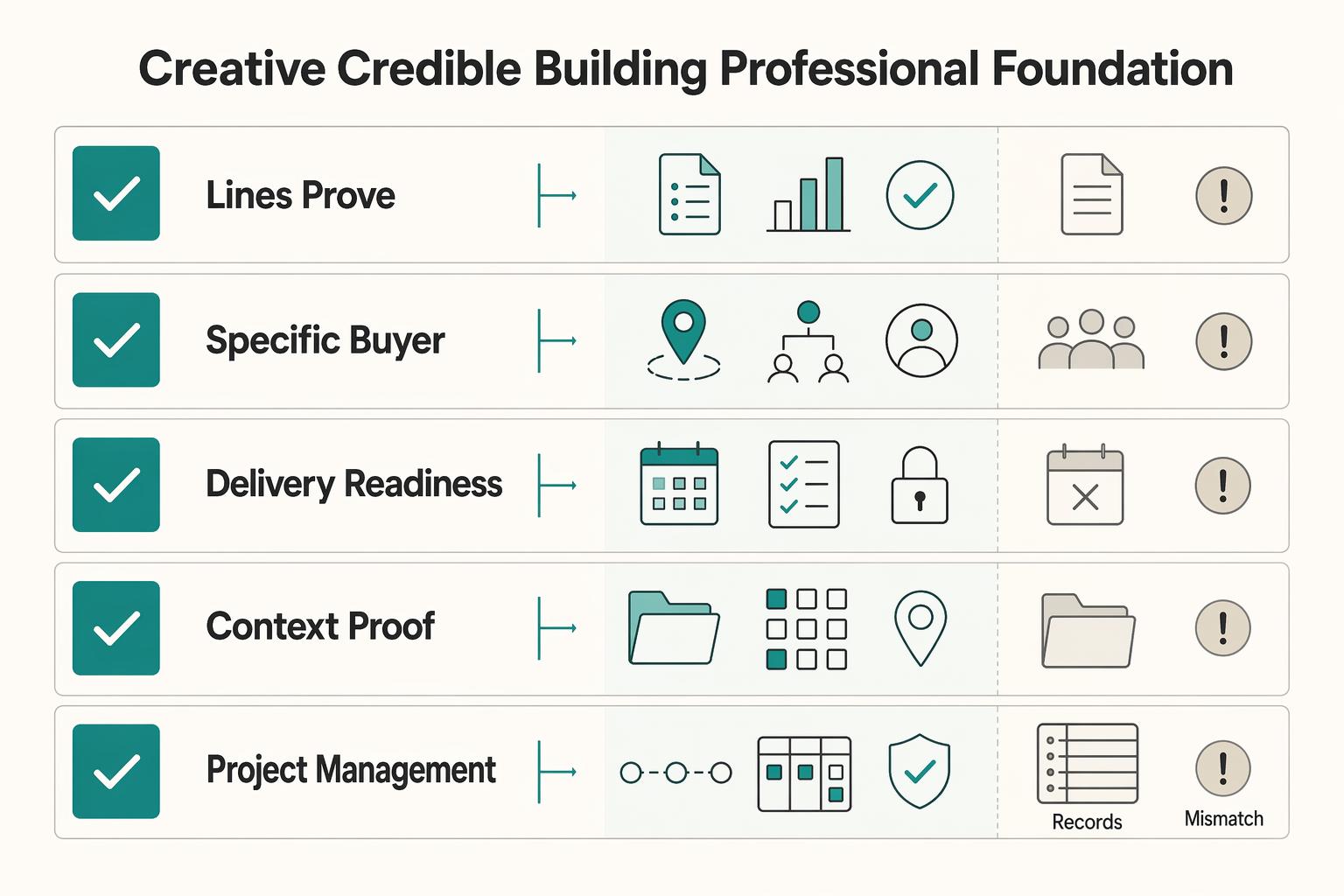
Use this keep-vs-cut filter before you finalize:
| Keep | Cut |
|---|---|
| Lines that prove business outcome | Follower counts and audience demographics |
| Specific buyer fit (industry, team, stage) | Aesthetic adjectives and vague personal branding |
| Delivery-readiness signals (handoff format, coordination norms) | Skill dumps without a business use case |
| Context for proof points | "Featured in" logos with no relevance to the buying decision |
Step 3: Define ICP with qualification gates. An Ideal Client Profile (ICP) is a company-level description of the organizations most likely to be a strong fit and buy. It is different from a buyer persona, which is person-level.
Build your ICP with three qualification filters:
- Industry or operating context: Where do you already understand the language, review cycles, and risk profile?
- Team type: Which team usually owns the problem you solve (for example, marketing, product, founder-led sales, comms)?
- Problem context: What must already be true for your work to matter (for example, upcoming launch, stalled conversion, unclear positioning)?
Add one de-prioritize rule to protect your pipeline: de-prioritize accounts with no clear problem owner or no visible budget/authority to buy.
Step 4: Present your tech stack as an operations signal map. A professional tech stack is evidence that you can manage work, coordinate stakeholders, and execute reliably, not a software flex list.
| Tool category | Purpose in delivery | Client-facing benefit |
|---|---|---|
| Project management | Track tasks, deadlines, owners | Clear status and fewer missed handoffs |
| Collaboration and files | Share drafts, comments, approvals | Faster reviews and cleaner version control |
| Finance and compliance | Invoicing, tax forms, vendor setup | Smoother onboarding and payment processing |
Only list tools you actively use. If relevant, note operational readiness clearly: ability to provide Form W-9 when a U.S. payer requests it; Form W-8BEN status documentation when you are a foreign individual receiving U.S.-source payments and the payer asks; and VAT-compliant invoicing for EU B2B work where required.
Related: How to Build a Media Kit for Your Freelance Business.
Phase 2: Moving Beyond Vanity Metrics to Prove Your ROI#
Your Trust Kit should prove business impact, not popularity. Keep metrics only when they help a buyer make a decision; if a number is not practical, treat it as weak evidence.
Filter your proof with Metrics That Matter#
Use one rule: keep a metric only if it maps to pipeline, revenue efficiency, retention, or delivery performance. Cut reach-only metrics unless they are tied to a defined conversion action (for example, a purchase, booked call, or qualified lead).
Ask this before you keep any KPI: Would this change a buyer's budget, scope, or priority? If not, remove it.
- Sales conversion rate belongs because it shows whether your offer turns interest into action.
- CAC and CLV belong because they show revenue efficiency.
- Retention belongs because it shows whether customers keep buying.
- Delivery performance belongs when you can show how it is measured (for example, SLA targets, turnaround time, or approval speed).
Verification rule: for every KPI, record source, date range, and owner. If you cannot state where it came from, do not present it as hard proof.
| Replace this vanity metric | With this verified KPI impact | Verified evidence to include |
|---|---|---|
| Follower growth | Conversion actions from campaign or content | Current result, source, and date range |
| Engagement rate | Sales conversion rate or qualified lead rate | Current result, definition used, and owner |
| Traffic or views | CAC, CLV, or cost per qualified action | Current result and attribution note |
| Positive comments | Customer retention, renewal, or repeat purchase signal | Current result and reporting period |
| Fast delivery claim | SLA hit rate, turnaround time, or approval cycle time | Current result and measurement method |
Build PAR case studies that can hold up to follow-up#
Use a disciplined Problem-Action-Result format. Your case study is evidence, not a highlight reel.
Required fields:
- Problem and context: client type, business situation, and what was at risk
- Action scope: what you owned, what others owned, and the time period
- Business result: KPI change, source, and attribution limits
Use this structure:
Problem Name the client type, the specific business problem, and the timing or trigger. Identify the affected metric, such as pipeline, revenue efficiency, retention, or delivery performance. Include the baseline only when it has been verified.
Action State the scope you owned, the dependencies handled by the client team, and the deliverables or interventions included.
Result State the time period, the verified KPI movement, the source, and the result your work contributed to. Do not claim sole causation if paid media, sales changes, pricing, product releases, or other channels were active at the same time.
If attribution is uncertain, say "contributed to" or "supported," not "caused."
Match testimonials to the objection you need to answer#
Use testimonials to answer buyer concerns directly, not as generic praise.
| Objection | Ask for | Evidence focus |
|---|---|---|
| Fit | The original problem, why they chose you, and whether your expertise matched the brief | Problem fit and expertise match |
| Reliability | Communication, deadlines, approvals, or performance against agreed SLA terms | Delivery reliability and SLA performance |
| ROI | What changed in the business, which KPI improved, and whether the result was measured | Business change and measured KPI improvement |
Ask for the kind of proof that matches the objection you need to answer, rather than a broad "working with you was great" quote.
Compliance check: under 16 CFR 255.2, performance claims in endorsements require substantiation, and testimonials alone are not scientific proof. If a client was paid, discounted, or otherwise received value, disclose that connection clearly and conspicuously. The FTC rule prohibiting fake reviews and testimonials took effect on October 21, 2024.
Run a final self-audit before sending#
- Is each metric tied to pipeline, revenue efficiency, retention, or delivery performance?
- Can you name the source, date range, and metric definition for each claim?
- Is attribution clear, or did you label contribution instead of causation where needed?
- Does every case study include context, scope, and business result?
- Does each testimonial answer a real objection (fit, reliability, or ROI)?
- Would this evidence matter to your actual ICP, or is it just flattering?
For a step-by-step walkthrough, see How to Price a YouTube Sponsorship Deal.
Phase 3: Show scope, payment readiness, engagement format, and setup contacts#
When your results are credible, the next approval question is operational risk: can a client onboard you cleanly and manage delivery without friction? Make this section a practical operations checklist so procurement can see scope, payment readiness, engagement format, and setup contacts in one pass.
Workflow & Process#
What to include: a written scope with work description, location of work, period of performance, deliverable schedule, measurable standards, and how performance will be assessed.
| Stage | Include | Note |
|---|---|---|
| Onboarding | Kickoff, required access, success criteria, approvals map | Use a reusable delivery framework instead of fixed timeline promises |
| Execution cadence | Review cadence, review points, and sign-off owner | Keep language result-focused |
| Handoff | Final deliverables, documentation, file transfer, and post-project support window (if offered) | Do not leave outcomes, owners, or schedule unclear |
You do not need fixed timeline promises. A reusable delivery framework is usually enough: onboarding, execution cadence, and handoff. Keep the language result-focused. Do not over-describe internal steps while leaving outcomes, owners, or schedule unclear.
Compliance & Invoicing#
What to include: legal name, business contact details, remittance address, bank verification availability, and tax/invoice formats you can provide when applicable.
| Document or capability | Use when | Note |
|---|---|---|
| Form W-9 | For U.S. payer setup if requested | State only capabilities you can document now |
| Form W-8BEN | For foreign payee setup if requested by payer or withholding agent | State only capabilities you can document now |
| VAT invoice | For EU B2B work where applicable | Confirm the applicable member-state requirements before sending |
Only state capabilities you can document now. Do not claim one universal checklist across jurisdictions, or identical VAT invoice fields in every EU member state. If you reference endorsements, make material connections clear and confirm the applicable requirement for your context.
Engagement Models#
What to include: clear model options and a simple selection rule tied to scope clarity, decision speed, and collaboration style.
| Model | Best when scope is | Decision speed | Collaboration style |
|---|---|---|---|
| Project-based | Clear and bounded | Usually easier when deliverables are defined | Structured, milestone-led |
| Retainer | Ongoing but predictable | Better after trust or recurring need exists | Continuous access and recurring priorities |
| Advisory | Still being defined | Useful when the client needs direction first | High-touch, discussion-heavy |
Decision rule: lead with project pricing when scope is fixed, present retainer for ongoing access, and start with advisory when diagnosis comes before delivery. Use a verified starting range only when it is current, instead of relying on stale price anchors.
Professional Contact Points#
What to include: primary business email, website, LinkedIn, invoicing contact, legal/business name, and onboarding contacts for tax forms and payment setup.
Final check: this page should let a finance or AP contact start vendor setup without chasing your social profiles or asking for basic admin details.
If you want a deeper dive, read The 1% Tax Regime for Entrepreneurs in Georgia.
Conclusion: From Anxious Creator to Empowered Partner#
Treat your kit as a buyer check, not a self-description. In B2B terms, a Trust Kit should prove three things: you can do the work, the work creates commercial value, and you will be easy to buy from. If your document cannot show capability through relevant past work, value through KPI-linked results, and operational reliability through a clear process, it is still a portfolio.
That is why buyer fears matter more than your preferences. Buyers are not only asking whether your content looks good. They are checking whether the partnership will create avoidable risk, and your kit should remove that doubt before the call.
| Client fear | What resolves it |
|---|---|
| "Can this person actually deliver?" | A precise ICP, relevant PAR case studies, and past performance evidence tied to similar buyer problems |
| "Will this be worth the spend?" | Metrics with a source, date window, and business KPI, not reach screenshots without context |
| "Will operations turn messy?" | A deliverable schedule, measurable performance standards, approval steps, and payment setup readiness (for example, Form W-9 for U.S. contractor payments or Form W-8BEN for eligible foreign individuals) |
Use this before you send. Your kit is partner-ready if you can say yes to each item below.
- Every metric can be recreated from the platform or report, with the reporting period shown.
- If you use YouTube or platform audience data, you note where demographics may be incomplete rather than implying certainty.
- Your case study states the problem, action, result, and evidence pack.
- Your process names deliverables, approvals, reporting, and invoicing documents.
- If endorsements are involved, your disclosure approach is clear and conspicuous when a material connection exists.
If you fail these checks, revise before sending. Clarity, evidence, and process discipline are what move you from "interesting creator" to credible partner. We covered this in detail in How to Use Social Media to Build Your Freelance Brand.
Frequently Asked Questions
What is the difference between a media kit, a capabilities deck, and a Trust Kit?
A media kit is a promotional package for digital media stakeholders, not just journalists. A capabilities deck, or capability statement, is a concise marketing resume that helps a buyer scan your core competencies, differentiators, past performance, and company data quickly. A Trust Kit is this article’s label for a package that adds proof, case studies, and workflow or compliance evidence so the buyer can judge fit and risk, not just interest. | Asset | Best use | What a buyer checks first | Pass signal | |---|---|---|---| | Media kit | Sponsorships, partnerships, visibility | Audience relevance and brand fit | Clear audience data and usable case examples | | Capabilities deck | Fast B2B introduction | Core competencies, differentiators, past performance | Concise, scan-friendly proof | | Trust Kit | Higher-stakes B2B buying | ROI evidence plus operational readiness | KPI mapping, case-study proof, workflow, invoicing readiness |
How do you create a creator media kit for B2B work?
Build it like a decision document, not a promo sheet. Before sending, make sure it shows four things: a clear ICP at company level, KPI mapping tied to the client’s goal, at least one case study with evidence, and a workflow or compliance section that shows how onboarding and invoicing work. It fails if your strongest proof is still your bio, aesthetics, or follower count without business context.
Should you include your rates?
Usually, include a starting point only when it helps qualify fit. Use a concise starting-range line for the engagement model you named earlier instead of a full menu. If scope is unclear, keep pricing out of the document and move the buyer to an advisory or scoping conversation.
What do clients actually look for before they reply or buy?
They are checking credibility, ROI proof, and operational readiness. Credibility passes when your ICP is specific and your past work matches that buyer. ROI proof passes when your metrics connect to conversions or another agreed KPI, not just reach. Operations pass when you can name deliverables, approvals, and setup documents such as Form W-9 or Form W-8BEN if applicable. Fail signals are vague audience claims, screenshots without context, and no invoice-readiness check.
How do you verify the numbers before you send it?
Check that every metric has a source and a date window. If you use YouTube audience data, confirm the audience view reflects the current reporting window and note when a monthly figure is based on the prior 28 days. If you reference return metrics, make sure the calculation period is explicit rather than implied. If you cannot recreate the number from the platform or report, remove it.
How long should it be, and what format should you use?
Use the short version when the buyer needs a fast yes or no. Use a longer version only when procurement, legal, or a larger stakeholder group needs more evidence. Set your own cutoff internally, but keep the concise version focused on ICP, KPI proof, case studies, and workflow readiness. Send it as a clean PDF for consistency, and if you maintain a secure evidence page, use that as the follow-up location for deeper compliance or document requests.
Try a related tool
Researched and edited by the Gruv editorial team. Gruv builds cross-border billing, payouts, and finance-operations software for global businesses.
Sources
- ecfr.gov/current/title-16/chapter-I/subchapter-B/part...trusted
- ftc.gov/business-guidance/resources/disclosures-101-...trusted
- hhs.gov/grants-contracts/contracts/get-ready-to-do-b...trusted
- irs.gov/forms-pubs/about-form-w-9trusted
- irs.gov/businesses/small-businesses-self-employed/fo...trusted
- sba.gov/business-guide/plan-your-business/write-your...trusted
- taxation-customs.ec.europa.eu/taxation/vat/vat-businesses/invoicing_entrusted
Educational content only. Not legal, tax, or financial advice.
Related Posts

Georgia 1% Tax for Entrepreneurs Without Filing Surprises
Treat Georgia's 1% tax path as a compliance question first and a rate discussion second. The goal is a setup you can defend under review, not a shortcut that fails at filing time.
Build a Freelance Media Kit That Reduces Client Friction
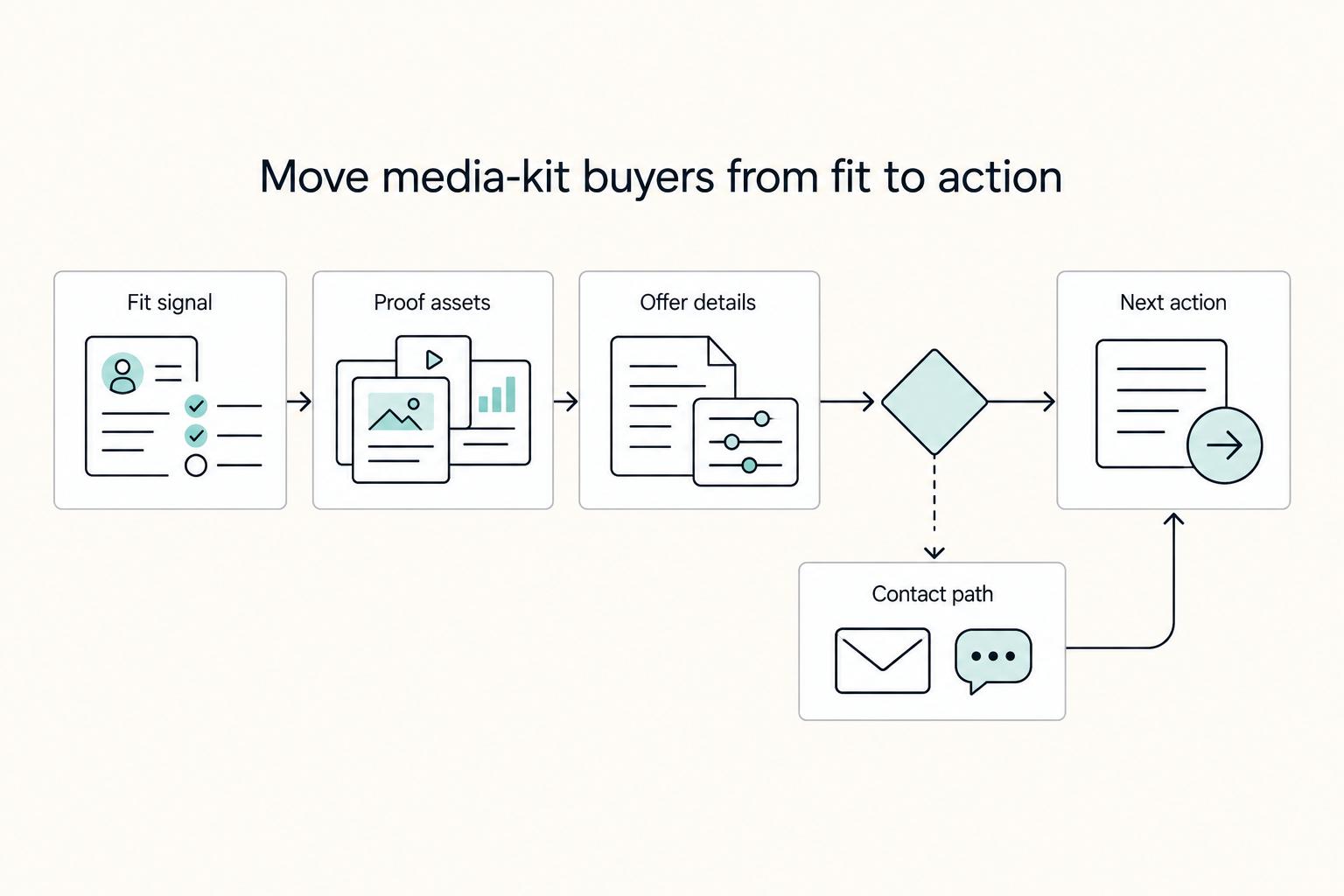
Treat your media kit as a buyer decision tool, not a design exercise. If a prospect can spot fit, proof, and the next action quickly, you cut a lot of avoidable back and forth before a call is scheduled. That is this document's job.
YouTube Sponsorships for Creators Who Want to Get Paid on Time
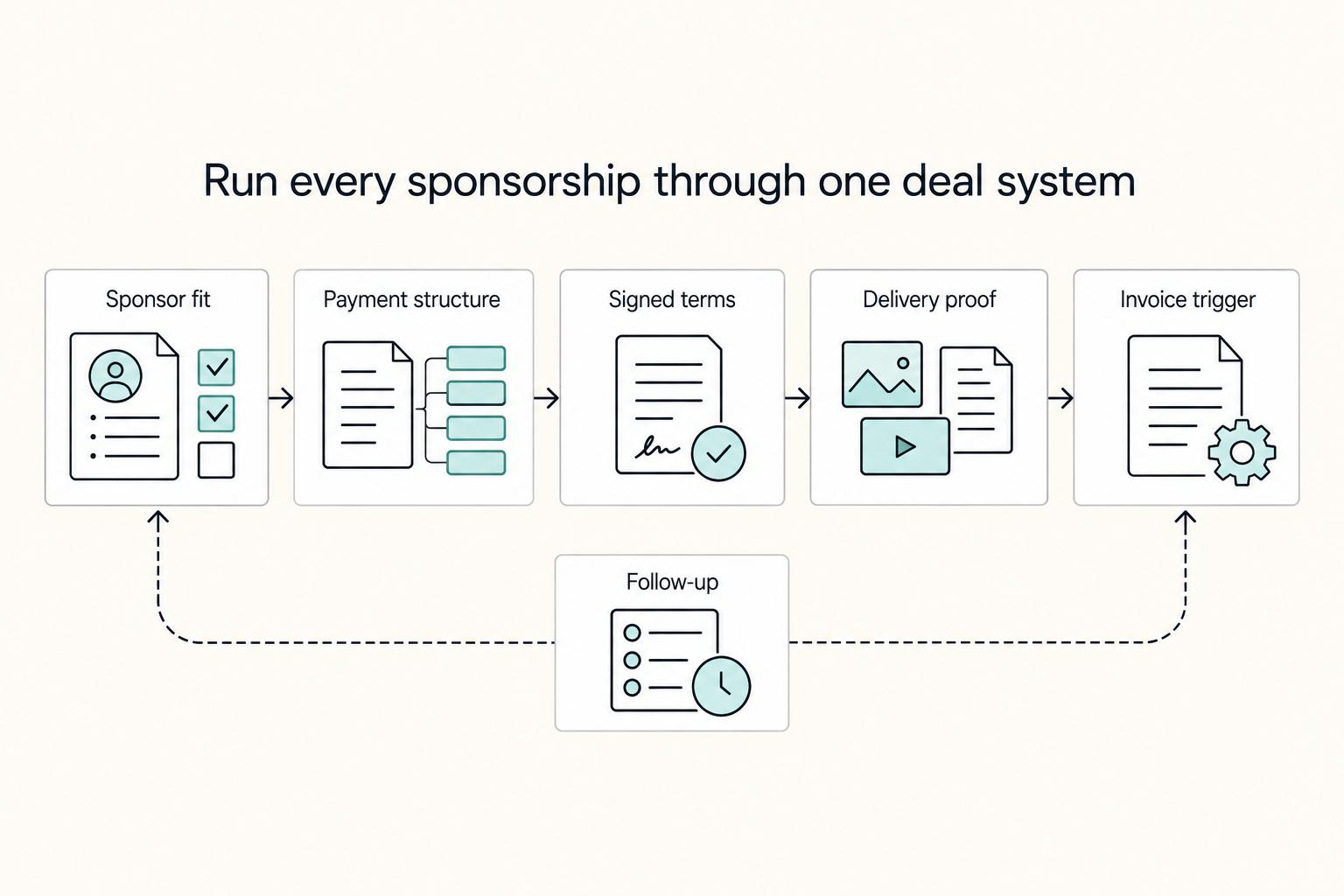
Landing interest is not the same as getting paid. The goal is not a lucky one-off campaign. It is a deal process that helps you manage sponsor work with fewer surprises.