
Quick Answer
Build building a community for creators around ownership, rules, and repeatable value delivery. Begin with an invite-only beta, put Terms of Service and moderation procedures in place, and choose a platform based on control and knowledge retrieval rather than trend appeal. Then run a structured weekly cadence, use paid access to qualify fit, and track business outcomes like qualified inquiries and conversions instead of vanity activity.
Stop Building an Audience. Start Building Your Moat.#
For creators, community starts with ownership. You need an environment you control, a repeatable way to deliver value, clear rules, and a path that moves the right members toward meaningful business outcomes.
If your current audience strategy mostly means posting more, replying everywhere, and hoping the algorithm keeps sending the right people, you are taking on platform risk without owning much of the upside. The usual result is fragmented effort and a channel mix that can change the moment a platform changes distribution.
That is different from chasing broad reach. Harvard Business School frames community as a growth lever tied to loyalty and sustainable growth, and cites 66 percent of companies saying community significantly affects retention. The takeaway is not the percentage itself. It is that community works best when you treat it as a business asset, not a social extra.
A quick checkpoint helps. If most member access still depends on rented platforms, and you do not have a direct owned channel such as email, you do not fully own the relationship yet. Another red flag is spending heavily on setup or features while neglecting trust and interaction quality. Technical edges are easier to copy now. A well-run space built on trust and consistent interaction is harder to replace.
The rest of this guide follows that logic in three stages. First, you build the foundation. Second, you create an operating model for engagement. Third, you grow in ways that keep quality high instead of flooding the room. Success here is not follower count. It is treating community as a long-term business asset tied to retention and less dependency on platforms you cannot control.
Stage 1: The Inner Circle - Build Your Foundation and Mitigate Risk#
Start with a small, invite-only beta and put your core terms in place before anyone joins. In this stage, control beats speed: a tight first cohort, clear Terms of Service, and a narrow purpose prevent cleanup work later.
Early members shape your norms. If you open too wide too soon, moderation load rises, expectations drift, and low-fit behavior can become the default.
How should you start the beta?#
Invite people you trust to contribute, not just people who follow you. A practical first mix is trusted peers, thoughtful past collaborators, and people who will give direct feedback.
Before they join, set three points clearly:
- who this space is for
- what commitment you expect during beta
- how long the beta runs before you decide on broader access
Keep the commitment simple: read the rules, participate in a defined way, and share feedback on what is useful, unclear, or missing. Run a lightweight loop inside the community, then use a short survey or brief calls to confirm recurring friction.
Use this checkpoint before expanding access: can members explain the purpose in one sentence, find the rules quickly, and point to interactions that were clearly useful? If not, keep beta closed.
What documents should you have before launch?#
Put your legal terms in place, including liability and IP protections, before inviting your first member. Treat this as a pre-launch checklist, not a single vague rules page.
| Item | What it should do | Placeholder for jurisdiction-verified wording |
|---|---|---|
| Community guidelines | Define acceptable behavior, prohibited behavior, and consequences | [warning and removal process] |
| Liability language | Clarify discussions are informational and not professional, legal, or financial advice | [required disclaimer wording] |
| IP and data terms | State content rights, repost permissions, and how member data is handled | [content license scope], [privacy contact] |
| Escalation workflow | Show how reports are submitted, reviewed, and resolved | [response owner], [governing law or venue if applicable] |
A short moderation playbook helps too. Keep it practical: who decides, how warnings work, when removal applies, and where cases are logged.
How do you stop the scope from drifting?#
Use a job-to-be-done filter on every channel, event, and post type:
- What concrete member problem does this solve?
- Is that problem central to why this community exists?
- Would a high-fit member thank you for this, or mute it?
If you cannot answer all three, cut it.
Then choose your platform based on control, moderation burden, knowledge retrieval, integrations, and portability, not trend value.
| Platform type | Ownership | Moderation controls | Discoverability and knowledge retrieval | Integrations | Portability | Best fit when... |
|---|---|---|---|---|---|---|
| Chat-first platform | Lower direct control over environment | Usable, but can become labor-heavy as volume grows | Fast conversation, weaker long-term retrieval | Usually broad | Migration can be messy | You need real-time discussion and can manage information decay |
| Dedicated community platform | Stronger control over branding and access | Better for roles, permissions, and structured spaces | Better for organized, searchable knowledge | Often strong for memberships/events | Ask export questions before committing | You want a professional member experience with clearer structure |
| Forum + email stack | High control when you own the stack | Depends on your setup and staffing | Strong when taxonomy and archives are managed well | Flexible, with more setup effort | Usually better when you control the data | You prioritize portability and long-term knowledge capture |
Before committing, ask: if you had to migrate in a year, what can you export, and in what format? Migration is a real lifecycle event.
Stage 2: The Value Engine - Systematize Engagement and Protect Your Time#
In Stage 2, make member value repeatable without becoming always on. If you are still posting reactively, answering everything yourself, and treating activity as success, the community is turning into a liability. Track business outcomes instead: qualified leads and conversion to your higher-ticket services.
What should your weekly operating rhythm look like?#
Run a narrow system: you own signal, tone, and final judgment; routine operations should be templated, delegated, or cut.
Each week, do four things:
- Review where members are stuck.
- Publish one anchor discussion or teaching piece.
- Reply where your expertise changes the decision.
- Capture reusable topics for future content.
Delegate welcomes, duplicate-question routing, routine reminders, and re-engagement nudges.
Use an editorial framework that ties each format to an outcome and reuse path:
| Format | Member outcome | Effort level | Reuse path |
|---|---|---|---|
| Quick test prompt | Surfaces real problems and member language | Low | Expand strong responses into a deeper post, email, or workshop topic |
| Case breakdown | Helps members apply your judgment to a real scenario | Medium | Turn recurring lessons into an FAQ, resource post, or onboarding reference |
| Office-hours thread | Gives a predictable place for help requests | Medium | Convert repeated questions into a searchable knowledge post |
| Deep teaching post | Builds authority and decision confidence | High | Split into smaller posts with a content waterfall system |
Apply a test-before-invest rule for new ideas: spend 30 minutes to an hour max on a short prompt or question first. If you get specific replies, follow-up questions, or useful disagreement, promote it and reuse it across channels. If response is weak, stop there.
Also decide what to stop doing: avoid turning every question into custom mini-consulting, avoid posting filler takes, and avoid promising fast DM support that does not scale or create searchable value.
How should moderation work?#
Moderation should be simple under pressure and consistent over time. Use one workflow:
| Workflow step | What it includes |
|---|---|
| Intake | capture report, link, screenshot, and the rule/behavior in question |
| Triage | classify as low-quality posting, member conflict, possible IP misuse, or an issue touching your Terms of Service or liability language |
| Escalation | route repeat incidents, removals, IP terms issues, and potential legal or reputational risk back to you |
| Decision owner | assign one final owner for each case |
| Documentation trail | log what happened, what rule applied, what action was taken, and what would trigger a stronger response next time |
Keep a moderation log with date, member, content link, screenshot (if needed), decision owner, and outcome.
How do you set capacity before demand tests you?#
Set limits before demand spikes, or your calendar will set them for you. Strict time-blocking only works when it is tied to service delivery capacity.
Define three limits:
- Weekly cap for community hours.
- Daily check window for urgent issues.
- Reasonable founder-time limit per member.
Use a fallback rule during high-demand periods: keep moderation, the scheduled anchor interaction, and questions that unblock real decisions; pause bonus events, custom feedback, and spontaneous drop-ins.
Lighthouses can help you scale without drift. They can welcome members, model participation, host approved prompts, and flag issues. They should not rewrite rules, interpret policy independently, or make final removal decisions. Keep a shared action log and short recurring check-in for accountability and alignment.
Stage 3: The Growth Multiplier - Scale and Monetize Without Diluting Your Brand#
When demand starts to outrun your hours, treat paid access as qualification and expectation-setting, not scarcity. You are asking people to opt in, state intent, and accept how the room works before they participate.
Charging does not automatically create trust, but it does make expectations explicit. If someone will not pay, complete a short application, or name the problem they want solved, treat that as a fit signal. Keep public content generous, and make the paid layer the place where commitment, context, and reciprocity are required.
Use a clear progression so members can self-select and you can avoid selling the wrong offer to the wrong person.
| Tier | Entry criteria | Promise | Next-step trigger | Member intent | Delivery workload | Brand dilution risk | Best use case |
|---|---|---|---|---|---|---|---|
| Public layer | Follows your newsletter, channel, or free resource | Clear point of view and practical examples | Repeated engagement, replies, or direct questions | Learning and evaluating fit | Low to medium | Medium if reach starts to override relevance | Build trust and signal |
| Paid community | Membership payment or light application | Peer access, focused discussion, direct but bounded guidance | Specific results, consistent participation, request for deeper help | Solving an active problem | Medium | Lower when entry expectations stay clear | Qualify members and support recurring revenue |
| Premium offer | Application, interview, or invitation | High-touch support (advisory, coaching, mastermind) | Clear business case, urgency, budget, and fit | Implementation and speed | High | High if promoted too broadly or too early | Concentrated revenue from best-fit members |
For most creators, the paid community is the hinge between broad attention and premium work. If you want diversified revenue, keep each lane legible: memberships/subscriptions support continuity, consulting/services monetize strongest fit, and licensing/partnerships are better once your method or IP is repeatable.
What should you track instead of vanity metrics?#
Track revenue contribution, not just activity. The operating question is pipeline and closed deals, including cases where the community influenced the opportunity without being the final touchpoint.
| Metric | What to track |
|---|---|
| Pipeline contribution | qualified inquiries from members, alumni, or member referrals |
| Tier movement | transitions from public to paid and paid to premium |
| Retention quality | members who stay and still participate in ways that match the promise |
| Referral quality | whether referrals resemble your best current members |
There is no universal benchmark, so anchor to your own trailing 90-day baseline. A simple setup is to require two form fields: "What problem are you here to solve?" and "Who referred you?" Then review upgrades, cancellations, and referral notes together each month.
How do you scale without eroding trust?#
Scale only when the current offer is delivering what you promised. Before expanding, run an offer-fit check: are members getting outcomes, are repeated questions exposing onboarding gaps, and are promotions crowding out substantive discussion?
Set a promotion cadence limit you can enforce, and pause growth pushes when quality drops. Keep a feedback-friendly loop in place: ask for feedback, respond, and use it to improve the offer before adding volume.
Also reduce platform risk as you grow. Maintain direct relationships through email and keep a simple member history outside any single platform. You might also find this useful: The Best Community Platforms for SaaS Businesses.
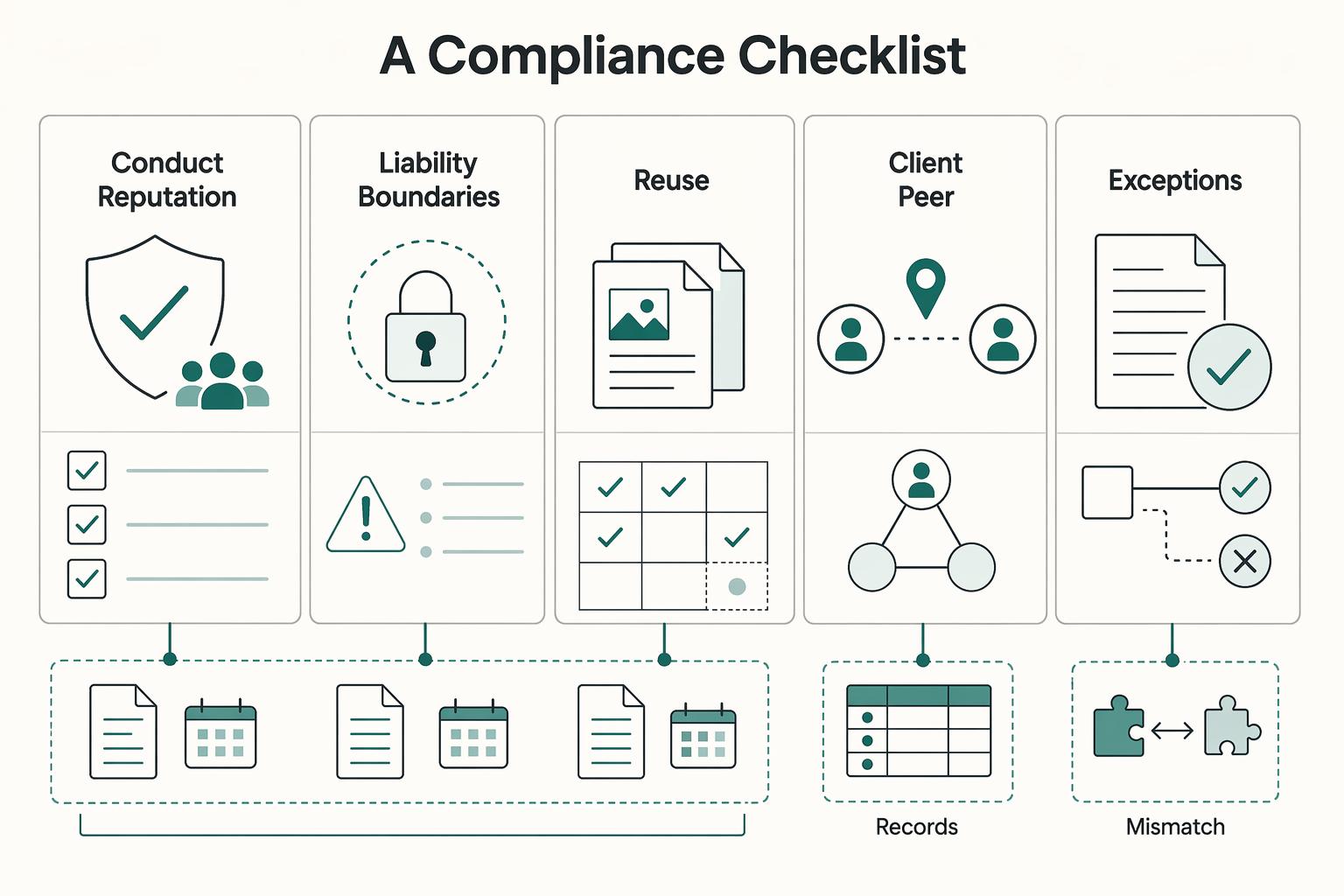
Fortifying Your Asset: A Compliance Checklist#
Treat compliance as normal operating hygiene: clear rules, clear ownership, and a repeatable process when issues come up.
| Risk area | Policy location | Owner | Trigger event | Review cadence |
|---|---|---|---|---|
| Conduct and reputation | Community Guidelines + onboarding acceptance | Founder or lead moderator | Complaint, harassment report, repeated boundary pushing, off-platform solicitation claim | Quarterly and after any serious incident |
| Liability boundaries | Terms of Service + join page disclaimers | Founder with counsel review | New content format, paid advisory add-on, member confusion about advice vs education | At launch, then every 6 months |
| IP and reuse | Terms of Service, content library footer, speaker/replay release | Founder or content lead | New templates, guest expert sessions, replay publishing, member request to reuse material | Every 6 months and before major launches |
| Client and peer vetting | Community Guidelines, moderation SOP, report form | Moderation lead | Negative allegation about a client, vendor, or member | After each escalation and quarterly |
| Exceptions and special permissions | Written approval log in your admin folder | Founder | Any exception to reuse, recording, access, or partner promotion rules | Monthly |
Keep member-facing rules in two places only: Community Guidelines for behavior and Terms of Service for legal boundaries. Point onboarding to both, require explicit acceptance, and keep a dated copy of each version. If you allow an exception, require advance written approval instead of informal DMs; that checkpoint helps prevent policy drift and inconsistent enforcement.
For liability, keep one clear boundary: your discussions, templates, and office hours are educational, not professional advice. Use the same boundary in your Terms, onboarding, and sales pages so your promise matches your contract. Leave legal language as a counsel placeholder: [counsel to confirm enforceable liability, assumption-of-risk, and hold-harmless wording for this jurisdiction].
For IP, define scope on both sides. Copyright protection starts once original work is fixed in a tangible medium, and the owner controls copying, derivatives, and distribution. Your Terms should state what you own, what members own, and what limited license each side grants to host and display content in the community. Do not treat member posts, testimonials, or call clips as reusable marketing assets without explicit permission; add a separate reuse permission step. Keep anti-solicitation language as a legal placeholder, not template copy: [counsel to confirm anti-solicitation scope and enforceability for target jurisdictions].
For enforcement, standardize intake and evidence so moderation is consistent. Route incidents through one form or inbox, and require links, screenshots, dates, and any relevant contract, invoice, or message history. Log outcomes in plain categories: no action, warning, content removal, temporary suspension, permanent removal. Offer a short appeal path that lets members submit missing context, ideally to someone other than the original moderator.
For peer or client vetting, apply a fact-pattern rule. Allow verifiable business conduct claims (for example, late payment against signed terms, chargebacks, missed deliverables, abusive written messages), and block subjective labels. If a claim cannot be substantiated with documents or first-hand records, freeze the thread, request evidence privately, and remove the allegation if support does not arrive.
For a step-by-step walkthrough, see A guide to 'Network Effects' for community-based products.
Conclusion: Your Community is Your Competitive Advantage#
Your community becomes a real business asset when you treat it as part of operations, not just audience engagement. The practical test is simple: are you creating a space with multi-directional interaction, where members learn from you and from each other, or are you just gathering followers in one more channel?
What this means for you now is concrete. Stage 1 was about foundation: define who the space is for and decide how much of the channel you want to own. Stage 2 was the value engine: create repeatable ways for members to talk, ask, and help each other so you can spot recurring questions. Stage 3 was growth: monetize and expand in ways that improve member fit instead of chasing raw volume.
Use this as your next-step checklist:
- Confirm your channel decision. If you do not actively shape the space, people may still form communities around your brand without you.
- Check that your experience is actually community, not awareness. A follower count alone does not prove real participation.
- Review one month of member questions and discussion threads for repeated language and recurring themes.
- Add a measurement stage. Track signals over time, such as repeat questions, attendance, and member-to-member replies.
- Cost-check monetization before launch. If you use app purchases or web checkout, model the fee stack in advance. One provider example lists a 3.9% web checkout fee, and store fees may also apply.
That is the grounded version of building this kind of community: clearer decisions, cleaner operations, and growth you can sustain without losing control. This pairs well with our guide on A guide to the 'Mere-Exposure Effect' for building your personal brand.
Frequently Asked Questions
What platform should you choose for a professional creator community?
Choose the platform that matches how you want members to interact, not the one with the loudest brand. If your offer depends on organized knowledge and continuity when algorithms or platforms change, a dedicated community setup can be a strong fit. If you need fast back-and-forth and looser conversation, chat tools can work, but set clear moderation and engagement norms early.
How do you monetize without hurting your brand?
Use a simple ladder: free entry content, a paid community layer, then a premium service path for people who need deeper help. Your paid layer should give members access to focused discussion, member-only assets, and peer-to-peer interaction so it solves a real problem instead of feeling like a locked chat room. Do not promise that everyone belongs there, and do not fill the paid space with low-fit buyers just to raise member count.
What legal risks matter most in a paid community?
Start with process, not legal jargon. Set clear rules for moderation, plus an escalation path for warnings, removals, and appeals so people know what happens when something goes wrong. The practical risk categories are straightforward: misleading advice, privacy problems, copyright issues, and harmful content. Keep policies specific, because broad policies often break down when members dispute moderation decisions.
How should you measure ROI?
Track business outcomes, not applause. Your checklist is short: lead quality, conversion into your paid offer, retention signals such as repeat participation, and time leverage from answering one question once instead of privately ten times. Add two review points early: at Week 2-3, check whether introductions and replies are slowing, and by Week 4+, silence is your warning that you built access, not engagement.
How do you start if your audience is still small?
Start with a small validation group and treat it like a test, not a grand opening. Invite a handful of people with a shared problem or goal, give them one clear reason to show up each week, and watch what they actually ask for. Your first success metric is not size. It is whether a small group produces useful conversations, repeat visits, and language you can use to sharpen your offer before you scale.
Try a related tool
Researched and edited by the Gruv editorial team. Gruv builds cross-border billing, payouts, and finance-operations software for global businesses.
Sources
Includes 4 external sources outside the trusted-domain allowlist.
- ias.umn.edu/programs/research-and-creative-collaborativestrusted
- ogc.harvard.edu/pages/copyright-and-fair-usetrusted
- online.hbs.edu/blog/post/brand-communitytrusted
- regis.edu/policies/intellectual-property-policytrusted
- antidisplacement.org/wp-content/uploads/2025/11/Community-Ownersh...external
- arxiv.org/html/2506.14018v1external
- blog.tagmango.com/the-ultimate-guide-to-community-building-for...external
- blogmarketingacademy.com/edge/your-last-moatexternal
Educational content only. Not legal, tax, or financial advice.
Related Posts

Digital Nomad Health Insurance Comparison for Long-Stay Moves
Use focused time now to avoid expensive mistakes later. Start with a practical `digital nomad health insurance comparison`, then map your route in [Gruv's visa planner](/tools/visa-for-digital-nomads) so we anchor policy checks to your real plan before pricing pages pull you off course.
The Best Digital Nomad Communities to Join
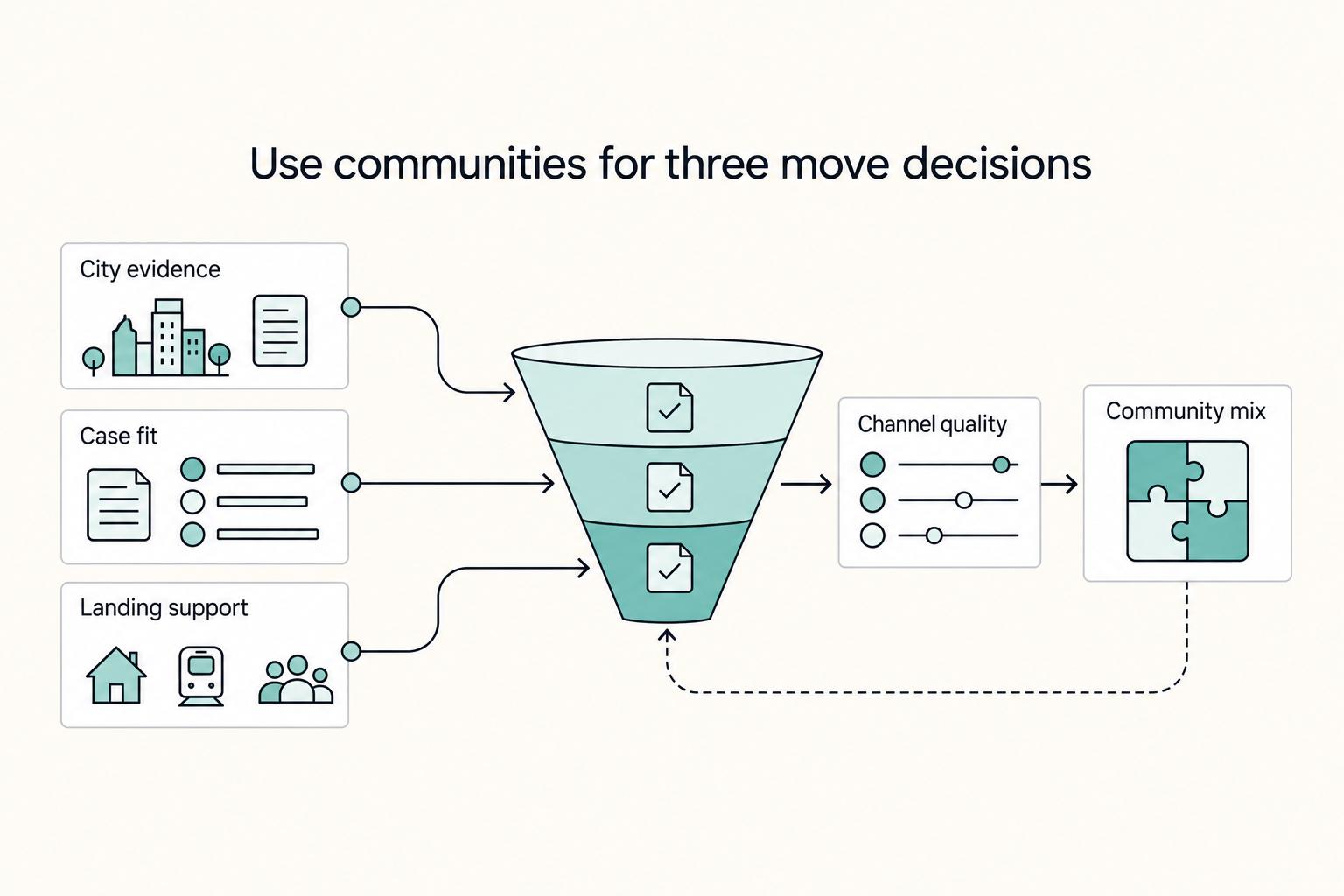
If your move date is real, use communities to answer three decisions in order: which city stays on your list, whether your case actually fits, and whether your landing week is covered. Judge every channel by outcomes, not activity. If it does not give you evidence you can use, stop giving it time.
The Best Community Platforms for SaaS Businesses
Start by classifying the job. If you want access to other people's audience, ideas, or conversations, you are choosing a community to join. If you want a place your customers or members use under your brand, with your rules and structure, you are choosing software you will need to operate every week.