
Quick Answer
Use a three-stage workflow for trademarking a brand name for client work: pre-filing scope design, active examination oversight, and post-registration control. Start by confirming the legal owner, goods/services wording from the USPTO ID Manual, and jurisdiction priorities before counsel files. During review, translate every status change and Office Action into clear options with owners and deadlines. After registration, manage symbol usage, calendar Section 8 windows, and capture dated infringement evidence before legal escalation.
As a brand strategist, your value goes well beyond delivering a strong name and identity. When you guide a client through trademarking, you help protect one of the business's most important assets, reduce avoidable risk, and make your role more durable.
Use this three-stage framework to manage the trademark lifecycle, from early intake through post-registration use, so the client can make clear decisions at each step.
Stage 1: Lock the filing strategy before anyone drafts an application#
Before filing, you need a facts-based brief that matches how the business will actually use the mark. This is where many preventable mistakes start: the wrong owner, the wrong scope, weak intake, or treating a filing service like legal counsel.
Run a practical pre-mortem on the client call#
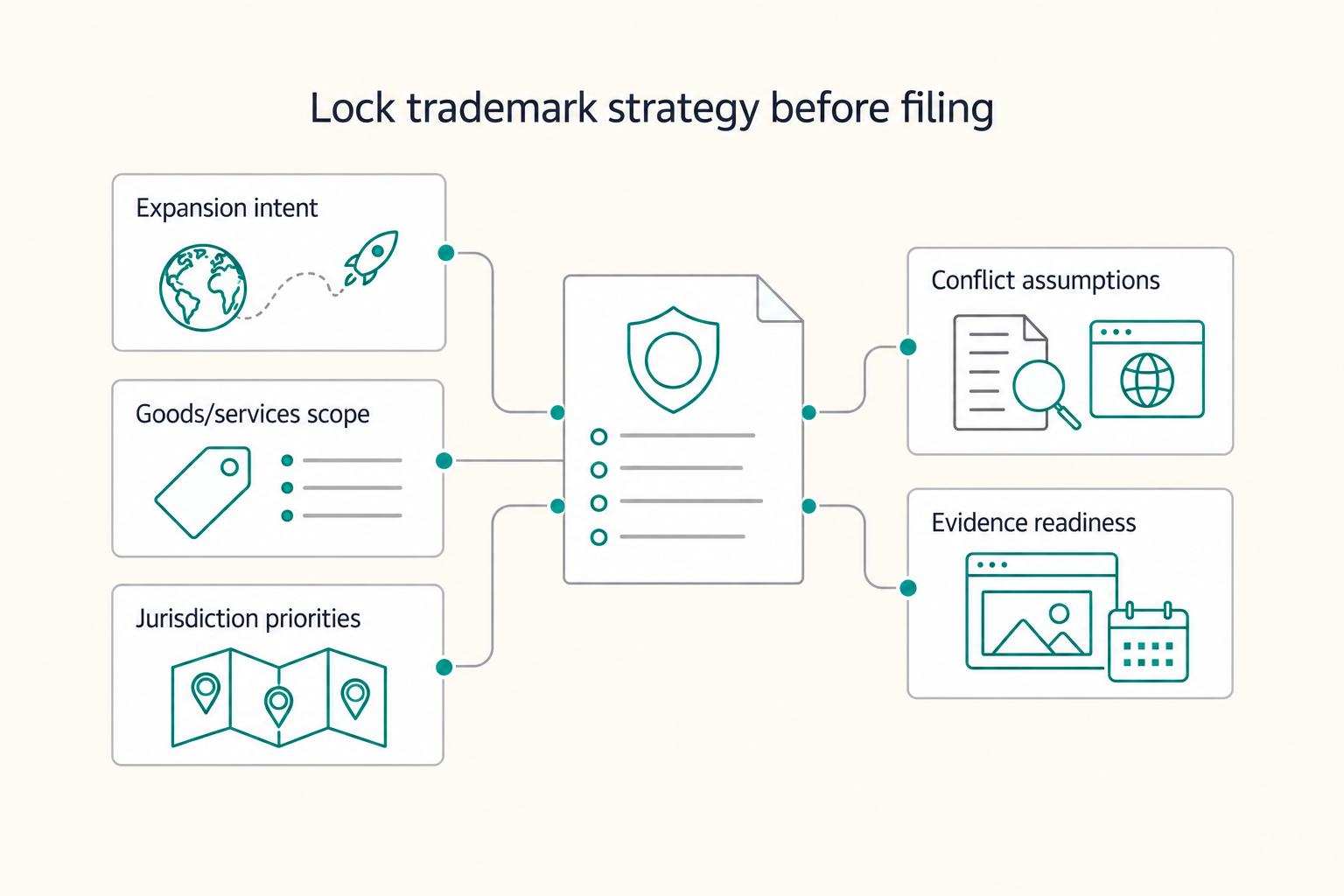
If the client cannot clearly describe what they will sell under the mark, pause the filing discussion and finish discovery first. Then use this checklist to lock the filing strategy before anyone drafts an application:
| Pre-filing check | Ask or confirm | Key note |
|---|---|---|
| Expansion intent | What they will sell now and what they realistically plan to launch next | Goods and services scope drives class decisions, and each class has its own filing fee |
| Goods/services scope | What is already live versus what is planned | Use identifications selected from the USPTO ID Manual; vague labels are not enough |
| Jurisdiction priorities | Where revenue is expected first and priority countries | International protection is not automatic, and each designated country can grant or deny registration independently |
| Conflict assumptions | Whether they are relying on an LLC or state name filing, or domain registration, as clearance | Domain registration does not create trademark rights, and likelihood of confusion is a common refusal ground |
| Evidence readiness | Whether the mark is already in use in commerce or still pre-launch | If web pages may be used as specimens, prepare screenshots that show the URL and access or print date |
- Expansion intent
Ask what they will sell now and what they realistically plan to launch next. You need concrete offers, not "maybe later" ideas, because goods and services scope drives class decisions, and each class has its own filing fee.
- Goods/services scope
Separate what is already live from what is planned. Use correctly classified goods and services with identifications selected from the USPTO ID Manual, because vague labels are not enough.
- Jurisdiction priorities
Ask where revenue is expected first and have them name priority countries. International protection is not automatic, and each designated country can grant or deny registration independently.
- Conflict assumptions
Ask if they are relying on an LLC or state name filing, or domain registration, as "clearance." Reset that early: domain registration does not create trademark rights, and likelihood of confusion is a common refusal ground.
- Evidence readiness
Confirm whether the mark is already in use in commerce or still pre-launch. If web pages may be used as specimens, prepare screenshots that show the URL and access or print date.
Choose counsel like the filing might be challenged#
Treat counsel selection as a risk decision, not an admin task. Foreign-domiciled applicants must use a U.S.-licensed attorney. U.S.-domiciled applicants may be able to file without one in some cases, but that does not make the process simpler or less legal.
| Decision area | Qualified IP attorney | Filing service | Risk signal + first consult question + required deliverable |
|---|---|---|---|
| Clearance and legal advice | Can assess search results and advise on likelihood of confusion | Cannot provide legal advice or USPTO representation | Risk signal: similar names in related categories. Ask: "Who gives the legal risk opinion?" Require: written clearance summary with risk assessment. |
| Scope, ownership, filing basis | Can verify owner details, classes, ID wording, and filing basis | Not a law firm; legal advice or USPTO representation must come from a U.S.-licensed attorney | Risk signal: multiple entities, unclear ownership chain, uncertain launch status. Ask: "How do you confirm owner and basis before filing?" Require: pre-filing draft showing owner, classes, and basis. |
| Post-filing issues | Can represent you in USPTO responses, including Office Actions | Cannot represent you at the USPTO | Risk signal: likely examiner questions or refusals. Ask: "Who handles Office Actions, and under what fee terms?" Require: engagement terms that state response scope. |
If a provider says it is not a law firm, cannot identify who is legally responsible for advice, or treats clearance as a checkbox, slow down.
Use budget as a risk-control script#
Budget conversations go better when you make the variables visible and keep the discussion operational, not emotional. Use a line like: "Let's separate filing fees, attorney fees, and possible follow-on costs by class." Verify current filing fee ranges, attorney fees, and likely follow-on costs from official USPTO, counsel, and engagement records before using specific numbers. Then explain: "The key variable is how much risk we reduce before filing by confirming ownership, scope, and conflicts." Then make the tradeoffs explicit:
- More classes can expand coverage, but they increase filing fees and can increase documentation burden.
- Broader scope can help near-term expansion, but it can waste budget if the plans are still speculative.
- If international filing is planned, note that outbound Madrid from the U.S. needs a U.S. basic application or registration, and the USPTO recommends waiting for the first U.S. Office Action before filing outbound from a pending U.S. application.
Hand off counsel a filing brief, not scattered messages#
Once budget, scope, and legal path are aligned, give counsel a structured intake so filing scope matches business reality:
| Brief element | Include | Constraint |
|---|---|---|
| Ownership chain | Legal owner name, entity type, place of formation, and who controls the mark | A U.S. application filed in the wrong owner's name is void and cannot be corrected by amendment |
| First-use narrative and filing status | Whether the filing is use-based or not, plus first-use details where needed by class | First use anywhere cannot be later than first use in commerce |
| Mark format choice | Standard character mark, special form mark, or separate applications for each | Standard character is text only; special form covers stylization, color, or design; one application is limited to one trademark |
| Evidence artifacts | Use evidence gathered early | For webpage evidence, keep the URL and date visible |
- Ownership chain
Include the legal owner name, entity type, place of formation, and who controls the mark, whether that is the company, founder, or holding entity. This is critical: a U.S. application filed in the wrong owner's name is void and cannot be corrected by amendment. If your scope includes brand assets, align this with your IP terms and review work for hire vs. assignment issues.
- First-use narrative and filing status
State whether the filing is use-based or not, and capture first-use details where needed by class. Keep the chronology consistent: first use anywhere cannot be later than first use in commerce.
- Mark format choice
Specify whether counsel should file a standard character mark, a special form mark, or separate applications for each. Standard character is text only. Special form covers stylization, color, or design. One application is limited to one trademark.
- Evidence artifacts
Gather use evidence early. For webpage evidence, keep the URL and date visible.
When this stage is tight, legal work starts from verified facts, not assumptions. If you want a deeper dive, read A Guide to Trademarks for Your Freelance Business Name and Logo.
Before you start clearance or counsel outreach, lock scope and ownership terms in writing so filing decisions do not drift later. Use this freelance contract generator to draft a clean first pass.
Stage 2: The Oversight Engine (Confidently Managing the Filing & Examination)#
After filing, your role shifts from intake to oversight. You keep the client informed, keep counsel supplied with clean inputs, and prevent silence from turning into bad decisions. That matters because naming conflicts can surface during launches, marketing pushes, fundraising, or the application process itself. Late surprises can force rebranding or legal disputes after major spend.
Run a client operating cadence from day one#
Set the cadence early so the client knows what they will receive, when, who owns it, and whether a decision is needed.
| Trigger | What you send | Owner | Client decision |
|---|---|---|---|
| Filing confirmation | One-page filing summary (owner, mark, goods/services, filing date) plus a check against the Stage 1 brief | Counsel confirms legal accuracy; you translate for the client | Only if something is wrong |
| Meaningful USPTO status change | Short plain-language update: what changed, what it means, what happens next | You draft; counsel confirms legal significance as needed | Usually no |
| Quiet period | Scheduled "no action needed" update so silence is not misread as risk | You | No |
| Refusal, requirement, or third-party issue | Immediate heads-up, then a counsel-backed options memo | Counsel provides legal paths; you frame business tradeoffs | Yes |
Translate milestones into plain language#
Clients usually do better when you translate status into business meaning instead of repeating portal language. Do not promise timing. Before sending the update, verify the exact USPTO status label from the official record and confirm any timeline window with counsel.
| USPTO record status | What it means in business terms | What the client should do now |
|---|---|---|
| Current USPTO status label pending official record verification (file received/queued stage) | The filing is in process, and waiting is normal | Hold position and keep records organized |
| Current USPTO status label pending official record verification (examiner review stage) | Legal review is active, and scope and conflicts are being tested | Stay available for fast clarifications |
| Current USPTO status label pending official record verification (public/challenge stage, if applicable) | Market-facing risk may surface before the final outcome | Avoid overcommitting brand rollout until risk is clear |
| Current USPTO status label pending official record verification (final outcome stage) | The filing reaches registration or another decision point | Execute the next plan, not assumptions |
Treat every Office Action as a business decision#
An Office Action is not just a legal event. It is a scope, timing, and budget decision. Do not forward a raw letter and ask the client to interpret it. Get counsel's written recommendation, then present the options in plain tradeoffs.
| Trigger condition | Counsel response path | Likely impact on brand scope | Effort level | Recommended client script |
|---|---|---|---|---|
| Conflict issue (including likelihood of confusion) | Assess overlap and choose to argue, narrow, or pivot | Argue: scope may hold if successful. Narrow: coverage tightens | Medium to high | "We can defend the original scope, or narrow it to reduce risk and move faster." |
| Clarification or narrowing request | Revise wording and confirm remaining protection | Usually tighter scope, clearer path | Low to medium | "This is mainly about scope precision, not a full reset." |
| Evidence or support gap | Identify what proof is needed and whether the record supports it | Scope may hold if support exists; strategy may change if it does not | Low to medium | "We should confirm the evidence first, then choose the response path." |
| Economics no longer justify the fight | Compare response cost and delay against renaming or refiling | Current filing may be dropped for a stronger path | Medium | "Continuing is possible, but we should compare the cost against a cleaner reset." |
Use a risk log, not just a timeline#
A status tracker alone is not enough. Keep one shared log with: status, blocker, owner, next step, client decision needed. That keeps anxiety management and execution in the same place.
Attach the document trail to the same record: filing summary, confirmation, USPTO correspondence, counsel memo, and final client decisions. If counsel flags a possible new conflict, consider rerunning a quick check in the USPTO Trademark Search System before briefing the client. It is a practical checkpoint, not a guarantee of clearance or registration.
Stage 3: The Asset Maximizer (Adding Value After Registration)#
Registration is not the end of the project. It is the point where the filing becomes something the business has to use, maintain, and defend correctly. Your first post-registration delivery should make that practical.
Build the post-registration handoff around risk reduction#
Do not just forward a long legal thread. Send a package that answers four questions clearly: what is protected, how to use it, who owns it, and who approves use.
| Handoff item | What to provide | Purpose |
|---|---|---|
| Registration proof | Official USPTO registration record and certificate from TSDR | Shows what is protected |
| Approved usage rules | Exactly how the registered mark can appear for the listed goods and services | Shows how to use it |
| Ownership records | Owner name or entity and where updates are filed | Shows who owns it |
| Internal contact map | Owners for packaging, website copy, ad copy, reseller use, and legal escalation | Shows who approves use |
- Registration proof: Pull the official USPTO registration record and certificate from TSDR. The electronic copy is available at no charge. If the client wants a display version, label it as a presentation copy because it is not the official certificate or a certified copy.
- Approved usage rules: Define exactly how the registered mark can appear for the listed goods and services.
- Ownership records: Confirm the owner name or entity and where updates are filed. If ownership changes, treat it as an assignment and route U.S. assignment/name updates through the USPTO Assignment Center. For a Madrid extension to the U.S., holder name or mailing-address updates are filed with WIPO through Form MM9.
- Internal contact map: Name owners for packaging, website copy, ad copy, reseller use, and legal escalation so approvals are clear before publication.
Keep symbol guidance simple enough to be followed#
If symbol use is too detailed in the style guide, teams will ignore it. Keep the rules simple and tied to the registration record.
| Symbol | Correct use | Common misuse | What to do instead |
|---|---|---|---|
| ™ | Unregistered mark for goods | Team delays use until filing | Use ™ when claiming a mark for goods, including pre-filing |
| ℠ | Unregistered mark for services | Applied to goods or packaging | Use ℠ for services; use ™ for goods |
| ® | Registered mark | Used before registration, or used on goods or services outside the registration | Use ® only after registration, and only for the listed goods or services |
Before launch, compare the style guide against the actual registration record. One mistake to watch for is overusing ® in materials that fall outside the registered scope.
Run compliance, monitoring, and expansion as one workflow#
Put maintenance, enforcement, and expansion on one calendar with named owners so nothing slips.
| Workflow item | U.S. baseline | Owner | Action note |
|---|---|---|---|
| Maintenance filing 1 | Section 8 window: 5th-6th anniversaries | Legal or counsel lead | File on time; late filing may be possible in a six-month grace period with an extra $100 per class |
| Maintenance filing 2 | 9th-10th anniversaries | Legal or counsel lead | Prepare evidence and filing packet early |
| Ongoing maintenance | Each successive 10-year period | Legal or counsel lead | Repeat cycle; missed deadlines can lead to expiration or cancellation that cannot be reinstated |
| Non-U.S. maintenance | Current filing window confirmed with local counsel | Local counsel + internal legal owner | Do not assume U.S. timing applies |
For enforcement, keep a light ladder: watch -> document -> escalate to counsel. The owner is responsible for enforcement. Before legal outreach, build an internal record with dated screenshots, URL or location, seller or company name, the goods or services at issue, and why source confusion is plausible.
For international expansion, treat the Madrid System as one path, not the default. If the client has a qualifying basic mark and wants multi-market coverage, ask counsel to compare Madrid against direct national filings. Madrid centralizes filing and management, but each designated member applies its own domestic law to determine scope of protection. Base the comparison on target markets, enforcement priorities, and expected country-level disputes.
You might also find this useful: How to Create a Brand Style Guide for a Client.
Conclusion: Solidify Your Role as the Indispensable Advisor#
Use the three-stage framework to run trademark projects as strategy work, not form-passing. In practice, that means helping the client make better filing decisions before money is spent, keeping attorney collaboration smooth during examination, and preventing avoidable post-registration mistakes. That matters because USPTO fees are generally nonrefundable. Fees are charged per class, and missed response or maintenance deadlines can lead to abandonment, cancellation, or expired rights.
The shift is simple. Collect complete business facts early, pressure-test filing scope, and keep ownership, timing, and evidence organized so counsel can advise on a complete record. Just as important, set expectations honestly. Common law rights are tied to actual use in a geographic area, and there is no worldwide trademark registration.
| During the project | Order-taker or vendor | Strategic advisor |
|---|---|---|
| Before filing | Forwards a name and waits for legal feedback | Confirms owner entity, exact mark, goods and services, use status, launch timing, and likely classes before counsel review |
| When costs come up | Gives one vague total | Separates per-class government fees from attorney and search costs and flags that filing mistakes can become nonrefundable spend |
| During examination | Reacts only after the client notices trouble | Checks each Office Action deadline, treats most responses as a 3-month clock (with different timing for Madrid applicants), and coordinates counsel early to reduce abandonment risk |
| After registration | Treats registration as done | Calendars Section 8 windows (5th-6th year, 9th-10th year, then each 10-year period) and keeps maintenance on track |
Before ending a trademark strategy engagement, confirm:
- The correct owner and filing name match the client's real entity.
- What was filed or will be filed: one mark per application, classes, and current use facts.
- The next dated checkpoint, including any Office Action response period or maintenance window.
- Who will monitor infringement and expansion planning, since the USPTO does not enforce owner rights.
- Whether any foreign-domiciled applicant requires U.S.-licensed counsel before the USPTO.
Keep the boundary clear: you lead process, records, coordination, and business context. Licensed counsel gives legal advice, filing opinions, and legal responses. For another client-rights workflow example, see DMCA for Freelancers in Client Content Disputes. If your trademark workflow also includes cross-border invoicing and payouts, review Gruv docs to map policy-gated, audit-ready money movement into your client delivery process.
Frequently Asked Questions
How do you explain costs to a client?
Start with what is fixed: the USPTO base application fee is $350 per class, and filing starts in Trademark Center when the application and fee are submitted. Then separate everything else so you do not blur legal and government costs. Use this line: “Government filing starts at $350 per class; legal and clearance-search support are separate and should be confirmed directly with counsel or the provider.”
What is your role as a strategist, and what has to go to trademark counsel?
You coordinate business inputs and keep decisions moving: brand background, planned goods and services, launch timing, use facts, and owner details. You do not give legal advice, choose legal strategy, or act as licensed counsel. Use this line: “I’ll organize facts, options, and deadlines; your trademark attorney advises on filing basis, legal risk, and responses.”
Can you handle the filing if the client asks you to “just submit it”?
You can prepare a complete intake pack, but legal filing should be handled by licensed trademark counsel. If counsel needs support, you can quickly provide the owner name, mark format, goods and services list, first-use facts, if any, and launch materials. That keeps your role clear and useful.
How should you handle an Office Action?
Treat it as a business decision point, not a panic event. Counsel handles the legal response through TEAS, and you confirm progress by checking uploads and status in TSDR. Use this line: “Counsel will file the response; I’ll translate the issue into choices, gather support, and track status.”
What should be in your intake form before any filing starts?
Collect the owner entity, exact brand name, current and near-term goods and services, use locations, current use status, and priority markets. If the mark is not in use, flag the intent-to-use path so counsel can assess Section 1(b). Also flag risk early: in a legal challenge, the client’s good-faith intent to use can be questioned.
How long does the process take?
Do not promise a fixed month count. Set expectations around checkpoints and use current USPTO processing timelines instead of guessing. Use this line: “We’ll track live status in TSDR and update you at each movement, stall, or action point.”
How do you plan for cross-border client work?
Do not assume the U.S. sequence controls every country, and do not promise a domestic-first rule. Your job is to help the client rank markets, launch order, and budget, then hand that brief to counsel for jurisdiction-by-jurisdiction strategy. If U.S. priority timing matters before use, counsel may evaluate intent-to-use for an earlier filing date, but registration still requires later proof of use and additional fees.
How do you scope trademarking work for a client without overpromising?
Split your coordination scope from legal and government costs in writing. Keep your scope to intake, counsel coordination, evidence collection, and client updates. Use this line: “My fee covers coordination work; USPTO fees, search costs, Office Action responses, and attorney work are separate and confirmed by the provider.”
Try a related tool
Researched and edited by the Gruv editorial team. Gruv builds cross-border billing, payouts, and finance-operations software for global businesses.
Sources
Educational content only. Not legal, tax, or financial advice.
Related Posts

Work for Hire vs Assignment of Rights for Freelancers
A freelance agreement is not just about price and scope. It decides who controls the rights in the work. If the ownership language is loose, rights can move earlier than you expect, cutting down your control once the work is delivered or used.
When Freelancers Should Trademark a Business Name and Logo
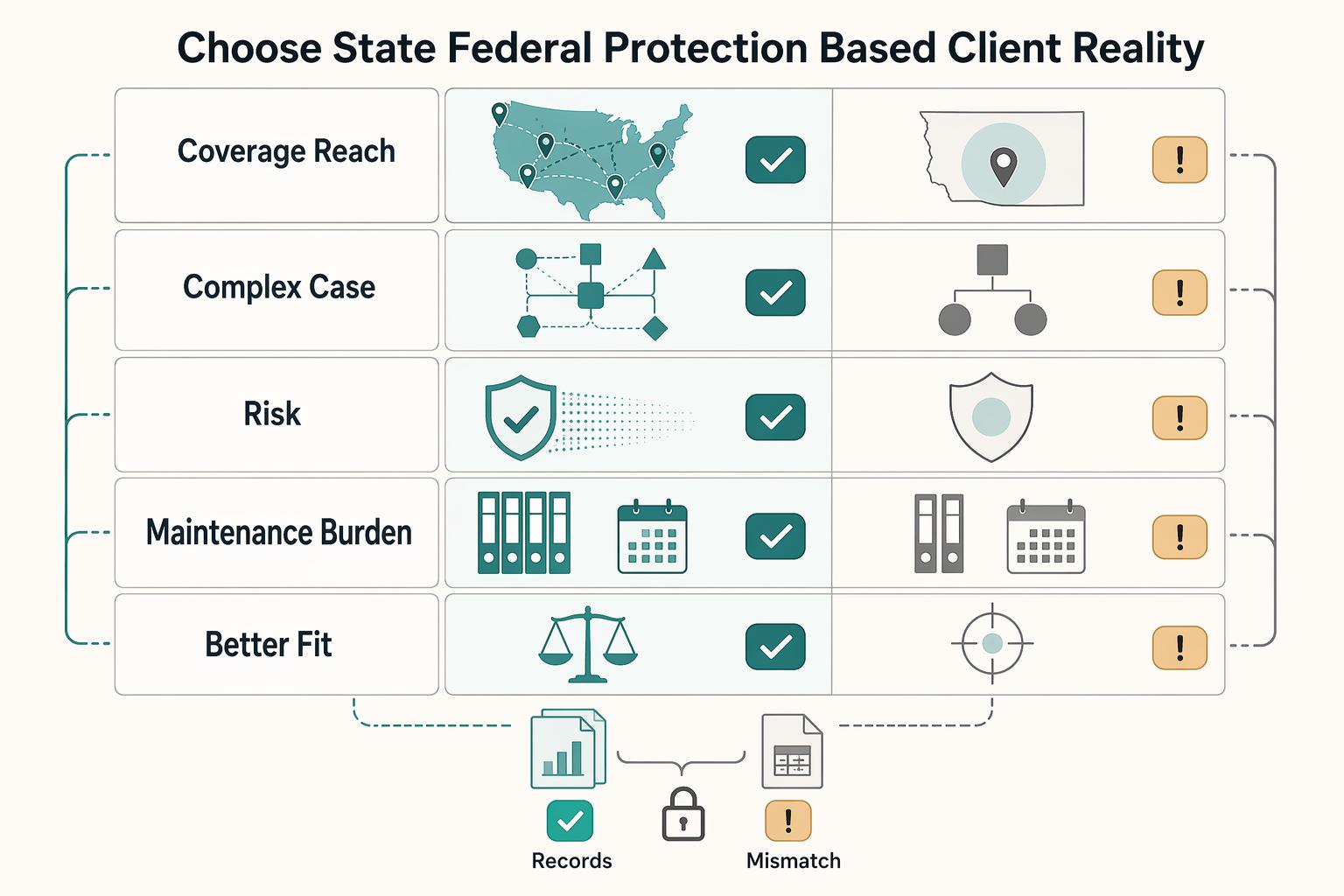
Start with one practical decision: `file now`, `file later`, or `hold for now`. Base it on actual client-facing use, brand stability, and whether your work is moving beyond one state, not on how much you like the name.
Best Digital Nomad Cities for Safety and Stability in 2026
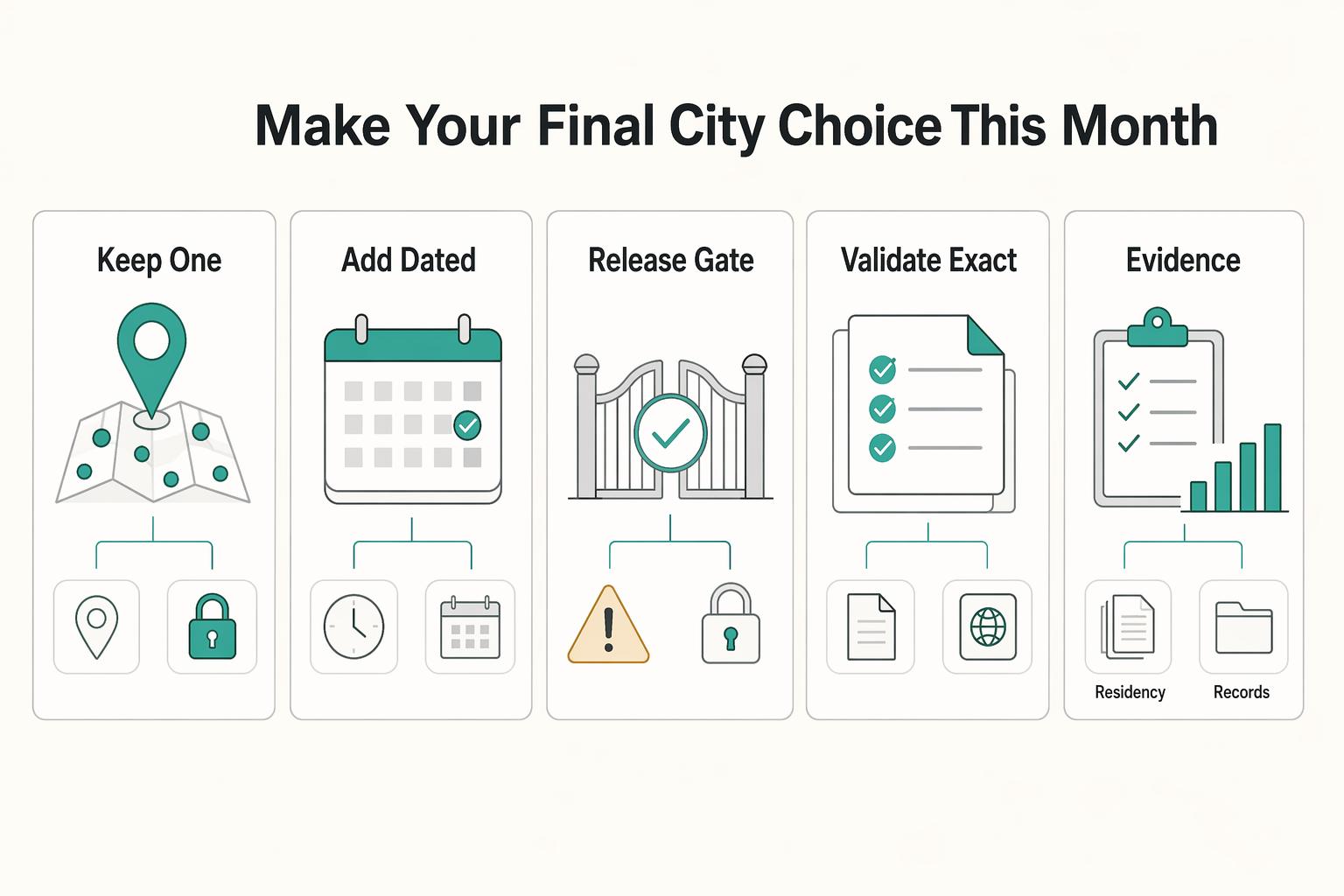
Treat this as a relocation decision, not a travel mood. The fastest way to make a good call is to run every city through the same three checks in the same order: shortlist signal, stay feasibility, and day-to-day work readiness. Stick to that order and you avoid most expensive mistakes before money leaves your account.